
Starlink lands on Aer Lingus, expanding its airline takeover while Delta bets elsewhere. Will that gamble pay off as competition finally emerges?
Starlink’s Grip On Airline WiFi Tightens
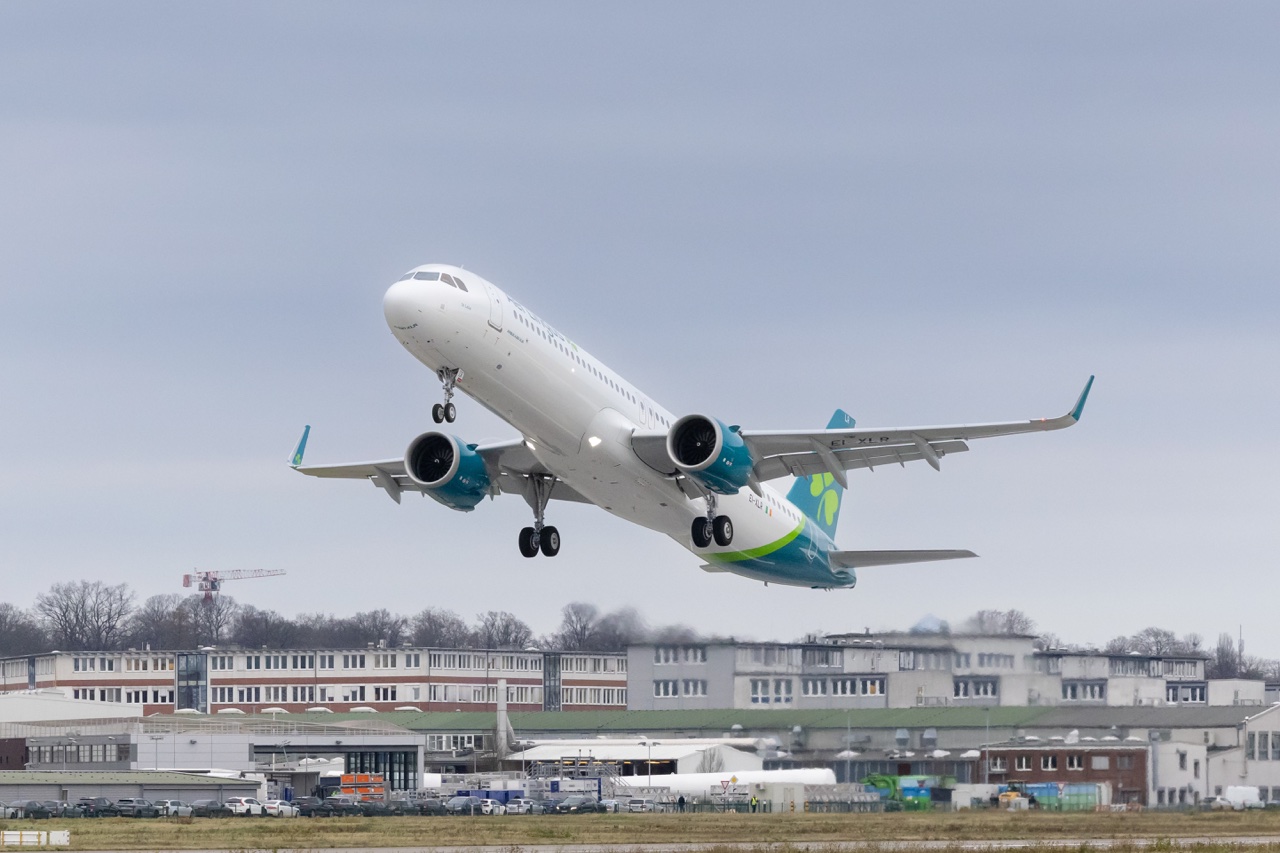
Aer Lingus just joined the growing list of airlines rolling out Starlink, and at this point the list of airlines without it is becoming few. Starlink is not just improving inflight WiFi. It is redefining expectations. Gate-to-gate connectivity, minimal latency, and speeds that beat home broadband (it’s faster than my wired Xfinity connection at home.) are no longer theoretical. They are operational, and spreading fast.
What started with early adopters like JSX and Hawaiian has now expanded across long-haul flag carriers. The key difference is consistency. Legacy providers always struggled with dropped coverage, especially over oceans. Starlink’s low Earth orbit network solves that problem in a way GEO satellites simply cannot.
And now, Aer Lingus becomes the latest proof point that this is not a niche upgrade. It is becoming the default even for smaller flag carriers.
Delta’s Bet On Amazon’s Leo Looks Increasingly Risky
That leaves Delta Air Lines as the most notable holdout until this week when the world’s second largest carrier – and most profitable globally – selected Starlink competitor, Amazon Leo (a play on Low Earth Orbit.) Delta has aligned itself with a competing ecosystem tied to and related partners, rather than going all-in on Starlink. On paper, that diversification makes sense. In reality, it looks like a timing problem.
Blue Origin’s satellite ambitions, along with Amazon’s Project Kuiper, are still ramping. Amazon Project Kuiper has launched satellites, but nowhere near the scale or maturity of Starlink’s 10,000 satellite strong network. That gap matters. Other airlines are not buying future potential, they are switching on service today while Delta will wait until 2028. They are buying and delivering passenger satisfaction today.
Delta has done an excellent job marketing free WiFi, but performance lags dramatically behind what Starlink-equipped aircraft are delivering. If that gap widens, customer perception could shift quickly, especially on long-haul routes where connectivity matters most. In a case of United leaping ahead of Delta in other areas of innovation, this too could be an area where Delta may have discovered key customer incentive only to watch competitors take the pole position.
Is Amazon A Real Challenger Or Just A Price Check?
Amazon’s Leo is the most credible long-term challenger, but it intends to operate as a long-term disruptor. The advantage Amazon brings is not just technology. It is pricing pressure. Even before full deployment, Project Kuiper introduces leverage into airline negotiations. Starlink is no longer the only game in town, even if it is the only scaled one. If airlines can be patient, they may find better prices around the corner. Commitments like Delta’s buoy Leo’s growth efforts and give other airlines who may be open to waiting a bit longer, a chance not only at better pricing but perhaps better terms, speeds, and service as the product expands.
That alone could keep Starlink pricing in check, especially as airlines begin to standardize fleet-wide installations. No airline wants to be locked into a single provider forever. But make no mistake, Amazon is playing catch-up. Until its constellation reaches meaningful density, it cannot match Starlink’s global reliability. Delta is betting that happens in the future.
What Happens To Panasonic And Legacy Providers?
Panasonic Avionics and other legacy providers face a brutal reality. Their GEO-based systems were built for a different era. High latency, patchy ocean coverage, and inconsistent speeds were tolerated because there was no better alternative. Imagine if Starlink, or Leo for that matter, were operational when MH370 went missing.
Panasonic can attempt incremental upgrades, hybrid networks, or partnerships, but the core limitation remains. Higher orbit equals higher latency, more expensive launches, different technology, and higher costs. To stay relevant, providers like Panasonic likely need to pivot toward integration rather than competition. That could mean becoming service managers, bundling connectivity with entertainment, or even partnering with Starlink or Leo rather than trying to outbuild them. For an operator like Leo, Panasonic could provide incremental coverage or a fall back system. It could show a broader map of general coverage though the higher speed nework would remain what it is building today.
Who Hasn’t Chosen Starlink Yet?
The list of airlines without Starlink is shrinking, but a few major players still stand out as potential adopters. American Airlines remains tied to existing providers but has shown willingness to test new solutions. For carriers like American, that will mean refitting their aircraft with the new satellite, updating payment modes, changing its own operational satellite communications (potentially too.) It would mean retraining staff which carries a high cost as well.
In Europe, groups like Lufthansa and Air France-KLM are experimenting with upgrades but have not fully committed. These airlines operate complex fleets, which slows decision-making, but also makes them prime candidates for a step-change solution. Once one of these major groups flips, expect a domino effect. But Delta’s commitment to Leo shows them that there is a future for competition in the connectivity space.
Conclusion
Starlink is no longer a disruptor. It is becoming the standard. For Starlink, Aer Lingus joining the network reinforces a clear trajectory where speed, reliability, and global coverage are no longer optional. What makes Aer Lingus particularly unique is that it is not a particularly premium carrier (though it offered free internet to its business class customers, something its European peers did not.) Delta’s decision to back an alternative ecosystem may eventually pay off if Amazon’s Project Kuiper/Leo reaches scale, but for now it looks like a bet on the future while competitors win in the present. The presence of Amazon in the connectivity space will likely prevent pricing from spiraling out of control, which benefits airlines and passengers alike. The real question is not whether Starlink will dominate, but how long the remaining holdouts can afford to wait before joining them or if Amazon is able to pose a legitimate threat in the long term.
What do you think?






Delta, aka Georgia KlanAir, has always lagged electronically with the worst app and website by far of the big four U.S. airlines. United’s app 10 years ago was better than DLs now. It is not surprising they would pick Amazon. Amazon’s frequent outages match DL’s horrid IT infrastructure and all the problems they and their subs have had including multiple meltdowns, lost data, and canx rates higher than peer airlines. Par for the course sadly.