
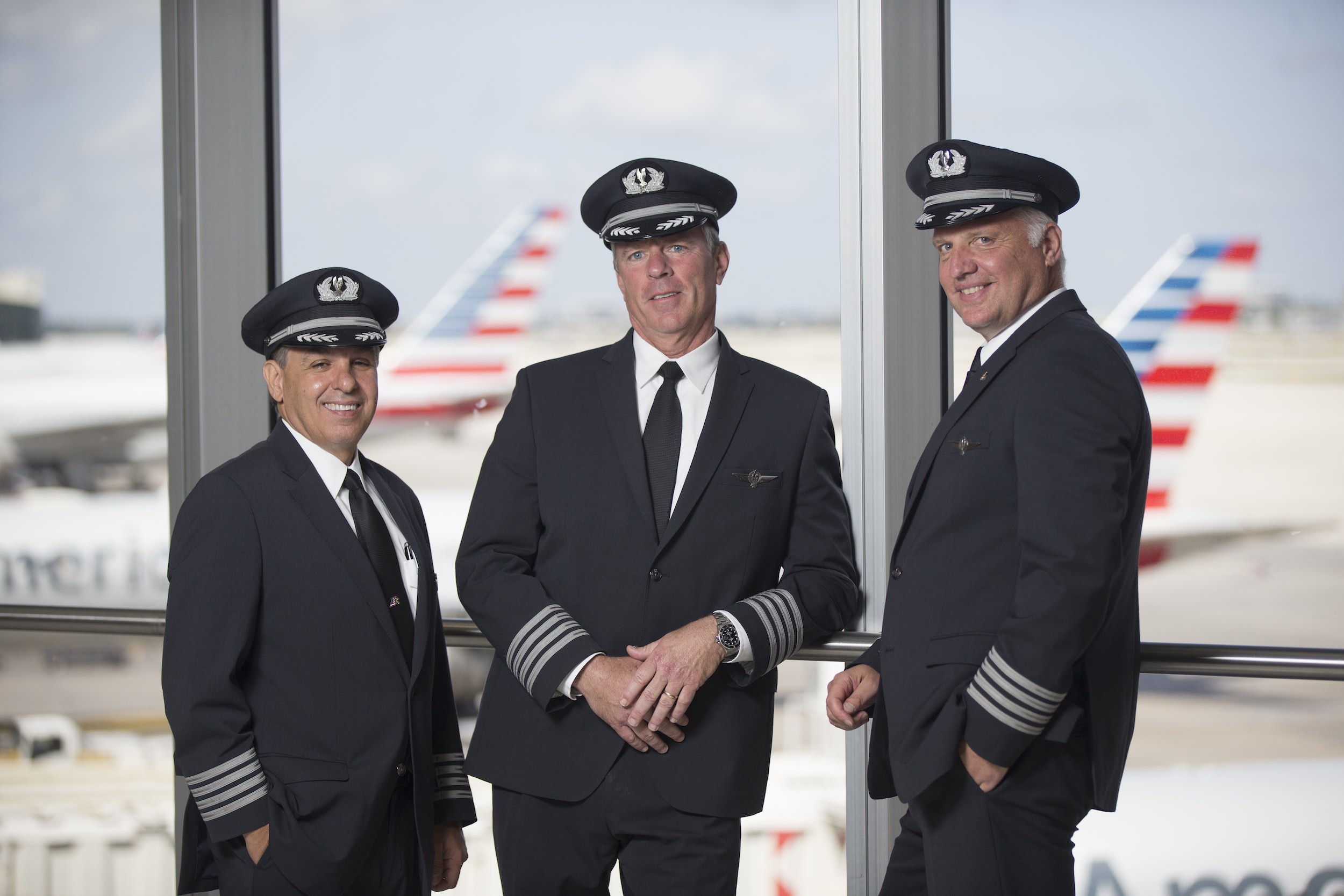
Are pilots paid too much in the United States? That’s probably the wrong question to ask, but it is an issue to consider when airlines are losing money flying.
Pilot Pay, Airline Economics, And An Awkward Question The Industry Avoids
A recent post by an American Airlines pilot has reignited an uncomfortable discussion about airline labor costs and whether pilot compensation has become misaligned with the underlying economics of U.S. aviation. The post, highlighted by One Mile At A Time, included a detailed breakdown of pay that would have been unthinkable just a decade ago. A Boeing 737 pilot shared that he made $457,894.51 over the last year in his role as captain:
https://twitter.com/fienixtaranova/status/2003205385432551450
We’ve discussed pilot pay before so it came as no surprise that me…but apparently it did to many people.
But the most interesting part was not the salary figure itself, it was the discussion it prompted. Here is a comment that caught my attention:
“Question – if airlines have negative unit economics now outside their frequent flyer programs and true LCC models don’t work in the US – might the pilot pay be the issue?
The Europeans have the same safety record we do – so it’s not the pay making the difference. They just believe that mobility is a right of the flying public and they don’t have the ability to restrict labor supply our unions do. How can you fail to compare our labor market to others in the world? It’s literally the most fungible job in the world.”
That is not an anti-pilot argument. It is an economic one. And it points to what may be an existential problem for U.S. airlines.
Airlines in the United States increasingly struggle to make money flying airplanes. Outside of frequent flyer programs and premium credit card partnerships, the core business of transporting people from point A to point B often produces razor-thin or negative margins. Meanwhile, European carriers operate with comparable safety records, lower fares, and far lower pilot compensation. The difference is not professionalism or safety culture. It is labor structure and supply.
This is where things get culturally uncomfortable in America.
Pilot unions in the U.S. have been extraordinarily effective at shaping public perception. Pilots are framed not merely as skilled professionals, but as heroic guardians standing between passengers and catastrophe (and to be clear, I’m willing to grant them that). The profession is wrapped in a pathos that draws heavily from American romanticism: the lone cowboy, the ace, the man or woman who saves the day at 35,000 feet.
That mythology works because it taps into something deeper. Plane crashes are dramatic. When aviation fails, it fails spectacularly, with many lives lost at once. That captures public attention in a way that everyday systemic risks do not. No one obsesses over the cumulative deaths from car accidents, taxis, buses, or rideshare vehicles in the same visceral way, even though they kill far more people over time. Drama distorts perception.
The result is that pilots are often treated as if they are fundamentally different from other highly trained, safety-critical professions. But are they just because they can kill so many people at once if they make an error? They are skilled, essential workers who undergo rigorous training, recurrent evaluation, and operate within highly standardized systems. That does not diminish their importance, but it does challenge the idea that they are somehow untouchable within economic reality.
To be clear, this is not an argument that pilots should be paid less. I admire the contracts pilots have won for themselves. Labor has every right to negotiate the best possible outcome and took full advantage of the pandemic and 1,500-hour rule to negotiate incredibly sweet deals. The question is whether the current U.S. airline model can survive indefinitely when pilot pay continues to rise while the core product becomes harder to monetize (consumers will not tolerate massive price hikes to fund higher labor costs and labor typically represents 20-30% of a carrier’s cost structure).
Europe answers this question one way. The U.S. answers it another. And so far, the American answer has been to subsidize the system indirectly through loyalty programs, consolidation, and higher fares, while avoiding a deeper reckoning with cost structure.
Again, I’m not saying pilots should be paid less (and I will say very clearly that executives should be paid less, but that’s another topic for another time). But these men and women have negotiated incredibly lucrative deals with strict credentialling requirement and scope clauses that ensure scarcity…they’ve done well, but I’m not sure these salaries are sustainable if airlines want to actually make money flying.
Ultimately, you do not judge a career based on annual pay over a short-term period. As we saw with Spirit Airlines this week, pilots are taking pay cuts as the beleaguered budget carrier tries to survive. There is risk and ups and downs for U.S. pilots. But airline pilots in the USA have taken advantage of a perfect storm over the last five years to negotiate pay that does raise eyeballs.
CONCLUSION
“Are pilots paid too much?” is the wrong question. The better question is whether the U.S. airline industry can continue to function when most airlines lose money on actually flying.
That tension is not going away and I do sense that loyalty programs are reaching a saturation point in which pilots may have to reckon with a historic jump in pay that has far outpaced any wage gains for the average American worker over the last two decades. A reckoning may be coming.






Initially, Merry Christmas.
In any instance where participants distort the market by creating artificial barriers to entry, someone is being paid “too much”. I encountered this over the weekend on Grand Cayman, which still has a strong taxi racket going. The cabbies were not being paid alot. But a 6 mile fare from the airport to hotel was a “fixed” $40 compared to my $44 21 mile uber fare from Dulles to home.
I am off to see my family.
Not anti-pilot. Riiighht….
It’s not an economic argument until the C suite makes what pilots make.
They’re not paid too much, I am paid too little. Certainly my fault and no one else’s. God bless America.
I realize that the CEO pay of airlines is a small percentage of the cost of running an airline, but it ignores a sense of fairness to the rate of pay increases that the majority of airline employees receive. Scott Kirby would not sacrifice anything to his lifestyle if he only made half of his current compensation.
They’re not paid enough. Between the difficulty in learning to be a pilot and the expense and time involved, airlines struggle to find pilots.
Not to mention there are plenty of careers that pay as much or more. Should doctors be paid as much as they are when all they do is say “drink water and rest” and kick you out of their office in 30 seconds? Lawyers? Sports / media professionals? The list goes on and on. Pilots are one of the few professions that actually deserve what they get.
Perhaps,,in this entitled society,,,,mileage programs have gone too far in rewarding customers for their business….lets pay a fair price, instead of expecting something for nothing……..
Provocative headline and I realize you are not necessarily advocating for lower pilot pay, but as a pilot paying his dues to get to the airlines I can assure you that most pilots aren’t making the top of the food chain rates that this captain’s W2 reflects.
Training costs, student loans, and being away from the ‘adult professional job’ wages of my previous career at a time my peers are hitting their peak earning years isn’t fun but to be fair was a choice I made. That said, I don’t begrudge others for what they have negotiated over the years and for many that experienced bankrupt employers, furloughs, givebacks, and stagnant wages after 9/11 and during the great recession, this is to some extent making up for lost time.
You do realize that millions of workers in many industries were impacted by these moments in history? Not just pilots? Like most, it was about starting over and rebuilding, not getting revenge pay on what was a lost moment in the economy. Sorry, pilots live in a bubble. The real world is cruel. You lucked out with a shortage for the short term and some good union work. Now consumers are paying the price in a combined distort of service, fees, and fares.
And spare me the training and costs associated argument. Everyone is paying crazy amounts to get on the treadmill of most any profession.
Unions and industry structuring has made the pay differential between regional airline pilots and captains of major airlines too great. The worse, however, is the FAs. Senior FAs often have poor performance but are paid way too much compared to those with a bit of experience.
While not trying to compare the two professions, it’s similar to doctors where there are very high barriers to entry and very little ROI at first. There’s still the economics of supply and demand here. However there are plenty of expat and internationally trained doctors working in the US. Do the unions make it hard for airlines to support visas for pilots?
A handful of senior Captains at major airlines make half a million dollars a year. In 2016 when I started work as a first officer I was making $31k a year. Ten years later I’m working at a major airline and I make significantly less than $200k a year. That’s really comfortable for me, but mainly because I retired from my previous job in law enforcement after 23 years making only about $50k a year the last couple of years.
Another way to look at it is to calculate the cost of your flight crew as a percentage of your ticket. Let’s say the Captain makes $300/hr, the FO makes $200/hr, and three flight attendants make $50/ hr each. A two hour flight costs $1300 for the crew divided by 150 passengers. That’s $8.66 per ticket. You could literally zero out the price of the crew and it would save less than $10 on your ticket.
It’s deceptive to use the highest paid employees as a measuring stick for an entire profession. a Hollywood star pulling in $10M for a single movie doesn’t mean all actors are overpaid. Many are scrapping by. Doctors occupy the top ten highest paid professions in the US but that doesn’t mean the guy prescribing your antibiotic is pulling in anywhere near that cash.
The issue here isn’t that airline pilots are paid too much, it’s that the executive class would like to do to airline jobs what it’s already done to nearly every other career in the United States. Squeeze labor to pad their own pockets. They do that by pitting labor against itself and by convincing the public that it isn’t profiteering driving up prices but rather overpaid employees. Delta airlines pays its employees at the top of the industry, yet is consistently profitable. Meanwhile, LLCs pay significantly less but have mismanaged and bungled their way into bankruptcy. That’s not the fault of labor. It’s idiotic management, coincidently making $1000s of dollars an hour in extractive compensation, pointing the finger at anyone but themselves. Don’t fall for it.
Others beat me to the punch: The high barriers to entry creates a caste system where those with the resources can afford to enter the field and then survive to get to the top tier.
It doesn’t help, I think, that airlines often shoot themselves in the foot with short term profit driven decisions laying off pilots during COVID and then griping when they didn’t have them when revenge travel kicked in.
I think bloggers are paid too much.
On the pilot’s payslip, what is “crew advance”?
If you’re not saying pilots are paid too much, why didn’t you title your article “Are pilots paid too little?” or even just “Are pilots paid fairly?”
That’s fair.
1. Unions don’t control the experience to entry, airline management and the government does. 1500hrs is nothing, and in the not so recent past you couldn’t get hired with 3000hrs at a regional. This is simply supply and demand.
2. ULCC’s like Spirit aren’t failing because of pilot wages, it’s failing due to a shift in consumer habits to that of premium offerings. I believe this author himself has reported on this. Same as when the legacies struggled and created low cost offerings when the economy wasn’t so good. Know your history…and your present. Delta and United are doing pretty well with even higher rates than most.
3. Zoom out…plot U.S. pilot pay from the 60’s to now. I think you’ll be surprised to find it’s just finally corrected to match inflation over that term.
4. The industry and profession is fragile. As an example what other profession starts you at the bottom of the pay scale as a subordinate when your employer goes under? So the current pay in my mind is justified albeit at a current high due to the risk of fragility. This is seen in other fragile industries such as oil, real estate, finance, and even the medical profession without the trip to the bottom with every economic swing.
5. A blogger/influencer is the last person who should be reporting on pilot wages and employment. Riding in the back more than the average person qualifies you to report on the quality of snacks/entertainment/comfort. This would be akin to a pilot blogging about the proffesion of surgeons simply because they paid to have a knee replaced. Stay in your lane.
6. Consider the safety argument you speak of compared to other facets of our lives may be because of the professionalism of these highly paid individuals. This alone supports those rates. Even when everything is going right in good weather, the daily threats are there.
You mention CEO’s should be paid less. While I don’t disagree, take a closer look at their performance. Billions in stock buybacks, poor management decisions, inflated volumes of middle management, lack of investment in the actual business and infrastructure in the vein of inflating stock prices to satisfy investors. This last point seems to be the downfall of many airlines throughout history leading to our current unprecedented number of “meltdowns” adding up to many billions of dollars industry wide. It seems management at many of the “performing” airlines can’t keep things running smoothly when the weather is good…good thing there weren’t any snowstorms leading up to Christmas this year.
If you break down what a pilot makes as an hourly employee by the number of passengers that are in the airplane you’d actually be surprised by the few dollars per hour per passenger. Most people tip their waiter/waitress or barista more for the service provided. European carriers are subsidized and you’re comparing a socialist environment to a capitalist market. These pay rates only shot up in the past few years. Not seeing any mention of what the pay rates were 5, 10, 15 or 20 years prior. How about comparing them to a pro player makes their first year using league minimum.
Short answer: No. Pay them more.
Longer answer: Also, pay everyone more. Like, first officers, flight attendants, baggage handlers, cleaning crews, dispatchers, gate agents, call center folks, maintenance technicians, everyone.
They all deserve better pay, benefits, and protections.
And you’re prepared to pay $1400 one way economy fares from DC to LAX? Or redemptions that are 500K miles for a J ticket to London? Someone is going to have to pay for what you propose. First It will be consumers. Next it will be shareholders as people stop flying. Finally it will be those same staff who get laid off as the industry crumbles under the weight of it all. That was the point of this post it seems. It’s not sustainable.
I respect many of your comments, 1990, but this one is either vague satire or really not well thought out in my opinion.
Getting financial aid for flight training is nearly impossible. Unless you have wealthy family help, or your coming from a previous career, set up in life with excellent credit and/or lots already saved for the $80-$100k+ training.
A career that you miss a lot for. Birthdays, holidays, anniversaries, funerals. Driving something that bad people want to use as a weapon. In an office with an exuberant amount of radiation over your career.
Then once you made it through the training, you have to instruct, or take slow-time-building jobs to get the required 1500 hours in the US that the FAA mandates for part 121 airlines. Other countries do not. All this really adds to the complexity and difficulty to achieve one’s dreams.
I’m 40 and still trying to get there. Grew up poor in a less than opportune area, life getting in the way, cars breaking, bills and rent always going up, but I’m getting there, and I will make it happen. Another 2-3 years I’m hoping. I really wish I could find a sponsor or lender, write up legal documents for repayment, plop the cash down at an accelerated school, and train nonstop, totally immersed, until the remainder of my ratings are completed.
So no, they don’t get paid too much, except for the ones that got there too easily.
This doesn’t make any sense. What you’re basically saying is that the lack of access to loans for making a $100k investment justifies a ROI of 300-400% on that investment, year after year after year.
It’s obvious that pilots in the USA are paid a lot more than the market can sustain anywhere else. You could say that’s the right approach and that literally everyone else in the world has got it wrong – that sort of thinking wouldn’t be particularly surprising given the country context (refusing to join the rest of the world on things ranging from measurement units to recognising the International Criminal Court).
Not unlike doctors, they’ve managed to elevate their profession to some kind of demigod status (here in the UK, the deeply problematic NHS is something like a national religion, anyone who dares to suggest that it maybe isn’t very good gets ostracised) and lots of people are convinced that normal economics rules don’t apply.
Matthew raises a good question which some have accurately rephrased should be asked “are pilots paid fairly?”
the clear answer to that question is a resounding “NO”
Fair would require that there not be a gap between junior and senior pilots and yet virtually every airline pays senior pilots much more. The safety argument vaporizes in the reality that junior pilots can carry just as many passengers and have just as much responsibility as senior pilots.
Pilots argue how much responsibility they have and yet people that run nuclear power plants and other large industrial processes do have the capacity to kill hundreds of people if they don’t do their jobs right. Air traffic controllers are responsible for multiple flights at the same time so, even in aviation, the notion that a pilot should be highly compensated because of their responsibility doesn’t hold water – or jet fuel.
The economic differences between the US and Europe include a much lower social safety system – and lower taxes in the US – as well as the ability to make more money in most industries in the US.
ALPA does done a great job of doing all possible to unionize every commercial pilot in the US and yet there are exceptions like SkyWest; by high rates of unionization and control of public policy – including the 1500 hour rule – the supply of pilots is limited which keeps salaries high.
as for the argument about healthcare and compensation for doctors whether in the US or Europe or the UK, the government controls not just the supply of doctors but also the compensation for services from them to a great extent, including in the US.
ultimately, being well compensated is a blessing for those that realize it but wealth is always relative not just to what others make but to what you think you should make.
Flaunting wealth or income is distasteful to the vast majority of humans. Enjoy what you have, give generously, and be grateful for what you have regardless of income or wealth.
and Merry Christmas, Matthew and to all of your readers.
Merry Christmas, Tim!
You talk about “economics” and forget to actually look at the biggest economic differences between the US and Europe. We are able to operate three of the largest airlines in the world with US demand alone being the largest portion of their revenue. Not to mention several others as well that are 90%+ domestic. The EU simply doesn’t have the same demand for air travel. As a result they don’t have the same economic factors pushing up pilot rates.
Yes certain airlines are struggling right now. That is due to management choices. Spirit was making good money prior to covid and yet the pilots were operating with the exact same contract as after covid. There was a weakness in their operation and covid eviscerated that weakness.
Also you have to realize that cheaper airlines are struggling because the people that they rely on are having more issues these days as they are hit harder by inflation and such.
What a load of nonsense. Ryanair and easyJet carry about 300 million pax per year between them, with the big 3 groups collectively exceeding that on top. Then TK alone have another 80-odd million, after which there’s also a significant number of medium-sized airlines like LO and Wizz and A3 and TP and UX… The US carriers likely do need a few more pilots as they have a lot of longer short-hauls, but the overall size of the market isn’t that much bigger.
Pilots in the USA are earning what they’re earning not because it’s the point where demand and supply are balanced within a free market but because there are artificial barriers to entry and career progression within the profession. That’s not inherently evil, or even ‘unfair’, but it doesn’t seem to be great for the viability of the sector, and it’s certainly not a positive outcome from a consumer perspective.
PM
now respond to the question he raised – which is the amount of DOMESTIC REVENUE – which the US can support.
Ryanair is one of the most profitable airlines in the world but it gets a fraction of even EU/UK revenue that US airlines make domestically.
The number of passengers carried is not the point; the extent to which the US can support much more high revenue air transportation IS the point – and it does play into why US airline employees make much more than any other country in the world even when adjusted for taxes paid on behalf of employees.
and many people fail to realize that it was Delta that pushed salaries up post covid; they may have needed to raise salaries to ensure they could replace skilled employees, including pilots, which took early retirement during covid. But I strongly believe that DL raised salaries so aggressively post covid because they knew they had the revenue to support high salaries and they knew that high salaries would sink some of their competitors and put a world of hurt on others. DL was the first of the big 4 to settle a post covid pilot contract – and that was worth 2X what UA had tried to offer its pilots – which was shot down by its pilots. DL has raised pay for its non-pilot/non-union personnel multiple times since.
NK and other ULCCs and other LCCs don’t have the revenue but have been forced to raise salaries. The lower cost sector of the industry is being thinned; NK and B6 have aggressively reduced capacity and the trend will continue across the industry.
Whether you believe pilots are paid too much or too little doesn’t matter right now; some airlines including DL continue to raise pay for its employees and pay handsome profit sharing.
Those companies that cannot make the economics work to support high labor costs are the ones at risk – a complete paradigm shift to the way business typically works.
Employees who work for airlines that can’t support high costs should be worried. Those that are blessed to work for airlines that can and are covering those high costs should be thankful.
Very thankful.
If what you say is true (I am not so sure) that would mean that The Big 3’s predatory approach will bankrupt ULCC’s eventually OR force them to downsize into small players like Allegiant. With that it will result in a glut of pilots in the workforce that start driving down wages over time. Yes, you will still have senior pilots making absurd salaries but regionals and entry level mainline pilots will start to see shifts downwards at hire. Further, it opens back up upstart ULCC’s finding pilots desperate now for work who will take smaller contracts as the Big Three are saturated with pilots. That is, until it all blows up. And it will all blow up. Another 9/11….another Great Recession….another Covid…and the Big 3 (assuming AA even survives) will be faced with a reckoning. It will come. This is not sustainable.
@Tim , as they said in the olden times, turnover is vanity and profit is sanity. I’m no accounting expert, but everyone seems to agree that the US carriers can’t make any money on their flight operations and they’re cross-subsidising them with credit card income. Naturally, any employer is going to need to increase salaries when faced with a labour market that’s characterised by both huge regulatory barriers to entry and a virtual monopoly imposed by trade unions- the only question is whether this unusual situation with the cross subsidies can continue in the long term.
It goes without saying that the likes of Ryanair operate in a different environment in that they don’t have to contend with monopolies, have a core business which is profitable, and are unable to generate billions from credit card companies- but that doesn’t really depend on whether they have 100, 200, or 500 million pax per year.
Antwerp and PM,
the cycle of high salaries in the US could well be broken by failure – even over a period of time – of low cost and ultra low cost carrier models and the removal of hundreds of aircraft from the US carrier fleet that otherwise would have carried deep discounted passengers.
NK is removing about 100 aircraft from its fleet and even net of aircraft retirements, the number of new a1ircraft is forcing fares up. that process will play out as carriers like WN and B6 transition to higher revenue business models and chase less and less deep discounted traffic.
as for cross-subsidies, I’m not sure why so many people think it is a sign of failure or that it will end. Many businesses have lines of business that are more profitable than others. AWS is a far more profitable business on a margin basis than selling merchandise and delivering packages but Amazon keeps expanding into new businesses like prescriptions where they believe their size will reshape the market.
Grocers have low margins on milk but they still sell it while shoppers come in and also buy high margin prepared foods.
The legacy airlines have just figured out a way to cross subsidize transportation through revenue sources which other airlines cannot duplicate.
While banks are happy to keep partnering with airlines other than the big 3 to add credit card/airline partnerships, there are network and business plan advantages that some airlines have over others – including DL’s better ability to win corporate contracts compared to AA and UA – that give it advantages.
and smart airlines, just like other types of businesses, can and will find other types of revenue that can help cross-subsidize.
but as fares increase faster than labor costs – and that will happen as the supply of deep discount fares is tightened, there will be less of a need to cross-subsidize and more revenue from non-transportation businesses will drop to the bottom line.
I think the US airline industry will look very different five years from now.
The Legacy airlines have increased pay recently just a couple of years ago. Pay was about 35% lesser previously. Realize why this happened- to attract and incentivize the most quality individuals who would then pick that legacy airline over say an LCC or a cargo carrier or a corporate job. And it’s working, as pilots with extensive experience domestically and PRs and U.S. citizens from abroad are competing for these jobs at the big 3.
So, you’ve got this very wrong Matt. Your disclaimer is disengenous because you clearly believe in the nonsense you’ve cooked up. I hope you never fly with mediocre pilots in trying conditions or emergencies.
Comparing the economics of pilot pay at European carriers to American carriers is not only apples to apples, it’s apples to alligators.
1. Most European nations supply pilots with government subsidized medical care for free. US pilots have to provide significant contributions for medical care even while employed.
2. Governments in Europe, subsidize retiree pensions, whereas pilot based in the United States are solely responsible for funding their own retirement via the compensation they receive from companies.
3. Pilots at American carriers are governed under the railway labor act, which severely limits their ability to strike and limits leverage during negotiations. While salaries at American carriers now might be waxing, historically, it is extraordinarily difficult for American pilots to obtain significant raises in negotiation. Conversely, pilot work actions at European carriers are much easier to conduct and much more common, creating more negotiating leverage.
Also, your basic premise that somehow pilot pay negatively affects airline economics is not supported by empirical data. Literally, legacy airlines like united and Delta are recording profits never contemplated in this industry. The historical level of revenue for a healthy industry at one percent of GDP is far away from being achieved. The bar to entry at lucrative hubs is high with legacy carriers solidly entrenched and controlling much of the capacity. Premium revenue continues to grow regardless of the state of the economy.
So the “reckoning” you allude to sounds like fear mongering.
This is a red herring, we’re not talking engineers earning €70k gross in Europe and $110k in the USA- it’s an extreme difference in salary. The state pensions you’re talking about are in the order of €20k per year. In other words, the annual salary of this pilot is about as much as what European pilots will receive in pension during their entire 20 years of retirement.
Why don’t you ask the question “Are doctors paid too much”? Let me know what you come up with.
They often are overpaid, and they’re not always very good at their jobs either. I know someone who’s doing a PhD in quality assurance processes within US hospitals and describes what he’s uncovering as ‘horrifying’. That’s not to say it’s a problem restricted to the USA- if anything, I know of more than one European countries where medical malpractice is systematically swept under the carpet, with clinical staff discouraged from whistleblowing etc.
I used to work at an airline as a mechanic. The pilots would always tell me it’s the best paying part time job in the country. Do the simple math. They can only work 1000 the average is 700 to 900 a year flight hours a year or Apx. Many pilots take extra routes early in the year and get paid overtime and time out in October and don’t fly for 2 to 3 months and still get a paycheck. They mostly have auto pilot so they can sit back and watch the computers do there job. Most pilots complain when they do have to fly complain about everything. Keep in mind average full time worker puts in over 2080. Without overtime. So are they overpaid yes are they spoiled. Yes. I spend over 20 years working around pilots. The more they make the easier the equipment is they fly and easier job. They are a glorified buss driver ..
Larry, are you a glorified oil change guy at the quick lube, or are you trained in complex systems and structures that have to hold together at 650 miles per hour and stop within certification requirements? … you surely know pilots get paid by the “block hour” that typically is defined as when the brake is released and the aircraft is in, or ready for, flight. If we measure a pilot’s time like most workers, by when their car is in the parking lot, their pay is much less. An average month is around 300 hours time away from base. A pilot’s average day is around ten hours at work, but can go to fourteen or sixteen. I have worked many sixteen hour days (and been tired enough to appreciate they limited this for safety’s sake). Honestly, my mechanic friends have much nicer houses than I do.
Is the man or woman with 20 years of training, responsible for the lives of hundreds of passengers, flying them in a $50 million metal tube six miles above the ground close at nearly the speed of sound, sometimes for more than 10 hours at a time, paid too much?
I suggest we cut their pay. Teleporting across North America in 6 hours should never cost more than $50, maybe $60 with a meal and drink.
What most people don’t understand is this pay takes years to achieve in the airlines. On top of that, just to get to the airlines is years of training, student loans, airplane rentals, time building, low paying entry-level flying jobs, etc.
And these pilots sacrifice a lot…. Missed holidays, birthdays, births of their children, missed sporting events, anniversaries and so on all while being away from home for half of the month.
I think we all agree that the path to high pay is long but can you just tell your pilot husband and his coworkers not to use the argument that pilots should be paid so much because they have so much responsibility in their hands?
If safety and the high responsibility is justification for high salaries, then it makes no sense for junior pilots to make so much less.
Presumably, many senior pilots got Christmas off and will get New Years off, leaving airlines to operate w/ mostly junior and less paid pilots. and yet if safety was the biggest reason for high salaries, then there should be no difference in salary between the highest and lowest paid pilots.
Just admit along w/ your husband that the reason for high salaries is because ALPA has very effectively controlled US public policy and limited the supply of pilots to force and keep pilot salaries high.
and, more recently, legacy airlines led by DL, have leaned into high salaries as a means to squeeze low cost carriers and ultimately to reduce low fare competition.
It really is all about economics as much as you and he want to posit any number of other reasons.
Your argument is based on a false premise-that flying operations at the big three barely make money, if at all. You fail to understand that the selling of miles/points IS selling airfare-in fact it is the most profitable way to sell airfare, which allows the selling of seat miles through traditional outlets (directly) to be relatively affordable compared to historical inflation adjusted airfares. Likewise pilot salaries when adjusted for inflation are not at historical highs. Points/loyalty programs don’t exist without flying networks, so separating that out from flying operations is only useful for accountants and those with an interest in driving down wages.
If you complain about pilots making too much, you need to complain about CEOS and upper management making too much.pilots have a skill .CEOS don’t.