
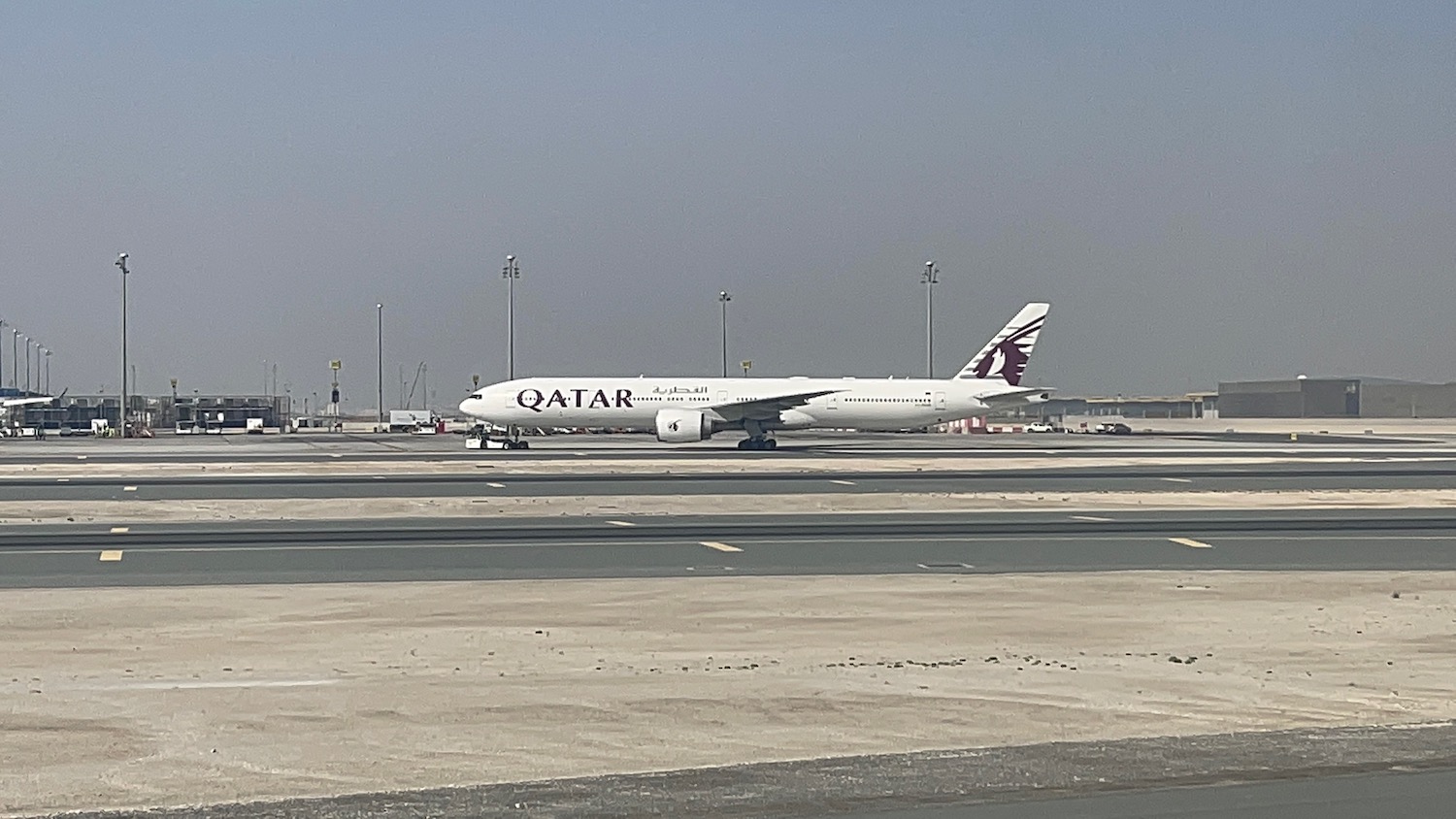
Sri Lanka is floating an idea that, on paper, sounds clever: turn its nearly empty Mattala Rajapaksa International Airport into a temporary hub for Emirates and Qatar Airways. In reality, the idea strikes me as quite far-fetched.
Sri Lanka’s “Ghost Airport” As A Gulf Airline Hub? Sounds Clever…But Highly Impractical
As conflict continues to disrupt aviation flows in the Middle East, One Mile At A Time flags that Sri Lanka is reportedly in discussions with Emirates and Qatar Airways about using Mattala Rajapaksa International Airport (HRI) as an alternative transit hub.
The pitch is simple. Mattala is:
- Far from the conflict zone
- Strategically located along east-west flight paths
- Almost completely empty
(Currently, the only international airline flights from the airport are to Russia)
Mattala has long been dubbed the “world’s emptiest international airport,” with airlines abandoning it due to lack of demand. Now, that emptiness is suddenly being reframed as an advantage.
Yes, The Airport Can Handle It…On Paper
Mattala is not some tiny regional airstrip. It has:
- A 3,500-meter runway capable of handling widebody aircraft, including the Airbus A380
- A small, but modern terminal built to handle up to one million passengers annually
From a purely technical standpoint, Emirates and Qatar Airways could operate there.
But that’s the easy part.
The Real Problem: Everything Else
Mattala has only two gates.
There is some additional room for remote stands, but even that space appears limited…not the kind of space Emirates could operate multiple A380s concurrently with any sort of efficiency.
Everything that makes a hub function would have to be built or negotiated:
- Crew logistics and layovers
- Catering infrastructure
- Fuel supply contracts
- Ground handling and maintenance
- Passenger connections and transfer facilities
Building a “hub” from zero would have tremendous costs and could not be done overnight.
With fuel shortages caused by the Iran conflict, it is not even clear the airport could be used as a refueling hub.
A Massive Bet On A Temporary Problem
Even if Emirates or Qatar Airways could make this work operationally, the bigger question is whether it makes any sense strategically. It’s quite a big bet during a time with tremendous uncertainty.
A bet that the current disruption in the Middle East will last long enough to justify the enormous effort required to stand up a new hub.
If it doesn’t, all that money just gets added to the loss column.
Airlines don’t just flip a switch and create a hub. They invest years building infrastructure, partnerships, and operational reliability. Doing that for what could be a short-term geopolitical disruption is extraordinarily risky.
And that’s not even really thinking about the customer experience.
Mattala is a remote, lightly developed, and lacks the kind of premium infrastructure that Emirates and Qatar Airways rely on to sell their product. It’s no Hamad International Airport!
No massive lounges. No seamless connections. No global hub experience.
Just an empty airport.
That might work in an emergency, but I don’t see it as a sustained strategy.
CONCLUSION
On paper, Sri Lanka’s proposal is clever. A nearly empty airport in a neutral location, ready to absorb displaced traffic, sounds like a perfect solution to a very real problem.
But the details create many roadblocks. Running a global hub requires more than runway space.
Unless this conflict drags on far longer than expected, it is difficult to see Emirates or Qatar Airways making that kind of investment for what could ultimately be a temporary disruption.
Mattala may be empty, but turning it into Dubai or Doha, even temporarily, is a far bigger challenge than it appears.






The airport has exactly 3 stands capable of handling widebody aircraft.
You can’t build a hub with 3 aircraft unfortunately.
Perhaps it could be a scissors route focus airport?
Sydney, Melbourne, Heathrow, Rome?
Sounds like something floated by the White House Office of Bad Ideas.