
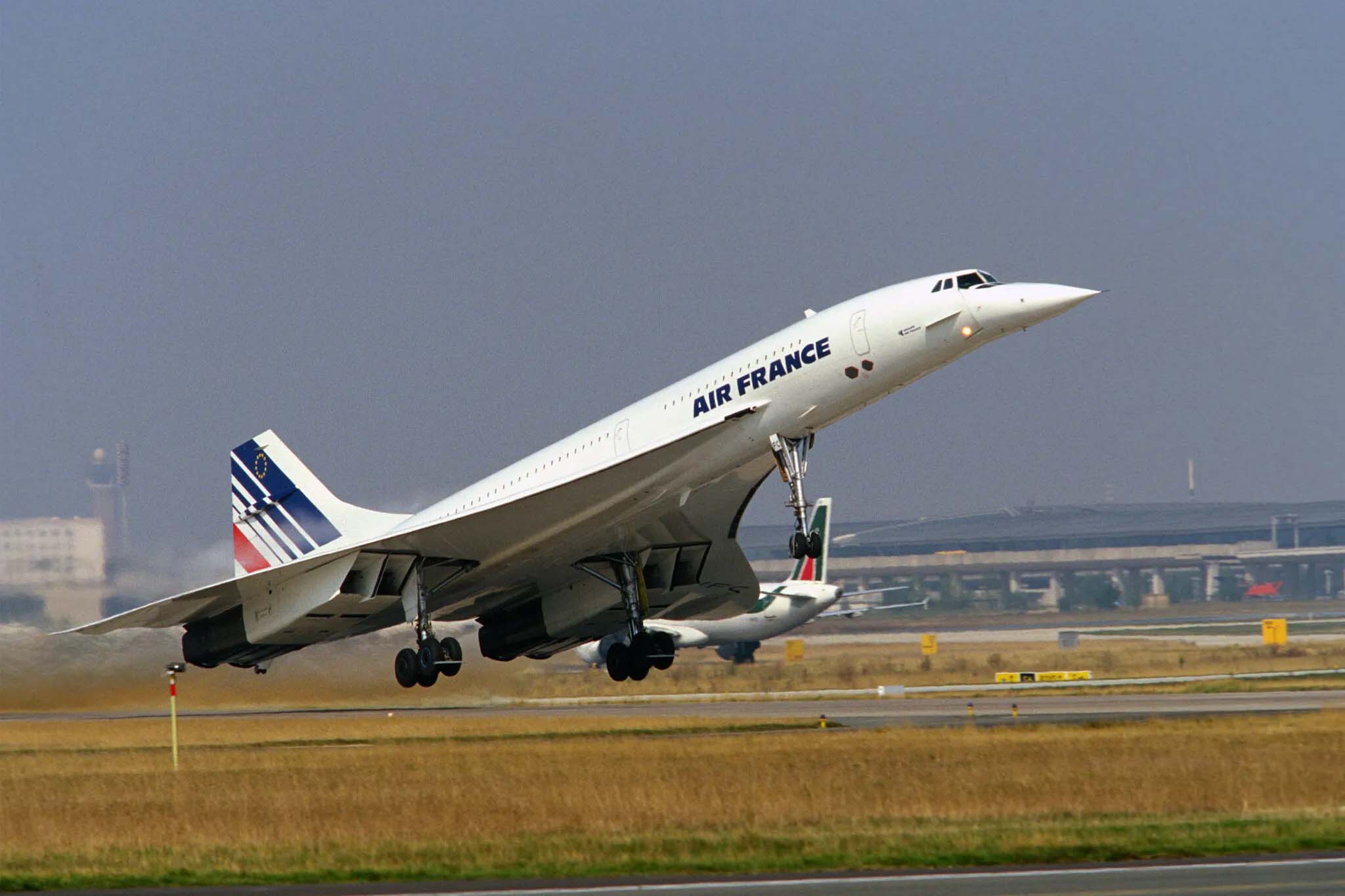
Today marks the 50th anniversary of the Air France Concorde’s first commercial flight, a milestone in aviation history that redefined what was possible in passenger travel and remains one of the most iconic aircraft ever flown.
Air France Concorde Turns 50: A Supersonic Legacy
On January 21, 1976, Air France inaugurated commercial supersonic service with the Concorde, departing Paris for Rio de Janeiro via Dakar (aircraft F-BVFA). This event was one of aviation’s most dramatic milestones, bringing Mach 2 passenger travel into the mainstream and capturing the imagination of the flying public around the world.
The Concorde project itself was born out of a bold Anglo-French collaboration, uniting Britain’s British Aircraft Corporation and France’s Aérospatiale. Designed to cruise comfortably at speeds exceeding twice the speed of sound, the sleek delta-winged aircraft embodied cutting-edge aerodynamics and engineering. Its development began in the early 1960s, at a time when the industry was dominated by subsonic jets. Years of tests, design refinement, and international cooperation culminated in the supersonic airliner’s arrival.
Concorde’s operational life was as remarkable as its design. With a typical cruise speed of Mach 2.02 (about 1,350 miles per hour) and service ceilings around 60,000 feet, the aircraft could fly from Europe to New York in under four hours, cutting traditional flight times nearly in half. Both British Airways and Air France operated Concorde services across the North Atlantic, with routes linking London and Paris to New York and Washington. Consider how cool it was to leave Paris at 8:30 pm after dinner and arrive in New York at 6:00 pm in time for another dinner…
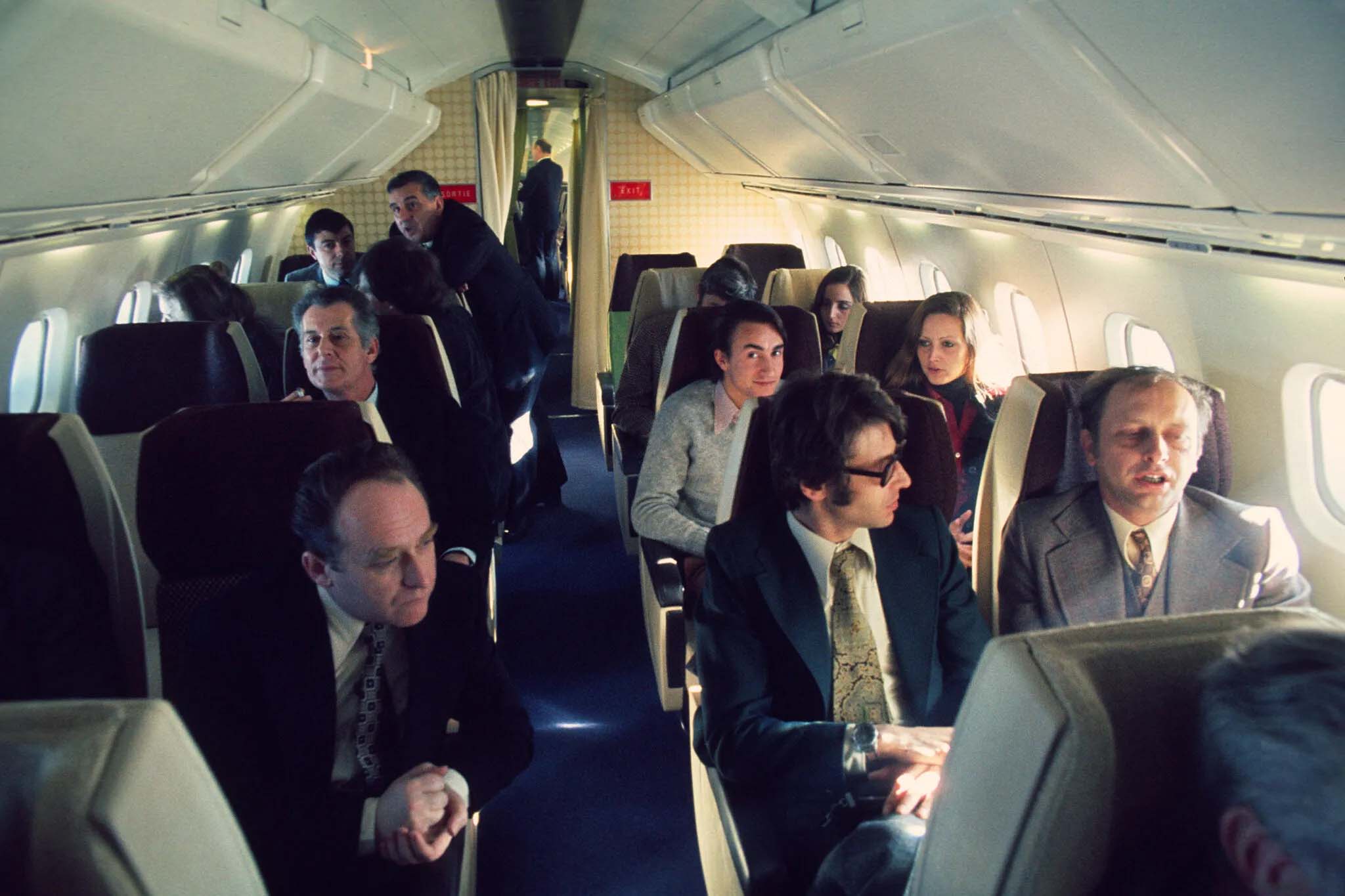
Champagne, gourmet meals, and impeccable attention to detail became hallmarks of the Concorde experience, even though the seat was nothing like the luxury lie-flat suites of today. Concorde represented the height of prestige travel, and its passengers included dignitaries, celebrities, and high-flying executives. Yet even as it thrilled many, Concorde’s operational costs were high, and its economics were always challenging. Demand was limited by expensive fares and high maintenance needs, even when fares suddenly doubled in the late 1990s with no discernible decrease in demand (but no increase either).

The tragic crash of Air France Flight 4590 in July 2000, in which a Concorde operating for Air France was involved in a fatal accident shortly after takeoff, led to a temporary grounding and intensified scrutiny of its economics. Although Concorde returned to service later that year after safety modifications, broader industry shifts and rising costs ultimately led to its retirement. Air France flew its last Concorde service on May 30, 2003, with the type withdrawn from service later that year alongside the British Airways fleet.
For many aviation enthusiasts, Concorde remains a symbol of a daring era of innovation when civil aviation sought to push past the sound barrier on regular passenger flights. Its legacy is preserved in museums, photos like the ones above, and in the memories of those who flew aboard the supersonic bird.
New Documentary Celebrates Air France Concorde
To commemorate this golden anniversary, Air France has released a new documentary titled Concorde Air France: They Made the Legend Fly.
Presented by Air France-KLM CEO Benjamin Smith, the film is available on the airline’s YouTube channel and offers nearly 40 minutes of archival footage, firsthand accounts, and rare access to the aircraft’s iconic cockpit and cabin at the Musée de l’Air et de l’Espace in Le Bourget:
The documentary features interviews with former pilots, flight attendants, mechanics, and lounge staff who helped define the Concorde experience, offering personal insights into the aircraft’s operational excellence and cultural impact. Though more than two decades have passed since Concorde’s retirement, the supersonic legend continues to inspire and reminds us of a time when passenger flight was not just transportation, but a celebration of human ingenuity.
CONCLUSION
Full confession: one of my greatest regrets in life is that I never flew Concorde (I have far more serious regrets as well…). I got into aviation in 2004, just one year after Air France and months after British Airways suspended Concorde service. Watching this video doesn’t assuage that regret, but it’s still worth watching!
I am hopeful that we will see a new generation of supersonic travel in my lifetime, but there was something so uniquely special about Concorde and it is proper today, 50 years to the day after Air France launched service, to recognize that unique aircraft.
Did you fly Concorde? Share your experience below!
images: Musée Air France



Can this be duplicated in 2035?
What could be the development costs? $25B? If so, sell 100 and the development costs are $250M per plane. Sell 50 and the development costs are $500M per plane. Sell 200 and the development costs are $125M per plane.
If the development costs are $500M and the production cost are $100M, that’s a $600M plane. Fly that for 20 years and it’s $30M per year or $100,000 per day in aircraft costs or $50,000 per flight, if there are 2 flights per day. That could be $500 per seat per flight plus cost of labor, fuel, airport costs, marketing costs for the airline. Would you pay $1500 for a one way economy class seat transatlantic?
I flew Concorde eleven times, once on AF and the others on BA. Actually, the AF flight was a domestic interchange flight flown by Braniff between IAD and DFW at subsonic speeds. The experience was unlike anything we have today, and was simply fantastic. Back in the 80’s, the early days of the AAdvantage program had an upgrade from BA First to Concorde for 20k miles. My company paid for F internationally back then, so the upgrade was a no-brainer. Anyway, thanks for the article. Brought back some great memories!
Fun fact: The disco group Silver Convention performed at the opening ceremony for that Braniff route.
I did fly aboard Air France Concorde, Matthew — ship number F-BVFB — during its last week of operation.
You can read about my experience here, along with a video and some bad photographs: https://thegatewithbriancohen.com/concorde-trip-report-20-year-anniversary/
This article contains photographs of some of the souvenirs I received during the flight, which I still have today: https://thegatewithbriancohen.com/my-souvenirs-from-air-france-concorde/
No, not interested.
The beloved Air France Concorde left the aviation world at an early age and in a tragic way … Its cherished memory will live on forever.
Great moments in plane spotting: watching the Concorde land at Dulles.
Very ironically, the Concorde that crashed in 2000 was the very plane that was used to film AIRPORT ’79.
Would’ve loved to have experienced this, but, still grateful to have seen it flying in air shows and at JFK.
There was a Concorde with dual livery right? One side pained in SIA colors and one side in BA? )or was it Air France?)
Still amazing to believe that with all the corporate travel that a 4hr transatlantic then or now doesn’t have cache
One of my earliest childhood memories, whenever I went to Rio Airport (GIG), was admiring the beautiful Air France Concorde from the observation deck as it made its daily flight to Paris, via Dakar. Its takeoff was impressive.
What a fantastic aircraft!
My wife and I had a friend who was on loan to BA from British Caledonian and worked the maiden dignitary flight of the BA Concorde . It was a nightmare as there was a labor issue going on at LHR and all their food carts were jumbled and loaded in backwards and apparently no one had tested champagne bottles and once airborne they started to pop open on their own. She said they were not really ready for this flight but could not cancel due to the importance of it!
As I remember the Air France and British Airways Concordes took off simultaneously from CDG and LHR on the first day of service. AF to Dakar and BA to Bahrain. The above is only half the story.
I remember I was in a particularly hard gym class at school and wishing I was on Concorde!
Branson wanted to buy and fly them. They said no.