

I went to what I assumed would be a kitschy, tourist-oriented “cultural dinner” in Ethiopia and walked away having learned something genuinely profound about how Ethiopians see themselves and their place in history.
The Ethiopian Story Of Queen Sheba I Never Learned Until A “Cultural Dinner”
I’ll admit it upfront: my expectations were low. The phrase “cultural dinner” usually signals a carefully choreographed evening designed for foreigners, complete with traditional music, costumed dancers, and food that most people don’t eat at home. I went along out of curiosity (and to be polite to my hosts), not anticipation. We went to a place called Yod Abyssinia Traditional Restaurant just outside Addis Ababa Bole International Airport (there was even an Ethiopian Airlines plane outside the restaurant).

Then the story of Queen Sheba came up, and everything shifted.

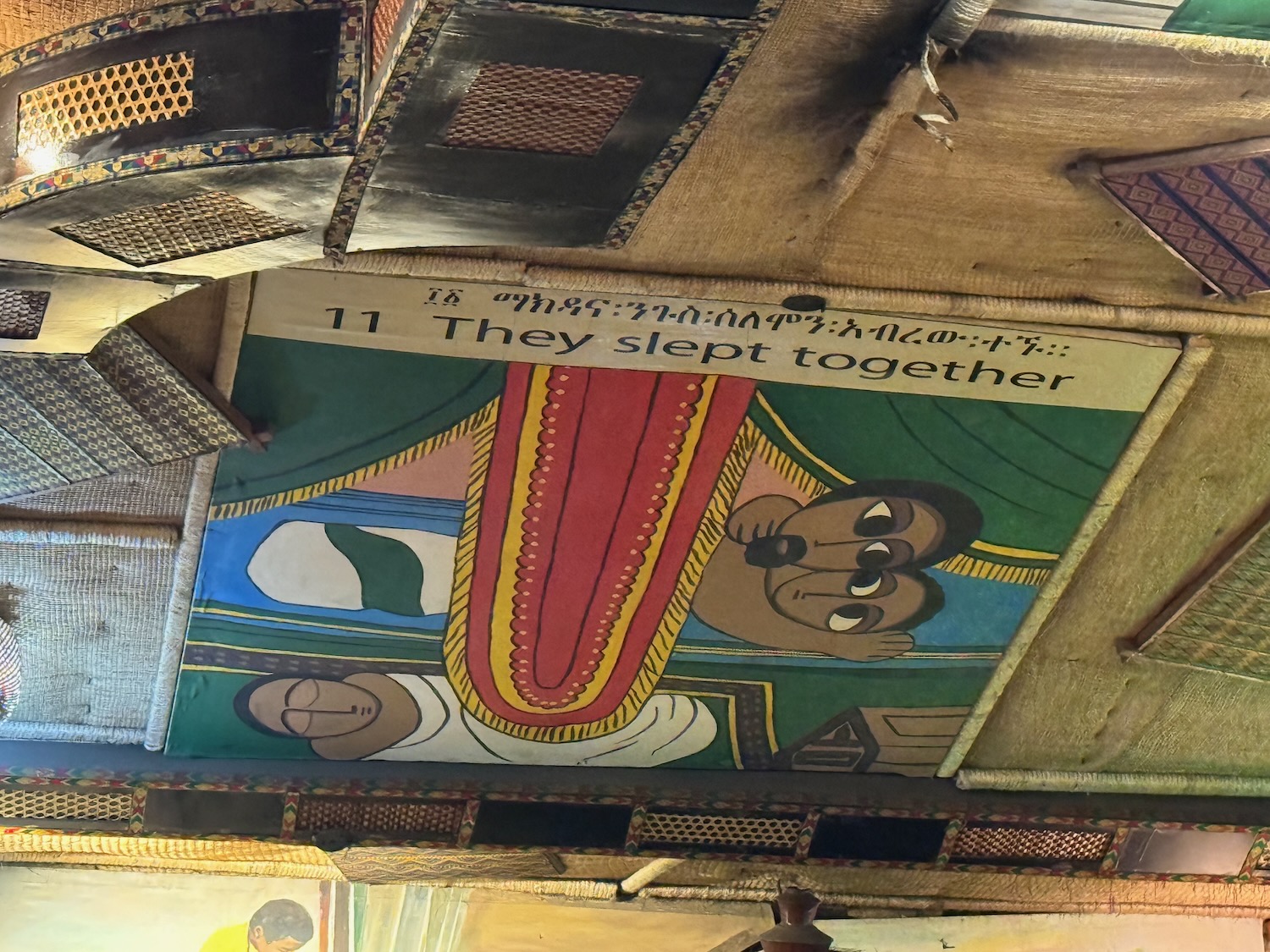
I had always understood the Queen of Sheba as a vaguely biblical figure, a ruler who visited King Solomon, exchanged gifts, asked riddles, and then faded back into legend. What I did not appreciate, and what Ethiopians know deeply, is that this story does not end in Jerusalem. It continues in Ethiopia.
According to Ethiopian tradition, preserved most famously in the Kebra Nagast, the Queen of Sheba, known locally as Makeda, returned home after her visit to Solomon carrying his child. That son, Menelik I, would later travel to Jerusalem, meet his father, and ultimately bring the Ark of the Covenant back to Ethiopia. From that moment onward, Ethiopia sees itself not as a peripheral civilization that brushed against biblical history, but as one of its central heirs.
This is not fringe folklore in Ethiopia. It is foundational. Ethiopian emperors, right up through Haile Selassie, traced their legitimacy to a Solomonic lineage. The idea that Ethiopia is a chosen nation, bound by covenant, is not metaphorical. It is a historical identity.
That explains something else I had long found puzzling: why Ethiopia has such a strong Jewish tradition despite being surrounded by predominantly Muslim and Christian neighbors. The Beta Israel community is not viewed as an imported or adopted faith, but as a continuation of an ancient inheritance. Even Ethiopian Christianity, with its Old Testament emphasis, dietary practices, and rituals, reflects this sense of continuity rather than conversion.
Sitting there, eating injera (and more goat) and watching what I had initially dismissed as a tourist performance, I realized how little I had understood. Ethiopia does not see itself as borrowing from Jewish history. It sees itself as part of it.
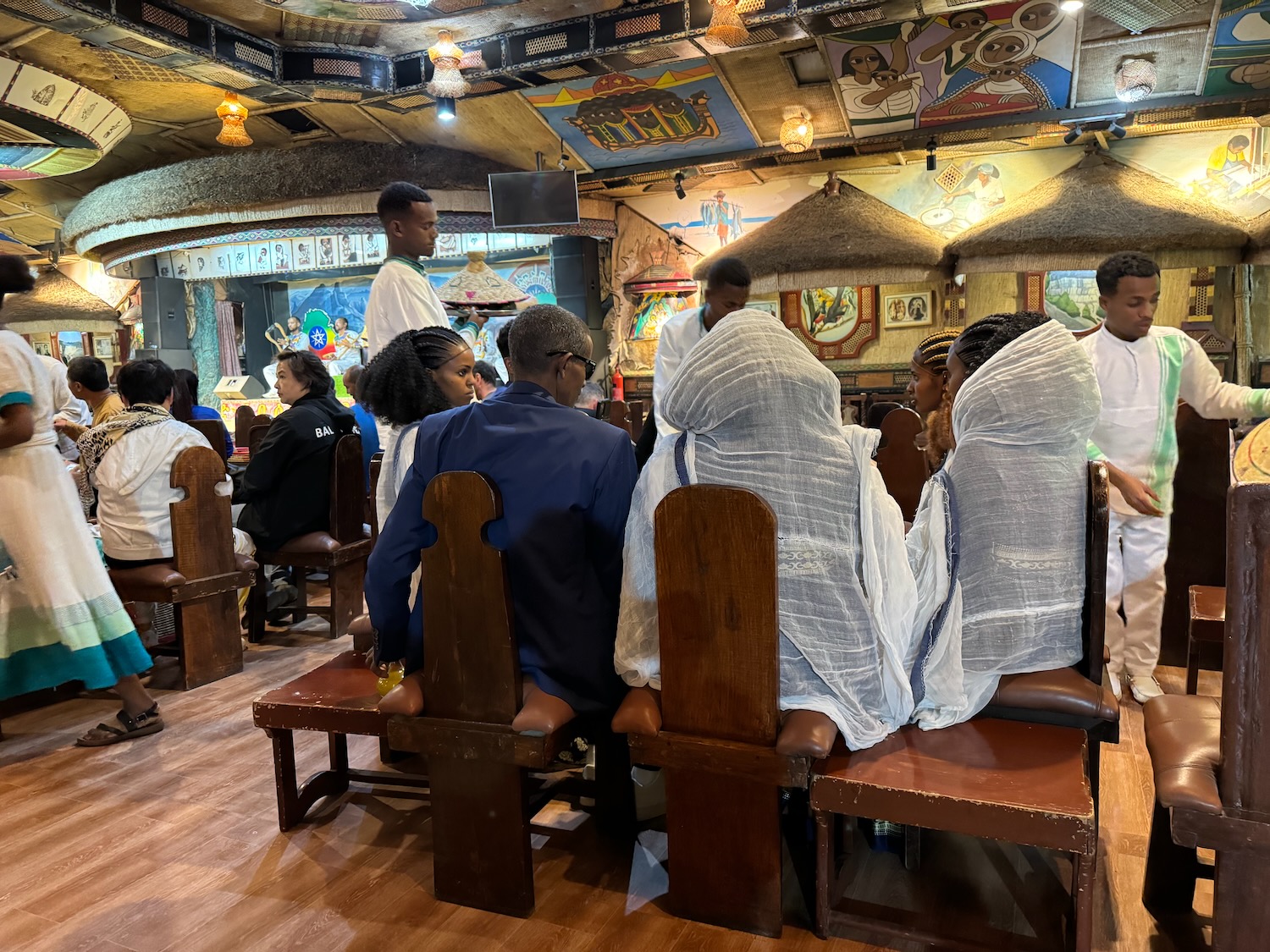
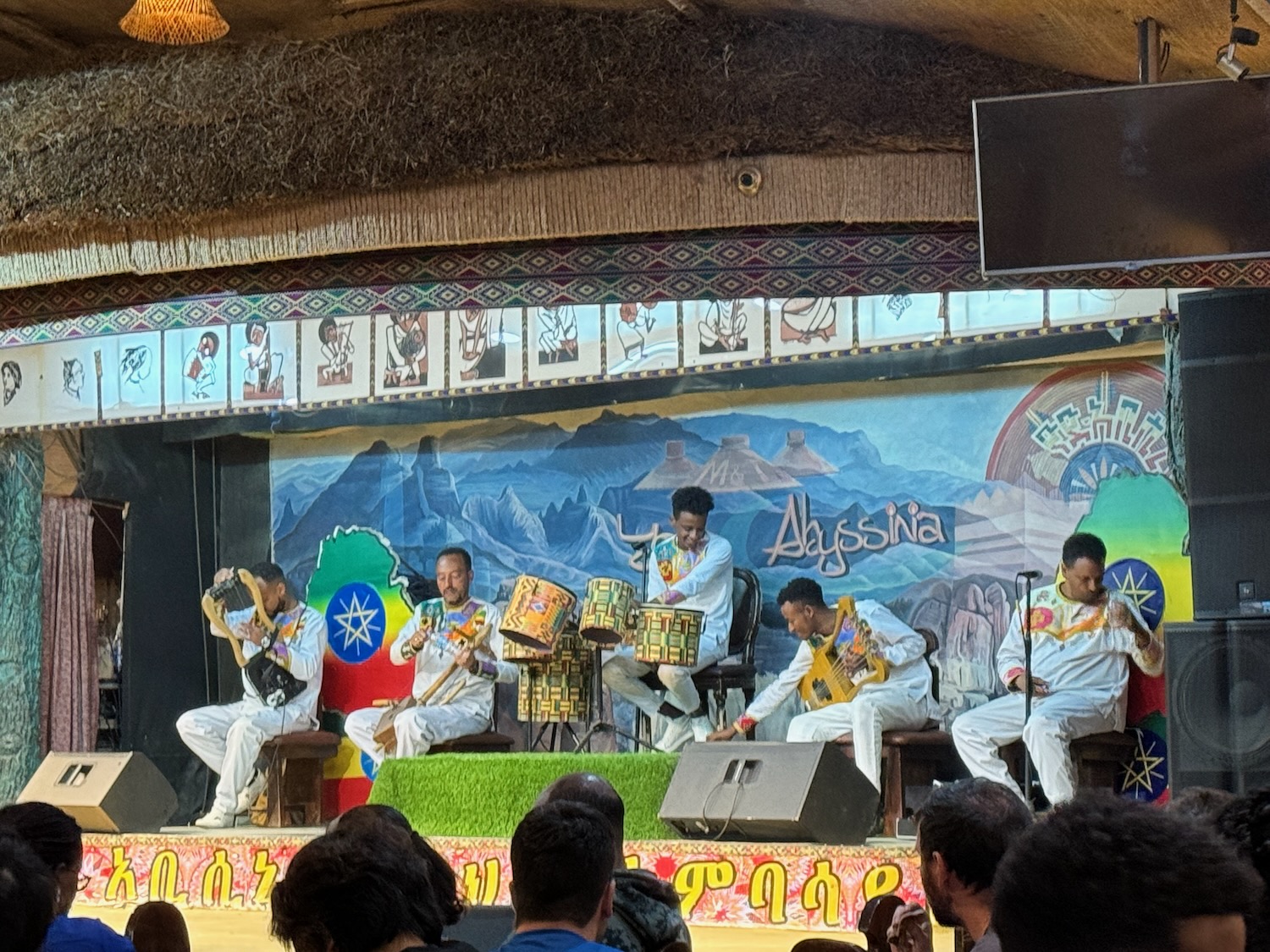
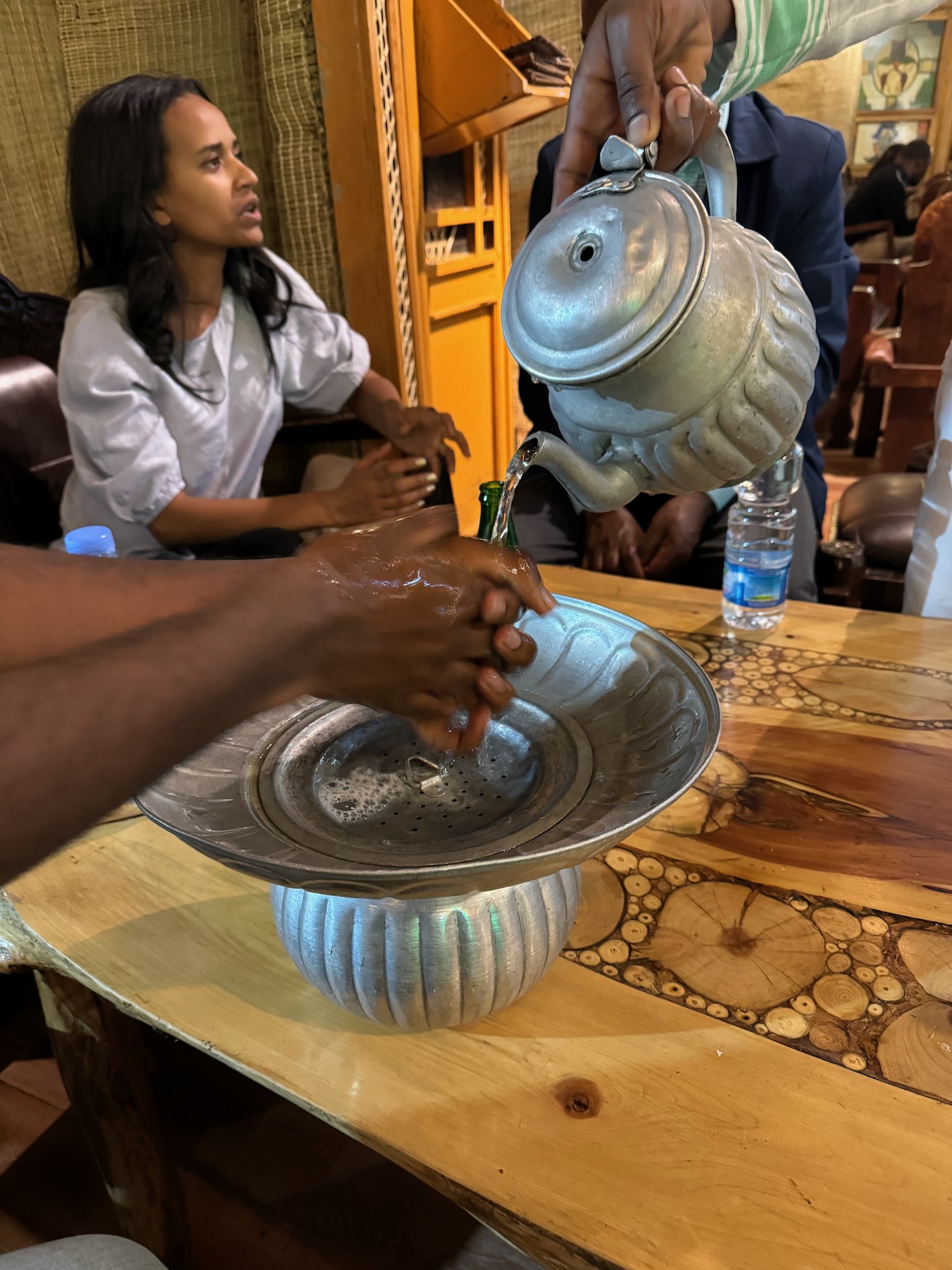
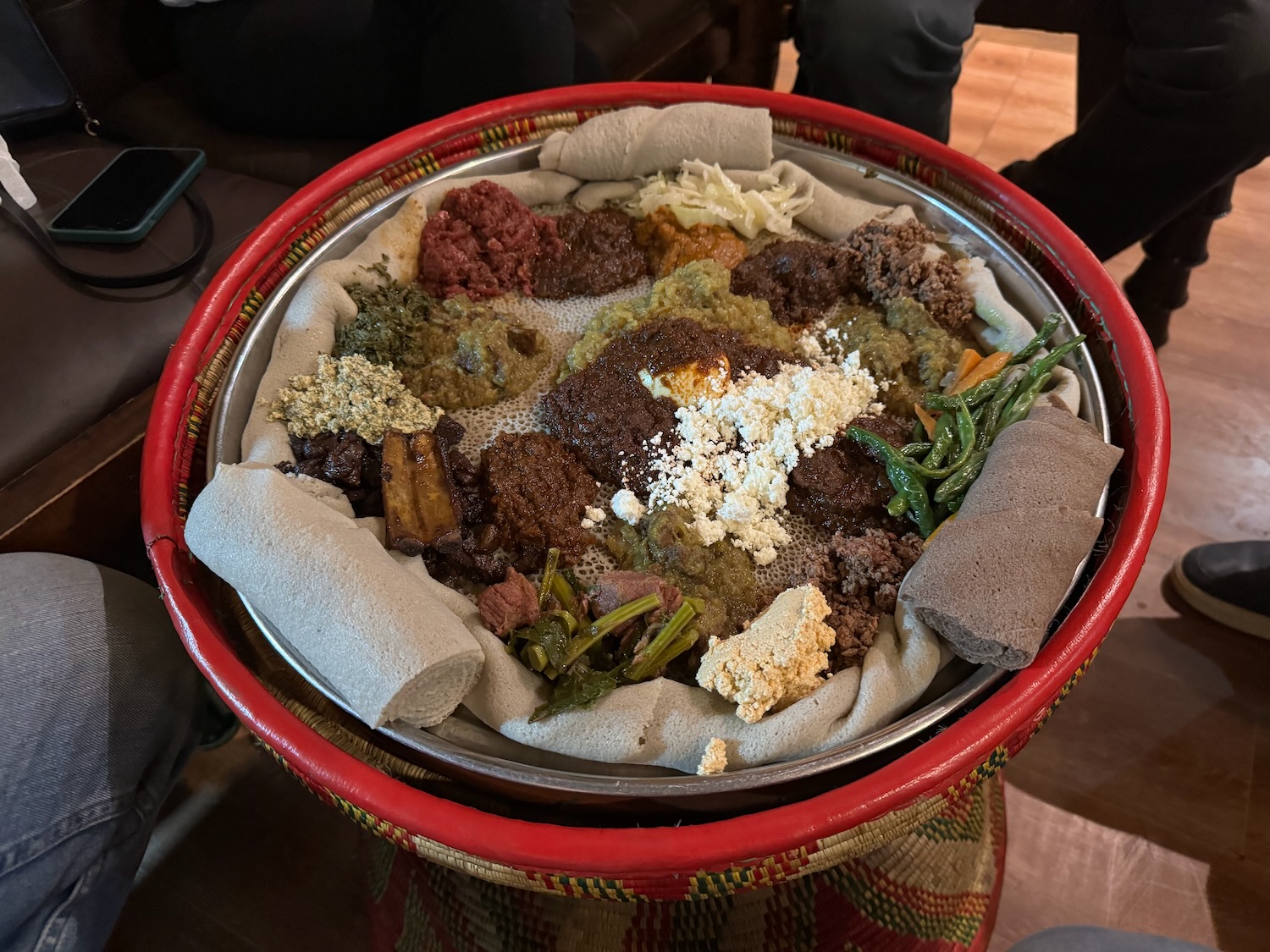
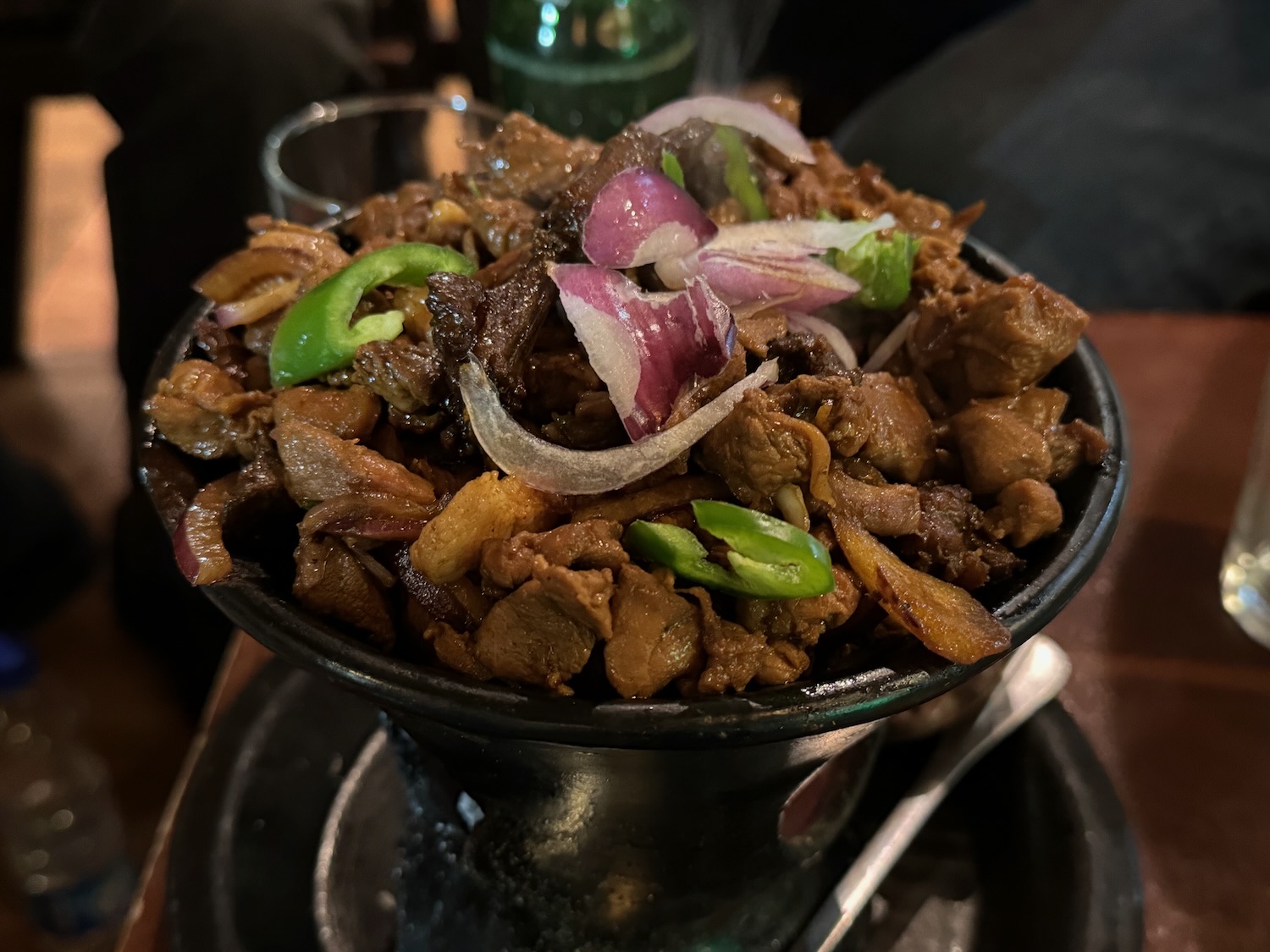


I consider myself generally well-versed in Abrahamic religious history, but this was all new for me.
That dinner reminded me why travel still matters. Not for the curated experiences or even the food, but for the moments when your assumptions quietly collapse. I walked in expecting kitsch and left with a deeper respect for a civilization that not only withstood colonialism in more recent history, but traces a royal lineage back to King Solomon.
Sometimes the most meaningful lessons come from the places you least expect to find them.






My Lutheran church has a Tingrinya language service every Sunday (an echo from Swedish Red Sea missionary efforts 100 years ago) – and its attendees are always generous with food – the photos made me salivate,
very yum yum
Thank you for that report. I didn’t know any of that history. Now I will research it. Can’t wait until I find a time to visit Ethiopia – I was already wanting to go, but really cool to learn about this.
Thank you so much. WOnderful blog you have. Is that ugale (spelling?)
Not Ugali…not sure they have that in Ethiopia.
More goat is always a good idea.
As for ‘emperors… trac(ing) their legitimacy’… gotta say, that’s not a system I wanna live under; like, ideally, we don’t have to use ancestry or mysticism to elect and maintain systems of governance; could it be competence, serving the people, etc.
All said, nice story, Matt.
Listen. Strange women lying in ponds distributing swords is no basis for a system of government. Supreme executive power derives from a mandate from the masses, not from some farcical aquatic ceremony. You can’t expect to wield supreme executive power just ’cause some watery tart threw a sword at you! I mean, if I went around saying I was an emperor just because some moistened bint had lobbed a scimitar at me, they’d put me away!
Ha. 10 points to Dan. But since we are on an aviation blog, what is the air-speed velocity of an unladen swallow?
The history of Ethiopian Jewry is a fascinating one for sure, from distant times through the more recent airlifts from Ethiopia to Israel. Thanks for writing about it.
matthew: its amazing to me that you, a religious man, didn’t know this. live and learn i suppose. myself, an avowed atheist learned all this on my last trip to Ethiopia. They (ethiopians) claim the Arc is located in a church in Axum, of course no foreigners are allowed to go see it.
Its an amazing country and i’ve always found the harmony between religions there to be reassuring.
They still claim to have the ark. It’s a shame they don’t get basic theology right (are they even saved?) and Matthew 7:23 comes to mind.
Very interesting. I always learn something from your blog.
Interesting I am not very well versed in Abrahamic religious histories but this is known to me and somehow i have founded out have more knowledge about the biblical history than regular christian believer. I blame Eich von Deniken who sparked the interest.