

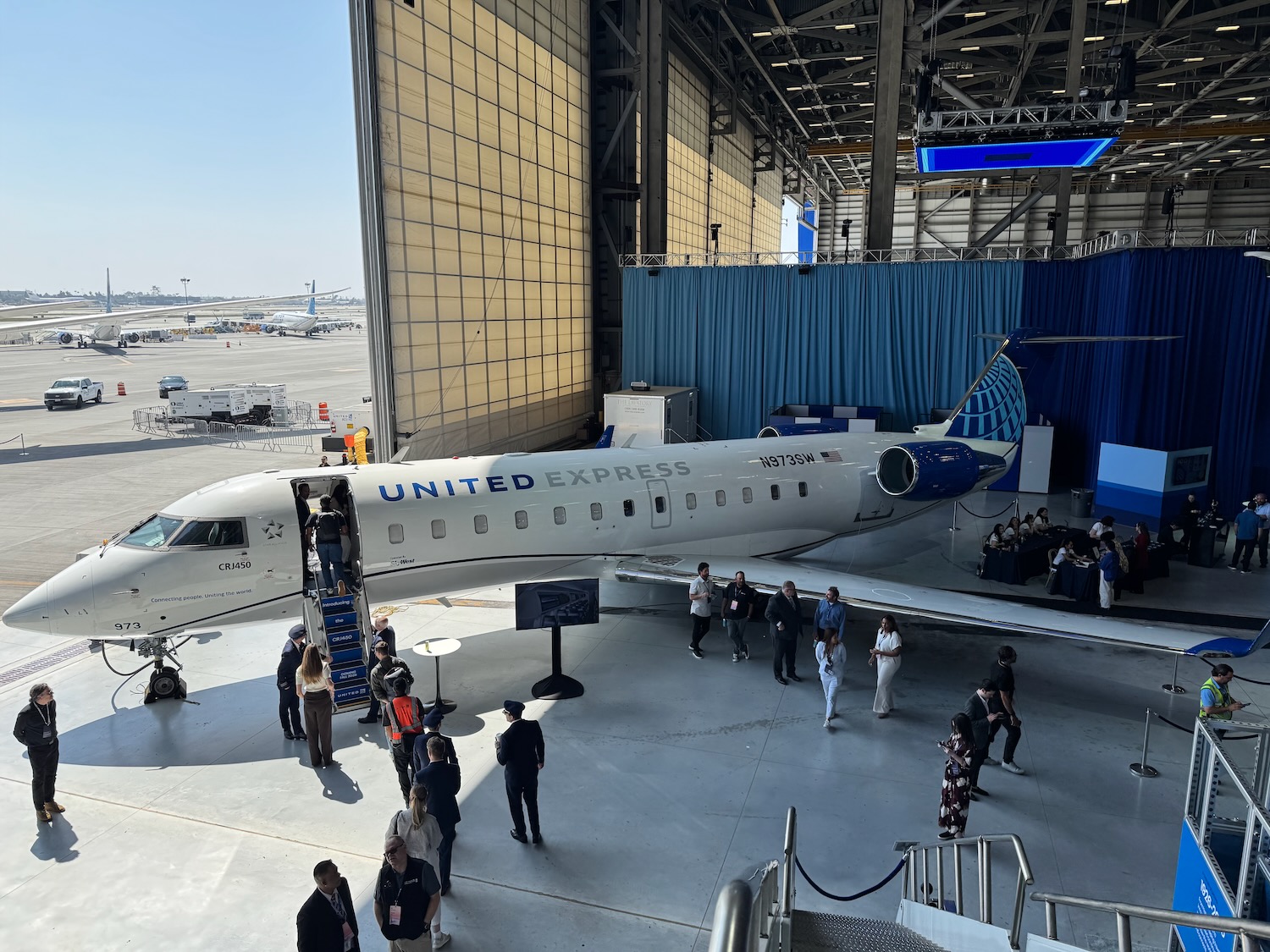
As part of United Airlines’ recent media event in Los Angeles, I had the chance to step onboard its new Bombardier CRJ450 and take a close look at every seat and detail. This is not a brand-new aircraft, but it represents a very throughful makeover of the regional flying experience on the most-loathed jet in the United Express fleet.
United Airlines CRJ450 Photo Tour: A Different Take On Regional Flying
The CRJ450 is a Bombardier CRJ200 rebranded and reconfigured with first class, Economy Plus (extra legroom economy), and economy class. With the addition of first class and extra-legroom economy, the aircraft will seat 41 instead of of 50 passengers.
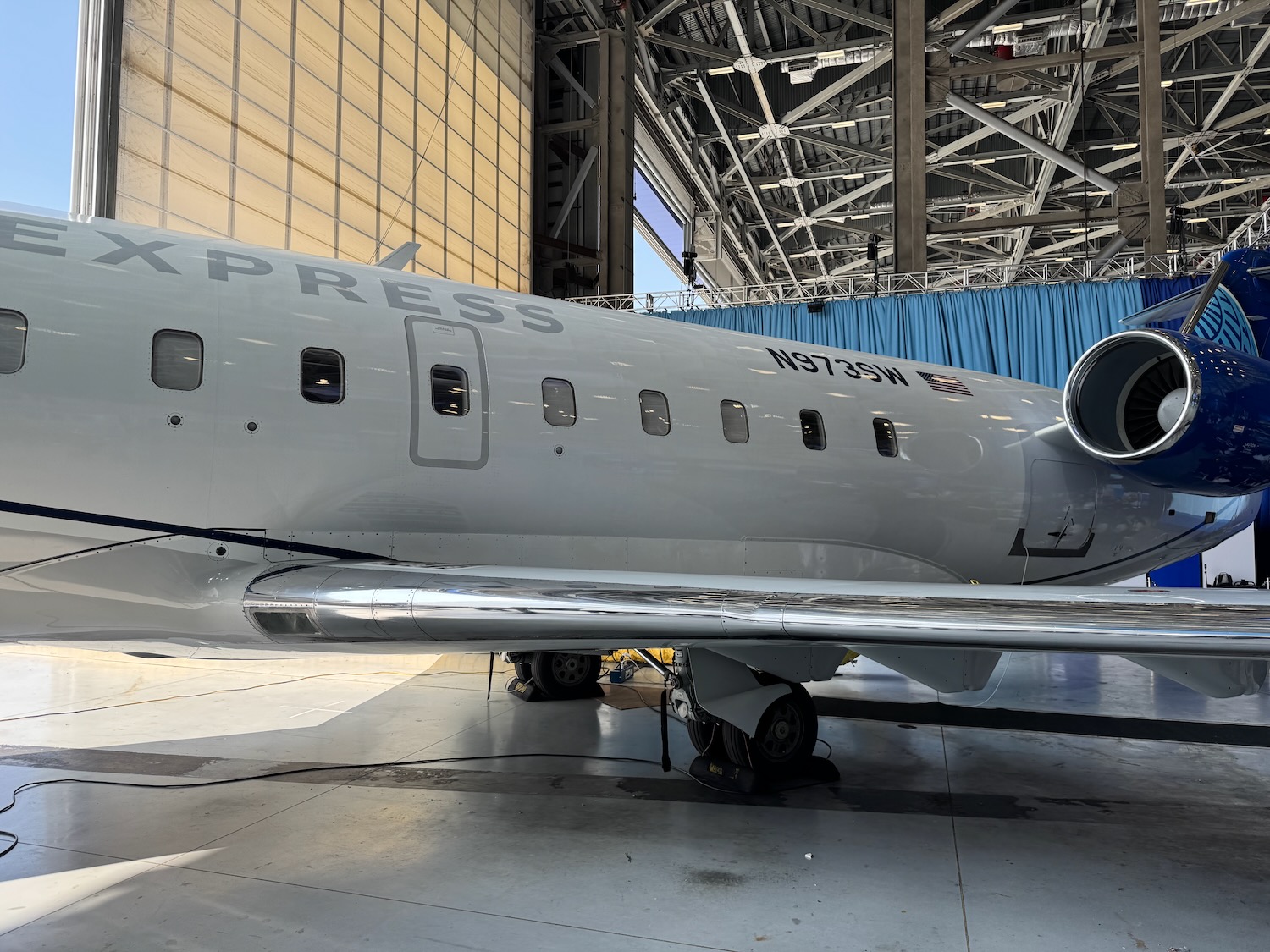

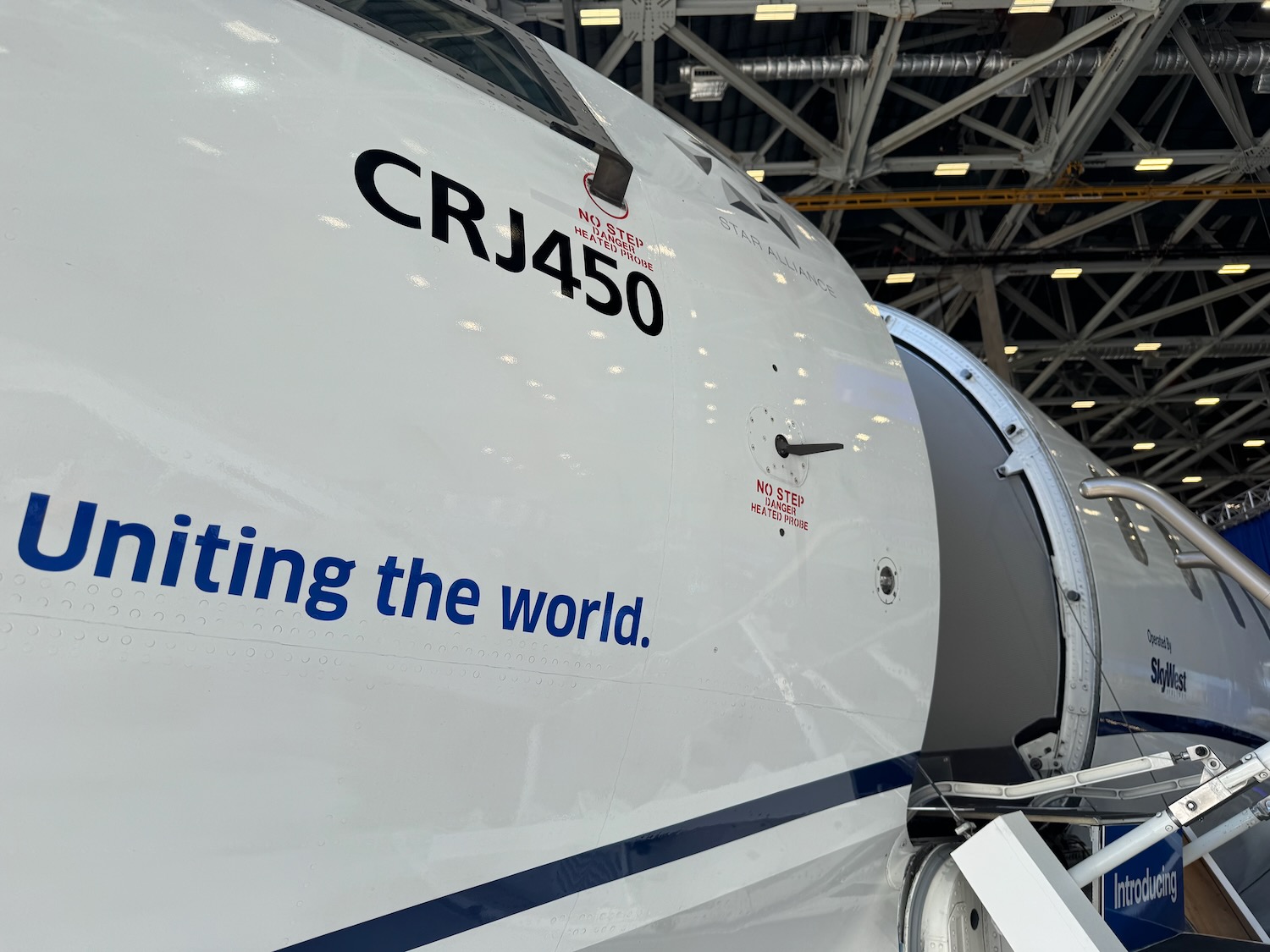
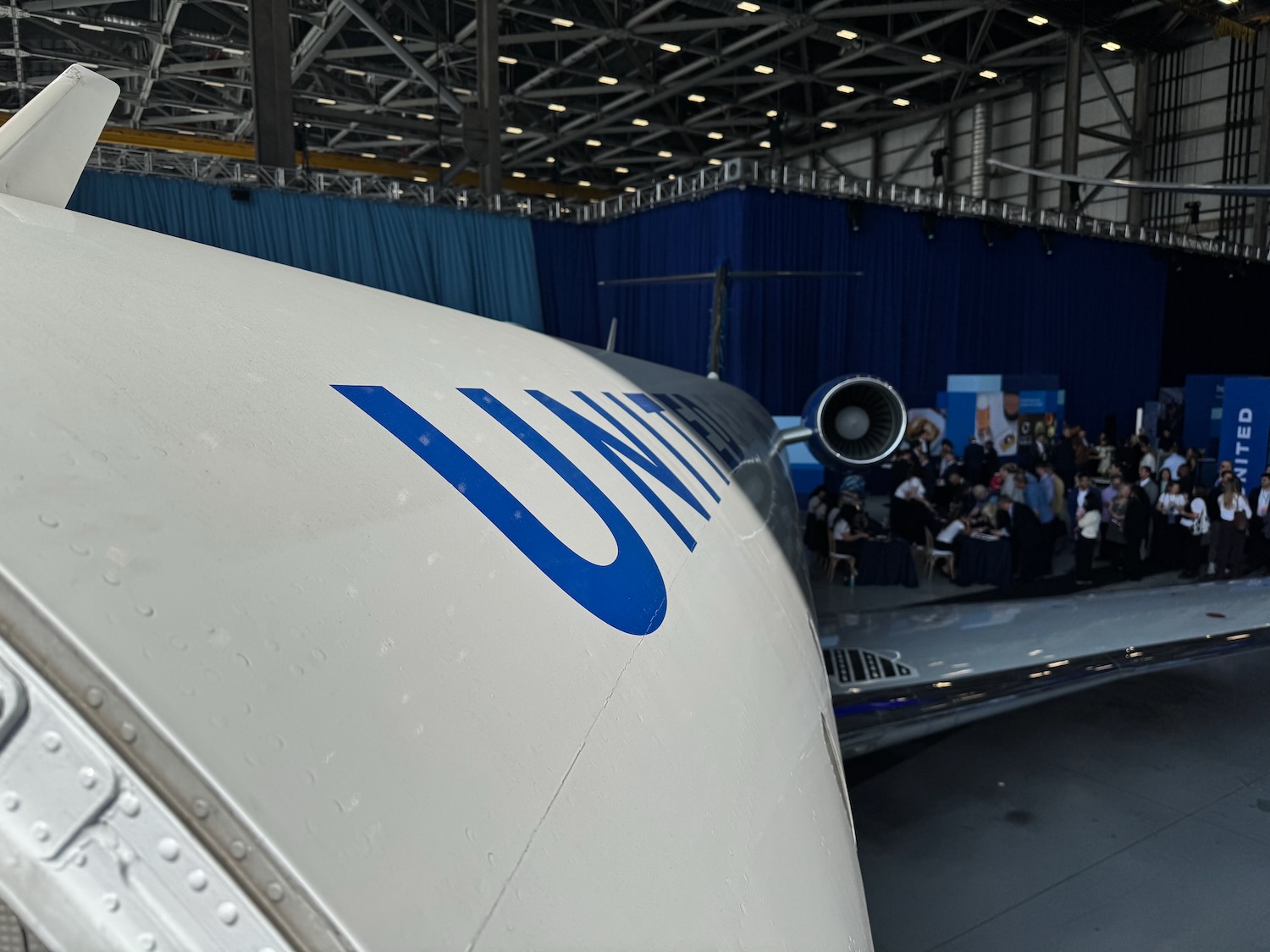

United says this aircraft is designed to offer a more premium experience on shorter routes, with fewer seats, more space, and a noticeably different onboard feel compared to traditional regional jets of that size. I had the opportunity to walk through the aircraft and see if it really does approximate the “private jet” experience (spoiler: it does not, but it still represents a big improvement over the “devil’s chariot” that preceded it).
First Class
The CRJ450 features a small 7-seat first class cabin in a 1-2 configuration. As you would expect on a regional jet, these are recliner seats that feel tighter than on the CRJ550, but there are no overhead bins giving the small first class a roomier feel and creating a natural partition even though there is no curtain separation the cabins.
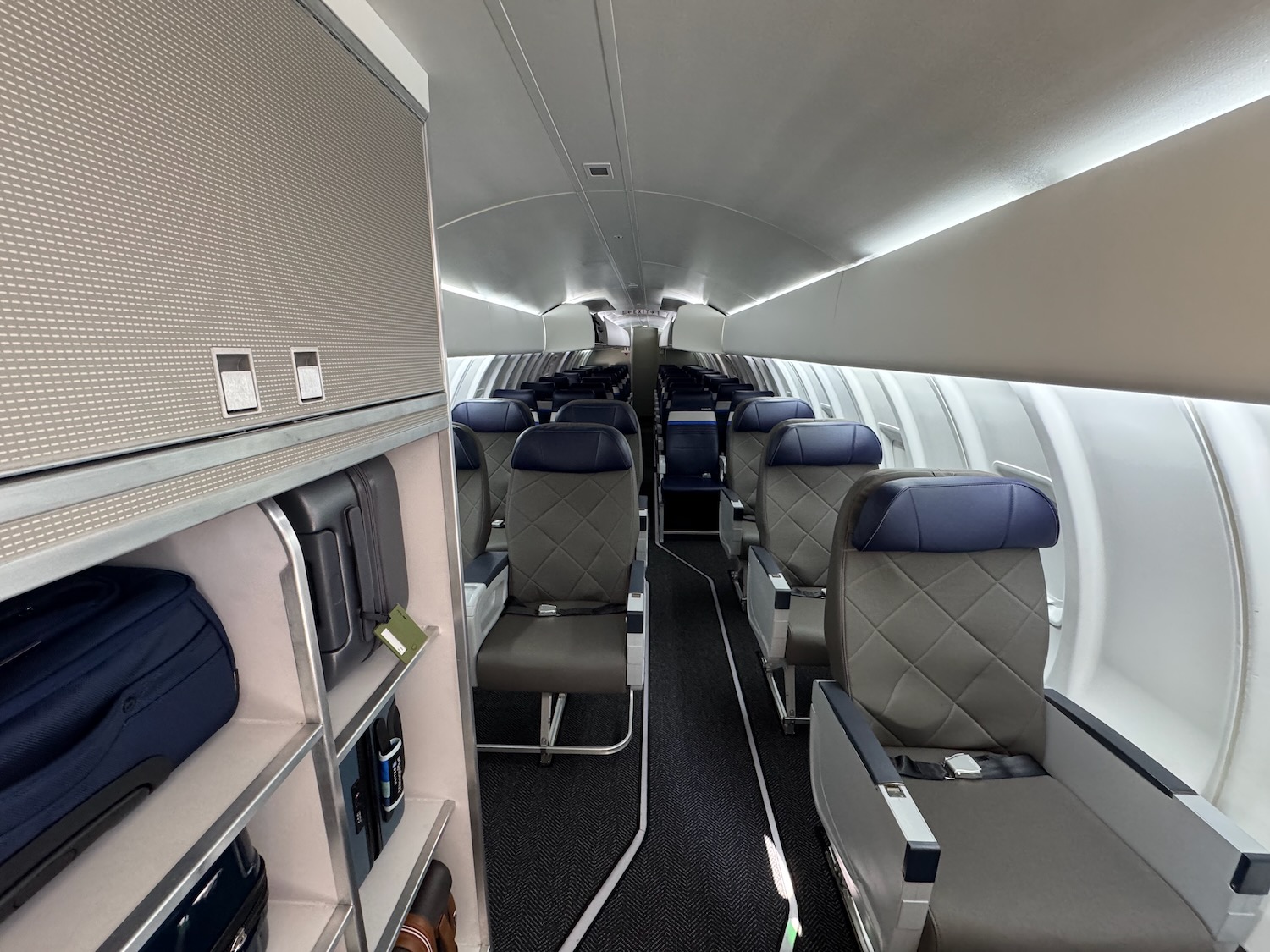

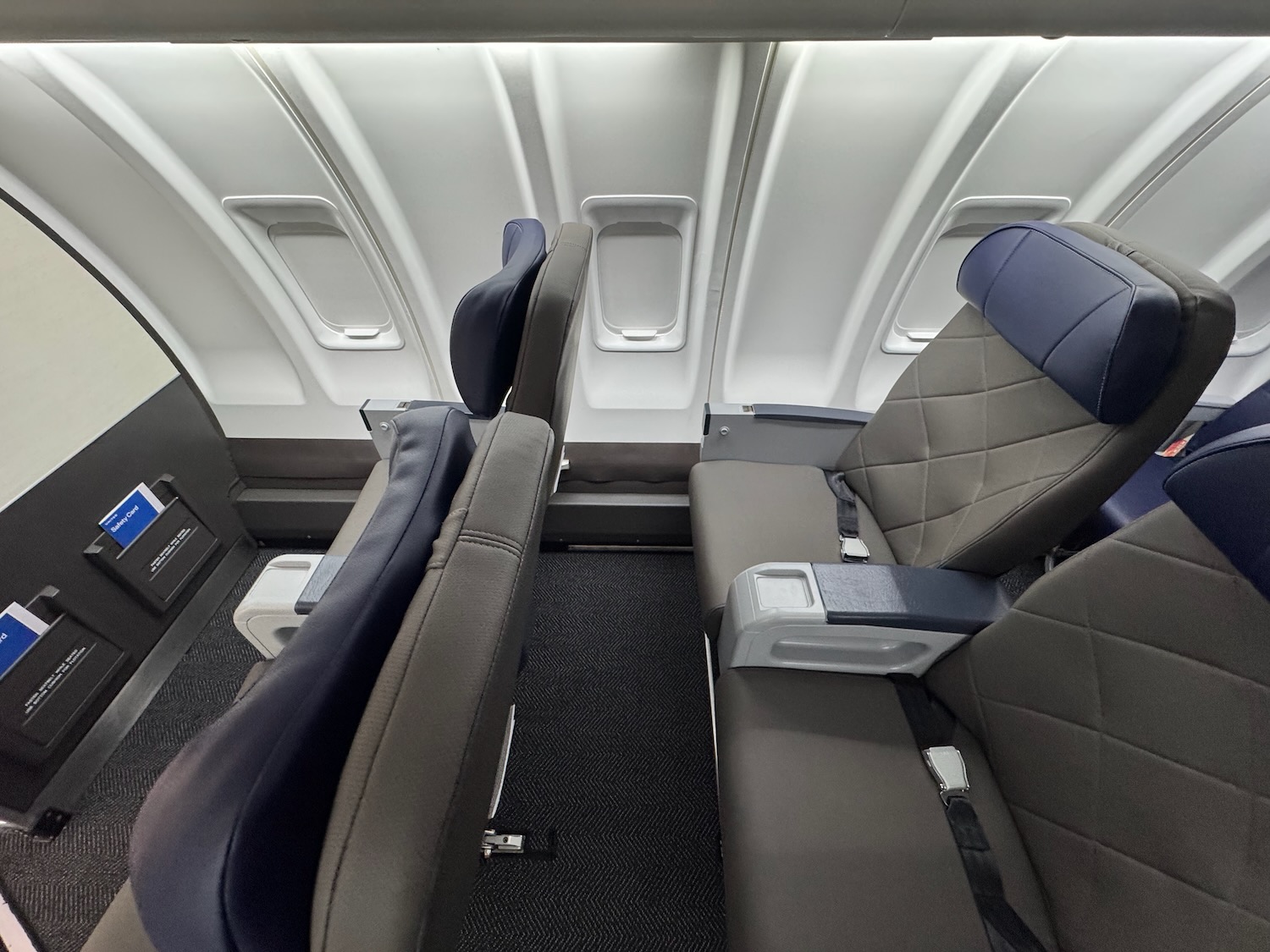
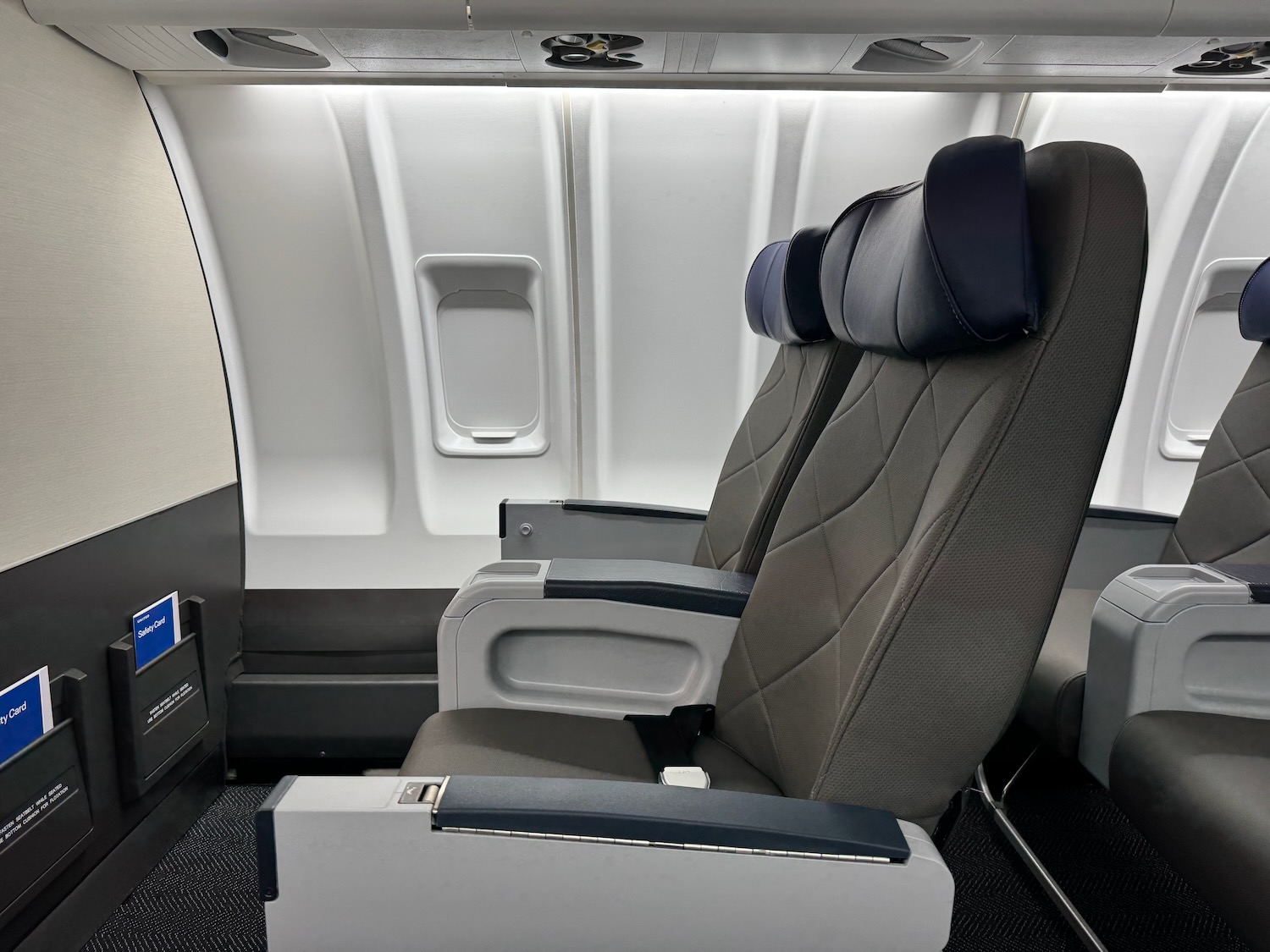
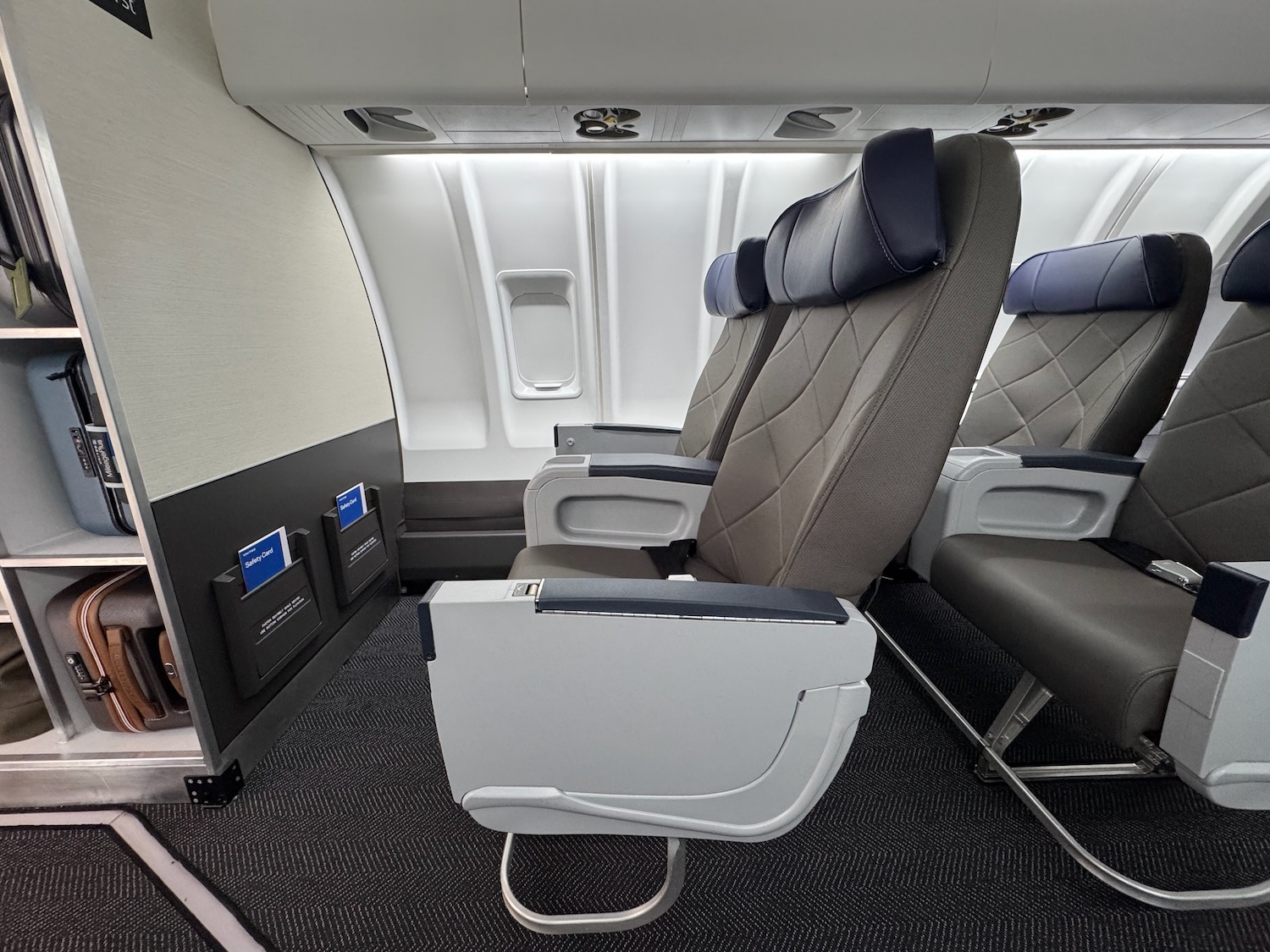

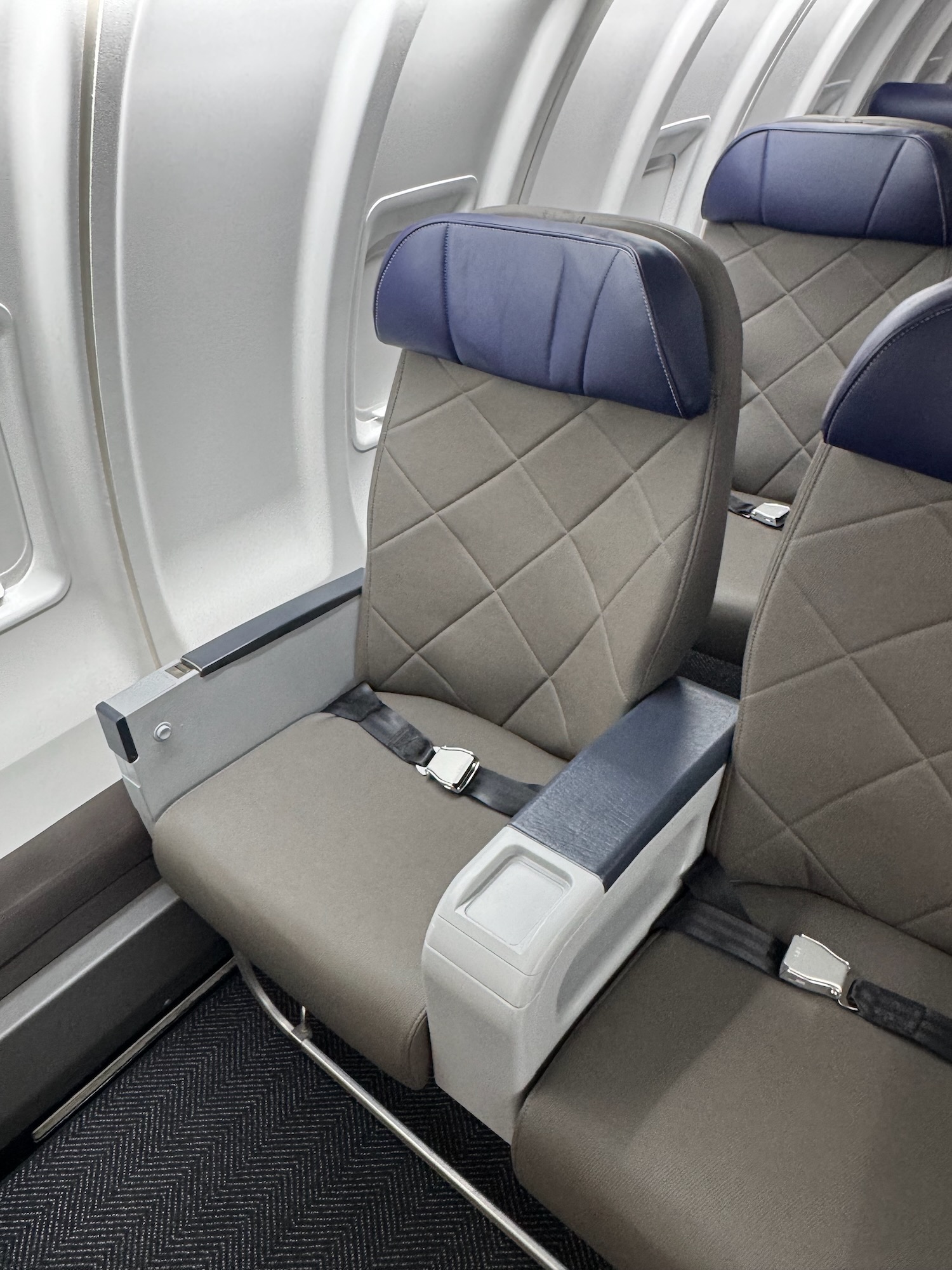
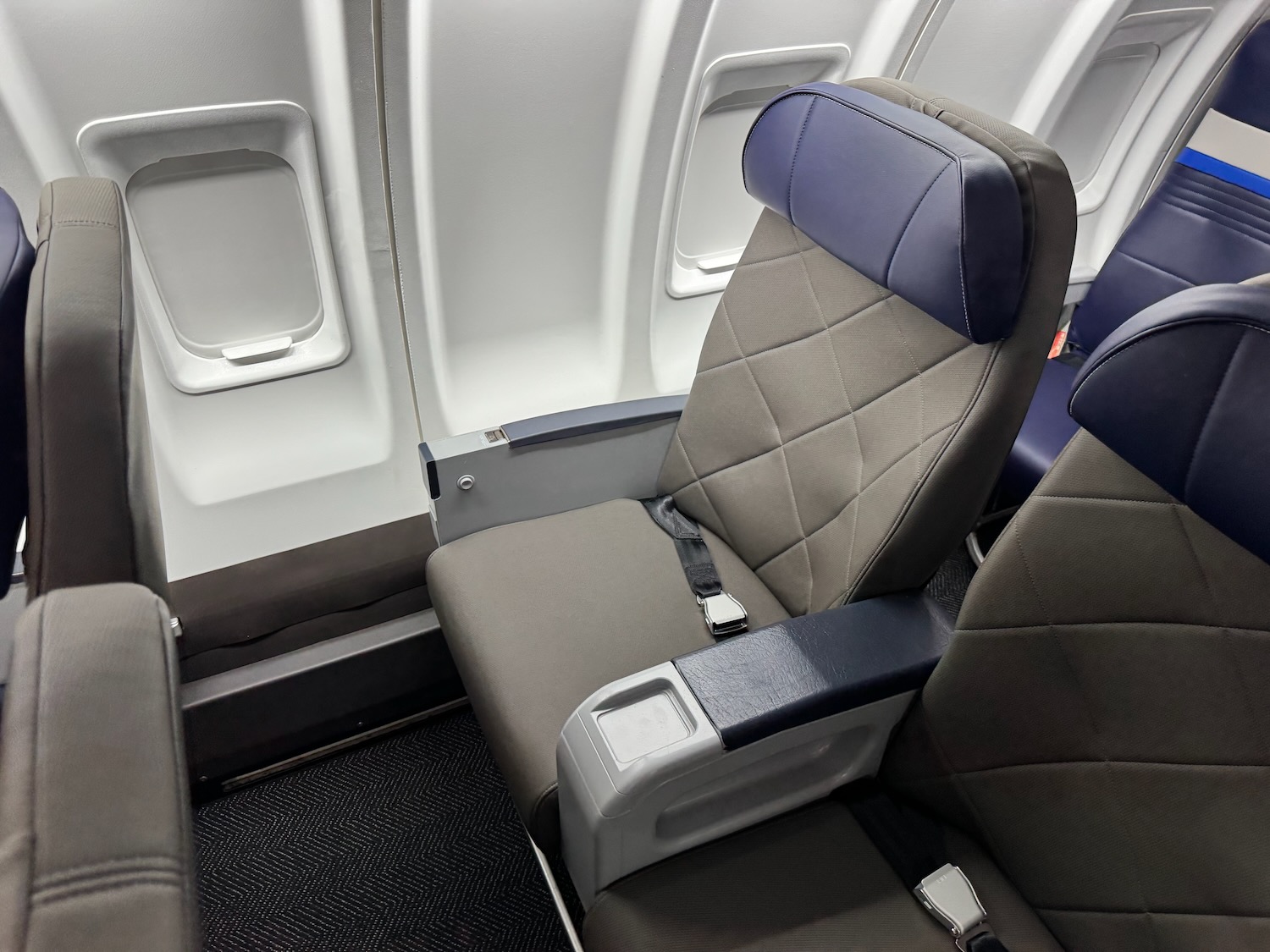
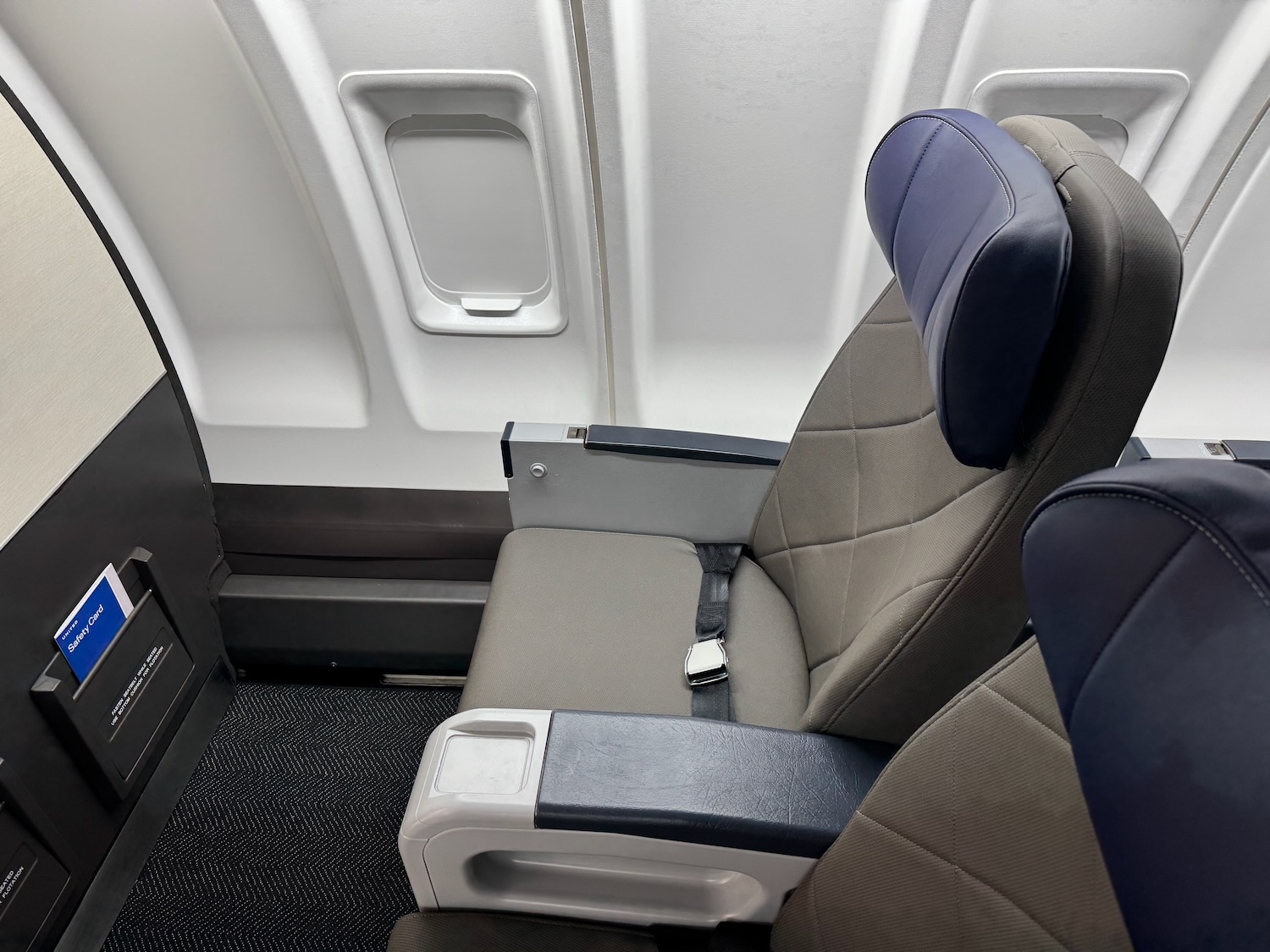
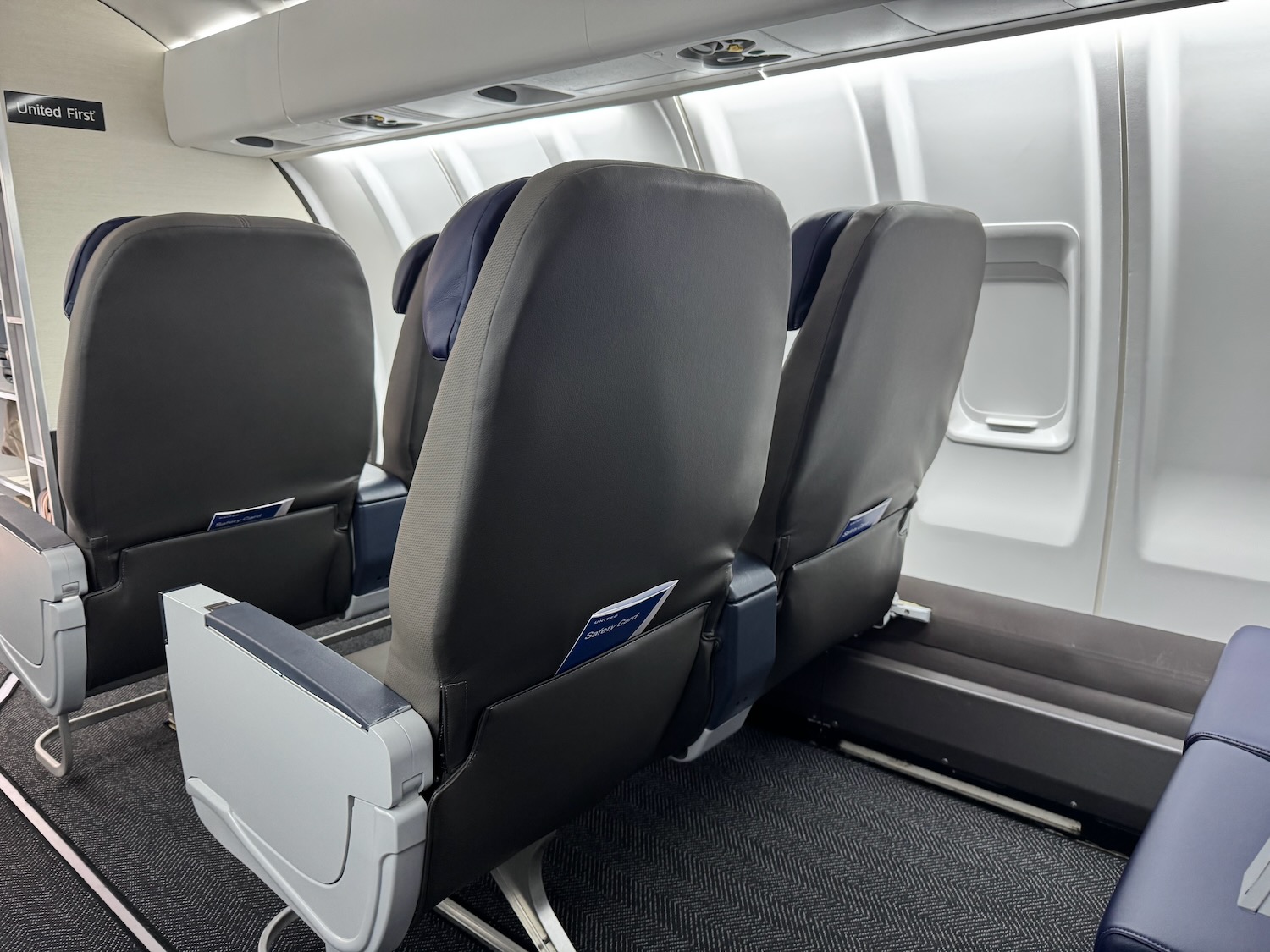
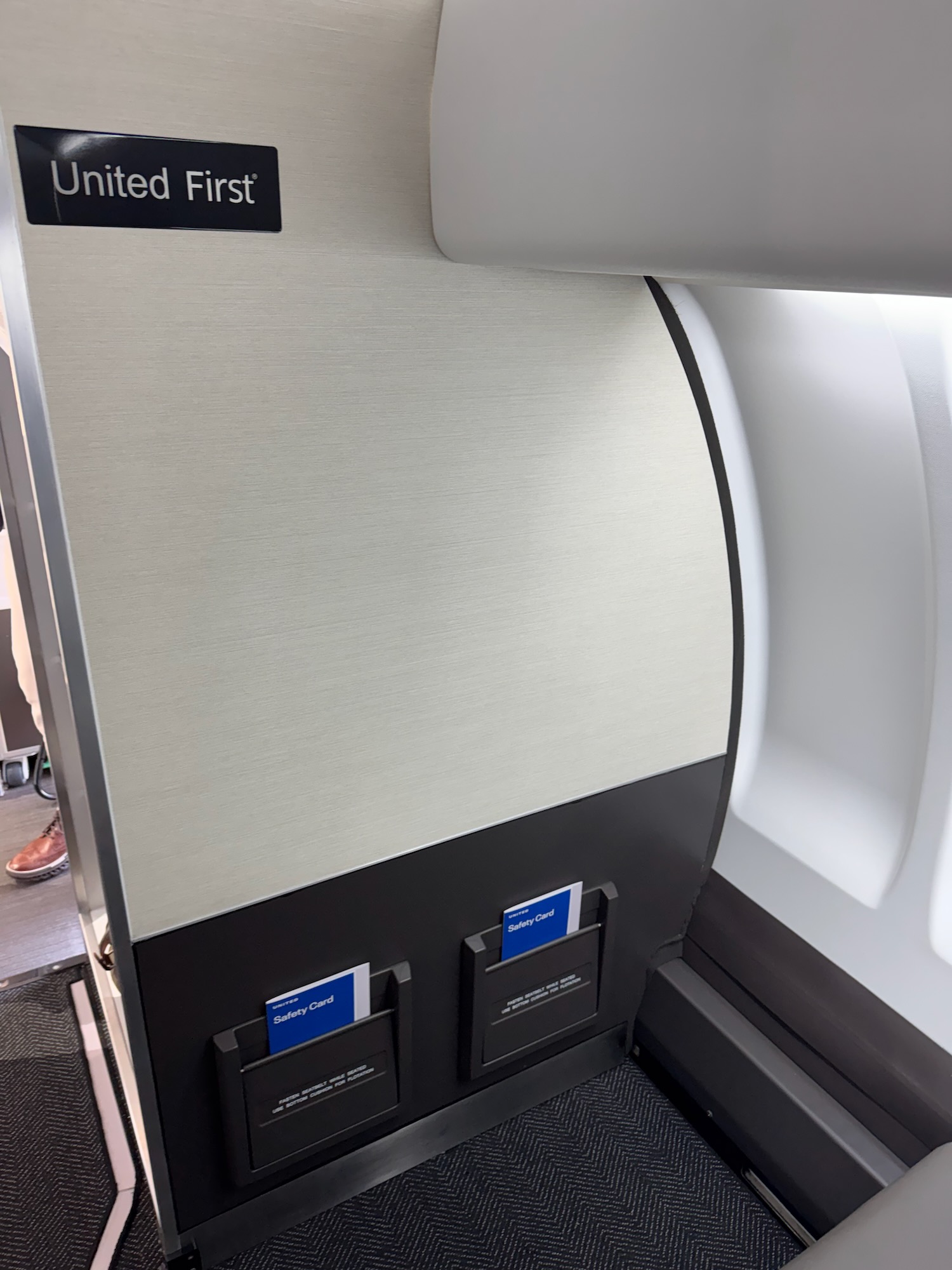
To accommodate carry-on bags, there is a cabinet in the front of the cabin (the reason there are seven seats instead of nine) that can accommodate seven larger carry-on bags.
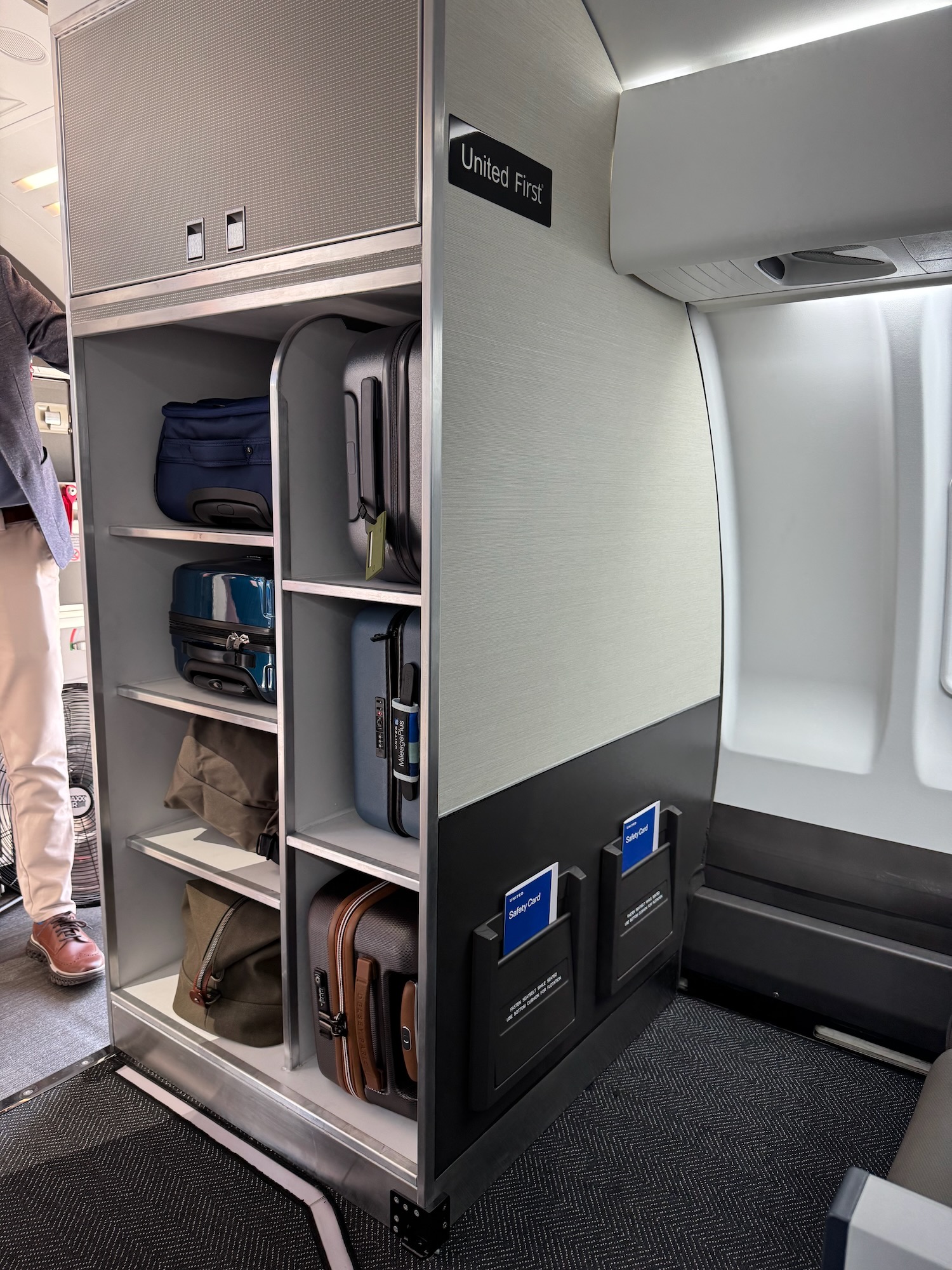
There is no seatback screen, but passengers can stream content via United’s onboard Wi-Fi system (Starlink is coming). There are no plugs (A/C or USB). Unlike the CRJ550, there is also no snack bar.
Economy Plus And Economy
Behind first class is a compact economy cabin, including 16 Economy Plus seats with additional legroom.

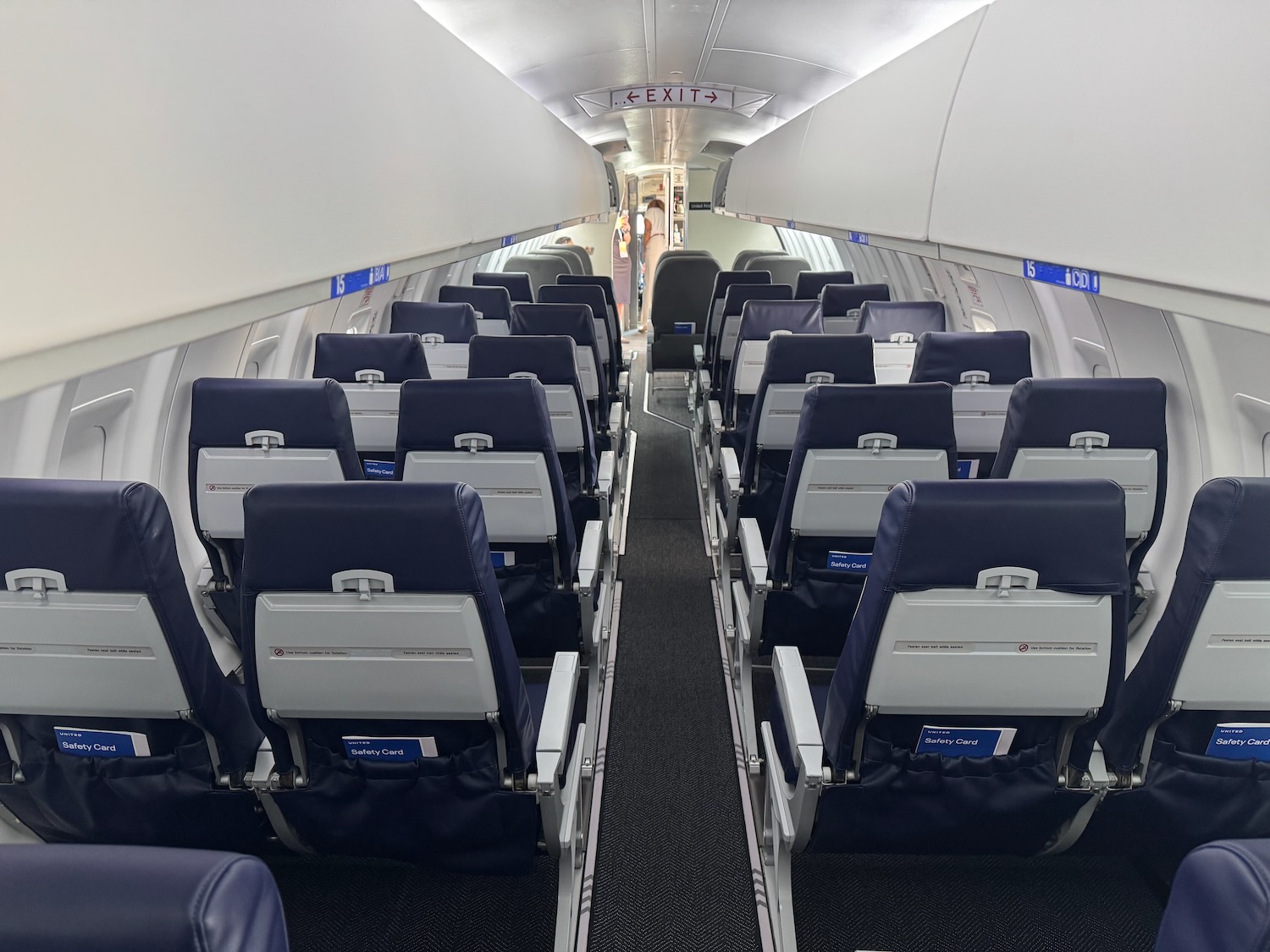
Unlike the first class cabin, the economy class cabin has overhead bins and these are largest than you currently see on the CRJ200, with United promises they will be able to accommodate larger carry-on bags (though not enough for every passengers to bring one…gate checking will still be a thing).
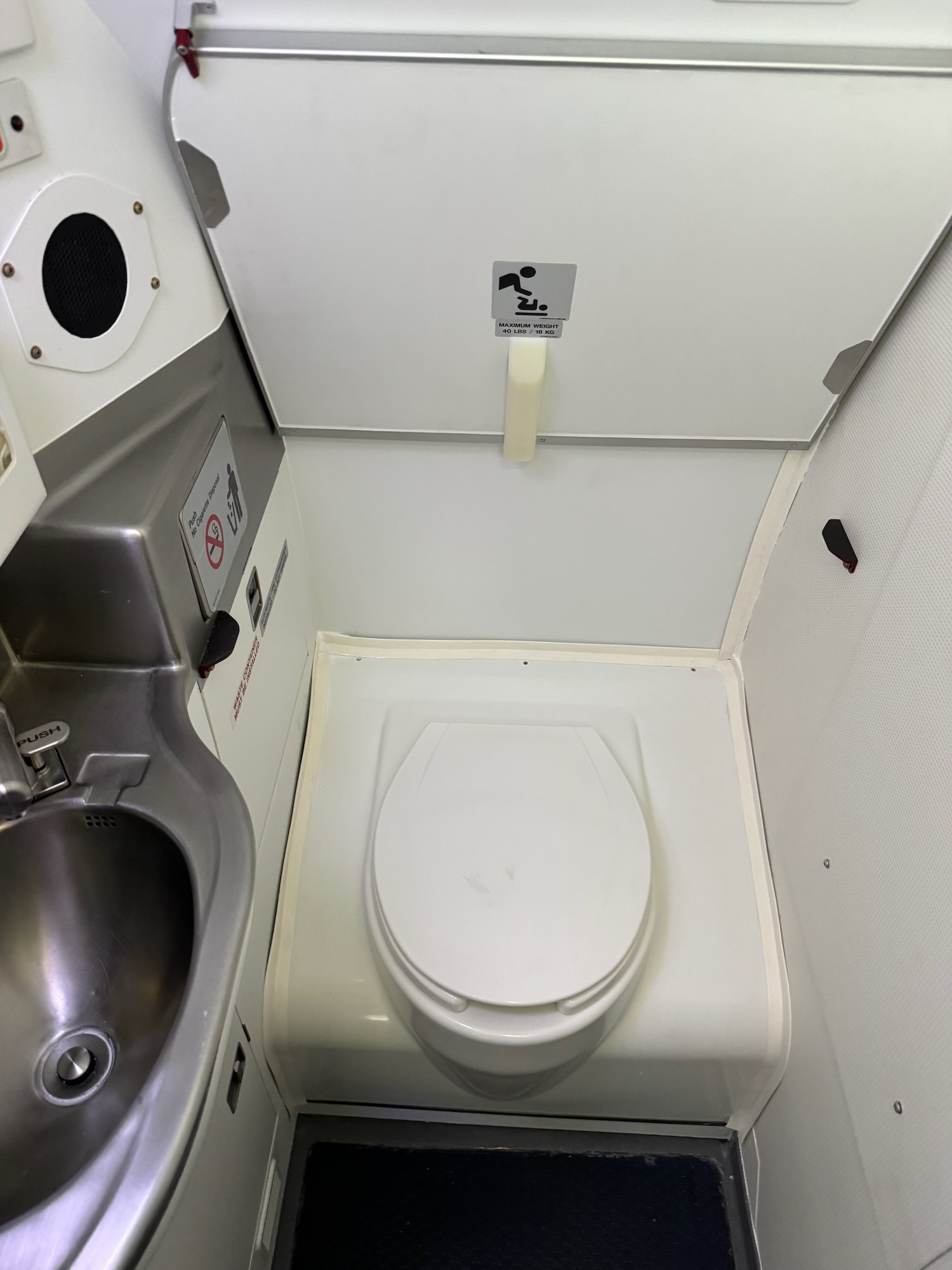
In the rear of the economy class cabin, you can find a lavatory that remains just as tiny as before.
A More Premium Regional Strategy
The CRJ450 is part of a broader shift at United toward premium-heavy configurations , even on shorter routes and smaller aircraft.
By reducing seat count and increasing the proportion of premium seating, United is betting that passengers will pay more for a better experience, even on regional flights. I think that assessment is correct, though I don’t expect this aircraft on longer routes (however, the range is long enough for flights of about three hours).
Once the retrofit is complete, the ERJ145 will be the last single-jet aircraft in the United Express fleet (at least that aircraft has 1-2 seating).
CONCLUSION
The CRJ450 is the latest chapter in United’s intentional move to offer a premium product across the fleet. United is clearly trying to elevate the regional experience by reducing density and leaning into premium seating. While passengers will certainly appreciate first class seating and Economy Plus, I think most of all the passengers (regardless of seat) will appreciate the Starlink high-speed internet onboard, which will help these short flights fly by quickly.






changing the seating config does not create a new lane type
United has thoroughly tested this concept with the CRJ-550s and they clearly love the results as they have continued to grow that fleet and will continue doing so. People fixate on hubs, but much of airline competition happens in spoke cities. This will allow United to feed its hubs from secondary cities and at off-peak times that larger RJs won’t be able to. The aircraft costs couldn’t be any lower as these aircraft were paid for long ago and Starlink will make this a home run.
United has definitely taken over as the leading industry innovator.
Am I the only one who thinks they should’ve kept overhead bins in F? The bulkhead pax are screwed, since they have nowhere to put their personal items. And it’d be even worse if they have mobility/medical devices… UA put so much effort to accommodate larger bags, but they forgot that people travel with a lot of baggage.
You are not alone. Totally agree.
My thoughts exactly.
I like the openness of the removed bins. I’d be on the 1 side of the 1-2 and not bulkhead. My only carryon fits under the seat in front. So, what me worry?
CRJ-550 was rather good on a short routing like ORD-ROC and this looks to be pretty similar. I’d probably take the -450 and -550 over a 737 at this rate for 1-2 hour hops.
Indigenously impressive… Another plus point for good UNITED!
Influential slogan → “Connecting people. Uniting the world.”
Meanwhile, an incident about a regional jet belonging to rival DL → https://www.youtube.com/watch?v=99RfMBpd8fk
What does this mean: the ERJ145 will be the last single-jet aircraft in the United Express fleet (at least that aircraft has 1-2 seating). ?
It should be noted that the ERJ-145 is currently the only 50-seat single-class regional jet operating for United Express, following United’s decision to consolidate this aircraft type with operator CommutAir. While other regional jets exist in the fleet, they are larger, multi-class aircraft, making the ERJ145 the sole 1-2 seating configuration jet remaining.
I was wondering the same thing. But after reading Güntürk’s reply to your comment, I think Matt meant to say “single-class aircraft”, not “single-jet aircraft”.
7 F seats, 7 slots in the front cabin, no oh space in F. So, where does the 7th F to board put their bag when the FAs use the cabinet (or some F pax uses 2).
They messed up removing the overhead.
UNITED RISING
I doubt very seriously if they would have moved forward w/ this project if they knew jet fuel costs would soar to over $4.50/gal which is where they are now.
There is no such thing as a NEO or MAX RJ in the US carrier fleet and smaller RJs have even worse economics, esp. since airline labor rates are far higher.
As much as some will hate hearing it, it is things like the CRJ450 and 550 that explain why UA will never reach DL’s levels of profitability.
and for those that don’t want to hear about profitability, then consider what airlines that make more money can do compared to airlines that make little or no money.
NK@DTW and B6@JFK and BOS are perfect examples of why profitability matters when you compete w/ someone that is more profitable.
Is it enough to get people to fly United out of a smaller airport than drive 90-120 minutes to a hub? Is it enough to get people to switch at airports not serviced by any mainline?
The flights themselves don’t have to be profitable if you can move credit card spend.
let us know how many cities UA uniquely serves or will uniquely serve with CRJ450s and 550s.
It is precious few that don’t have service on AA and/or DL.
DL serves more cities with mainline aircraft than any other US airline. DL simply does not chase traffic to the point that they will add small regional jets.
UA is adding 41 and 50 seat two cabin regional jets because UA including under Scott Kirby refuse/d to add a small mainline aircraft so UA was unable to add dozens of large RJs that DL was able to add. Between the small mainline aircraft – the 717 and A220-100 – and the extra large RJs, DL has no remaining 50 seat regional jets.
AA has far more large regional jets and those have far better economics than UA’s 450s or 550s.
UA has convinced itself that it has to serve routes and does not have the tools via a small mainline or more large RJs so is buying that traffic at very likely money losing costs.
again, like it or not, but the CRJ450s and 550s are some of the exact reasons why UA’s profitability will never match DL’s.
And as DL increasingly decides to grow into UA strength markets such as LAX-ORD and LAX-HKG, it will be clear why profitability matters.
When I was at OO it was said it only took 8 ppl to breakeven on a CRJ-200.
absolutely depends on how that aircraft is used.
If it is carrying connecting traffic to/from a hub, the portion of the revenue that goes to that flight is a fraction of the total revenue for that trip.
If it is full fare traffic that is solely originating and terminating on the CRJ200 flight, then, yes, it is possible that the economics could work as you describe.
Not sure when you were at OO, but the cost of labor at regional carriers has soared post covid and it is not coming down anytime soon.
Small RJs simply are not economical both from a labor and fuel standpoint.
It is mind-numbing that some believe UA that it makes sense to upgauge mainline aircraft – which UA is doing in line with what the rest of the industry is doing because it does make sense – but then downgauge RJs in the name of getting premium customers, which no one else in the industry is doing.
The sooner some people accept that UA is buying market share using very inefficient aircraft via their 450 and 550 strategy that does negatively impact their bottom line, the sooner we can move onto the next topic.
I’d probably like it better than the 900s I get on DL to DTW. But, I may never fly UA again since they cut my rewards mileage by 40% (I will not pay a fee for their credit card. I will not move $10,000 in spending to the fee-free card.)
I hate the E-145 even more.