
The US and Venezuela have restored full diplomatic ties for the first time since 2019. Flights are back. But the State Department still says don’t go.

The US And Venezuela Are Officially Talking Again
For the better part of a decade, US-Venezuela relations have been frosty at best if not downright confrontational. Venezuela has been a country that most Americans knew only through headlines about economic collapse, political turmoil, and millions of refugees fleeing to neighboring countries. Direct flights stopped in 2019. The embassy closed. Travel advisories hit Level 4. Venezuela was, for all practical purposes, off limits. I have wanted to visit for nearly a decade but haven’t for obvious precautions.
On January 3, 2026, the US military captured (then) Venezuelan President Nicolas Maduro in a nighttime operation and flew him to New York to face narco-terrorism and drug trafficking charges. He’d ruled Venezuela since 2013. Almost overnight, the conversation shifted from whether anything would ever change in Venezuela to how fast it already was.
This week, even more normalization returned. On March 5, 2026 the State Department announced the formal process would begin of establishing diplomatic and consular relations between the United States and Venezuela. Embassies on both sides are reopening. Consular services are resuming. This is the first full normalization between the two countries since 2019, and it happened just two months after Maduro’s capture.
It is moving fast because there is a lot of mutual interest in making it work. The US wants access to Venezuelan oil, critical minerals, and gold. Venezuela’s government under acting President Delcy Rodriguez (Maduro’s former vice president) wants legitimacy, economic relief, and an offramp from further US military pressure. The oil embargo has been lifted and American companies are already being courted to invest in Venezuela’s battered energy infrastructure.
Maria Corina Machado, the opposition leader who won the 2025 Nobel Peace Prize, has said she will now return to Venezuela and that elections will be held, though no timetable has been set. President Trump has expressed skepticism about Machado’s ability to lead but is scheduled to meet with her at the White House. So the diplomatic reset is real, but the political endgame is very much still being written.
Flights Are Back, But The Fine Print Matters
For those of us in the travel world, the reopening of the US Embassy in Caracas is significant in ways that go beyond diplomacy. For seven years there were zero consular services available to US citizens in Venezuela. If something went wrong, you were on your own. That is changing now, and it removes one of the biggest practical barriers to travel. For the diaspora, the lack of corresponding diplomatic channels is also an issue.
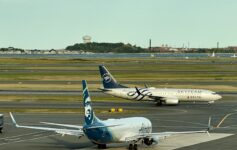
The flight picture is moving just as quickly. On March 4, the DOT approved American Airlines’ application to resume nonstop service from Miami to both Caracas and Maracaibo. American became the first US carrier to fly to Venezuela since 2019, with the inaugural flight departing Miami in just a few days on March 15. (while this was initially reported, these flights do not yet appear on sale according to Google Flights or American Airlines. The carrier has not updated for when it intends routes to start if not on March 15th. HT: Duane.) The routes are being operated by Envoy under the American Eagle brand on Embraer 175s. On the Venezuelan side, Laser Airlines has filed for a US foreign air carrier permit seeking twice-daily Caracas to Miami service. As of writing, this author couldn’t find any credible approval or denial of such permissions. For what it’s worth, I would imagine it would go a long way for bilateral diplomacy efforts to grant those rights to Laser 1:1 with the American route approvals.
Caracas is roughly a three-hour flight from South Florida, not much more from Atlanta, and just over five hours from New York, Washington DC, and a pinch less from Charlotte. When regular service scales up, flights serving the millions of Venezuelans displaced in the US will fill.
But here is where I pump the brakes. The State Department’s Level 4 “Do Not Travel” advisory remains in effect. The risks cited are not abstract: wrongful detention without consular access, kidnapping, arbitrary enforcement of local laws, and poor health infrastructure. Security forces have detained US citizens for up to five years without due process. The Chavista security apparatus, including the military, intelligence services, and police, remains largely intact under Rodriguez.
Then again, I also suspect that the State Department will be encouraged by developments in the country and if nothing more than a show of good faith, the threat level gets lowered. It’s not as though cruise ships will start adding the country to itineraries any time soon and casual tourists won’t start inquiring without attractions and accommodations that look enticing and make them feel safe.
So the embassy is open and the flights are running, but the government that just restored those services has not yet told Americans it is safe to go. That tension is worth sitting with before you start browsing fares.
The US proposes a phased process that creates conditions for a peaceful transition. It intends to assist with joint efforts to a democratically elected government in the country.
Venezuelans Wanted Change, But The Manner Remains An Issue
The data on Venezuelan public opinion tells a more nuanced story than either side of the debate tends to acknowledge. A survey from January found that 55% of Venezuelans inside the country supported Maduro’s arrest and 83% described themselves as optimistic about the future. Of approximately eight million Venezuelans who fled under Maduro, 64% supported military intervention outright. If elections were held today, Machado’s opposition coalition would defeat Rodriguez’s Chavistas 67% to 25% according to some polls. That’s a far cry of support for Interim President Rodriguez.
By almost any measure, Maduro had lost the support of his people long before his apprehension. But the method of removal remains an issue. Only 34% of Venezuelans inside Venezuela supported a US military operation as the mechanism for that removal. That is a significant gap between wanting the man gone and wanting a foreign power to be the one to do it. In the US, opinion was almost perfectly split: 33% approved, 34% disapproved, and 32% were unsure. Mexico, Colombia, and Brazil all formally condemned the intervention.
The relative calm on the streets of Caracas is real, but it does not tell the whole story. In the days following the operation, the Rodriguez government declared a state of emergency and arrested citizens who publicly celebrated Maduro’s capture. By mid-February, Venezuelans did take to the streets demanding the release of political prisoners in the first major opposition demonstration since the raid. The absence of widespread protest is not the same as unanimous approval. It may simply reflect a population that has learned the cost of speaking up.
There remains a question of legality too. While the Trump Administration is citing (likely) valid warrants for arrest, but the United States did not hold a functional extradition treaty with the US. On paper, a 1922 agreement which did not call out narcotics trafficking (because it wasn’t likely a serious issue at the time) remains in effect. However, in 1999 Venezuela’s constitution specifically bars extraditing nationals which ultimately nullifies the treaty. Therefore, a court may find that Maduro’s capture was in violation of UN charters and choosing New York as the venue for the trial may be the nail in the coffin for a US conviction. It’s entirely possible that the method of Maduro’s extraction (by the military under the cover of night) will dismiss the case before the facts and evidence ever see the light of day.
Conclusion
Venezuela is in a transition unlike anything we have seen in the Western Hemisphere in a very long time. The diplomatic reset with the US is real and accelerating. Flights are resuming and the economic incentives on both sides point toward more travel and trade, not less. Venezuelans overwhelmingly wanted Maduro gone and the polling is clear on that point.
But the Chavista apparatus that kept Maduro in power has not disappeared. Rodriguez is governing under a state of emergency, not a democratic mandate. A full 68% of Venezuelans want elections within a year, which tells you that what they want next is a voice in what comes after, not simply gratitude for how it happened. The manner of removal, a unilateral US military operation condemned by Venezuela’s closest neighbors, remains deeply polarizing both inside and outside the country.
For travelers, the practical picture is better than it has been in years. Embassies are open, flights are running, and the trajectory points in the right direction. But the Level 4 advisory is still in place for good reason (despite my own personal desires to visit), and the political situation on the ground is fluid at best. This is a country we should all be watching closely, and one I suspect many of us will be visiting before long. Just not quite yet.
What do you think?



If I were an American oil company, I would not invest in Venezuela. Exxon has had its operations there nationalized twice. Nationalization means the government takes your company. Nationalization also happened to many Venezuelan non-oil companies. The government went in and told workers “you now work for the government”.
If I were a U.S. airline, I would not risk losses by flying into Venezuela until there is more traffic. Why do another Tulum again, where most US airlines flew to the Mexican airport only to find the demand not there? I would be less hesitant to start service than an oil company because there would be less to seize by the government.
“For seven years there were zero consular services available to US citizens in Venezuela. If something went wrong, you were on your own.”
Current events are proving that having a US consulate nearby does not exactly change this.
I love in Venezuela, for 18+ years. do not believe the media / government propaganda. it’s still dangerous on the ground here on a regular day-to-day basis. any foreigner will be looked at, and God Forbid english comes out of their mouths the questions will begin. police are suspicious, and catching a foreigner on the street(s) will result in some sort of shakedown. I expect American to not overnight crews in Caracas. it all ain’t rosy folks, but there seems to be a light at the end of the tunnel (I just hope it’s not a train!).
Kyle, on another note just tried to look at flights to/from Caracas on March 15 and multiple times I get an error message, “no flights on these dates” ….. are you sure your information is in fact correct?
@Duane: Good catch. I included the link but it looks like they have either not yet published those flights or are moving them back. I have updated the post and I thank you!
Finally, that long-awaited trip to Angel Falls is back!
” While the Trump Administration is citing (likely) valid warrants for arrest, but the United States did not hold a functional extradition treaty with the US. ”
Wut?