
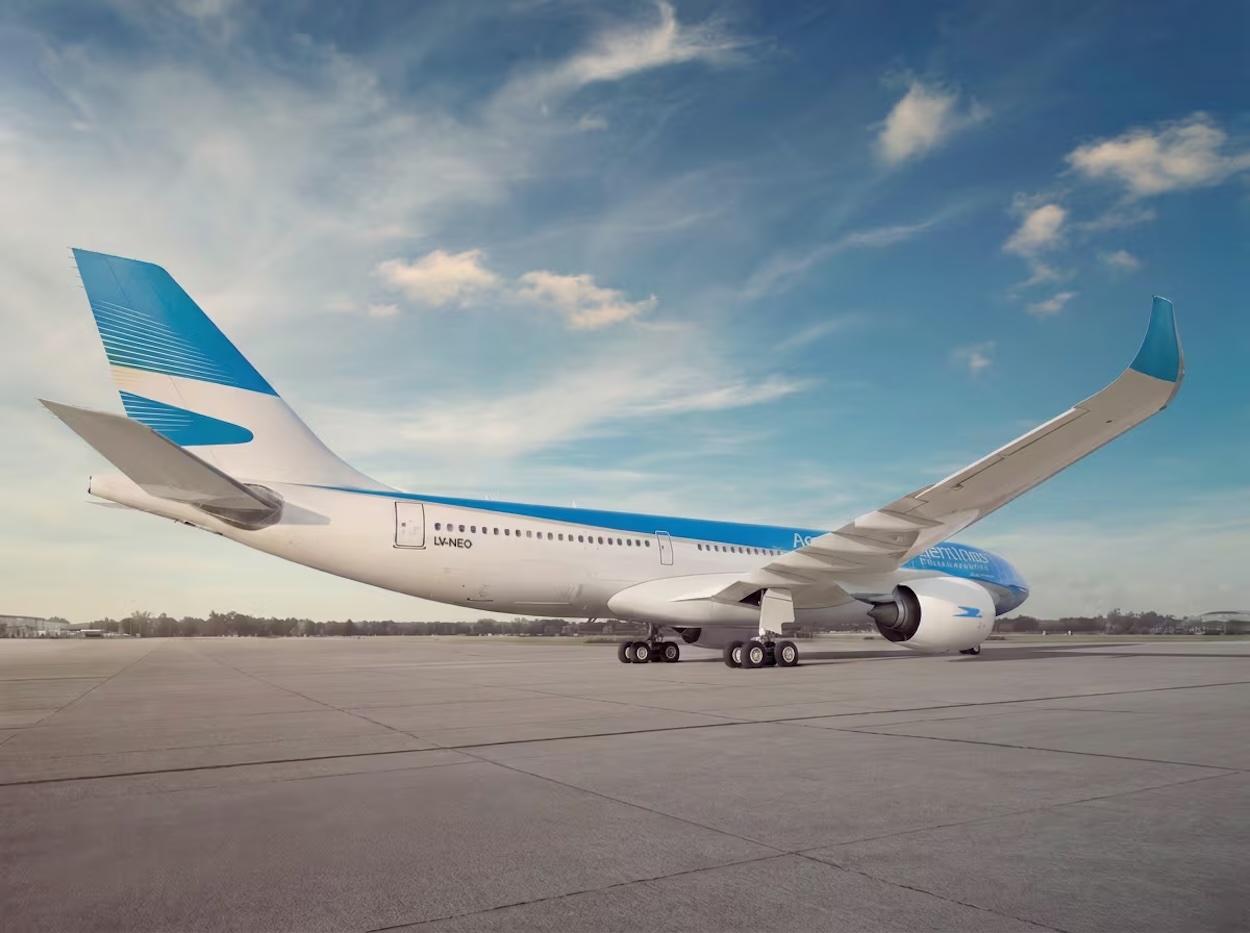
Aerolíneas Argentinas has finalized plans to add 20 new aircraft, including six Airbus A330neos and eight Boeing 737 MAX 10s. But the aircraft themselves are only half the story. Far more remarkable is how an airline that consumed billions of dollars in government subsidies became profitable after Argentina effectively told it to survive on its own.
Aerolíneas Argentinas Orders 20 New Aircraft After Remarkable Financial Turnaround
Aerolíneas Argentinas will add 20 aircraft between 2027 and 2031 as part of the largest fleet renewal program at Argentina’s state-owned flag carrier in a decade.
The plan includes:
- 6 Airbus A330neo aircraft
- 8 Boeing 737 MAX 10 aircraft
- 6 Boeing 737 MAX 8 aircraft
Agreements covering 14 of those aircraft were formalized with lessors at the Farnborough International Airshow, while two of the MAX 8s had already been secured and negotiations for the remaining four are underway.
The first aircraft, a Boeing 737 MAX 8, is expected in early 2027. The A330neos are scheduled to begin arriving during the first half of 2028. The A330neos will feature new lie-flat business class seats, a welcome upgrade from the current A330-200 seats (which I reviewed here on the A340) which are woefully uncompetitive.
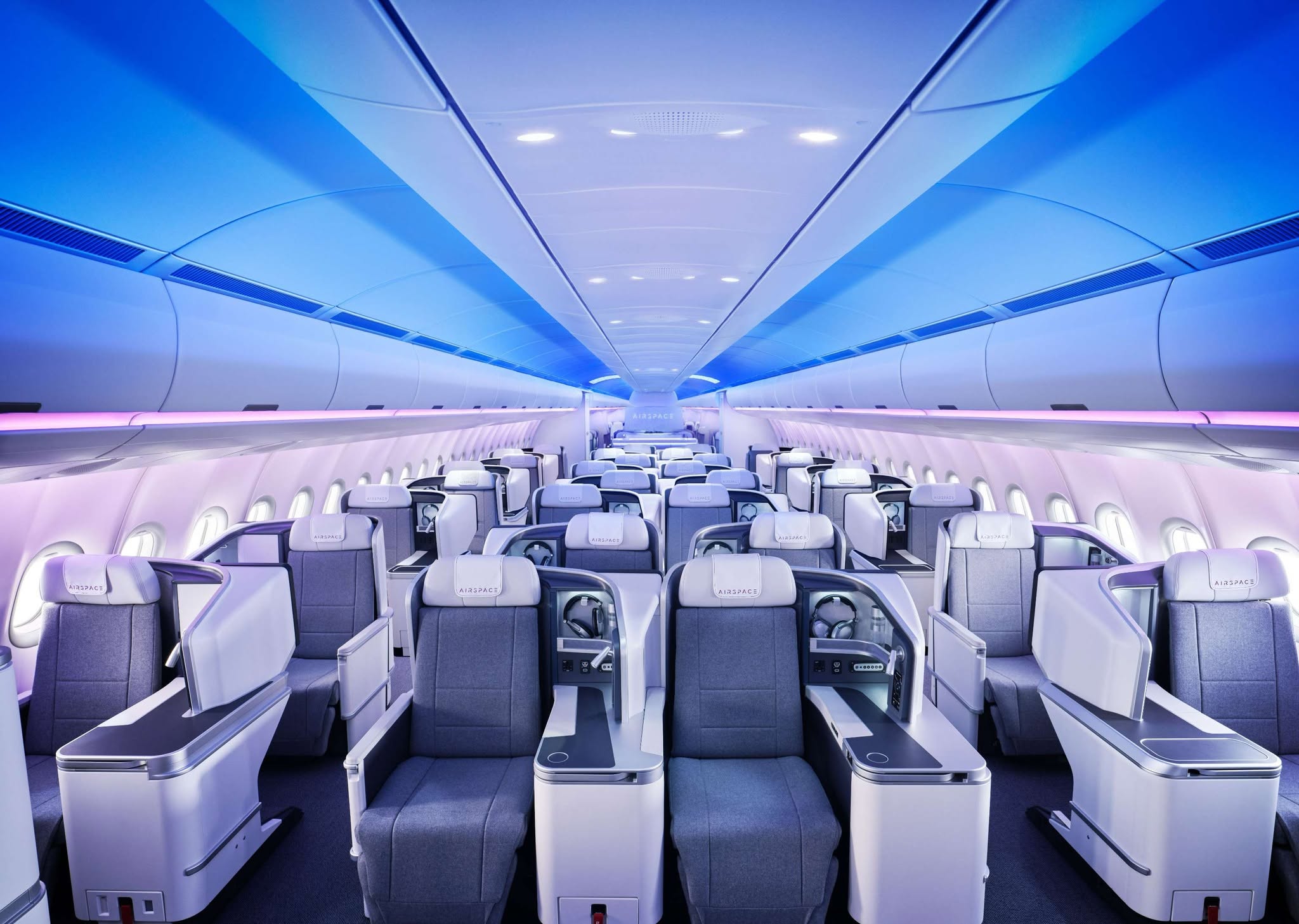
> Read More: How Bad was Aerolineas Argentinas Business Class?
Aerolíneas says the program will replace about 25% of its total fleet and roughly 60% of its longhaul aircraft. It will also be financed entirely from the airline’s own resources, not through another cash injection from Argentina’s treasury.
That last detail is what makes this announcement extraordinary.
For most of the period since Aerolíneas was renationalized in 2008, the notion that it could fund a major fleet renewal from its own operations would have sounded almost laughable.
From $400 Million Annual Losses To An Operating Profit
Between 2008 and 2023, Aerolíneas Argentinas says it recorded average annual operating losses of approximately $400 million and absorbed more than $8 billion in direct transfers from the Argentine government.
The airline was not merely unprofitable during an occasional difficult year. Government funding had become an essential part of its business model.
Aerolíneas operated routes for political and social reasons, carried an oversized workforce, maintained generous employee privileges, and faced militant unions capable of bringing much of Argentina’s aviation system to a halt.
By 2023, the airline reported an operating loss of approximately $390 million.
Then Javier Milei took office.
Milei had campaigned on taking a “chainsaw” to Argentina’s bloated public sector. Aerolíneas became one of his most visible targets. He sought to privatize it, threatened to close it if a buyer could not be found, and made clear that endless government subsidies would not continue.
Many assumed that removing state support would destroy the airline.
Instead, it forced Aerolíneas to begin behaving much more like a commercial airline.
In 2024, Aerolíneas reported an audited operating profit of $56.6 million, its first positive operating result since its 2008 renationalization. In 2025, that operating surplus nearly doubled to $112.7 million on revenue of more than $2.22 billion.
Most significantly, Aerolíneas says it completed 2025 without receiving a single peso in operating transfers from the national government.
That does not mean taxpayers are entirely removed from every risk associated with a state-owned company, nor should every headline accounting figure be accepted without scrutiny. Argentina’s inflation, exchange rates, and financial accounting can make comparisons particularly messy.
I’m not an accountant, but I’m told that Earnings Before Interest and Taxes (EBIT) is a useful measure of whether the airline’s underlying operation is earning more than it costs to run. On that basis, the reversal is genuine and dramatic.
What Actually Changed At Aerolíneas Argentinas?
The turnaround was not caused by one clever innovation. It came from imposing commercial discipline across nearly every part of the airline.
First, Aerolíneas reduced its workforce by roughly 15%, with about 1,500 employees leaving through voluntary retirement, early retirement, and other separation programs. The airline said this brought staffing to its lowest level in 14 years and produced the lowest employee-per-aircraft ratio in its history. Management was also trimmed.
Second, Aerolíneas began eliminating routes that could not justify themselves financially. A Buenos Aires-Havana route, for example, was dropped after the airline said it lost approximately $500,000 during 2023.
There is a legitimate debate over whether a state airline should maintain some unprofitable domestic routes to connect isolated communities…but flying internationally for political prestige while losing money is very hard to defend.
Third, management attacked smaller expenses that had long been ignored because the government ultimately covered the deficit:
- Inflight catering was simplified
- Contract workers were reduced
- Free travel privileges and other employee benefits were reduced
- Apparently, even removing certain snacks reportedly saved more than $500,000 annually.
None of those measures individually rescued Aerolíneas. Together, they reflected a fundamental change in mindset: expenses were no longer someone else’s problem.
Fourth, the government confronted the airline’s unions.
After months of strikes, cancellations, and bitter public conflict, new labor agreements removed or modified a series of costly work rules and employee benefits. These reportedly included free ground transportation, premium cabin rest arrangements, complimentary vacation travel for relatives, and rules counting transportation time toward working hours.
Employees received wage adjustments, but some increases were tied to productivity.
These were politically explosive changes, particularly during a period of punishing inflation. But airlines cannot compete when collective bargaining agreements make crews and aircraft materially less productive than those of their rivals.
Finally, Aerolíneas improved the utilization and reliability of the operation rather than simply shrinking itself into profitability.
During 2025, the carrier transported nearly 12.8 million passengers, operated about 300 daily flights, achieved an 83% load factor, and reported a 99.4% completion rate. It flew approximately the same number of hours as in 2024 while producing a much larger operating surplus.
Its bank and financial debt also fell 41%, from $341.9 million at the end of 2023 to $207.4 million at the end of 2025.
Cutting costs is easy when an airline also cuts flying, abandons customers, and allows the product to deteriorate. Aerolíneas appears to have reduced its cost base while maintaining a substantial network and improving the financial productivity of that network.
It’s a huge success story (maybe American Airlines can learn something from it, especially when it comes to labor?)
Did Milei Save Aerolíneas Argentinas?
The easy political narrative is that Milei withdrew subsidies and magically transformed a socialist money pit into a profitable airline. The reality is more nuanced.
Aerolíneas was already making some operational progress before Milei took office, and not every route served by a flag carrier should be judged solely by its standalone profitability. Argentina is a vast country, and air connectivity has economic and social value that may not appear on an airline’s income statement.
The turnaround also came at a cost.
About 1,500 jobs disappeared. Wages were squeezed during an inflation crisis. Strikes caused extensive disruption. Benefits were removed, routes were cut, and employees were forced to accept dramatic changes under the threat that the airline might otherwise be sold or closed.
But it is equally difficult to deny the results.
Milei removed the assumption that the treasury would always cover the bill. Management responded by cutting excess staffing, eliminating waste, renegotiating labor rules, reducing debt, and choosing routes based more heavily on commercial performance.
The airline did not collapse when its blank check disappeared…it became profitable!
This turnaround demonstrate that Aerolíneas was not inherently incapable of functioning as a viable airline. Its chronic losses were apparently the product of incentives, politics, inefficient work rules, and the absence of meaningful financial consequences.
Once those consequences became real, behavior changed very quickly.
CONCLUSION
Aerolíneas Argentinas will add six Airbus A330neos, eight Boeing 737 MAX 10s, and six Boeing 737 MAX 8s between 2027 and 2031, renewing one-quarter of its fleet and most of its longhaul operation.
That is noteworthy news by itself.
But the more compelling story is how Aerolíneas reached the point where it could claim to finance the program from its own resources.
After years of average operating losses approaching $400 million, the airline reduced staffing, cut unprofitable routes, stripped away costly privileges, renegotiated labor rules, lowered debt, and operated without government transfers in 2025. It reported a $112.7 million operating surplus, nearly twice its 2024 result.
Aerolíneas Argentinas was widely expected to die when Milei turned off the subsidies. Instead, the threat of failure appears to have forced one of the most remarkable airline turnarounds in recent memory.






Leave a Reply