
American and Google showed a smarter way to cut contrails on transatlantic flights, and the real story is how simple the technology actually is.
The Aviation Climate Story Nobody Talks About
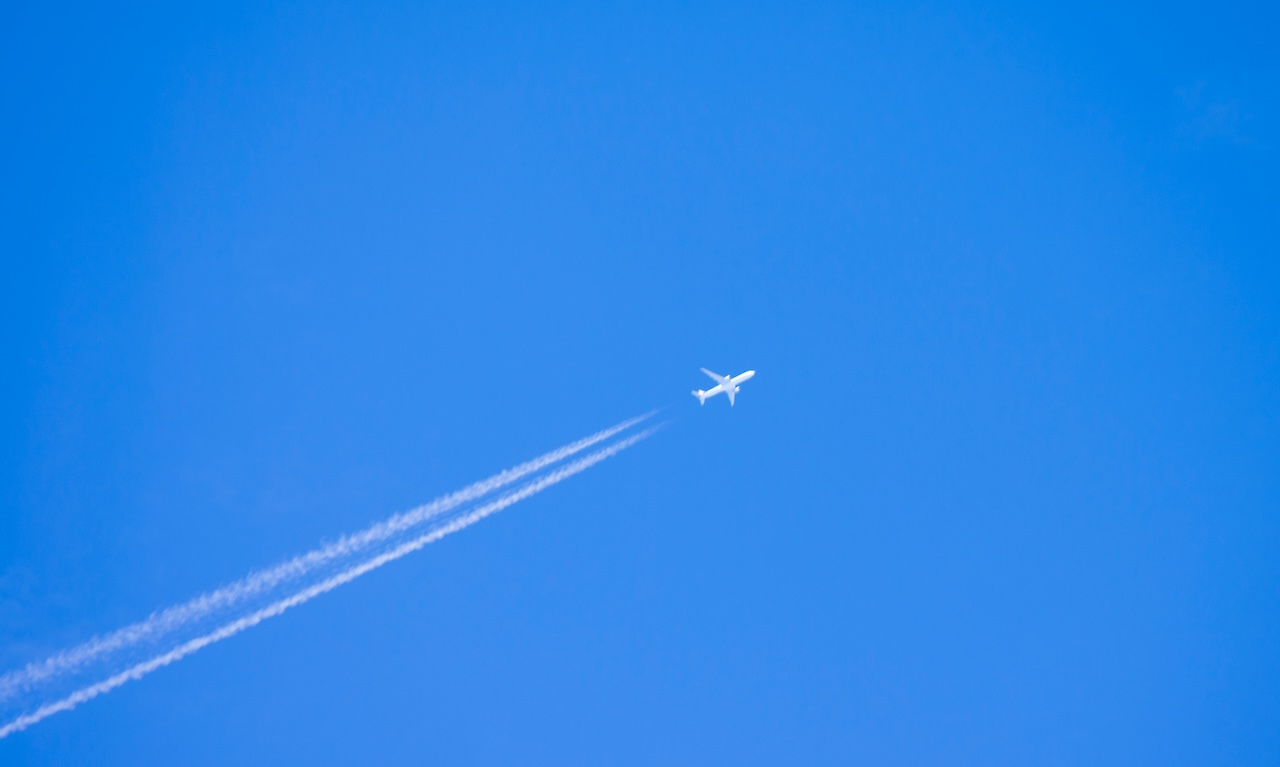
For years, aviation climate debates have centered on sustainable aviation fuel, newer aircraft, and the long march toward lower emissions. One of the biggest climate levers in commercial aviation has been sitting in plain sight, or streaking across it. Contrails are not just harmless white lines behind aircraft. Under the right atmospheric conditions, these condensation trails formed by water vapor coming into contact with high heat engine exhaust can spread into contrail cirrus clouds that trap heat and materially increase aviation’s warming effect. Recent research continues to show that aviation’s non-CO2 effects are larger than previously thought, with the impact of contrails and other non-CO2 effects responsible for around two-thirds of total warming from aviation. A 2026 paper projected contrail warming could exceed aviation CO2 warming by 2050 if nothing changes.
That is why the latest work from Google and American Airlines deserves far more attention than it is getting. Google said its AI contrail forecasts were integrated directly into American’s flight planning software for a trial covering 2,400 transatlantic flights in normal operations. On the flights that actually flew the contrail avoidance plans, formation of contrails fell by 62% compared to the control group.
What The Technology Actually Is
The easy mistake is to hear “AI” and imagine something futuristic bolted onto the airplane. The aircraft does not need a new engine technologies, which is great news for airline managers and bad news for GE, Pratt & Whitney, and Rolls Royce. This is a forecasting and flight-planning tool.
At its core, the system tries to answer a simple question before departure: where along this flight path are the slices of atmosphere cold and humid enough for persistent contrails to form? Google’s earlier explanation of the project said it combined satellite imagery, weather data, and flight path data to build contrail forecast maps. Those forecasts were then cross-checked with open-source contrail models and handed to pilots and planners so they could avoid the high altitudes most likely to create persistent contrails.
That matters because contrails do not form everywhere. They tend to form in very specific atmospheric layers, usually at cruise altitudes, where the air is cold enough and moist enough for jet exhaust to trigger ice crystal formation. Aircraft exhaust leaves behind particles such as soot, which act as nuclei for water droplets. As those droplets freeze, they become contrails. If the surrounding air stays ice-supersaturated, those contrails can persist and spread into broader cirrus clouds. In plain English, planes are not creating a problem continuously from pushback to touchdown. They are flying through pockets of atmosphere where the problem can happen.
So the technology is really an intelligence layer on top of normal dispatch. It identifies contrail-prone airspace the same way airlines already identify turbulence, storms, or other operational hazards. Then it suggests a tweak: fly a little higher, a little lower, shift a portion of the route. It doesn’t entirely change the route and pilots remain in control of what actually happens in the sky. The model provides just enough to miss the moist atmospheric band that would have produced a persistent contrail. This is similar to how the industry already plans around turbulence or icing, and Google’s 2026 update said the breakthrough came from building avoidance directly into the tools airlines already use.
Why Small Altitude Changes Can Have Big Climate Effects
Contrail formation is highly concentrated. Studies have found that less than 10% of flights may be responsible for 80% of contrail warming. That’s a perfect case of marginal change rather than a redesign the entire air transport system to achieve a meaningful result.
That is also why the economics look so favorable. In Google’s earlier 70-flight pilot with American, contrail avoidance reduced contrails by 54%, but the flights attempting avoidance burned about 2% more fuel. Even so, Google said recent studies suggested only a small share of flights would need adjustment to avoid most contrail warming, which is why the total fleetwide fuel impact could be as low as 0.3%. The newer 2,400-flight transatlantic study is important because it moved this from manual coordination into standard flight planning software, which is exactly what you would need for real scale.
This just comes down to planning and a smarter dispatch. It’s as simple as recognizing that a few hundred or few thousand feet can make the difference between no contrail and a warming contrail cirrus cloud.
Why The Industry Is Taking This Seriously
In 2022, Alaska Airlines, American Airlines, Southwest, United, Virgin Atlantic, Airbus, Boeing, Breakthrough Energy, Google Research, Imperial College London, Flightkeys, and RMI launched the Contrail Impact Task Force to study and operationalize contrail mitigation.
Airlines already optimize routes for winds, fuel burn, and traffic flow. Contrail-prone regions are just another atmospheric variable, except this one has a potentially outsized climate payoff. RMI even put it bluntly back in 2022, saying contrail-prone regions are “just weather,” and the industry already has a lot of experience working around weather. That is a refreshingly practical way to think about the problem.
Real constraints remain. Air traffic control has to maintain separation (with fewer resources at least in the United States.) Pilots and dispatchers cannot be overloaded with another layer of complexity – it should remain simple and straight forward. In tests, it appears that was the case. It seems more practically achieved than sustainable fuels which have been costly headline grabbers over the years (including on Live And Let’s Fly) while failing to deliver continued results.
Why Almost Nobody Is Talking About This
Part of the reason is that contrails are conceptually awkward. Carbon dioxide emission reduction is an easier concept for the public to understand. Burn fuel, release emissions, warm the planet. But the climate impacts of contrails are harder to land. Some dissipate quickly. Some reflect sunlight in the daytime. Some trap heat more than they cool, especially at night. The science is more conditional, the whole notion can seem more esoteric.
Complexity is not the same thing as irrelevance. Aviation’s non-CO2 effects are too big to treat as a side issue, and contrail avoidance is one of the rare areas where a near-term operational fix exists. For airline contrails, climate connections
Airlines and regulators spend a lot of time talking about long-range solutions that may take years or decades to scale. Here, by contrast, is a method that works with existing aircraft, existing dispatch systems, and existing flight operations. It is not free, but it is remarkably cheap by aviation standards. And unlike many climate talking points in this industry, this one does not ask passengers to sacrifice comfort, schedule, or convenience.
However, with fuel prices playing such a critical role in current profitability models for carriers and pricing for consumers will airlines pay for an extra 2% fuel burn? In this exact example, American Airlines was the test operator. Last year, the carrier spent $10.72bn on fuel related expenses. A 2% increase in fuel costs without a corresponding increase in pricing (which would be tough to sustain as the rest of the market won’t rise in lockstep) would cost $214MM. Last year, American netted just $111MM in profit for the year, this change (if rolled out fleet-wide) would move it to a loss for the year on $54bn in revenue.
Conclusion
The most interesting part of the American and Google contrail story is not simply that contrail formation was cut by 62% on a large set of transatlantic flights, but that the underlying technology is surprisingly unglamorous and available now. This is just a better forecast, integrated into flight planning software. That is why this feels so important, because it’s practical and ready now. When a solution is this compatible with how airlines already operate, the burden shifts. The question is no longer whether contrail avoidance is real – it clearly is. Will governments provide an offset equal to its impact on profits or consumer prices to enact it? Will that be less expensive than other models and will this reduce the wait and wonder of solutions that have not yet materialized?
What do you think?






Which is better? Altering your route, and possibly burning more fuel to fly that route or burning less fuel by flying the most direct route?
A. Neither. It doesn’t matter to the temperature of the planet
Whelp I must live near a trough of cold humid air. Everyday the sky is crisscrossed by contrails I imagined harmless. Do I believe airlines will want to use more fuel? Nope.
Enjoyed the read Kyle.
Let’s wait for China and Russia to take the lead on this and other “climate change” issues.
If they’ve found a way to make meaningful improvements (either to improve air quality, and fuel efficiency, etc.), I see nothing wrong here (and, sure, why not celebrate). However, if it’s merely greenwashing, that’s not cool. At least no one is going off-the-deep-end yet on chem-trails conspiracies… yet.
Well done AA, well done Google… Keep up the good work… Mother Nature loves you both more than you will know.
but how else is the government going to intentionally spread killer viruses and nanobots?
…there it is. That crazy-train is never late!
thats just it!
since its easy and nobody notices, it doesnt exert control
which is the driver behind:
1970-global cooling
2000-global warming
2010-climate change