
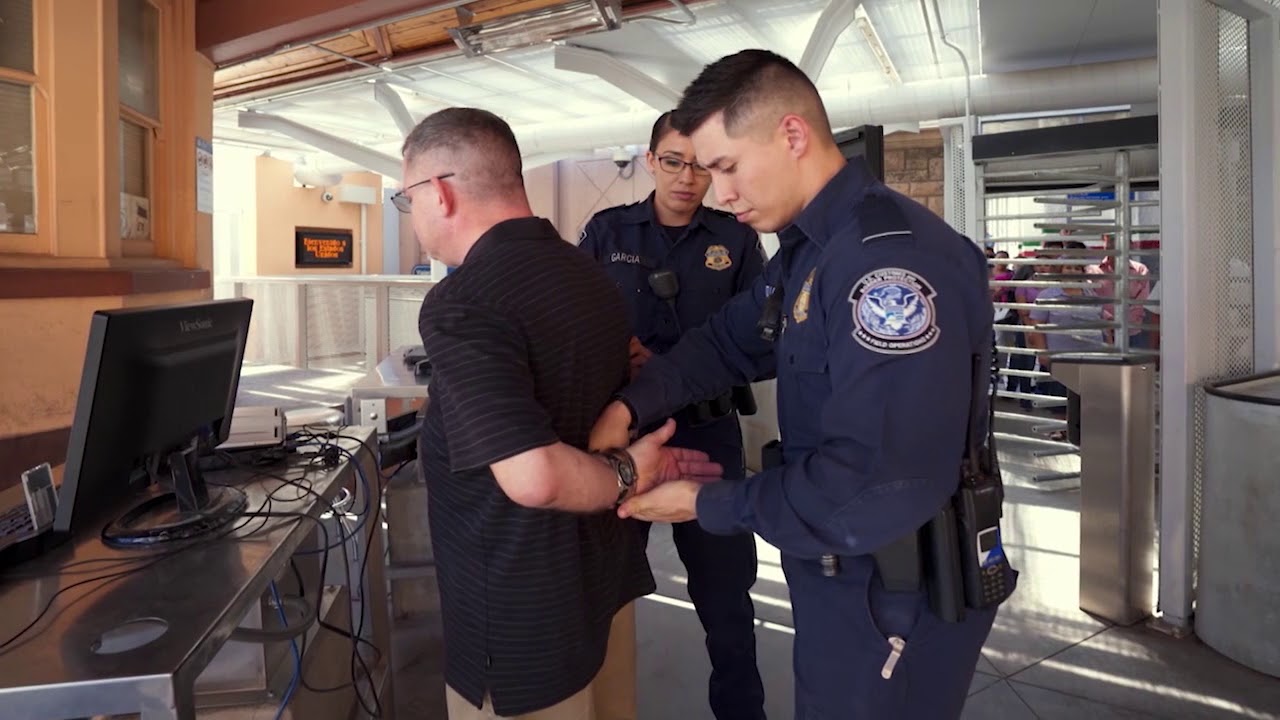
A U.S. citizen was detained for hours at Houston Bush Intercontinental Airport, told by Customs and Border Protection officers that he had no Fourth Amendment rights at the border, and pressured to unlock his phone for inspection. He refused. Now he is suing.
And he should.
CBP Says Americans Have No Fourth Amendment At The Airport
A troubling case at Houston Intercontinental Airport (IAH) highlights how far Customs and Border Protection believes its authority now extends. On July 21, 2025, Wilmer Chavarria, a U.S. citizen returning from Nicaragua, says CBP detained him “for no given reason,” separated him from his spouse, and took him into secondary screening. He was held for about four hours.
During that detention, he says agents repeatedly pressured him to hand over his laptop, phone, and tablet, along with the passwords to access them. When he objected, he says CBP told him he had “no Fourth Amendment rights at the border,” warned that asserting his rights was “suspicious,” and denied requests to contact family or a lawyer. After hours of isolation and pressure, he says he ultimately gave in and turned over the devices and passwords.
View From The Wing covered this case in detail, and I agree with him completely. This is not a close call. What CBP is asserting here is not routine border authority. It is an extraordinary and dangerous expansion of government power that should concern anyone who travels internationally, especially Americans who assume their constitutional rights follow them home.
I’m so tired of the canard that Americans have no reasonable expectation of privacy from their government.
CBP’s Claim Is Sweeping And Alarming
According to the lawsuit, CBP officers told this U.S. citizen that the Fourth Amendment does not apply at the border. That statement alone should stop every traveler cold.
The Fourth Amendment protects Americans against unreasonable searches and seizures. It does not contain an airport exception. It does not evaporate because you landed on an international flight. And it certainly does not disappear simply because your phone happens to contain vast amounts of personal data. As a reminder, the Fourth Amendment says:
The right of the people to be secure in their persons, houses, papers, and effects, against unreasonable searches and seizures, shall not be violated, and no Warrants shall issue, but upon probable cause, supported by Oath or affirmation, and particularly describing the place to be searched, and the persons or things to be seized.
This is a fundamental bedrock American right, and I’d argue that the contents of a mobile phone are akin to papers, which should not be available for fishing expeditions lacking probable cause.
A Smartphone Is Not A Suitcase
Courts have already recognized that digital devices are fundamentally different from physical luggage. A smartphone contains years of communications, medical information, financial records, location history, photos, and access to cloud accounts that extend far beyond the device itself.
Treating a phone search like opening a bag is legally incoherent.
Even if CBP has broad authority to inspect goods at the border, that authority has limits. A phone is not contraband. It is not merchandise. It is an extension of the person carrying it, especially now.
Detention As Coercion
What makes this case particularly troubling is the use of prolonged detention as leverage.
Holding a U.S. citizen for hours, denying entry into his own country unless he surrenders his privacy, and asserting that constitutional protections do not apply is sickening coercion.
Consent obtained under those circumstances is not meaningful consent…
This Will Affect More Than “Suspicious” Travelers
Some will argue that this only impacts people with something to hide. That is both naïve and wrong.
Business travelers routinely carry privileged communications. Journalists carry sensitive sources. Doctors carry patient information. Lawyers carry client data. Ordinary travelers carry intimate details of their lives that have nothing to do with national security.
Once the government claims the power to compel phone access without a warrant, suspicion becomes optional. No terrorist attack or fear of one can justify this.
If CBP’s position stands, then the airport becomes a constitutional vacuum zone. One where Americans can be detained, compelled, and searched without meaningful judicial oversight. Indeed, it is already happening
That is not how rights work (or at least should work). And it is not how borders are supposed to function in a constitutional republic.
The plaintiff in this case is doing exactly what more Americans should be willing to do. Push back. Force the courts to draw a clear line. Demand that constitutional protections mean something even when it is inconvenient for the government.
Sadly, I’m not sure he’ll get very far because many courts appear to be rubber stamps for the police state America is fast becoming.
CONCLUSION
Travel already requires surrendering a great deal of privacy. That does not mean we surrender our rights. If CBP truly believes the Fourth Amendment does not apply to Americans at the border, then this lawsuit is not just justified. It is essential.
You can review the case documents here. Read it and tell me whether you think the conduct of US government officers was reasonable.
> Read More: The Appalling Treatment Of A Woman At LAX By Misogynistic US Border Agents





I would have to dust off what I have learned in the past, but as a general matter, the decisional law addressing the border station exception in Fourth Amendment jurisprudence would surprise most Americans. And it is also troublesome, but CBP may indeed be operating in a manner consonant with that jurisprudence.
A constitutional amendment is one option. Perhaps a more direct option would involve Congress explaining that CBP’s funding is contingent on reforming its practices so as not to push the Fourth Amendment envelope as far as it does. But on balance, I anticipate that many Americans would be troubled that their Constitution permits far more than they anticipate.
Sounds like you’d agree with commenter @Mark F over at VFTW, who cited United States v. Ramsey, 431 U.S. 606, 616 (1977); yet, Chavarria’s lawsuit basically seeks to challenge that “border search exception” to the Fourth Amendment. I agree with Chavarria’s premise, because a smartphone contains vastly more personal and private data than a suitcase or a paper letter. It holds the entirety of one’s personal life, professional documents, medical history, and location data. Searching it is a massive intrusion into privacy. And an administration that is clearly racially and ideologically profiling its own citizens, should not have that much access. In essence, they’re picking winners and losers, in and out groups, all of which is against our entire principles as a nation. All created equal. E pluribus unum (out of many, one). It’s imperfect, but we’re trying. Citizens like Chavarria are fighting the good fight. I applaud him.
Well, CBP cannot and will not just search a phone. There must be a reason which the gentleman suing the government will not say. Thanks to those phone searches CBP has encountered and stopped many people, US Citizens or not, who had very bad intentions in the homeland.
CPB absolutely can search a phone at a port of entry.
If a citizen won’t consent, they can’t be kept out of the US, but their phone can be denied entry.
If it not a citizen involved, the person can be denied entry.
This. I’m not sure why Matthew writes as if 4A applies at border patrol in the exact same manner that it applies elsewhere, when caselaw has made it abundantly clear that federal officers may conduct routine inspections and searches of persons attempting to cross the international border without a warrant or any particularized suspicion of unlawful activity. Obviously, there are limits to the border exception, but Matthew should know better than to write this article without discussing the exception.
Matt’s commentary:
“The Fourth Amendment protects Americans against unreasonable searches and seizures. It does not contain an airport exception.”
really is inconsonant with settled jurisprudence. I could say more, but the following does so better than I would.
https://www.law.cornell.edu/constitution-conan/amendment-4/searches-at-international-borders
I’m well aware of the exceptions that have been carved…that doesn’t mean the Fourth Amendment is being interpreted correctly, even with 100 years of precedent.
As this SCOTUS pays no attention to stare decisis, I’d love to see them re-examine these laws…but of course the majority is not going to do that. That said, nothing is “settled jurisprudence” any longer…
There will be a day in which we have another Warren Court because the pendulum of history swings back and forth. Historically, I’ve been a Scalia guy, but the federal government has too much power…it is not what the framer’s intended and not what we, the people, intended…
Well said. The pendulum has moved way too far. Scary..
Well, I do not like CPB’s power. But CBP in no way arbitrarily concocted power or somehow decided to make things up as they went along. And I rather suspect that CPB officers are informed by legal counsel – I have been professionally involved in litigation which was settled with CBP agreeing to provide explicit guidance to officers concerning photography at ports of entry. You explain “[w]hat CBP is asserting here is not routine border authority”. While CBP does no exercise such authority routinely, under current decisional law CBP routinely “wakes up” with such power.
Rather than finding scandal in this particular incident, stating the Fourth Amendment “does not have an airport exception”, perhaps the scandal is that this is perfectly legal and that indeed there is an “airport exception” (along with exceptions for sea ports of entry and land ports of entry).
I respect your opinion of where you think the law SHOULD be, but your article is about where the law PRESENTLY stands, and you make absolutely no mention of the border exception, which is precisely the issue.
Ok you realize the fourth amendment says “unwarranted searches and seizures.” It means police cannot enter your home WITHOUT a WARRANT. It DOES NOT apply at AIRPORTS. Especially when you’re coming from a country that may be dangerous
Fourth Amendment says we are secure in our “persons, houses, papers, and effects, against unreasonable searches and seizures” – clearly the 4A is not limited to our homes.
Aren’t you assuming that there was no probably cause? Do you know what information the CBP had that may have caused them to detain this person? I think we need to stop being the judge and jury based on incomplete facts and information.
Probable cause should be articulated to the accused…not veiled in secrecy. If there is a reason for CBP to check your devices, it should be articulated beforehand…that’s the way a system functions properly with safeguards protecting civil liberties. That doesn’t mean no borders or no searches, it means that there is a high bar for such government action.
At a minimum, the author is lazy and probably dishonest with his reporting. In 1943 Truman (D) signed a bill giving border patrol a 100 mile border exclusion zone (a band all the way around the he U.S.)) with expanded forth amendment exemptions where searches could be conducted without warrants. Further exemptions were granted in 1953. Therefore, Houston airports are within this 100 mile border band and agents are 100% within their rights. Agents can look into all electronics and do not save, reproduce, document anything that is not illegal . While controversial , it is still legal
Just because it currently legal does not mean it is constitutional…see Plessy v Ferguson.
Matt,
That is a terribly poor analogy. Dred Scott was abrogated by the 14th Amendment, not by a later Court reversing it. Perhaps more apt analogies would be Plessy/Brown or Roe/Dobbs. Such reversals are rare. There is no evidence that the original scriveners of the Fourth Amendment intended to interfere with the border exception – that is, customs officials remained free to board incoming vessels to inspect for collection of duties, contraband, etc., without the smallest cause. And that tradition continues through this day when I may be subject to a random inspection upon arrival at JFK. Any theory would have to be a bit more novel. I do not see it growing legs. Rather, the more effective tack would involve more oversight of CBP.
My analogy was actually Plessy, but I somehow wrote Dred Scott, a reminder not to respond to comments before my first cup of coffee…
Will respond to your email as soon as I can (and am grateful for it).
International Borders
Amdt4.6.6.4
Drug Testing
Amdt4.6.6.3 Searches Beyond the Border
I doubt the courts would side with the citizen though I do not agree with it. Once a known citizen i think reasonable articulated probable cause should be required for any additional searches.
look, I live in Canada, and guess what, when going through a Canadian border patrol check point, in an airport or anything, you are stepping into LITERALLY ANOTHER COUNTRY.
Trump is telling your Customs and border protection to do the same thing to us, 5 years of social media data.
We don’t like it but people like you are like “Suck it, our country our laws”. so I’m saying it to you. Suck it it’s our country, our laws.
But there’s a difference between stepping into a foreign nation and stepping into your OWN country in which you have a right to enter.
A fine piece of bias reporting but we don’t expect honesty from someone who is in the pocket of corupt political overlords
If you have nothing to hide, just cooperate and then the sooner you will be on your way. Pretty simple dont you think?. Common sense folks.
But that’s not our system of government. We should not tolerate a guilty until proven innocent approach, even at international airports, at least when it concerns U.S. citizens. Because that sort of treatment is very ripe for abuse…
But it’s when officials act irresponsible and claim that they found something, i.e. cases where evidence was placed on an innocent person, motivated by anything, usually escalation or biases.
I dont want anyone to be searched without cause. (que Kavanaugh stop, tongue n cheek). I get nervous around CBP or police (which I rarely am) because they could change my life in an instance based their power over me. It might make me act suspicious to them, but I dont even know what their definition of suspicious is. This is where there is room for transparency and education and even a little outreach and humility by the government to the citizens.
I am told by media, by law precedents, that it’s all up to me to just know everything about the specific rules surrounding my protection. Its my fault if I dont know.
I dont want someone searching my phone, and I am not hiding anything. Would you let a friend, a storekeeper, your barber, search your phone? No, you would ask why. Is that question suspicious and escalates someone to hold me until I do? If anything, its suspicious that they would ask you without a reason. I dont know the specific laws and precendents that work against me to compel the search, they do. From that perspective, that’s why I would ask for a warrant or articulated reason from a government official. I trust that they can give that much, It seems that talking transparently is not the rule and relying on “because I have the authority” is the rule now. If I ask why, I am trying to understand, not to escalate, so that I can avoid the problem in the future. This is the angle in which I interpreted Matthew’s article.
I support him suing. The mere act of suing signals that he wasnt hiding anything. If he wasnt on any kind of list before, he is now, whether is his making or not. The government doesn’t let that stuff go.
Actually no they don’t have that right.. And it had already been brought up in court prior to this instance, and the judges said that a cellphone can not be accessed without a warrant if they don’t want to. Yes they may use this to do as they please, BUT THE LAW HAD CLEARLY BEEN STATED THAT THE 4TH AMENDMENT DOES APPLY AT AIRPORTS. Now if they have causer or suspicion that’s different. And if they really thought this man had something to hide, they could easily get into his devices, but they didn’t do they couldn’t access intelligence to do so negate they didn’t have cause. The governed has the technology to get into devices without the passwords they just can’t use it whenever they want.. And the airport BPD defibrillator doesn’t have it to violate our privacy.
jfhscott is correct. I feel people are misinformed about what rights you have as an alien entering the country under any circumstances. CBP has far more power than corporate media seems to believe and want you to know.
Nun, let’s make the distinction between ‘alien’ (non-citizen) as you said and actual citizens, who have a presumption of greater protections; however, it is CPB that needs to properly identify who is and is not a citizen, so that’s where this gets mirky, and they’ve been given a lot more discretion than most would expect.
Maybe I missed it, but the article didn’t mention if he had, or showed, a US Passport.
He did. Was a US citizen.
Fourth amendment do not apply at the border, an international airport is considered a functional equivalent of the border regardless of it location within the State
If you read the Fourth Amendment, there is no exception for borders. I don’t really care how SCOTUS and laws have construed border exceptions even dating back 200 years. It’s time to revisit that jurisprudence.
Apparently, people cannot or do not read the article or context of responses. To detain a lawful US citizen based on presumably color and race with no explanation or reason should scare the daylights out of even the most biased. It’s a big joke and ok to do it to others? I’d hate to see the shoe on the other foot. I sincerely (yet doubtfully) hope and pray this man who did nothing wrong is compensated for his time.
Paul, I agree!
Most likely also in possession of a Nicaraguan passport too. Do we not expect our intelligence services to give info to our CBP? There is more here than meets the eye most likely. Nicaragua is a communist nest of other bad actors in their country. Judgement is a bit to quick here siding with a “U.S. Citizen”. He will have his day in court.
It is mentioned multiple times in the article, plus it is mentioned in the headline.
*whoosh*
Yes…but he is not a “real” U.S. citizen…his last name sounds Spanish. 4th amendment was meant for “real” Americans. That is what is at the heart of the matter. Thats what determines whether you area patriot or a criminal thug…
Also something negative about Biden. Please if you are reading thus dont cancel my citizenship and deport me, thanks!
This is an extremely ignorant comment. I have a Spanish last name, my father came to this country when he was six years old. My grandfather served this country in the navy, my father was a Marine. I was born here. I’m a “real” American with a Spanish last name. Unless you are Natuve American, we’re all children of immigrants, which makes me laugh when people make these kind of comments. Show me your papers that you’re Native American (a “real” American), and then we can have a conversation about your ignorant words
Even the so-called native Americans came up from South America or across the land bridge from Asia and down into the now continental US.
As a white male who’s grandparents and great grandparents came through Ellis Island and who’s spouse’s parents came from Poland…. I’m so done with the what defines an American based on color and last name. I’m not saying we let every illegal immigrant run amock but the profiling and prejudice are escalated to absurdity. I’m sorry but if you’re on US soil and go to work or try to do better for your family and children… That is American, that is the ideal that we were founded on. I’m sorry for the rambling rant but people have to wake up, accept others and just be nice to one another. Thank your family for their service.
It says he is a U.S citizen returning home, so his last name is wholly irrelevant. The last name White has Scottish & Irish roots, should their citizenship be called into question as well? Should they have their rights & protections violated?
I believe the point of this article is to question what rights & protections do we have as American citizens under the constitution. If the 4th Ammendment doesn’t apply, then we as a people should not only be made aware but it should apply to EVERYONE. I’ve been singled out for extra screening on my very 1st return trip home from visiting another country. Its annoying to be sure and I almost missed my flight, but not a single person asked to go through my phone or tablet. This administration is taking more liberties than our constitution & law allows, and for some “unknown” reason too many people are ok with this.
LOL. Gotta include the ‘/s’ sir.
That’s right as an American citizen you should be proud that you’re being detained and your channels are working properly for not letting it illegals into the country
No one coming from Nicaragua would assume their country people have only Hispanics names AND NEITHER WOULD CBP. Yes the Spanish Conquistadors names are prevalent in western Nicaragua, but 300 years of being a British Protectorate in Eastern “Nicaragua” and the Western Caribbean Islands that were never Nicaragua in the first place gave British names to many. So to assume Nicaraguans have only Spanish names is absurd.
I have always assumed you have no protections until you actually are cleared past the border.
For non-citizens, that is a reasonable, if debatable, understanding. For citizens, whether you had or had not cleared immigration doesn’t matter…you are an American citizen in the United States.
Actually, it’s what?, 100km?
Since he landed at the airport, well within the country’s border, he should have the protection of the 4th amendment. He was detained at customs and passport control.
not true, this is international travel, immigration laws, customs laws, along with other laws are enforced, even with US citizens, in accordance with the law, 4 amendments protection are not for US citizens and foreign arriving at any port of entry whether an airport, seaport, or land port….arriving from a foreign country….
Matt, thank you for adding to Gary’s article. I could not agree more with your statement: “Smartphone Is Not A Suitcase.” Yet, as you and Gary conclude, while this lawsuit is absolutely necessary, the Supremes are likely to go 6-3 in favor of this administration, regardless of law, facts, and conscience. It’s incredibly disturbing. We all lose.
I anticipate that SCOTUS might go more than 6-3. The border station exception is actually well established, but surprising to many. Just looking at Scalia’s jurisprudence, I recall that his ordinary search and seizure jurisprudence looked like it was outsourced to the ACLU. But he was equally resolute that any originalist would preserve the border station exception. As surprising as it may be to millions, the border station exception is rather incontestable.
The other branches of government do, however, have certain power to rein the CBP in, preventing the CBP from using the border station excepti0n to its full force.
Some theorize that the political spectrum is like a horseshoe… for instance, libertarians and progressives might agree on some economic and privacy issues. See former Federal Trade Commission (FTC) Chair Lina Khan, who has frequently stated her belief that many laws are “on the books” but have been historically underenforced, arguing that businesses stopped abiding by them because enforcement agencies became dormant.
So, with CPB, yeah, they and any President can be extreme in their use of force and search at the border, yet, most have not done so because it would really upset citizens and non-citizens, alike. Maybe some rules shouldn’t be enforced to the n-th degree. See speeding. If you go 1 mph over, you are technically breaking the law. Fine, maybe a mere traffic infration, as opposed to murder… yet, still, ‘the law.’ Hmm.
You are dead wrong. I’d more likely see 5-4 decision reigning in the had-booted thugs aka CBP. They’ve already ruled that way when it came the cell phones and other cases.
Gregg, you refer to Carpenter v. United States (June 22, 2018), where the Court ruled, in a 5-4 decision, that the government generally needs a warrant to obtain cell-site location information (CSLI) from wireless carriers, which shows where a person has been.
However, that was Trump term 1, where he was less-authoritarian, still had guardrails, and a 5-4 conservative majority, with just 1 Trump approved justice; now, this is 2025, Trump term 2, far more authoritarian, with a 6-3 conservative majority, including 3 Trump appointed justices, a truly sycophantic rubber-stamp court for the administration. So, I would not bet on this court caring about anything but appeasing the Dear Leader and his billionaire backers.
I disagree. I think SCOTUS will back the traveler. The left-leaning justices will rule in his favour just because of their personal political persuasions, whereas the right-leaning judges will rule in his favour because the fourth amendment explicitly protects against unwarranted searches. It’s right there in black and white. This isn’t like Roe, which manufactured a new constitutional right that didn’t exist except in the minds of the SCOTUS judges of the time. If there’s one thing that Thomas and Alito are dedicated to, it’s a capital-O Originalist interpretation of the constitution.
Are you an American based in Australia, or an Australian based in Australia? Either way, sorry to learn of what happened at Bondi. I’ve really enjoyed my visits to that country and place.
Anyway, I don’t think originalism means anything to those justices; that’s faux-intellectualism; all they care about is doing the bidding of their backers. Sure, they’ll find a way to justify whatever the outcome is, citing some long-gone text or law or Biblical passage, but it’s a farce, 6-3 in-favor of the admin. Bet on it.
Well my friend is about time for law and order hope for a Marshal law soon to clear from law lessness
Gus, what are you talking about? C’mon, malaka. Greece has been through a civil war and military junta. If you didn’t live through it yourself, certainly your ancestors did. Martial law is not the answer, here, there, anywhere. Sheesh.
This is extremely worrisome in the context of Hegseth saying the Armed Forces should prioritize to domestic protection over international. There is nothing more that Trump & his bootlicker Hegseth would like than to declare Marshall Law & suspend HC. Trump has said he wants another term. The history of him reading & keeping Hitler’s “My New Order” speeches by his bedside. The danger is real. This is how Fascism begins.
Agreed!
What I find interesting is that the Supreme Court would be giving this rulings in favor of the current administration, This will extend into the next administration. Cant believe that a conservative court would actually be destroying the constitution the way you are suggesting. Seems the current SC is taking more liberties away from citizens. Making this court more liberal. I would contend that a conservative court would look out to protect the constitution rights of the citizens instead of the administration. You are suggesting the current SC is more liberal in taking rights away from US citizens and destroying the constitution instead of protecting it.
“Don’t touch my junk”
4 hours? And then he wasn’t found guilty of anything. I got pulled over once just because the officer was bored and needed something to do for an hour.
CBP believes that they are the law out of fear. All is justified as long as it for their protection. Even if this goes all the way to the Supreme Court we know how they will vote. The only was for this to change is if some Congress family members gets swept up into it. The Media and public are dangerously naive about security operations at the borders.
The complaint claims the man is a successful K-12 professional. During the deposition, h3 may be questioned at length about that.
The complaint says 91% of Americans own a smartphone and 98% own a cellphone. I don’t think that is true. Many toddlers don’t.
One issue that will affect us is whether a cellphone is a suitcase. The court will allow suitcase searches.
Ah, so you’re one of those ‘nothing to hide’ folks, eh? Psh.
But, but… national security… ‘Patriot’ Act.
It’s nothing new. This started with the power congress vested to the former US Customs Service (USCS) in 1789. Since the formation of USCS and now with Customs and Border Protection, no one, citizen or not has any protections from search or seizure at the border. You can be searched on a whim, no reasonable suspicion or probable cause necessary. That includes all of your effects, electronic or otherwise, as well as your person to include what’s inside of you. Courts have long upheld this. In fact, the courts held that an individual held for a monitored bowel movement (yes, that’s a thing) was justified in being held for more than 30 days.
Something triggered this intensive exam, it’s not done for fun. Those of you who are appalled by this are the first to complain that nothing happened if CBP failed to catch a malicious electronic file that could take down the US power grid or if they had evidence of child porn or the abuse of children or if CBP were to miss the plans for another 9/11 attack. You can’t have it both ways.
I don’t think that is necessarily true in this era…
As an officer who began with the US Customs service in the 80’s and retired from Customs and Border Protection 5 years ago let me say that Grumpy1k is totally correct. This has been established law for over 200 years. Border search authority has been upheld by the courts many times during our history. Juat because people don’t like it now doesn’t make it unreasonable.
‘Just following orders’ and ‘but, but, it’s the law’ much?
This is a backwards Wire Tap. No probable cause, no judge or warrant needed. Just take the phone contents and look for a crime or blackmail data? A sneaky lazy way to get around the law. What happens with innocent gathered information? Who has access to it and for how long? Question authority.
Bullshit, nazi trash
Woah, Maryland is most definitely not a nazi or trash.
You do you, but mere ad hominems without any relevant commentary are WEAK.
That’s a Bingo!
No matter what America does going forward, every American will have to live with the decision they as a whole made to give up hard fought values of freedom, liberty, and opportunity. No one will ever forgive you.
No, for better and worse, shame and hypocrisy are not working anymore. It will likely take more loss, harm, destruction, likely economic or worse, for anyone here to wake up, stop appeasing tyrants in government and corporations. Time will tell. The rest of the world is not perfect, and those who judge us forget that this is a human problem, not just an American one. Easy to judge harshly; more challenging to do something productive from within or from afar. Prepare and save yourselves. We all have work to do.
1990, just shut up. You make no sense.
I’m going to put this comment, unedited, on my wall. Every word truth. Just read it again.
Your words restate those of Abraham Lincoln:
“…we must think anew, and act anew. We must disenthrall ourselves, and then we shall save our country.”
I love the 4th amendment, and I hope he prevails. While it makes sense to look at this from a legal perspective, it also makes sense to look at it from a practical perspective. He is a US citizen entering the United States. There is no mechanism to deny him entry; deporting him isn’t even a possibility as deporting a US citizen (as has happened recently) is in effect kidnapping.
My greater point is that if he refused, even for 8 hours, I suppose they could detain him indefinitely, but there doesn’t seem to be any rule he’s violating or any actual punishment they could levy. CBP would ultimately have to give in.
If you want to go the decline to cooperate route, make sure you don’t have biometric unlock enabled on your devices. While they can’t force you to tell them your password, they can certainly hold up the phone to your face or force your finger to unlock it.
Pacific Legal Foundation is behind this, that says it all, professional politicos on the left.
Says what all, exactly? Behind what? Filing a lawsuit? Hysterical.
Surely it’s only to be expected in Trumpton? It won’t be too long before you all have to have your social media vetted by Criminal Trump’s regime on a week by week basis with long prison sentences for anyone who offends the Trump child.
Still, you knew what you were voting for and Vance is ready to take over at the next election. So much for you all to look forward to.
Poor little Jimmy, trump owns your gutless ass boy.
With the company I work for, you are not allowed to leave the country with your work laptop. Why would this person have student information on his personal laptop? Also, was he possibly targeted for his sexual orientation?
Some workplaces require employees to use their personal devices..I know of 3 schools that require their employees using their personal devices for work..if they don’t, they don’t have devices for work.
As a flight crew member, coming home on an international trip it never fails to amaze me how much of a surveillance/police state we already reside in.
I always tell CBP not to scan my face, but they will do that without asking unless you tell them not to. I’ve been detained multiple times, in uniform, for no apparent reason
As working crew, we often only have to show a badge to get out of the airport in a number of countries.
On vacation, I couldn’t believe how efficiently I moved in and out of Ben Gurion TLV. Such a starck contrast with the 45 minute line with militarized police and k9 sniffing my crotch in Detroit customs.
Even security in Rio is relatively chill compared to our system. Frankly, it’s embarrassing. We made the changes on the plane to avoid another 9/11. The power grabs and money laundering to security contractors has to stop.
What is more, the 100 mile exclusion zone that grants CBP the authority to search without probable cause needs to be held to constitutional fire once and for all. The idea that Chicago can be considered a border town just proves the ridiculous lengths CBP has taken their power.
No one should cross any border with sensitive or personal documents. You upload everything like that to an encrypted cloud to which you access via bootable live Linux USB that will give you full Internet and online applications to access and use your data. That USB is read only and the minute you shut it off it reverts to a live Linux Os. You are not required to provide passwords to cloud services, but if you don’t tell them they won’t know anyway.
Yeah, that’s way easier said than done. Most Americans are not accustomed to needing to do what you suggest. However, these days, we should act more like citizens of Russia, China, and other authoritarian regimes, protecting our data and personal lives from our own governments. It’s a sad devolution. We should have gone the other way.
Maybe if the dems didn’t allow every loser to walk into our country and turn treat them like hero’s. We wouldn’t be in this situation.
Any cited or sourced statistics or figures about any of that from legitimate, credible sources?
I totally agree, now enforce the 2nd amendment right to bear arms just like the 4th amendment.
This article reminds me of an old saying “we have a solution in search of a problem”.
Bingo
That is correct. The 4th Amendment applies in criminal proceeding. Basic removal of illegal aliens is a civil procedure.
It cannot result in criminal conviction and imprisonment and/or fine.
I work at the Border. Over 20 years. Cell phones are only looked at when there is a real suspicion of something else going on…terrorist, pedophiles and those suspected of illegal activities. The paperwork that is required by CBP to do a phone search is quite extensive and time consuming….no one wants to do this unless nessicary. Also…most lie about there experience….they pulled me in for no reason and held me there for hours…bs…there was a reason.
@ 1973: Sadly, you are the one lying. I just traveled with a British and a German citizen who both separately confirmed they were required to open their phones to CBP thugs to get into the country.
Sure. Totally believable.
As a current officer, I can confirm this. I absolutely hate the hoops they make us jump through for something that ends up usually being not relevant. It is amazing though that a legal writer doesn’t understand how the process of a border inspection works, even if he disagrees with it.
The authority of Customs and Border Protection officers to search individuals and their possessions at the physical
border, the functional equivalent of the border, or the extended border is a longstanding border search authority, and an exception to the 4th Amendment as recognized in numerous Supreme Court rulings. That authority also include the right to search electronic devices.
CBP Directive. 3340-049A January 4, 2018 relates specifically to the search of electronic devices and can be found online.
Having a US Passport does not exempt any individual from a border search when crossing the US border.
https://www.cbp.gov/sites/default/files/assets/documents/2018-Jan/CBP-Directive-3340-049A-Border-Search-of-Electronic-Media-Compliant.pdf
We could hope for a Supreme Court decision offering more 4A support to citizens at borders. Or, we could, I know this a shockingly naive idea, insist our elected officials pass a set of restrictions for treatment of US citizens at the border.
The absolute silliness of all this is that there is absolutely no difficulty getting anything that could be on your device into the US without it being on your device when crossing borders. Of course, not all criminals figure this out, as we regularly hear of the arrest of individuals with explicit photos of [those who should not be in such photos]. I assume this material could be on their device or in the cloud in a manner that law enforcement could not recover.
All this is part of a Global Martial Plan to herd people and operate full control over private lives. The UK wants to introduce digital ID and already have facial recognition in many locations such as China does very well.
Everybody must simply refuse to hand over their devices for scrutiny. They can’t jail us all, or maybe they will!!
All this is because of the extreme Muslim terrorist threat so wel all have to suffer.
Tourism will take a hit in countries who go over the top with this kind of repression.
RIP the modern world in intensive care forever.
When flying international, travel with Chrome book and a new phone. Problem solved. People just don’t read the news about other traveler’s encounter the CBP or foreign immigration officals.
I work for a very well known drug cartel. Whenever I cross Americas borders I use a burner phone I don’t care about. I also have a “distress PIN” which i freely give any agent. Fun fact; the distress PIN silently and effectively wipes every bit of personal data and over writes it all while in the palm of their hand. Lol phuck tsa
That Guy is right!
Im finding all of your comments fascinating; I only wish that I too could add such a educated, experienced and well thought out argument or idea to the already large number of comments here but I thought that maybe someone might find it useful to also hear a point of view from someone who isn’t a lawyer or person who necessarily maneuvers in the circles of those who understand legal jargon. With that being said, my opinion is more of an observation as well as concern for what seems to be a very clear contradiction by the current administration of what it is rnjoy the protection of our constitutional; after all we are the same people who refused to mask during covid, bore consequences for not getting vaxxed, we also have freedom to educate our children as we see fit and demand constantly that all of our constitutional rights be upheld.
So if privacy seems to be so highly regarded, infact our freedom is valued more than any material asett, why does that only apply some of the time? Additional security checks and with diminished privacy law protection at the entry points is understandable, we complain about privacy invasions until there is a terrorist attack, then we demand to know how that person(s) was able to get past airport security, to my knowledge this is how the Patriot Act was allowd to push through with no pushback after 9/11. We want to feel safe without compromising our privacy or giving up our rights and that may not be possible.
But I do find it concerning that the ramping up of security checks on non citizens entering the US (which I agree with wholeheartedly) should now so show include United States citizens simply returning home from a trip. I always rather liked the feeling of landing back on US soil, a sigh of relief after traveling abroad knowing all of the risks associated with not being on US soil, it feels wrong and sad to picture US boarder agents treating America citizens as if they were no different than a suspicious person of interest flying from a hostile country into our land, but I hold out hope that this is the case, and cannot assume the validity that this article which has already been pointed to by many here as having several inaccuracies in regards to actual written law and case law.
On the other side of it though,it really only takes a moment to acknowledge the violations of personal privacy rights being committed in almost other country in the western world right now, including but not by any means limited to the UK and Australia.
This is not the vision of our future that our founding fathers and constitutional authors had, but then again, they would have believed that an America that had already seen the consequences of a secular, oppressed people would never have allowed the depreciation of our freedom and that entails. Not after what it took to gain it.. the more we look outward to the cause of our troubles, the less likely we are ever to find real solutions. The greatest threat to us, is us.. we let it happen, we’re still letting it happen. We can be lazy, co trolled and taken care of or we can be strong, vigilant and free… We cannot be both.
As a school employee with an app on my electronic devices that holds student/family/faculty personal information, this is troubling.
As an ordinary American, it’s concerning that our medical providers could have our personal information compromised if their devices were to be released to any Willy nilly government agent who claims rights to them.
Highly highly concerning.
The Constitution only applies to ho.e grown citizens born and raised r people with legal citizenship..doesn’t matter. If you anywhere on American soil as an American then your rights exist..the building doesn’t matter.
I say just buy a cheap phone one doesn’t give a shit about. Hell just go to a pawn shop or Walmart get a cheap tablet or Chromebook when going overseas. Leaving the good ones behind. I’m sure there is some internationally internet storage site one can access from abroad.
This is what scum like Dick Cheney and co were working towards. Leopards eating faces comes to mind
He’s looking up at us now…
Law’s are not settled in stone, they are written to be responding certain things that are relevant to that moment in wish they were written.
Life evolved, now some others things exist that there were not way to predict, like cells phones and laptops.
The law needs to be re written and the ones who do that should take in consideration the people.
Fear is driven madness to society, the laws should not encourage paranoia, abuse, disregard for basic human rights because if they do they are not better than the ones they try to government.
Government and law’s work for the people, no the other way around.
Are they in the U.S. when being checked by border patrol, while the 4th is suspended? Are the officers and other airport workers performing the checks also under such limitations to their rights? Is it a special “dead” zone where the workers and officers have to show passports to enter and exit work, and not just security ID but the leaving and entering the US type.
Once you’ve shown you’re a citizen, you should be treated as such. Unless there is probable cause, or you know the rules law enforcement are supposed obey, hope you had a good flight, welcome home, and have a good day is better.
Well said.
I would show this to the head of the CBP so those agents can be fired.
So here is my only thought, I find through a bit of research, what is said by the potential victim, usually doesn’t line up with actions. This is usually seen by security cameras. Alot of the time, they claim they were peaceful and followed every instruction. Until the camera shows a person getting belligerent or running or something to draw attention
Oh, you ‘did your own research’ did you? Cool.
Naw, officers using the ‘resisting arrest’ and ‘didn’t follow instructions’ as an excuse to escalate and harm detainees is a tale as old as time. No need to play dumb. It’s abuse of power. Period.
Sue the hell out of them
Can a US citizen bring contraband through customs, because he demands no one check? $500,000,000 in bit coin, child porn, seditious plans, government secrets, computer viruses, 2 terabytes of only God knows what??? If you carry in those things, you want the 4th amendment to apply to you. I would rather it did not.
Oh, wow, a perfect example of a strawman!
As a federal agriculture inspector with USDA, I worked in Customs for 20 years as a witness to inspections and searches by the former US customs Service. Customs enforces many laws and regulations for agencies that cannot be physically present to protect the US from bad things and bad people. In the “old days”, kiddy porn purveyors used to be caught with printed pictures documenting their crimes. International arms dealers had invoices. Are you claiming that merely concealing pictures or invoices in phones, thumb drives, computers or whatever new technology brings should automatically exempt someone violating our border from getting caught? Many times, I found agriculture contraband on suspicion bred by a passenger’s microexpressions or having their story fall apart. Shouldn’t today’s CBP officers be able to continue to verify all passenger assertions? Are you claiming it is ok to have your computer contain biological warfare and bomb recipes just so long as you don’t print these out before entering the customs room? Inspection for entry into any country is a complex problem. There are a lot of bad things that must be stopped and not a lot of time to do this, and it is quite intentional that you are not admitted to the country until you exit the customs room– thus the Constitutional question. Once something questionable is found on a device, a citizen still has to be admitted to the country, either to go home or to detention. The government has an opportunity to investigate further and must prove intent, conspiracy or allege another crime. ..and prove it! The passenger then has the right to ask that unlawfully obtained evidence be suppressed. There is a moral: if you don’t want your computer or phone looked at, don’t travel with it. If you do travel with devices, don’t store criminal activities or material you would be ashamed of on the device.
On what basis would you determine that someone might be possessing “kiddie porn” or bomb recipes? That’s the key question.
Matt,
I do have a dreadful example. A now disbarred former opposing counsel was suspected of possessing and distributing just that. Some information came about on sites where these people hang out, but perhaps there was not enough For the feds to to pursue a warrant for his phone. But then he returned home from Europe and the phone was seized on account of its contents. I suspect he had been flagged for detention in any place where the Fourth Amendment has softer teeth.
I had sat cross the table from him in tens of depositions and got along with him. I was shocked by it all.
I can share more details, but this is not the right place.
Customs work is little different than your job as an attorney. I highly doubt that a passenger was pulled over and asked for their devices just for the reason the inspector “didn’t like the passenger.” Something did not add up. While the agriculture inspector’s job was easier since we only were taking action against contraband items and not people, we heard every excuse, no matter how ridiculous: The baby put the hot chilies and parrot in my purse—my evil sister packed the bag.
The Customs inspectors have a rote method that does not involve the deception used by police in a traffic stop.
Where did you go on your trip? Less scrutiny if you answer Canada. More scrutiny if you answer North Korea. OOPS!
What was the nature of your trip? It was a business trip. What type of business? Sales. Do you have a business card? Oh, I ran out. OOPS!
I see you paid $2300 cash for your ticket. Why did you come back after three days? I didn’t like it. OOPS!
What is your profession? I’m a photographer. What do you photograph? Oh, flowers and insects. What kind of lenses do you use? Big ones. OOPS! Where is your camera? I didn’t bring one. OOPS!
Gee, that was an expensive ticket. What is your occupation? I’m a babysitter. OOPS!
The inconsistencies go on and on. I admit that I do not know which specific questions will reveal a kiddy pornster, an arms dealer or a terrorist, but I am sure they exist.
I once spent almost a hour with a passenger taking apart her box luggage after an x-ray image had me believing she was smuggling dried meat. She kept asking me if there was something wrong and she became more nervous as I inspected further. The nervousness prompted me to inspect to the conclusion to find 6 pounds of crystal meth. I was very disappointed that I didn’t find dried meat.
I am, by no means, an attorney and have only a tiny bit of knowledge of these laws; however, I do know if CBP suspects me of bringing in some kind of illegal whatever it may be and they know I am a U.S. citizen, I want then to detain me and interview me. It probably will not take much time either because I will not be screaming, pouting, and threatening these people whose job it is to make sure nothing and no one gets into the country with evil intentions and/or information like an entitled American. My goodness guys, do you listen to the news and hear about all the illegal aliens in our country who have killed, raped, and stolen from us??!!? Did you not see the hundreds upon hundreds of people just sailing across the border the DAY Biden was put into office??
Until these people are gone from the U.S and we can go back to vetting anyone wanting to come into the U.S., these guys can do whatever they feel necessary to keep us safe! Did you know there are even Americans who have bad intentions and do bad/illegal things against us??? Get over yourselves and try to be realistic!
You’d have a far better argument using the 1A and 5A than the 4A a the border. I’m not required to speak any information which MAY incriminate me. With today’s DOJ perversely over prosecuting for ridiculous things that are repeatedly thrown out in the most initial of court hearings, availing myself of my 5A right against speaking contrary to my own legal best interests (they only have to see texts joking about committing a crime, even if you haven’t actually committed one, in order to get a modern Grand Jury to return a true bill in 2025) is a hurdle the border exception doesn’t touch. They can physically search my electronics, but I cannot be compelled to turn over the passwords and any detention of that length would require they give me access to an attorney given the mountains of current case law stating law enforcement may only detain someone long enough to conduct an initial examination for probable cause without triggering that person’s Miranda and other rights. I’d happily give them the devices. But they cannot overcome my 5A right to utter a single word to them during a detention other than “I would like an attorney,” which is all they’d get from me. It’s not like they can refuse me entry as a citizen. They can perform their Zoolander search of the devices while I sit in silence.
Any democrats or liberals unhappy with this disgusting state behavior should be questioning why spiritually no one in their party voted against the Patriot Act which created these exceptions and encouraged these groups of over empowered men in uniforms. All the search provisions are in there. It is obviously a direct contradiction of the 4th: and one which especially white democrats have supported over and over whenever the targets were not in their class of people. Clinton bombed Colombia and introduced the word narcoterrorist and you voted for him again. Obama massively expanded BP, ICE, and prisons, and militarized tge police heavily… you voted for him again. Biden deported tens of thousands illegally… you complained only about the gop. Party politics makes people both ignorant, and able to avoid responsibility. New republic, new parties, and an end to ALL billionaires, strip their assets and jail the obvious criminals among them.
This is not new. Computers and phones have been seized at the border since they exist. Americans really.need to understand that their US rights.mean nothing in a foreign country AND are suspended at a US border crossing. There is a limit on how long they may be detained, but pretty much everything else is open season, as it always has been. Not new news and nothing to do with any President.
The issue is whether this should be the case – is this policy, which you correctly point out precedes the current administration, a valid reading of the 4th amendment? I don’t think so.
Everyone will have their own opinions, and thats good because it’s life, but I have no issues with this. And this is coming from someone who was held for 3+ hours more than 7 times entering the USA as a citizen.
National security is relatively loose in the states, something we take advantage of. I have no issues with people going through my phones/laptop etc, as like what happened in Russia. Not everyone, but if it happens, it’s just for security reasons.
Annoying? Yes. Could it possibly prevent an attack or espionage? Also yes..
Just my views, everyone’s are different.
“Those who would give up essential Liberty, to purchase a little temporary Safety, deserve neither Liberty nor Safety” – Benjamin Franklin
I would tell them to pound sand. If he had a spouse/wife, then if she was any kind of wife, a lawyer would have Been in the way. In no way shape or form do you give up your BILL OR RIGHTS freedoms. I keep $20,000 for a retainer of a lawyer should the need arise. The state pulls this till you have a lawyer walk in, then they whistle a different tune
I would tell them to pound sand. If he had a spouse/wife, then if she was any kind of wife, a lawyer would have Been in the way. In no way shape or form do you give up your BILL OR RIGHTS freedoms. I keep $20,000 for a retainer of a lawyer should the need arise. The state pulls this till you have a lawyer walk in, then they whistle a different tune
There is an exemption. It’s called border search authority. If you are traveling international, you and your belongings can be searched without a warrant or probably cause. This includes your phone, but only what is on the phone, they can’t go into the cloud or anything like that. This has been the law for awhile, even before this admin.
CBP does have some extraordinary police powers at the border but they are not without limits. Searching a suitcase, bag or even a vehicle is understandable but digging into a US citizen’s digital profile without reasonable probable cause is troubling. The 4th Amendment us a protection that is not arbitrarily waived. It leads to another question I have not seen posed here… does this mean by unlocking a phone or giving passwords you have now waived your 5th Amendment right to self incrimination if something is found on that device? If you didn’t give permission and there is no warrant, can anything found legally be used against you? The United States Constitution and Bill of Rights protects citizens from an out of control government but that 4th Amendment protects the government to make sure they can use whatever evidence is found in legal proceedings. It’s not like they are going to deny a citizen from entering their own country. I can see non-citizens being subjected to these searches, but a citizens that is legally protected should not.
So in simple text you are not waiving any rights because you momentarily give up your rights at the border/airport upon arrival. You seek admission= freezes your rights. At that time of inspection youre already detained not free to go yet. Everything is admissible in court found at the border. Youre right about US Citizens, they cant be denied entry. But let me remind you; being detained by cbp, something illegal is found, you get turned over to another agency with arrest powers HSI,FBI, DEA, FED, STATE,LOCAL POLICE is also an entry. So in plain words you can enter and be arrested by another agency
Yeah, Matthew. It looks like you contradicted yourself in the section of this editorial that you titled, “A SmartPhone Is Not a Suitcase”–at the bottom of which you stated, in essence that a phone is not contraband or merchandise; but rather an extension of the person carrying it-especially now.
So in the interest of national security, the Agents were well within the perimeters of inspecting the phone contents of the physical person (anchor baby type American, perhaps?) whom they observed and subsequently deemed to be suspicious.
There must be reasonable grounds for a search, not a Latino surname or a same-sex partner…
A simple Google would have prevented this story. Boarder search exception to the 4th Amendment… Now I don’t like it, but they have the authority to do it.
You don’t seem to understand that I, speaking as an attorney, find the border exception specious and think it should be thrown out. Doesn’t matter if that is the “law of the land” right now. It’s only law of the land until SCOTUS says it is not…
You do know why it was created right matt??
Do i need to remind you about 911? I dont think anyone forgets.
God forbid this authority is snatched from the gates of America.
Matt i believe youre smart. Youre a lawyer you say. Logically this authority is what keeps us safe. In exchange for some discomfort of long interrogations sometimes or searches? Heck yea.
I’m a pragmatic person and I am old enough to have lived through 9/11 and its aftermath…I still question the validity and necessity of such searches.
I wonder if you would defend the first amendment being applied just as broadly… seems more and more people are being charged for their speech in the western world than ever before, even in america we are facing constant attacks on our freedom of speech. Just had the man who got stabbed and then called his attacker a slur AFTERWARDS… and the jury decided the knife-wielding attacker was going to walk free as a result. That Shiloh whatever-her-name being charged for “disorderly conduct” after what she said. The Islamic governments of Michigan attacking people for exercising their free speech.
I am all for the amendments being the bedrock of our entire government; I just dont believe anyone writing for ANY publication actually thinks this anymore. You all feel the same. You love freedom of speech when it is your speech, you love fourth amendment rights when they protect YOU.
I fully support all of our amendments. I think citizens of this country SHOULD be protected against these forms of searches at customs. I remain steadfast in my support of free speech as well. People are free to say whatever horrible things they want.. and hate speech laws are absolutely a violation of freedom of speech.
The selective application of our amendments are when I get suspicious. I dont know the laws relating to customs and borders… and thus I cant comment on this topic as that distinction wasnt covered I the story either to educate why this might illegal or legal. If they acted within their power then kudos to these border agents, and if they are overreaching then I hope we set the clear boundaries.
My gut tells me that anybody traveling back to america that is a citizen should be fully protected by our amendments even at the border, but I would not be surprised to learn that they can demand certain things of you.
Thank you CBP.
This sounds fine. If the guy would have unlocked his phone & computer he could have been gone in a few minutes.
Entering the US from a place that has a reputation for being politically and socially unstable, characterized by authoritarian rule & severe human rights abuses … It seems like a good call.
Play stupid games, win stupid prizes.
Thank you CBP.
This sounds fine. If the guy would have unlocked his phone & computer he could have been gone in a few minutes.
Entering the US from a place that has a reputation for being politically and socially unstable, characterized by authoritarian rule & severe human rights abuses … It seems like a good call.
Play stupid games, win stupid prizes.
Do American Citizens have the 4A protection when outside the USA? Isn’t the border the legal “line” that determines if you’re in the USA or still outside of it? Why would the laws of the USA apply outside of the country? I’m assuming just because you land at JFK, for example, you aren’t in the USA until you’ve passed immigration and border control. If they don’t let you in (and send you back), I’m assuming you’ve NOT entered the country.
This is nothing new. I fly internationally more than most. My first experience with this was about 16 years ago traveling from Brasil to Chicago. Was taken to a small room and questioned for over 5 hours from passport control, missing my connecting flights with no aid or compensatio. I was repeatedly told I have no Constitutional rights in an international Airport. Coming from Mexico, I have been pulled out of line, taken to their back rooms, questioned at length, and strip searched, twice, once at LA and once in Seattle.
I love how these crying Liberals are blaming Trump for everything.
Looking at some of these comments, what strikes me most is how taken many Americans are with the Right Vs. Left paradigm, provided by national media. The legacy media serves really those who own it, not the consumers of this media. Nefarious, it turned out.
When they did away with the Fairness Doctrine, they had a plan. I pray for this country and world, that someday we may ‘get over’ ourselves. I wholly believe we are actively being turned against one another. Please, look at many different sources for information. It’s what criminal I vesrigators d
This nonsense has been going on at the border for many years now. It has nothing to do with the this particular SCOTUS. Also, for 5th amendment protection, secure your devices with passwords. Not biometrics.
Two can play the game. When you know you are going to deal with BCP leave your personal devices at home! Everything you need to legally cross the border can be carried in paper form. Carry a burner phone if you must have contact with the rest of the world. When you are detained give them the military answer. Name , rank and serial number and nothing else. Sooner or later they will tire of struggling with you and move on to easier targets.
It’s really not a bad idea and something I may try going forward, though my life is so full of travel it is a bit of a logistical nighmare.
JUST FOLLOW THE RULES…..IF U HAVE NOTHING TO HIDE WHY BOTHER?
That’s not the way the American system works, Manny.
Thats exactly how America works. Hence why we have laws, statues and federal regulations etc! You follow them or you get in trouble. I cant believe I have to reply to this.
Civics 101: the government derives power from the people.
The Bill of Rights do not grant us rights; they are an inherent recognition of them.
And it’s far too superficial to say, “You follow them or you get in trouble,” because sometimes unconstitutional laws are put on the books and those require brave folks to resist them…
Start killing border patrol and ice agents who violate the Constitution, who don’t uncover their faces, who refuse to identify, and those who didn’t identify themselves!!
Soooo, given that this is a recognized Port of Entry, where do you propose that we draw the line concerning National security, transnational criminal activities etc? The point(s) you fail to mention here concern ther individuals ‘ travel history, any possible police records, any associations with other known criminal enterprises, previous behaviors/findings related to previous reentry to the U.S., the list can go on. CBP has a very serious responsibility to the public at large as well as the Nation as a whole to do their job(s) with due diligence based on the information THEY HAVE,. If we allow electronic devices to be exempt from the scope of examinations upon reentry to the U.S. then National Security is dead.
If a US citizen has their devices taken and examined at the border, it must be for a clearly-articulated reason–it should be stated in advance of handing over any device. I’m not saying that CBP cannot examine electronic devices; I’m saying the bar for doing so must be very high and not shrouded in secrecy…
What the author fails to elicit in this this case is the whole story. Many questions could be asked! Why was this individual detained to begin with? Were there red flags concerning his trip? They don’t normally hold someone for 4 hours unless they suspect suspicious activity! If there were suspicious activity that does give them probable cause without needing a warrant! On all of these stories you only hear one half the story! No where in here does it give the CBP ‘s version of why this individual was treated in such a manner! Everyone has to jump to conclusions before knowing the entire story!
A few thoughts, when reading something like this, I remember a premier U.S. Supreme court statement. “Ignorance of the law is no excuse.”
While some things are generally left undefined because a functioning society shouldn’t need a law for literally everything within common sense – the agents aren’t necessarily acting outside of the law.
They are moreso acting within the current means available to them. Ignoring the bias and attempt of the journalist to project their own internal bias and beliefs; What we have here is an undefined lineup of what constitutes personal information vs safety of the country.
A personal diary for example; Legally, a diary isn’t automatically an extension of you with full protection; it’s often treated as paperwork (documentation) that can be discoverable as evidence in court, especially in criminal cases, if relevant, although courts weigh its reliability (contemporaneous, detailed entries get more weight). While you have a privacy expectation, the legal system can compel disclosure if legally obtained and pertinent to a case, potentially revealing private thoughts but also proving or disproving innocence.
Realistically, your cellphone is just that. It’s a Record keeping device that may be treated as discovered evidence. The security then is well within their granted rights to discovery processes.
Just because the phone has multiple secondary purposes (the personal data) has no bearing on its intended primary purposes.
This is where I think the argument would stand in court. What is the intended and outlined purpose of the cellphone?
Companies definitely lean towards record keeping and personal data. The owner uses it most as communication and information.
I think I lean towards the company end here in record keeping. Everything the company does is towards documenting the owner. The owner can say or do as they please with it but in most cellphone contracts, it’s ALL about data collection.
A good defense attorney, I think, would argue from this direction. And since it becomes a corporate method of documentation, your cell phone would have less rights to privacy than you do at any border patrol
You know, since you don’t actually own your phone
Where did the America Freedom go? Did it get flushed down a toilet when the Anti Americans took power. How unnoble we all are now. I thought I was born in a free country brought about by values, grit and a love of freedom and knowledge of right and wrong. What quagmire did these yahoos crawl out of.
We are seeing the ending of a free nation God bless the people of a once free country untouched by tyranny and lawlessness.
Actually, this is interesting. If a CBP Agent said show me your electronics, I’d say ok. Can I bring up all my F Trump pictures? And I’d assert my free speech rights and give that agent the finger the entire time. If they did anything to me, I’d file a multi-million dollar lawsuit against him individually and against the government as well.
Matt, an international airport is a port of entry. Anyone can be detained before entering the US. For whatever reason or even no reason at all. The mere fact he was coming from Nicaragua carries some suspicion. You reported he “gave” his passwords to the agents. They did not beat them out of him.
Do you really believe; no one should be detained at a port of entry? That is nuts.
Why even have checkpoints at boarders at all?
Your poor pal traveling from Nicaragua was inconvenienced and we may be a bit safer. If he doesn’t want any delays or inconveniences… do travel to places like Nicaragua.
It’s not enough, in the USA, to detain someone because they traveled to Nicaragua…if that is why he was stopped. There must be a higher standard for such invasive checks…that is what I am saying.
If they weren’t “invasive” enough they wouldn’t have stopped terroristic attacks from happening or terroristic ties that lead to investigation. They probably wouldnt catch human smuggling, narcotics, money that circles to support either terrorism, narcotics, smuggling. All of this ties neeatly to each other. Searches aren’t for scrutiny they are for security.
Again, the Fourth Amendment checks that power.
We could have prefect security and no crime in this country…in exchange for a police state. It’s not a trade I’m willing to make. If that’s what you want, move to North Korea.
Matt, the point is; anyone can be detained for any reason or no reason at all. He is not in the US until he clears customs.
And that is they way it should be.
Matt, the point is, they don’t need any reason. He is not in the US until he clears customs.
And that is they way it should be.
No, that is not the way it should be for U.S. Citizens who have an absolute right to enter the USA.
I am informed that there is no way that one CBP inspector may request access to electronic devices absent the approval of the immediate supervisor. I would reserve judgement on this case after a few responses and discovery. I am willing to bet there was a “hit” in the customs computer, a past violation, or a really bogus answer to a legitimate entry question. At any rate, this suit will not have the right framing to make it up the appellate levels for the ruling you appear to be anticipating. Two sides to every story.
Some people can never figure out how CBP can come to their homes to collect duty on the Rolex they neglected to declare on their last foreign trip. They threw away the box and the receipts. What gives? The warranty card comes in the mail– guess who inspects the mail? It pays to be honest.
I hope whoever is not educated on this matter takes a second to read what your rights are and aren’t (momentarily) at any given border within the United States; including international arrivals at airports. CBP has something called BORDER SEARCH AUTHORITY. CBP is able to search person and whatever their belongings are to include cellphones and laptops. CBP was granted this power by Congress. Here’s some statues and codes of federal regulations that you can read on in regards to this matter:
19 USC 1581
19 CFR 162.6
Authorizes CBP to:
STOP, SEARCH, AND EXAMINE ANY PERSON (includes belongings), CONVAYANCE, OR MERCH ENTERING THE UNITED STATES. This includes US CITIZENS. ALSO GIVES THE AUTHORITY TO CONDUCT SEARCHES WITHOUT A WARRANT.
Really recommend anyone who is not educated to read that USCode/ federal regulations that I mentioned to avoid being detained for hours and feel “violated” (specially comming from another country) when officers are exercising their authority.
Therefore this man has little to no room to win a lawsuit if its in regards to a border search. Unless im missing a piece of the story besides the search of his electronics and his detention. Im highly surprised the amount of educated people that dont know CBP has this authority of warrantless searches. Some people dont even know who they are or what they do. Please read on it!
I honestly feel safe knowing CBP detains, searches, and interrogates ANYTHING/ANYONE that may be a threat to our country.
What you to fail to understand is that the code you quote is, in my mind, unconstitutional. It will take someone like the subject here to question it and for it to make its way through the court system…
CBP has broad authority to perform these types of seizures and inspections at:
– all ports of entry (including airports)
– at all border crossings
– anywhere less than 100 mi from a crossing (such as a checkpoint)
The search can be refused, but CBP can also refuse to process or allow you in.
The legal battle rages on, but at the moment, the law and precedent favors CBP.
I am wondering about this customs “hit” list and how I got onto this. Was singled out coming back from a cruise to Mexico this year , my bags were searched, and let go after about half hour of questioning. This could happen again next time I travel abroad. Should I contact a lawyer.
There is no more fourth amendment, especially at American Airports. International or domestic flying, no difference. CBP, TSA, all bad. I am an American citizen with FAA CFI and ATP certificates. I immigrated to Russia because of the out of control police state and constitution free zone in the Airports in the USA. I mean, let’s have real security, and not just the illusion of security. It’s all security theater.
Excellent article, minus one detail: the US Constitutional protections apply to all persons, not just citizens. At least one of five conditions must be met for any government agent to even continue talking to a person: exigent circumstance, judicial warrant, probable cause, reasonable articulable suspicion, or consent. For searches, RAS is simply not enough.
Everyone saying this is legal or not when we should just normalize taking a burner phone with outlandish stuff on enough to embarrass them when they look. That’s my go to.
Cry harder snow flake. Border exception to the 4th amendment has been challenged and upheld numerous times. Challenges to searching electronic devices have also been heard and the challenges have failed. You wrote this article attempting to push a narrative that CBP is suddenly operating differently under the Trump administration but they are not. Clearly you have a narrative to push and can’t even consider why this exception is so important in protecting the national security of America.
It’s an international port of entry.
You dont have rights.
Lots of venerable jurists (just kidding) posting here who are happy to talk about the limits and exceptions of the Constitution when it applies to others. These are the same people who would make the biggest fuss and cry foul if anything even remotely similar were done to them…
The Constitution doesn’t carve out a border exception to illegal search and seizure. If it were meant to, it needs to be spelled out. What modern day government officials choose to say is irrelevant. Similarly, Congress cannot will away or carve out exceptions to what the Constitution clearly states. If you don’t like it, amend it.