
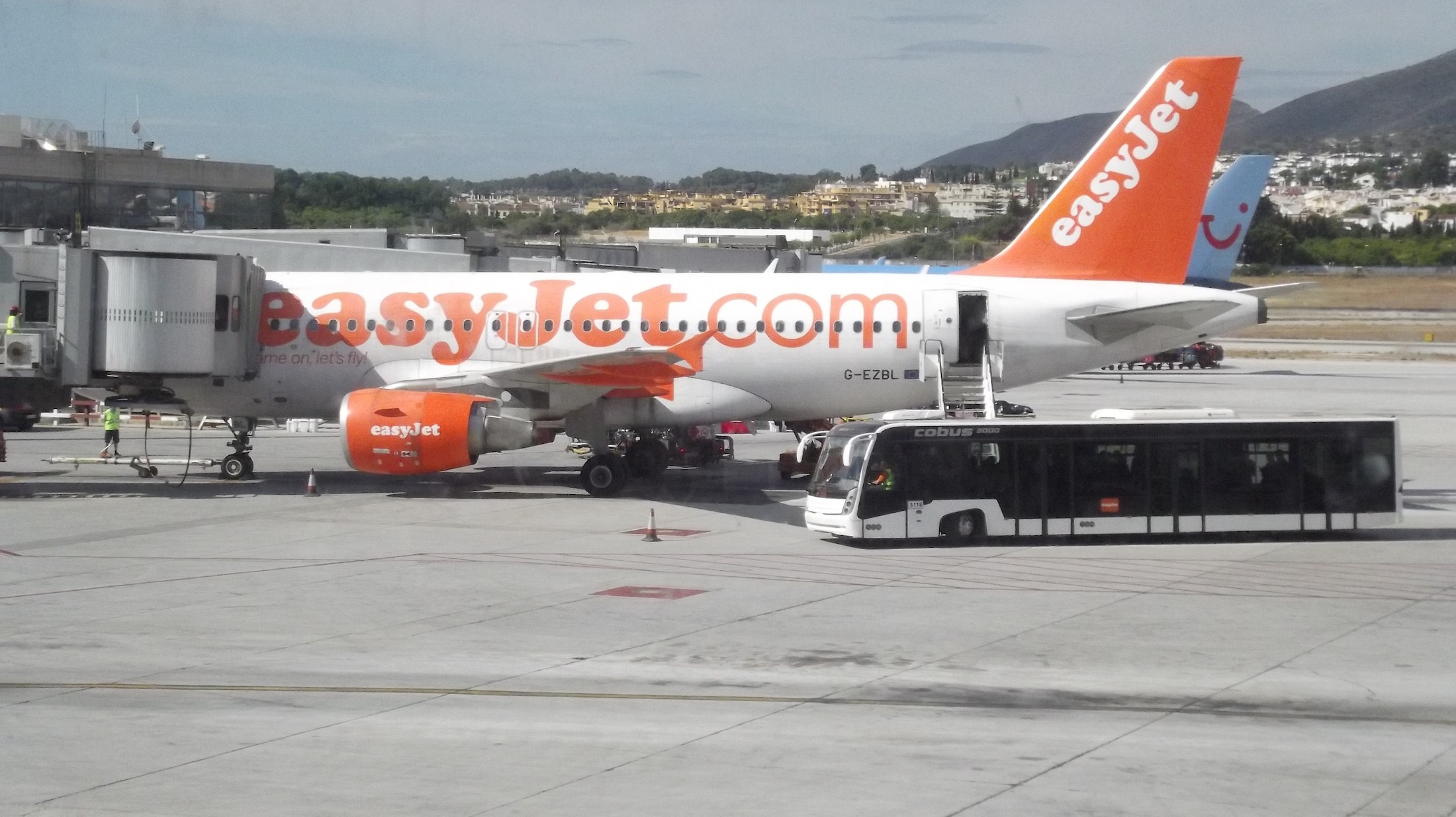
A family has been accused of knowingly boarding their dead grandmother onboard an EasyJet flight from Spain to the UK in a wheelchair, though I have a theory of my own.
Family Accused Of Wheeling Dead Grandmother Onto EasyJet Flight From Spain
A family traveling on an EasyJet flight from Málaga, Spain (AGP) to London Gatwick (LGW) came under intense scrutiny after passengers and crew raised concerns that an elderly woman brought onto the aircraft, who appeared unresponsive and was later pronounced dead onboard, was already dead before boarding.
According to multiple passenger accounts, the 89-year-old British woman was brought to the gate in a wheelchair by five relatives and assisted onto the aircraft. Several witnesses said she appeared slumped and unresponsive as she was wheeled down the jet bridge and seated toward the rear of the cabin. When airline staff questioned her condition, passengers claim family members indicated that she was tired or unwell, but that they were doctors and she was fine.
As the aircraft was taxiing for departure, cabin crew reportedly became concerned about the woman’s condition and contacted ground staff. The flight returned to the gate before takeoff and emergency services were called. Spanish authorities later confirmed that the woman was pronounced dead onboard the aircraft. The incident resulted in a significant delay for the flight.
EasyJet has disputed claims that a deceased passenger was knowingly boarded. The airline stated that the passenger had a valid fit-to-fly medical certificate and was alive at the time of boarding. In a statement, easyJet said the aircraft returned to stand due to a passenger requiring urgent medical assistance and that the woman sadly passed away after emergency services attended the aircraft. The airline expressed condolences to the family and emphasized that safety and wellbeing remain its priority.
Some Sympathy For The Family’s Predicament
At first glance, this incident sounds almost surreal, bordering on grotesque. But stripped of the shock value, it is a story about serious illness or death far from home and a family facing a very difficult situation.
If the woman did die before departure or was close to death, the family may have been motivated by a desire to bring her home rather than leave her remains in Spain. International repatriation of a body can be expensive, bureaucratic, and emotionally draining. My own theory is that she was probably very much near-death, at least before boarding (otherwise, how could she have somehow navigated the security checkpoint at AGP?), and they wanted to get her back to the UK as quickly as possible.
That does not excuse boarding someone who is clearly unresponsive, and it is undeniably selfish toward other passengers and crew. But it is not hard to understand the desperation behind the decision.
It reminds me of the early pandemic, when people knowingly flew while ill because they wanted to recover in their own beds rather than be stranded abroad. Grief and fear often push people toward decisions that prioritize selfishness over broader considerations of general welfare.
CONCLUSION
While accounts differ over whether the woman was alive at boarding, the undisputed fact is that she died before departure, delaying every passenger onboard for 12 hours. My own hunch is that this story is a sobering reminder of how grief can drive people to extraordinary and misguided choices when death or serious illness occurs far from home.
image: Elliott Brown






Years ago, while a Continental Airlines pilot, one of my fellow pilots recounted a similar story. A family in Florida boarded a dead relative in a wheel chair on a People Express flight (prior to its merger with CAL). It was a lot cheaper than air cargo, but, fortunately, they were stopped and deplaned. I’m betting the passenger was already dead and the family wanted a cheap repatriation to the UK. I would not be surprised if they face legal charges in Spain.
Weekend At Bernie’s III: Electric Boogaloo
Much prefer this to the civil war version of that meme.
When most travel insurers tell you they’ll cover “repatriation of remains”, they’re not talking about air-freighting a heavy coffin across the world, they’re talking about paying for your cremation in the place where you died, and then paying for your considerably lighter and less expensive ashes to be freighted home. If this isn’t what you have in mind for the disposal of your body, check the policy carefully and ask questions before you buy.
Over 40 years ago I was a new pilot at Continental Airlines. the Flight Attendant, also an RN, told me this story. A passenger was carried onboard accompanied by her daughter. The FA noticed the passenger and checked the passenger’s pulse and there was none. After a moment to think of what to say, she asked if she knew her mother was very ill? She said yes, she passed away on the last leg, we just need to get her home. The FA telling me the story said we continued on without informing the Captain.
Sometimes you just have to smile sweetly and let it slide…
They could have rented a car and got her home!!!!
Many years ago I recall reading a story about a BA flight from London to India IIRC.
An FA noticed two men struggling to get a suit bag in to a locker and thought it looked a bit suspicious so offered to help in order to investigate. Turns out the two men had their dead mother in the bag and were returning her home for a funeral.