
In a curious move that briefly shut down commercial aviation in a major U.S. border city, the Federal Aviation Administration halted flights in and out of El Paso International Airport before reversing course just hours later.
FAA Abruptly Halts El Paso Flights For “Special Security Reasons,” Then Quickly Reverses
Late Tuesday night, the FAA issued a temporary flight restriction prohibiting aircraft operations within a 10-nautical-mile radius of El Paso International Airport (ELP) up to 18,000 feet. The order, which was set to remain in effect through February 20, 2026, cited “special security reasons” and classified the affected airspace as national defense airspace.
The restriction applied to all commercial, cargo, and general aviation flights operating out of El Paso and nearby Santa Teresa, New Mexico. Pilots were warned that violators could face interception, enforcement action, and possible certificate revocation. The notice also included language referencing the potential use of force against aircraft deemed an imminent security threat.
The abrupt order immediately disrupted operations at an airport that typically handles dozens of daily departures on carriers including American Airlines, Southwest Airlines, United Airlines, and Delta Air Lines. Flights were delayed or canceled as airlines sought clarification and passengers scrambled for updates.
Local officials expressed surprise at the move, noting there had been no advance public warning or explanation for the restriction. Questions quickly emerged about what prompted such a sweeping measure and why it was issued without coordination or context.
Then, in a dramatic turnaround, the FAA lifted the restriction just hours later. Early Wednesday morning, the agency confirmed that normal flight operations could resume and stated there was no ongoing threat to commercial aviation.
Temporary flight restrictions are common around presidential movements, major public events, or emergency situations. However, a sudden and near-total suspension of air traffic over a metropolitan area for an extended period is highly unusual. It appears the flight restrictions were related to aliens Epstein Mexican drone cartels, with a Trump administration official stating:
“Mexican cartel drones breached US airspace. The Department of War took action to disable the drones. The FAA and DOW have determined there is no threat to commercial travel.”
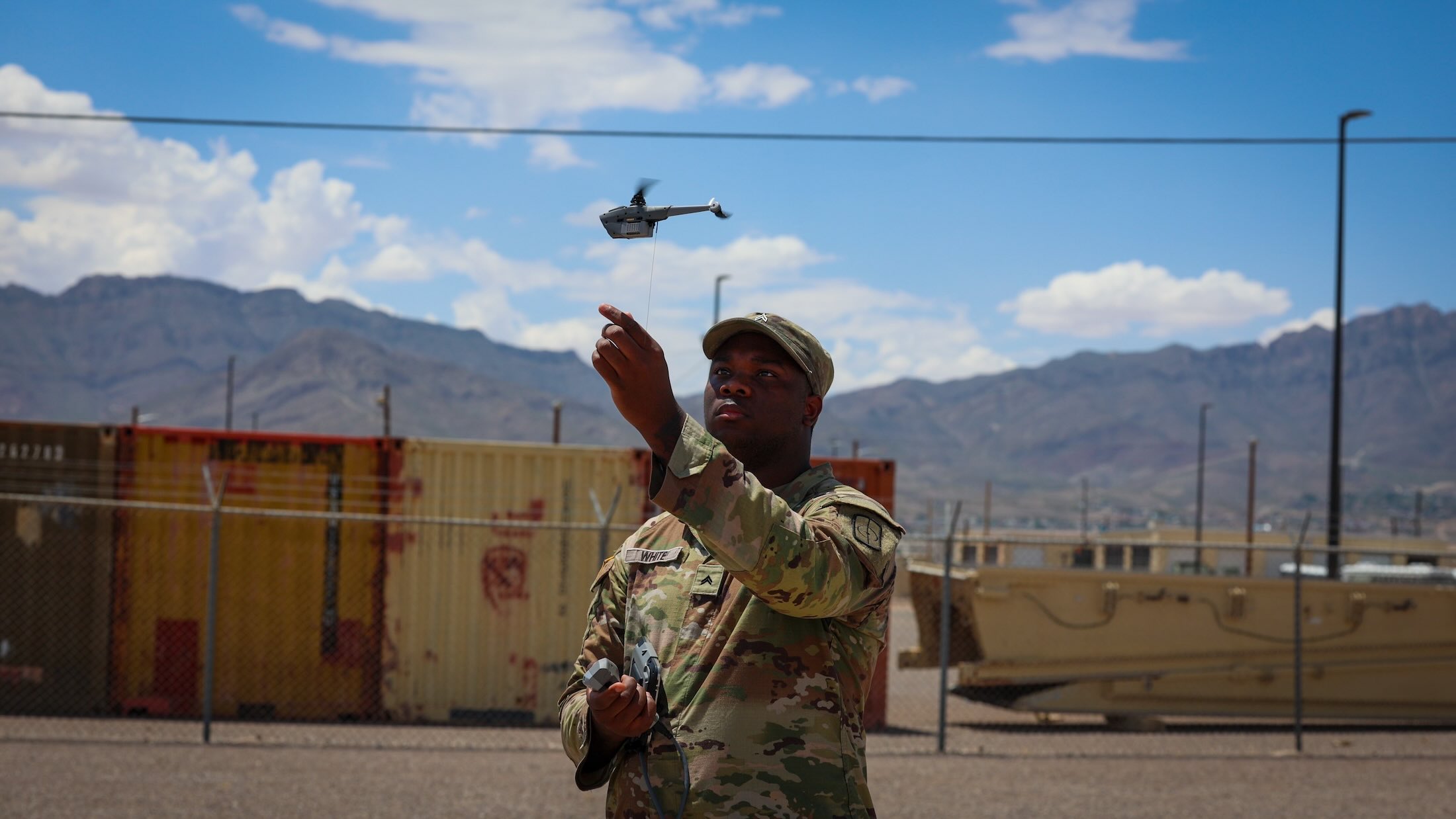
According to sources familiar with the FAA’s decision, the temporary shutdown of El Paso airspace was tied to operations out of Biggs Army Airfield at Fort Bliss, where military aircraft including drones and helicopters were operating in airspace adjacent to the civilian flight paths serving El Paso International Airport.
It appears the FAA acted after the Department of Defense could not “assure the safety of civilian aircraft in the area” during those operations, effectively leading the agency to restrict flights until the situation could be assessed and cleared. Fort Bliss is not only home for unmanned aircraft operations but also laser countermeasure systems that may have been used against cartel drones and posed a threat to civilian aircraft.
CONCLUSION
The FAA’s abrupt decision to shut down El Paso airspace, followed by a swift reversal, is still shrouded in mystery. If cartel drones did in fact breach U.S. airspace and required countermeasures from Fort Bliss, that is a serious national security matter. But the lack of immediate clarity from federal authorities only amplified confusion for airlines, passengers, and local officials.
When sweeping restrictions are issued without explanation and then rescinded hours later, it raises legitimate questions about coordination between the FAA and the Department of Defense, particularly in border regions where military and civilian operations frequently overlap. The incident may ultimately prove to have been handled appropriately from a security standpoint. Still, transparency matters. When airspace over a U.S. city is classified as national defense airspace overnight, travelers deserve more than a vague reference to “special security reasons.”
What do you make of this odd incident over ELP?
image: US Army





A reminder that no matter what the executive branch calls it, the Department of Defense remains the Department of Defense until the name is changed by congress.
And it’s also still the Gulf of Mexico. There’s gonna be a lot of ‘fixin’ to be done once this mess is finally over.
This was so odd. It makes Department of Defense and this administration look even weaker and more incompetent.
More manufactured crisis material to justify an unwanted military action. If the truth is out there, you will no longer find it from this administration.
I do think this is another distraction from the Epstein files. This whole thing is unfolding like Watergate, with information slowly trickling out that may eventually implicate the POTUS. I simply don’t understand why Biden withheld these files. Already, it has been extremely damaging to many of Trump’s closest confidants. What is in them that we still do not know about? The latest dump of 3 million files is still a distraction…there are thought to be 3 million more still withheld. I wonder what is in those?
Do you think the Guthrie kidnapping is also an Epstein distraction as well?
Fox and CNN stayed live overnight cancelling scheduled programming to cover it when they could have chosen to talk about Epstein. Fox even canceled their top rating show in Gutfeld and both went without commercials for hours.
Trump must be playing chess while everyone else is playing checkers in going this far to keep this covered up. Or are the networks on both sides of the political spectrum just giving the public what they want?
People love missing person stories…remember Natalee Holloway 20 years ago was the leading story every night the entire summer? What simpler times…
But if you think Trump isn’t engaging in “Wag The Dog” to distract from what must be truly terrifying in the Epstein files (more likely linking him to Russia, not pedophilia, in my opinion), I don’t think you are paying attention closely.
Well said, Matt. It’s 100% a wag-the-dog, sheer incompetence, or all the above. If the other party did anything like this, Fox/OAN/Newsmax/Rush, etc. would’ve roasted them in perpetuity, like a Benghazi, etc.
And what is wrong if Trump is linked to Russia?
He’d be linked to a Christian conservative country
The cold war is dead. So is the USSR and Reagan. Russia does not equal the USSR.
We should be allied with Russia against Western Europe, who we share nothing in common with these days
It’s one thing to do business with Russia, which he was and is free to do. But if there was election interference or even graft/corruption in Trump’s opening of hotels in the Russian Federation, then I think the American people deserve to know.
He is capable of anything to maintain influence on his dwindling followers.
Ok Matt – I’ve sat quietly on the sidelines while you’ve slowly turned your travel blog into an anti-Trump political blog, but you’re seriously going to go Black Helicopter conspiracy theorist to push Epstein and Russia-collusion narratives now? Riddle me this – if there’s information in those files damaging enough to bring down the Trump administration, why did Biden, Harris, and the DNC sit on this for 4+ years? With all of the leaks that emanate from the IC, not to mention your senator-cum-serial leaker of classified information Adam Schiff, you seriously want us to believe Democrats couldn’t get their hands on enough dirt to torpedo Trump’s 2024 campaign? If they had it and held on to it on purpose, what’s the end game?
C’mon, man. You hate Trump, I get it, we all get it, and it’s your right as a free American to believe what you want to. I don’t particularly like where our country’s politics is either right now. But seriously, you’re rapidly sliding beyond the pale and allowing your personal animus to overtake you. Just go back and read your own comments where you’ve inserted derogatory statements about Trump and his “MAGA worshippers” on posts that have absolutely nothing to do with politics. Be better. Do better. The path you’re on isn’t worth it.
Didn’t I say as much as about the Epstein files? I can’t figure it out, but this week we see what a bunch of liars people were, including Musk and Lutnick. More will come out, it appears.
It makes me upset to see what my Republican Party has become and how anyone can label anything Trump has done as “conservative.” Yes, I do hold his supporters responsible, including you, for being blinded by a lust for power and in the process, throwing out the conservative principles that made the GOP grand and the US a shining city on the hill.
Don’t think I hate you or Trump…I quite like you, Ram, and I’ve made clear I don’t hate anyone. We have to live in peace, side by side. I do hate the policies we’ve seen from this administration, ranging from tariffs to masked federal troops on the streets to a ballooning deficit and national debt to horrific rhetoric over Greenland/Canada/Panama that threatens to undermine decades of transatlantic stability. Don’t even try to argue that my disdain for Trump is emotional…it is rooted in his policies, which are absolutely destructive to my vision of America and the world.
I understand why the DOJ under Biden didn’t release these files. Because they took their jobs seriously and the prosecution against Ghislaine Maxwell was still playing out (it only ended in like January 2025, right before Trump took over). They didn’t see the value of Epstein materials in how they could benefit from them politically but how they could support their pursuit of justice against Maxwell.
That said, this is looking more and more like typical Trump admin incompetence combined with half-baked lies in a pathetic attempt to cover their tracks.
@MeonMosh
I think we are understanding a bit more now the decision not to release them by Biden prior to the election (or even after). The reality is that his administration foresaw how messy this would become for our society and did not want to take responsibility for wreaking havoc. This is not just about those who may or may not be implicated. It is about anyone appearing in the files carrying a stigma for life despite the level of their involvement with Epstein or any of the emails mentioning them, More so, they most likely predicted that this would become a national crisis of trust as a result. That it could break down our entire system (and it is appearing it may) through conspiracies, finger pointing, and the social media addiction to schadenfreude. These files, for any good they will do in identifying those who were horrible, will create ten times more friction in our nation to the point that there may be no stepping back from civil war (a different kind of civil war).
Even overseas we are seeing it. Starmer is an example. If he loses power over this it is just the start of a complete global unraveling. While he can apologize for not better recognizing Mandelson’s involvement, it is insanity that he should lose power over this. And the files are still 3M documents away and a lot of redactions from what will eventually come out.
This is why, I believe, Biden chose not to release them. The risk reward was far too dangerous for our country and perhaps the world. Further, I believe that they reasonably thought they could beat Trump in the election without them released and that by doing so before would have been seen as an attempt to influence the election and screams from MAGA that the files were fake as a result.
As to why Trump floundered on releasing them? Because he became aware that there are things in there that are going to be really bad for him. I agree with Matthew, I doubt the pedo thing, but could be wrong. More so I believe that there are deep state secrets inside that link Trump to Russia and some very shady dealings. Clearly he could give a rat’s butt about dismantling society in America like I believe Biden did. He just wants to protect himself and his friends.
Also, the legal process against Ghislaine Maxwell didn’t end until like January 2025. Aside from the fact that the DOJ shouldn’t publicly release their investigatory materials for political gain ever, no lawyer would do so while legal action was still pending.