
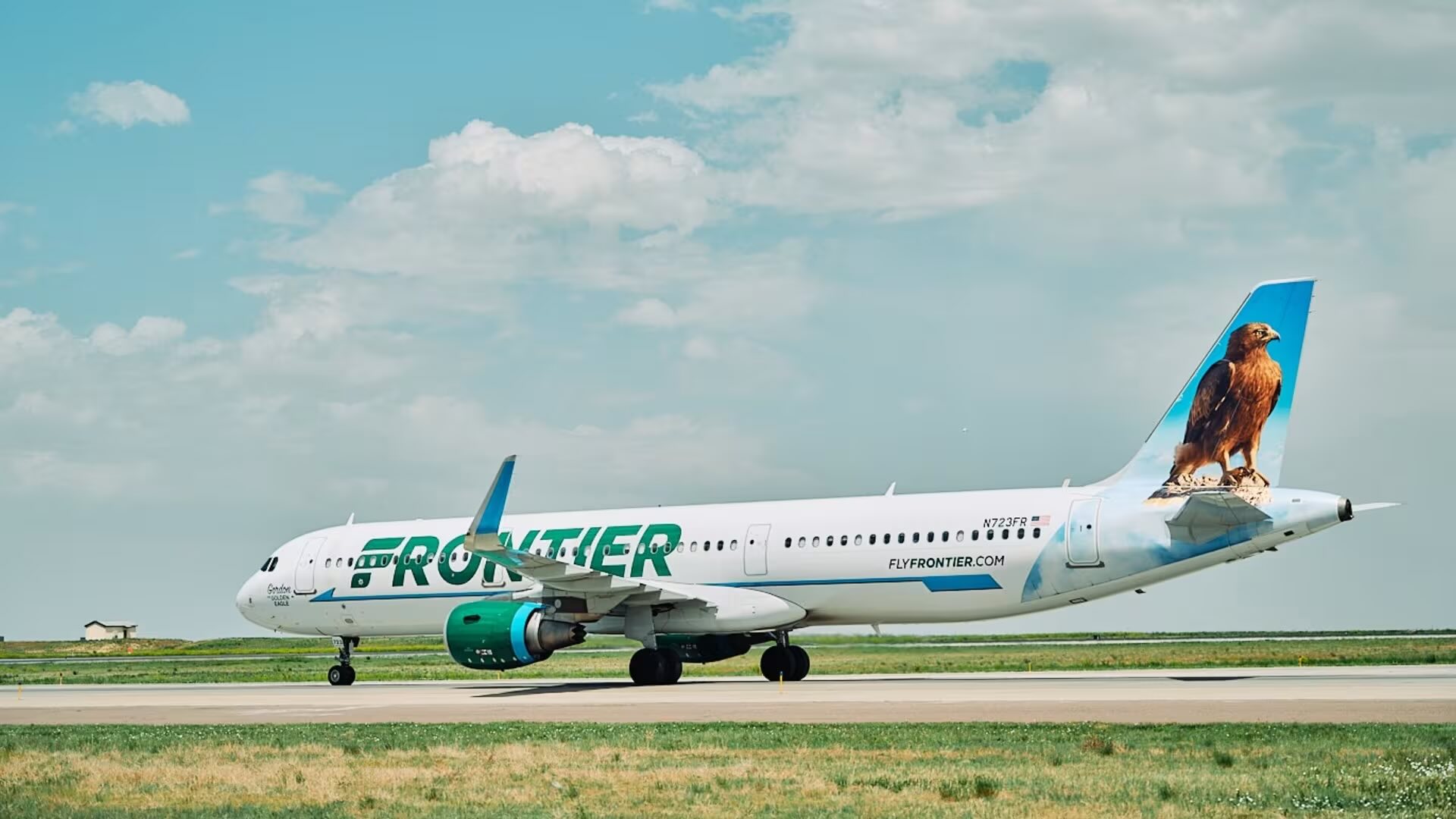
We recently noted something strange: Frontier stopped selling flights beyond April 13, 2026, and Kyle asked the obvious question, why would an airline delay publishing its schedule for that long? Now we have the answer, and it is not pretty, even though Frontier Airlines insists it will continue to grow.
Is Frontier Airlines Is Shrinking Or Growing?
When an airline goes “dark” beyond a certain date, it is usually not because it “forgot” to load flights. Rather, it is because it is still deciding what it can realistically operate. After a head-scratching delay, Frontier recently reopened its schedule for sale out to early September 2026, but the newly published inventory reflects a strategic pullback rather than the aggressive growth we have seen in years past.
Frontier’s capacity adjustment is not just route tinkering. The airline is also taking major action on its fleet, including returning aircraft to lessors and pushing deliveries further into the future, which at the very least signals a drastic slowdown in growth.
Frontier Is Returning Aircraft And Deferring Deliveries
The most concrete indicator that Frontier is in contraction mode is what it is doing with its airplanes.
- Frontier plans to terminate leases early on 24 aircraft during Q2 2026, returning them well ahead of the original lease expiration timelines (which would have been anywhere from 2-8 years).
- Frontier agreed to 10 future sale-leaseback transactions for aircraft deliveries between 2028 and 2029 (Frontier will sell the planes it acquires, then lease back so it can use them)
- Frontier has also reached an agreement with Airbus to defer 69 A320neo family aircraft deliveries that were previously expected between 2027 and 2030, pushing those deliveries years into the future (2031-2023).
While Frontier says these moves will still allow it to grow more responsibly at 10% per year, returning nearly 14% of your fleet and delaying dozens of future jets is a sign that Frontier’s growth plans were not viable…it may also (sadly) signal that Frontier will not pursue its merger with Spirit Airlines at this time as it worries about its own survival.
The “new” Frontier Airlines appears to be a business model adjustment driven by lower demand, lower yields, and cash preservation. But the low-cost model Frontier embraces flourishes or fades based on volume. When the fare environment softens yet costs remain stubbornly high, there is only one lever that works quickly: shrink. Even if there is tepid net growth, the model Frontier has built requires more robust growth to insulate itself from rising costs. This news cannot be seen as good for the carrier.
Here’s What Frontier Has Quietly Cut From August 2026
While the Frontier route map changes each year and is more prone to change than traditional network carriers, there will be a lot of cities this summer that currently do not have service scheduled when compared to last summer.
Fro example, here are the markets that had service in August 2025 but are not showing service this August 2026:
- Antigua (ANU)
- Aruba (AUA)
- Boise, Idaho (BOI)
- Burlington, Vermont (BTV)
- Charleston, South Carolina (CHS)
- Green Bay, Wisconsin (GRB)
- Harrisburg, Pennsylvania (MDT)
- Missoula, Montana (MSO)
- Everett, Washington (PAE)
- Palm Springs, California (PSP)
- Puerto Plata, Dominican Republic (POP)
- Portland, Maine (PWM)
- Savannah, Georgia (SAV)
- Spokane, Washington (GEG)
- St. Croix (STX)
- St. Thomas (STT)
- Syracuse, New York (SYR)
- Tucson, Arizona (TUS)
That list is a blend of leisure flying and secondary markets where Frontier has often attempted to stimulate demand with ultra low fares. Despite making some changes like introducing “business class” and selling “all-you-can-fly” passes, it still seems like we are in a period of adjustment in which consumers are shying away from the budget carrier model.
CONCLUSION
In hindsight, Frontier’s schedule blackout was quite telling. It is hard to sell future travel when you do not yet know how many aircraft you will operate, where you will deploy them, or whether your network plan is about growth or survival.
The airline is still selling flights, still competing aggressively where it chooses to compete, and still chasing ancillary revenue. But the direction is clear: fewer airplanes, fewer markets, and a more conservative network, even as it pledges to continue to grow.
I don’t see this as the beginning of the end and I’m rooting for Frontier, because I think the US market needs budget carriers like Frontier and Spirit. However, it is another clear sign that the status quo for Frontier is not working.
Have you been impacted by Frontier’s schedule cuts or route changes for summer 2026?
image: Frontier Airlines





All the big 3 Fanboys especially Delta and United that are wishing for the destruction of the ULCC’s you will get what you wished for. Competition will be gone and it will be terrible for the consumer. As a United 1k I wish for all the ULCC’s to transform and survive. Look how many planes they have they grew way too fast. Let’s hope they can right size and remain formidable competitors. Hopefully this is what Frontier is doing now.
Exactly. We, consumers (and workers), should want greater healthy competition in this and all industries. Unless they are parasitic hedge funds, those who root for the downfall of LLCs are shooting themselves in the foot.
You missed 2 datapoints in your analysis:
1) Frontier has drastically reduced their utilization already. It was at 8.6 hours per aircraft per day in 4Q25 and 9.2 for the full year, both down about 10% from the same periods in 2024.
2) They are receiving 24 aircraft deliveries this year per the CEO, so they’ll be even fleet-wise, but the majority of them are the larger 321neos but the aircraft being retired will be all 320neos, which will increase their total seats by about 2%
Also, how are the sale-leasebacks, an activity they have done for years for essentially all their aircraft, indicative of shrinking?
The stations they’ve closed could be more of a strategy shift. I’d love to see you post the total number of daily departures across all 18 of those stations, as the vast majority of them were less-than-daily in summer 2025 and I’d expect the number to be somewhere around 10-15 daily departures, so the closures affect only a small percentage of their network.
If they return their utilization back to 2024 levels and follow the current fleet plan for the rest of the year, they will be at ~12% ASM growth by the end of the year, which should offset the slight shrinking this quarter and bring close to 10% growth overall.
The bigger question I have is why didn’t they return the 25ish 321/320 CEOs instead and get better efficiencies from reduced fuel burn and simplified maintenance/spares. I’m interested to see how that formula penciled out.
Helpful comment. Thanks, Ben.
Oof. That’s not ‘great.’ April 13 is near, like 60 days. I suppose its better to have an end-date than to keep selling to customers you can’t serve.
New CEO, new strategy… This latest fleet overhaul could fortify F9’s ultra-low-cost airline model and provide agility in a constantly evolving aviation sector.