
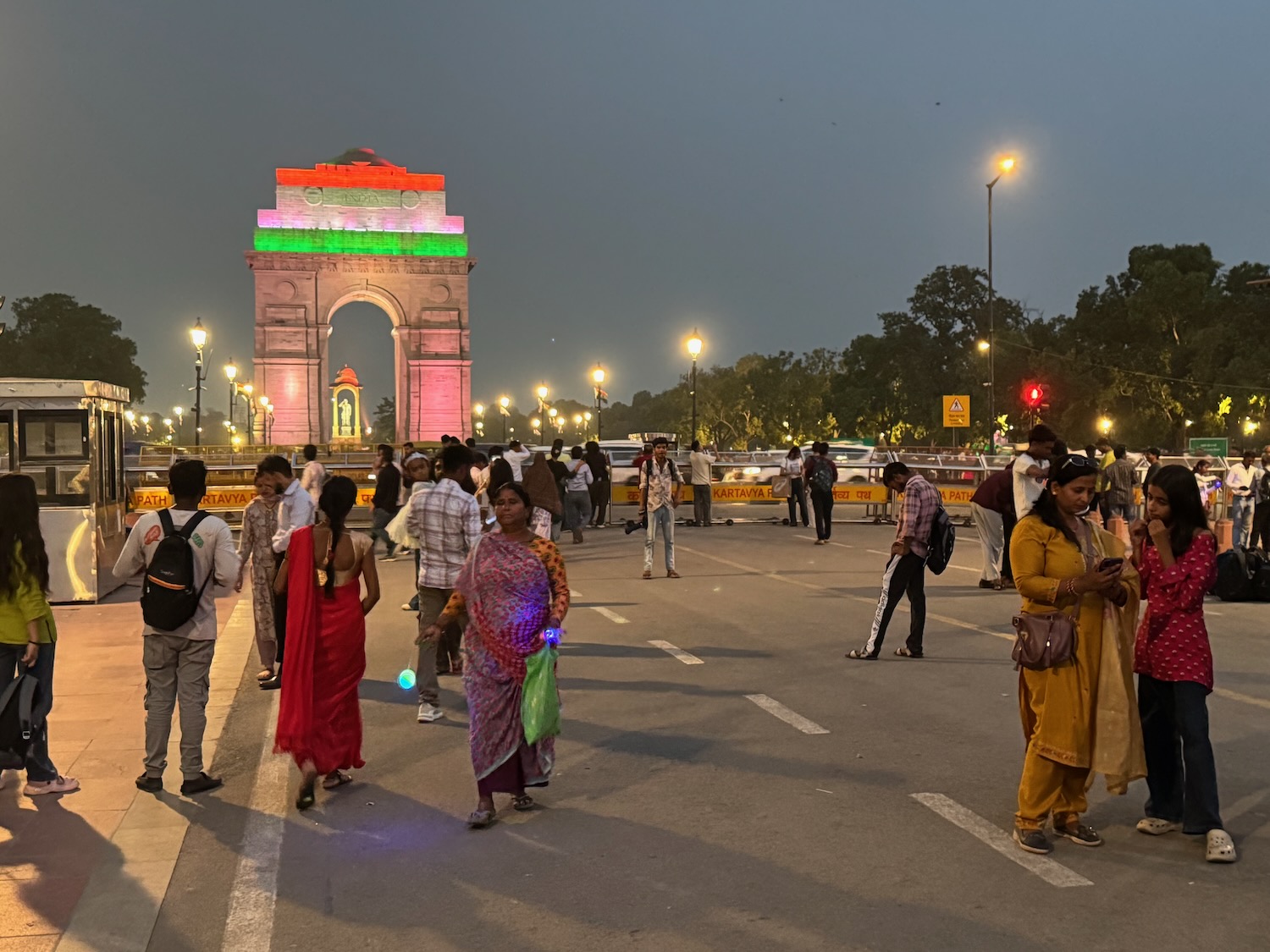
If you visit India Gate while in Delhi, be ready to deal with the aggressive photographers who will want to take your picture…
Caveat Emptor: The Aggressive Photographers Around India Gate
Located in the heart of New Delhi, the India Gate was built by the British to commemorate Indian soldiers. Designed by Sir Edwin Lutyens and completed in 1931, the sandstone arch was originally called the All India War Memorial. It honors more than 70,000 soldiers of the British Indian Army who died during World War I and the Third Anglo-Afghan War, with thousands of names inscribed directly into the monument. Architecturally, it was modeled after other European triumphal arches, but after independence it was gradually absorbed into India’s own national story rather than treated simply as a colonial relic.
India Gate stands at the eastern end of New Delhi’s grand ceremonial axis, now called Kartavya Path. The boulevard was also designed during British rule as part of the creation of imperial New Delhi, running from the former Viceroy’s House, now Rashtrapati Bhavan, toward India Gate. It was originally known as Kingsway, then renamed Rajpath after independence. In 2022, the Indian government renamed it Kartavya Path, meaning the “Path of Duty,” as part of a broader effort to move away from colonial terminology. Today, it is where India holds its annual Republic Day parade, making it one of the country’s most symbolically important public spaces.
The area therefore carries several layers of history at once. It was planned as a showpiece of British imperial power, but the buildings and monuments have been reinterpreted by independent India. Rashtrapati Bhavan is now the home of India’s president, Kartavya Path hosts the Republic Day parade, and India Gate functions as a national war memorial. An imperial landscape has become the ceremonial heart of the modern Indian republic, which I think is a far better way to deal with historic statues and monuments from an different era than razing them.
Anyway, that’s not my point here. Instead, I was met by tout after tout after tout of young men wanting to take my picture while I stood admiring the gate. One particularly aggressive guy began taking my picture without my permission, then came up to me and showed me the picture. Despite the red eyes, it wasn’t bad…
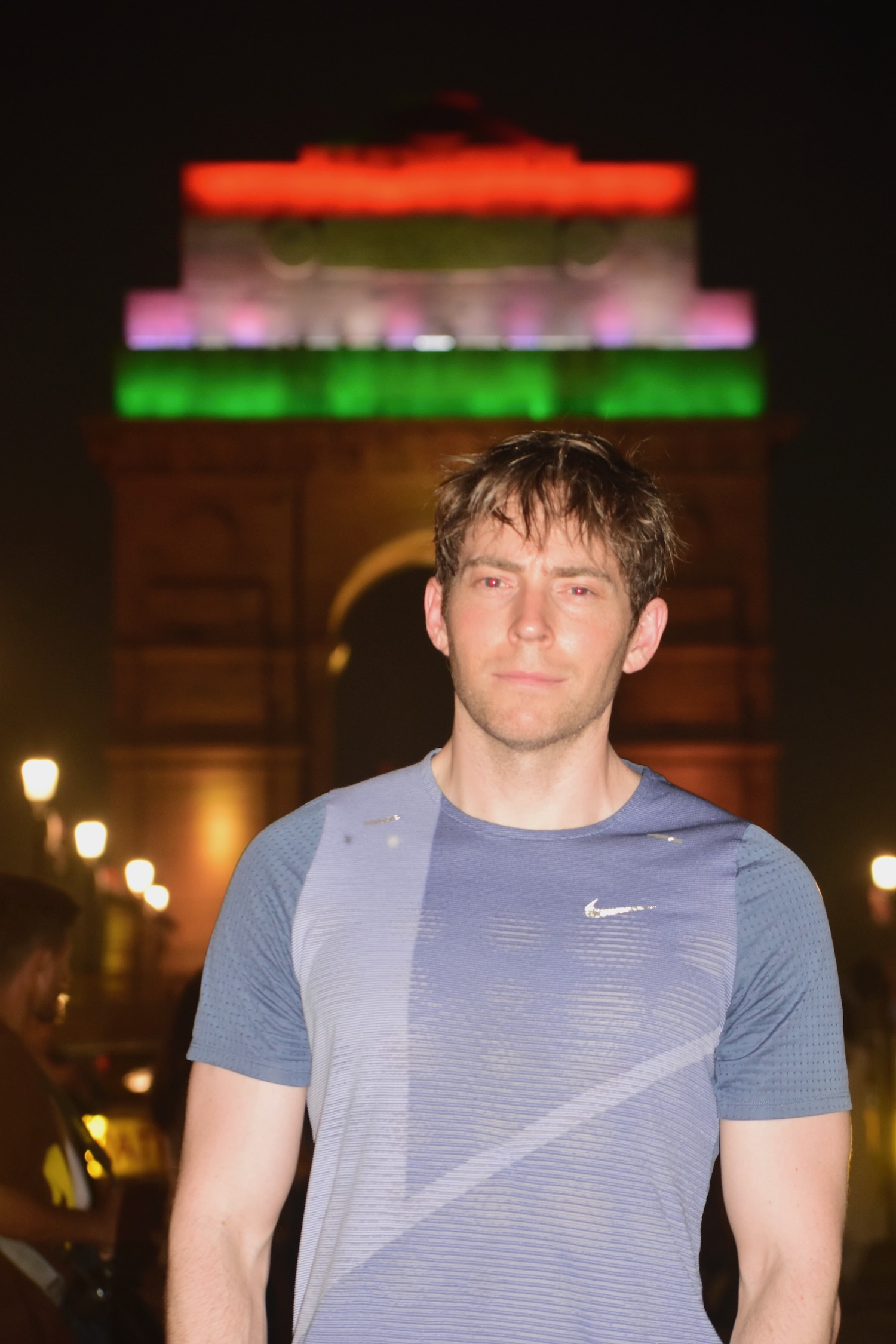
He took about a dozen picture and told me to give me my phone. Umm, no thank you…what if he took off running?
While I held the phone, he plugged in his camera to my phone via USB-C and uploaded the pictures.
He then, very matter-of-factly, told me that the picture were 200 INR each so I owed him 2,400 INR (about 25 USD). I laughed and said, “I just wanted that one.” He told me, no, no the others were “free.” So I said, “200 INR for all of them?” And he said, “Come on sir, give me at least 1,800.”
No way…
I again offered to delete the pictures but I could see where this was going.
“So how much you want to give me?”
I gave him 500 INR. I looked at him and said this is more than fair considering I never asked you to take pictures in the first place. In these sorts of situations, rather than argue I smile and put out my hand to offer a handshake…he got 500 INR for a few minutes of his time and he knew he wasn’t going to get anything more out of me.
So he smiled and shook my hand and that was that.
I wasn’t seeking a photographer, but if you are they are plentiful around the India Gate. Just be ready to negotiate…I’m sure I could have done even better, but I was okay with the 500 INR expenditure.






On the negotiation, I couldn’t help but think of the old exchange… “What kind of woman do you think I am? …We’ve already established that. Now we’re just haggling over the price.”
you should have never let him plug into your phone. electronic diseases don’t spread by AirDrop
Life in India is wild to say the least. Nothing like it on the planet
Petty (cash) scams is just part of the travel experience. The scammers have the home field advantage (and they know it). Just protect your safety and valuables, give then a few dollars for a meal in exchange for something to write about. Your good deed, smile, and generosity will promote a good ripple effect.