
121pilot, our resident commercial airline pilot on Live And Let’s Fly, weighs in on what he sees as a troubling parallel between his former airline and Spirit Airlines.
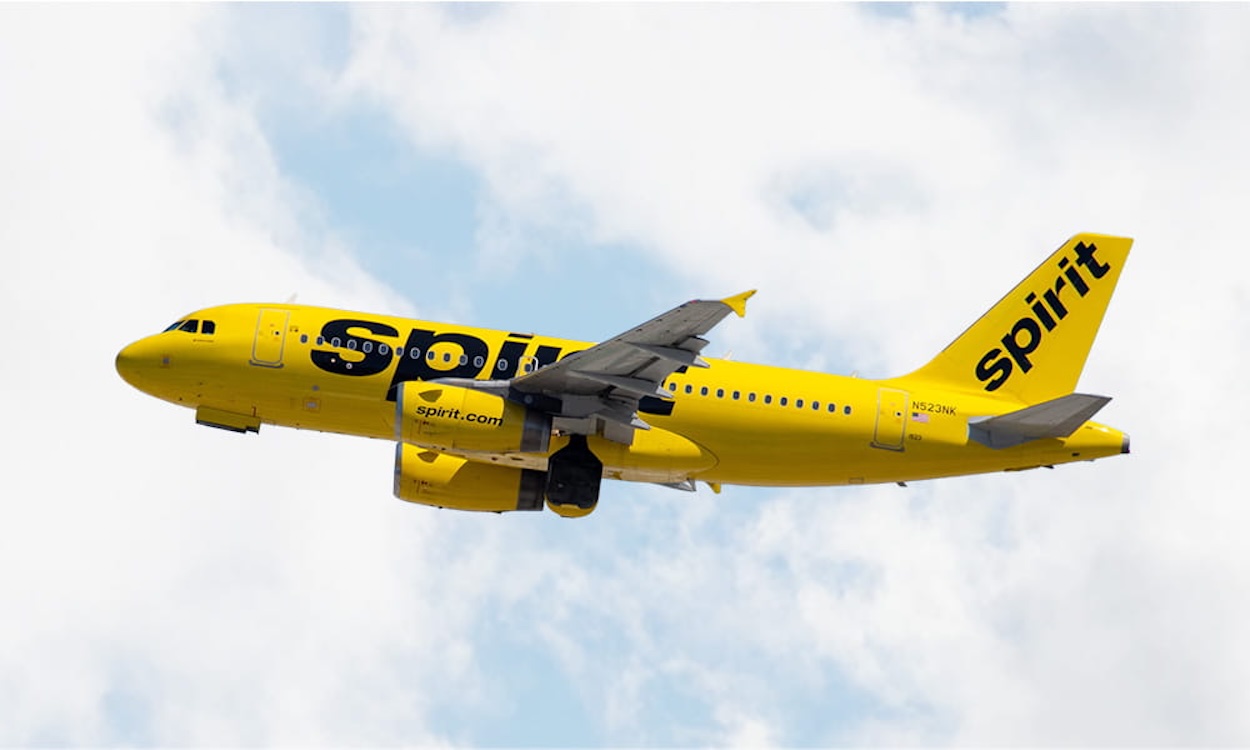
I’ve Seen An Airline Die Before. Spirit Airlines Feels Uncomfortably Familiar.
As astute followers of the industry, many readers may already be aware of the statement released earlier this week by the Air Line Pilots Association (ALPA) imploring the bondholders to continue funding Spirit Airlines and its exit from bankruptcy. For those who may have missed it, you can read the full text (here). Frankly, this message feels very familiar to me, and not in a good way. Which leads me to a story from my past…
Many years ago, I was a part of the leadership team for ALPA at the airline I worked for at the time. As such, when we filed for bankruptcy protection, I was directly involved with efforts to save the airline and our jobs. In my case, the timeline from bankruptcy filing to shut down and liquidation was relatively short. It was sadly apparent, early on, that management had no seriously viable plan for keeping the company going. A perfect example comes from when they had everyone sign non-disclosure agreements and brought us in for a presentation on their “save-the-company” business plan.
It was instantly obvious to us that this plan was more fairy tale than reality. It relied on very optimistic assumptions around the revenue environment and fuel costs. Even with those assumptions, a significant portion of our fleet would continue to operate at a loss through the end of the plan. A member of our negotiating committee had worked on Wall Street before deciding to become a pilot. As such, he and the CFO had frequently spoken essentially as a back channel between the company and us pilots. I remember him calling the CFO after we got back to our offices from the meeting. He asked him what the real plan was because they couldn’t possibly be going to investors with this, expecting good results. He was told that there was no other plan, and this was it.
At that point, we knew for certain that all of us were going to be unemployed in the near future. I was a part of writing messages that went to the pilot group with the goal to signal our pilots that we were doomed without saying it out loud. We wanted to warn the pilots without snuffing out whatever minuscule chance there was of a rescue.
I tell this story because the ALPA letter to Spirit’s bondholders sounds all too familiar to someone who has lived through an airline shutting down. It feels to me like a last-ditch Hail Mary effort to avert a decision that likely has already been made. I can’t think of any reason for ALPA to issue it if there was any confidence that the bondholders were going to continue to provide funding for Spirit to exit bankruptcy. From the letter:
One of Spirit’s principal bondholders is Citadel, a Miami-based firm with significant influence in this restructuring. Citadel and the other bondholders are in a key position to decide what happens next. They have a choice to make — continue funding and allow Spirit’s restructuring to move forward or withhold funding and shutter thousands of jobs leaving a deep void in the South Florida economy.
With that influence comes responsibility not only to the process, but to the community in which Spirit operates and the thousands of workers whose futures are tied to this airline’s survival. Access to this funding could mean the difference between an airline that emerges from Chapter 11 and an airline forced into liquidation. The ask is straightforward: fulfill their existing funding commitments and allow the restructuring to move forward.
These bondholders don’t care about putting people out of work, it’s all about the money. My guess is the statement is an attempt to get politicians to lean on the bondholders, as they do care about jobs being saved.
To be clear, I have no inside knowledge of what’s going on at Spirit. I’m a pilot, not a finance guy, and I don’t work for the company. My pilot friends at Spirit are working frantically to find another job, and none of them view the ALPA statement as anything other than bad news. Having lived through an airline I worked for shutting down, it’s an experience I wouldn’t wish on my worst enemy. I hope for the sake of all the staff that Spirit management can forge a path forward. But my gut is telling me this is a story I’ve seen and lived once before.
image: ALPA




first, no one wants to see anyone lose their job in any business. but it has happened over and over and over again in the airline industry because of poor management and NK will likely be the case again.
second, where did he EVER get the idea that lenders were interested in anything other than their own financial interests? Perhaps he could share the loan documents that NK signed that show an obligation to protect jobs.
third, the reason why the big 4 are doing better and that is expected to continue into 2026 is because low price domestic capacity is being removed from the US aviation system. For the first 4 decades of deregulation, ULCCs and LCCs had an advantage over the legacies but that has flipped over the past 10 years and esp. since covid.
Delta clearly strategized during covid to raise labor rates to make it much harder for LCCs and ULCCs to survive and NK, B6 and many others are simply treading water. and, it is also not a surprise that DL has benefitted the most from B6 and NK’s cuts because DL has the most network overlap with those airlines.
I do hope you have your apps in with the big 4. Consolidation is coming and the US will have fewer airline choices in a few years.
that has happened with a whole lot other industries and it is happening now w/ airlines.
So, Tim, now you care about workers, huh? Interesting, because you’re constantly trashing unions here and elsewhere. Meanwhile, its these unions, while never perfect, that still very much do protect and support pilots, flight attendants, dispatchers, maintenance technicians, baggage handlers, and others, especially when times get tough; otherwise, airlines would pump their stock numbers by dumping staff, regardless of need or financial woes.
What a weird and pointless article.
No one at Spirit is “scrambling to find another job”. The pilots that want to leave have their CJOs. The pilots that love it at Spirit and have decided to stay will be just fine. The Frontier acquisition will be announced very soon.
I disagree about the impact of ULLC’s to mainline carriers.
I doubt Delta thinks much about Spirit’s 3 flights a week between Orlando and Latrobe, PA. I think Delta is much more interested in Spirit’s 3 flights a day between Orlando and Atlanta.
But I think it’s more about good old demand elasticity. Spirit’s customer base is more, much more, impacted by declining real wages than is Delta’s and Spirit simply cannot pass along the higher operating costs of post-Covid pilot wages. Delta, on the other hand, can offer things that its more “upscale” customer base perceives as added value and mitigate its higher costs
One useful tool to determine this is that I can’t tell you when, if ever, I’ve seen police body camera videos of a passenger being dragged off a Delta flight. Off Spirit, every day.
Sorry you went through this. In this case this was the inevitable end for Spirit from the near start. A weak business model with poor customer service and a customer base that is more economically sensitive than the majors all worked against them.
I Hate to see anyone lose their job and reduce competition that will result in higher costs for all of us, but it just wasn’t a great operation. I would like to see Frontier and Allegiant succeed and help with pricing.
The ALPA letter was cute……just a bunch of highly-paid guys trying to protect their gig. It’s nice that that wrapped it up as concern for the gate agents, flight attendants, other employees and vendors……none of which any airline pilot gives one shit about.
I felt the ALPA memo read more like a “Go Fund Me” posting.
I think it is clear that rising costs are a bigger problem for the LCCs, but one question I have had revolves around the points often made that there is reduced demand from price-sensitive travelers in a weak economy, while at the same time there is growing customer demand for more premium experiences. How is is that both of these are true at the same time? Income disparity – which has been growing for decades, and is not just a product of the economy in recent years – is one argument for that, but I’m not sure about it. Are people who didn’t fly much in the first place really now flying less? Do they really have less disposable income, or more real income, just less than others, as the data indicates? I’d be more inclined to believe that post-COVID, flying habits of the middle class and higher have changed – the people who can afford to fly are flying more and are more willing to pay to have a decent experience.
I’m sorry to see Spirit go. I fly them regularly…one time a week for years. On the whole, it’s been a GREAT airline. Low prices. You do get what you pay for…and, turns out, with Spirit as a competitor, customers did not HAVE to pay for everything…they forced the rest of the industry to adapt (and the big guys did). But, a few other things of note…
…credit card money is what floats the industry…plus…
…regulatory capture by the unions and the airlines combined. There is NO WAY that pilots deserve $400-$600k to fly. No way. That is purely a function of the US government making the 1,500 hour rule, which was not in any way a reflection of safety (and no other major western market has such craziness). Pure theft from the consumer by limiting labor supply.
…allowing things like “gates” and “slots” to be treated as private property rather than a public good which is regularly auctioned to the highest bidder. Doing so might raise prices, but it would cause real competition among airlines. Today, it’s an oligopoly where markets are de facto divided among princes (airlines). Want to go to DFW? American. Atlanta? Delta…(to the point of never building a competing airport!!).
…we need real anti-trust enforcement…if Spirit-JetBlue is illegal, then the “big 3” need to be broken up!
They’re certainly in a mess. Poor management decisions are part of the problem, for sure, but the effect of the PW1100G engine debacle cannot be overstated. Pratt paid them “compensation”, but obviously there’s no substitute for having airplanes actually in the air and earning their keep. In 09/2025 Pratt released a statement that forecast there will be about 350 1100G-powered aircraft grounded worldwide through 2026, so they’ve not only been a disaster for Spirit, but caused a mess at almost every operator that didn’t order the CFM LEAP. For a company that prides itself on building “Dependable Engines”, the 1100G has been a humiliating fiasco.
Thank you, pilot 121 for sharing your insights with us, and to Matt, Kyle, LALF for hosting. Your statement: “These bondholders don’t care about putting people out of work, it’s all about the money.” That line hits hard. While some pilots and maintenance technicians will likely scooped up by competitors, I fear for everyone else who likely will be out of work for a while longer, especially if there is a wider economic downturn that coincides with Spirit’s woes. This is all indicative of macro issues. Wish there was a better way.
What else can the commentators & readers of the Live and Let’s Fly blog do but wish NK a safe and peaceful future?
Thanks to superb leadership of Dear Leader, exemplified by tax cuts for billionaires, there will be no bankruptcies in the USA.
Anyone saying otherwise is clearly not willing to pull themselves up by their bootstraps and work on the farms for reeducation.
MAGA
Worked for this doomed operation, they outsource their customer service to providers that don’t align with Spirit’s alleged customer service. I begged the CEO to put his boots on the ground when they hired him. I reached out to HR, all fell on deaf here and here they are about to go belly up. I feel horrible for the employees not pity for overpaid useless executives.