
United Airlines will introduce another Airbus A321 variant this summer, the A321XLR, an “extra long range” aircraft that will start flying transatlantic routes, with the possibility of new destinations that were not previously viable.
United’s A321XLR Will Replace 757s And Expand Premium Routes
United Airlines has confirmed that its incoming Airbus A321XLR aircraft will begin replacing Boeing 757-200s on select international routes starting this summer. Eventually, 50 A321XLRs are expected to join United’s fleet and more than half of them are expected to be in service by 2028.
The A321XLR will feature:
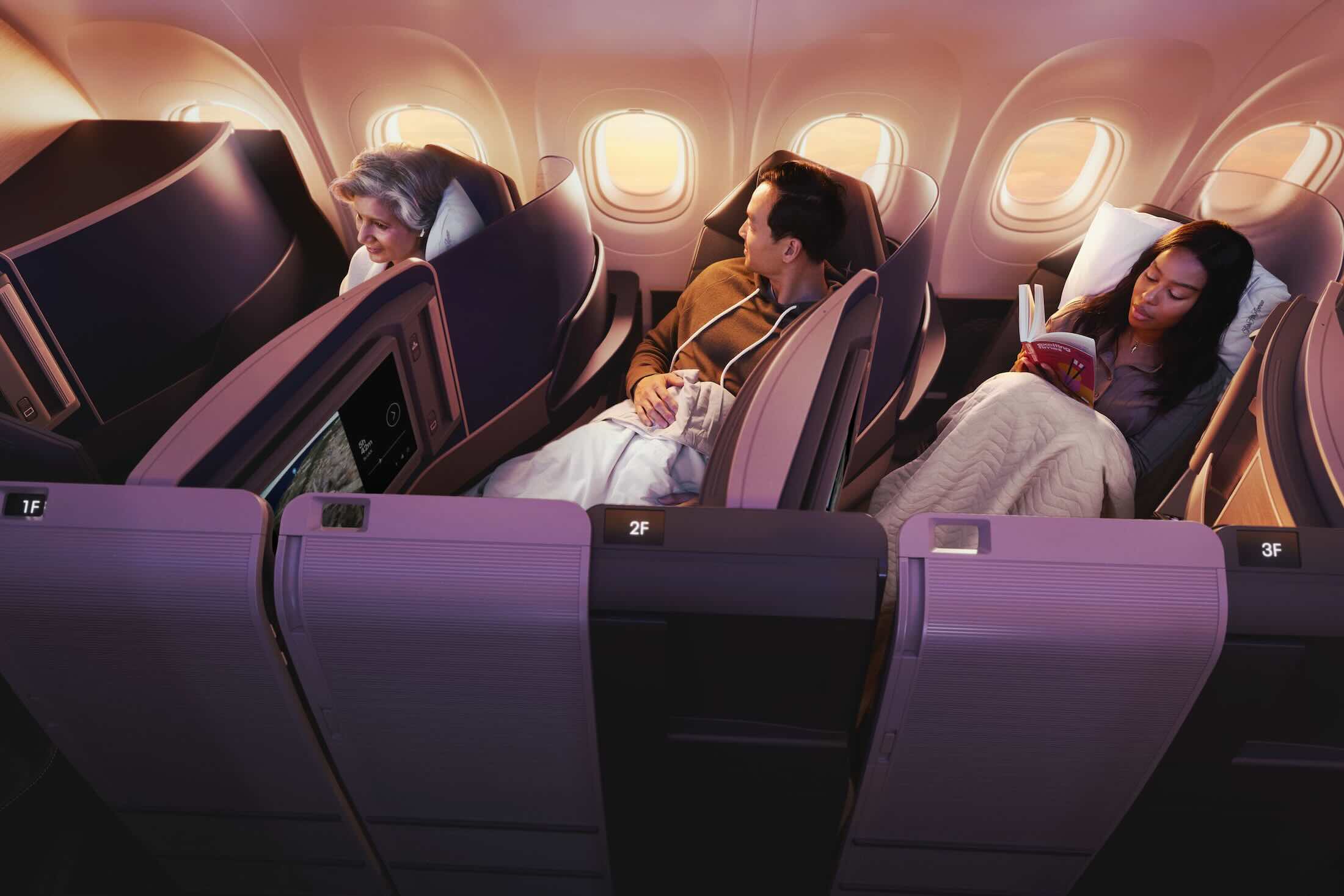
- 20 Polaris business class seats (4 more than the 757 it replaces, all with direct aisle access)
- 12 Premium Plus seats
- Economy cabins with upgraded screens and connectivity
The Polaris seats will be the same as on the A321neo Coastliner (though the doors will be certified). United promises that these seats are “wider at the shoulder and elbow than similar competitor products,” doubtlessly referring to the recently-introduced American Airlines A321XLR.
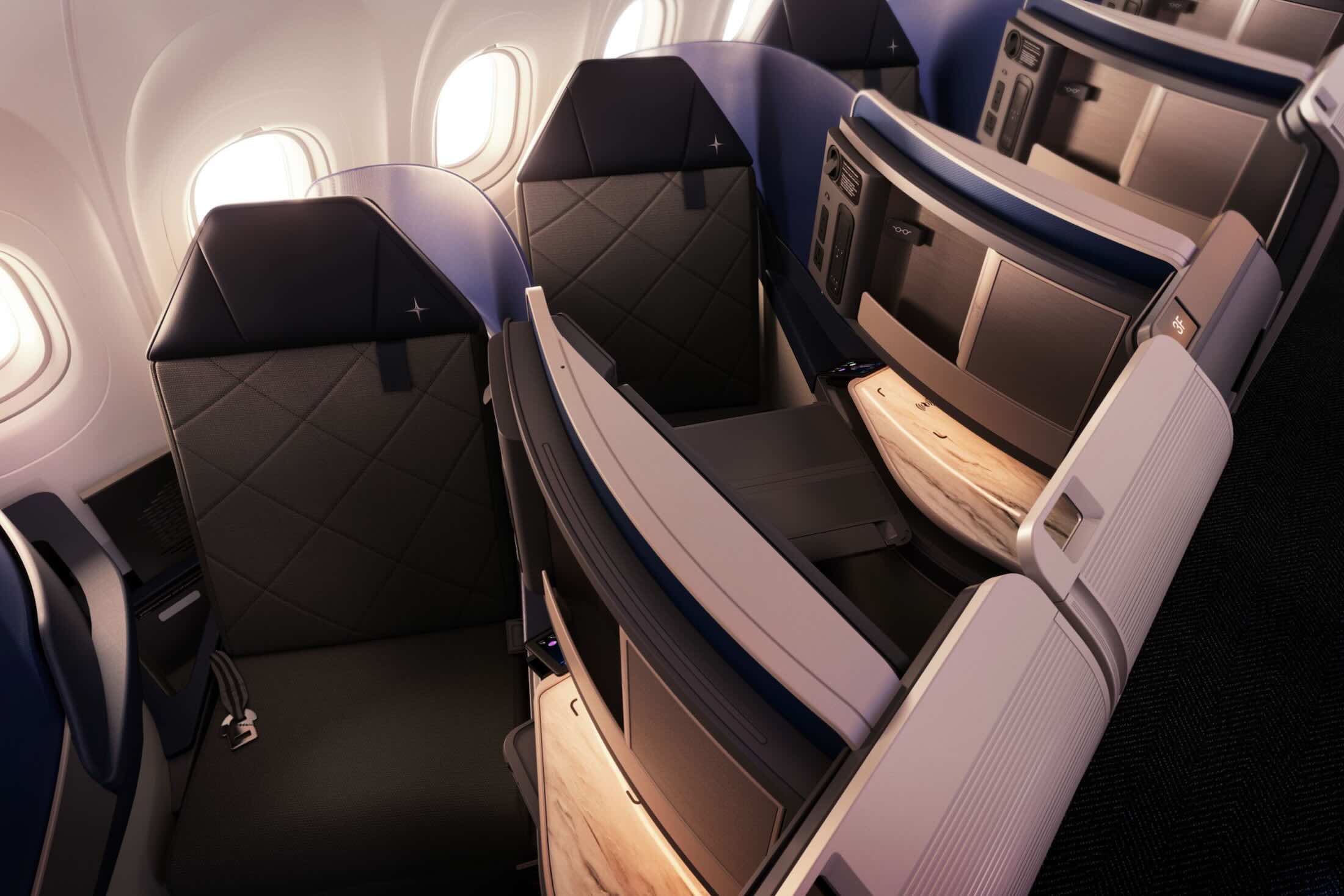

Premium Plus will have a bulkhead behind it, unlike on the A321neo, creating the feel of a more separate cabin and class of service.
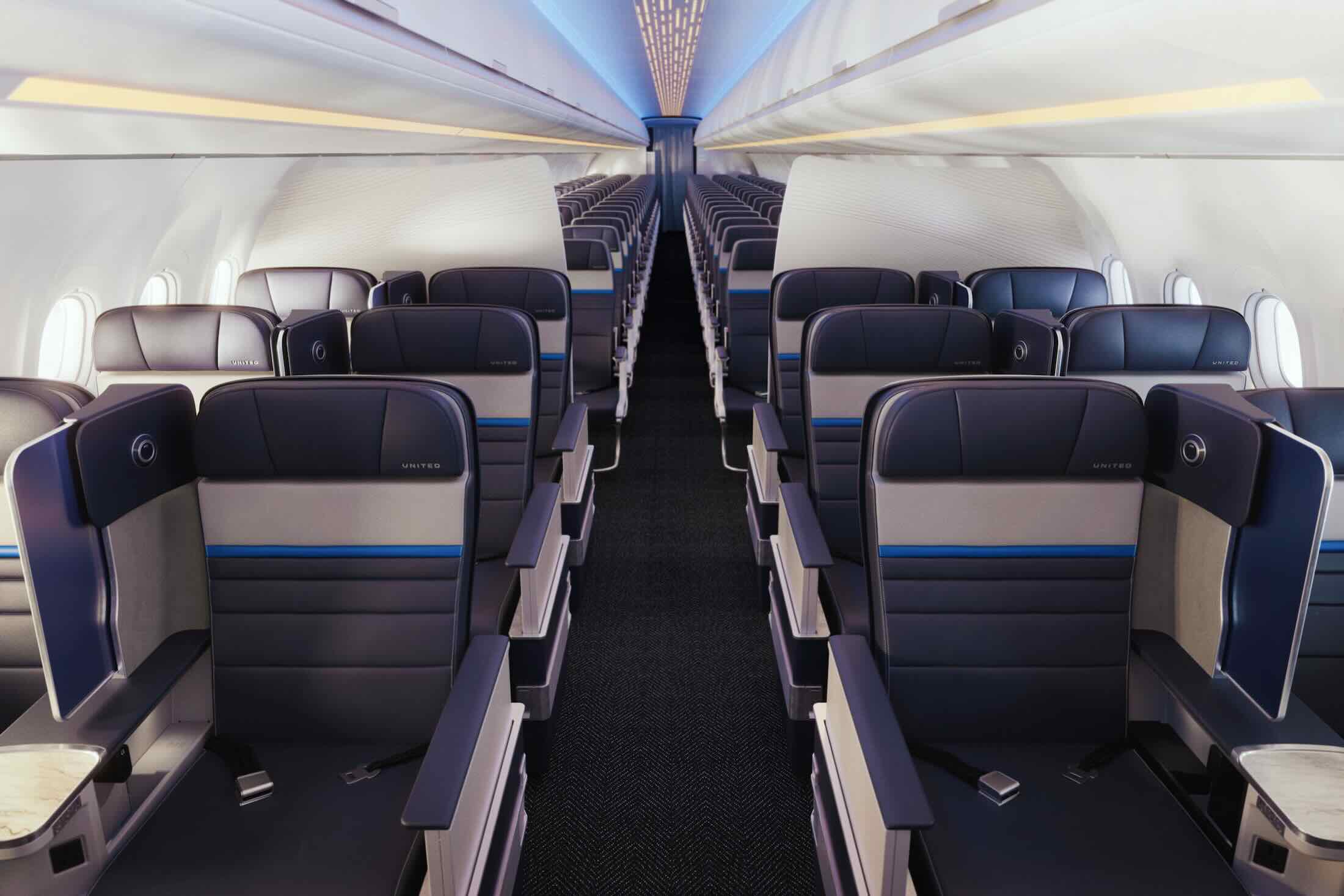
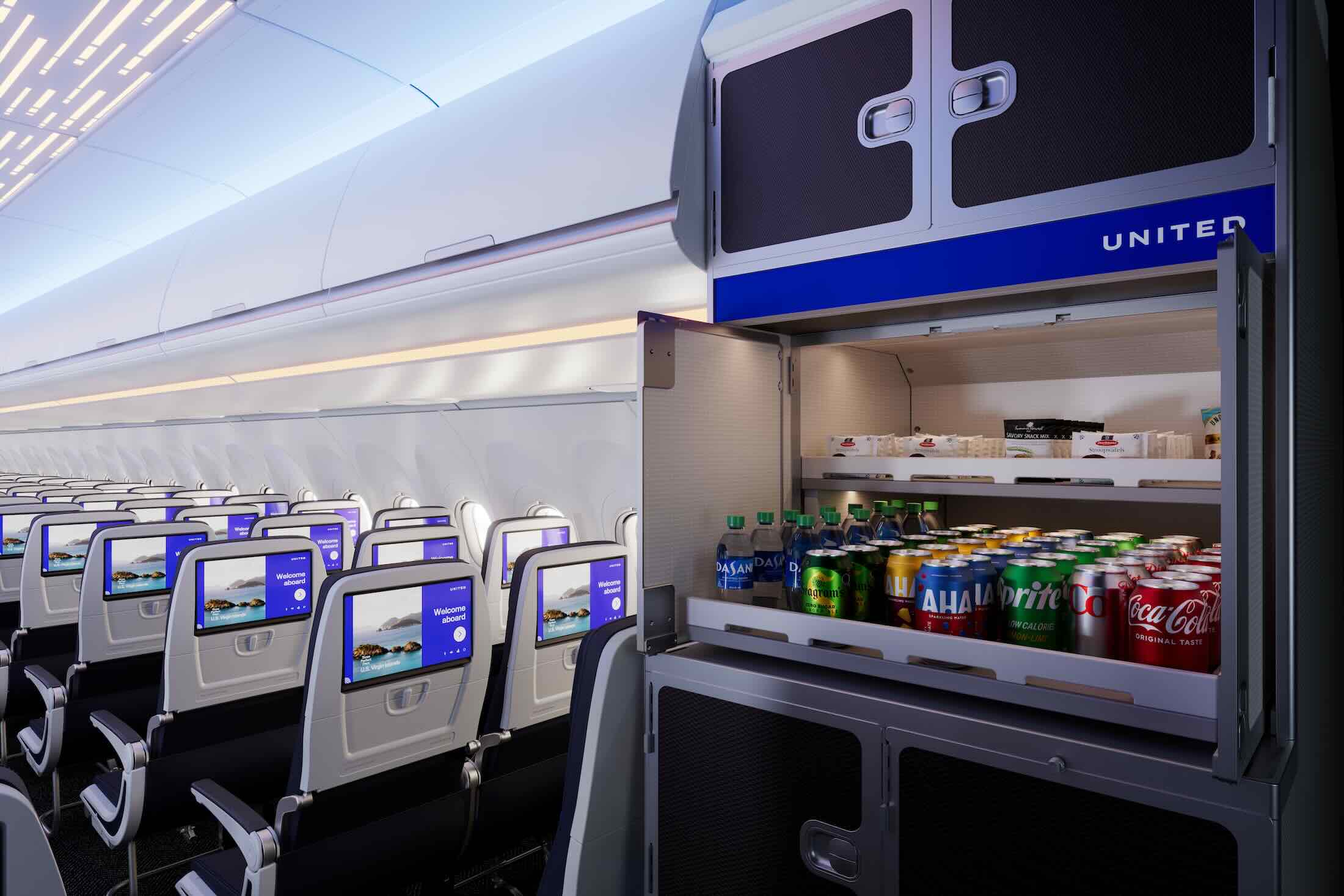
Screens will be 19 inches in Polaris, 16 inches in Premium Plus, and 13 inches in economy class. Just like the Coastliner, the A321XLR features a snack bar in the rear of the economy class cabin.
The 757 has long been United’s key aircraft for thinner transatlantic routes. The A321XLR takes that concept further, allowing United to serve smaller cities in Europe and South America with a higher-margin product. It will only fly existing routes this summer, but United says the aircraft “will open new destinations for the airline in Europe and South America.”
This Is About Margin, Not Just Range
Yes, the A321XLR has the range to open new routes and I’m looking forward to seeing what Patrick Quayle, United’s SVP Global Network Planning and Alliances, and his team will introduce.
But the bigger story is profitability as long as demand remains strong. More premium seats on smaller aircraft allows United to:
- Increase revenue per flight
- Reduce risk on lower-demand routes
- Maintain a consistent premium product
This is exactly the kind of fleet flexibility it has been chasing for years and is arguably the most important aircraft in United’s growth plan. This aircraft allows United to expand its network without the cost and risk of deploying widebody aircraft. And it does so while doubling down on premium seating.
Critics will claim passengers will not embrace narrowbody jets for intercontinental travel, but I’m not sure that is the case. The problem with narrowbody jets is often the onboard product, not the fact that there is one aisle instead of two. With the rights seats, Wi-Fi, and IFE, I don’t think a smaller jet represents a dealbreaker.
CONCLUSION
United’s A321XLR strategy will begin replacing aging 757-200 aircraft on transatlantic routes starting this summer. Over time, the A321XLR will allow new routes to be served that were not previously possible and do so with premium aircraft, not 737 MAX aircraft that lack a lie-flat seat or 30+ year old 757s that are no longer competitive.
By combining long range with a premium-heavy configuration, United can serve more destinations with less risk and potentially higher margins, a gamble that could pay off handsomely if demand remains resilient.
> Read More: United Coastliner Polaris Domestic Flights
> Read More: United’s New CRJ-450 Regional Jet






Note that, as of March 24, 2026, UA has 40 veteran B757-200 jetliners in its fleet with an average age of 29.2 years.
Oldies but goodies.
XLR will be a nice upgrade, especially with 1-1 lie-flat.
Matt you wrote they’ll have 32 Polaris business class seats… that is incorrect they will have 32 premium seats (20 Polaris and 12 Premium economy).
Thank you – you are correct.
Correct… The UA A321XLR means 20 Polaris, 12 Premium Plus, longer range and new routes.
Such a record fleet renewal… Just revealing three new aircraft (A321neo Coastliner, A321XLR, CRJ450), one can assume that UA is trying really hard to beat DL.
The 757s are in poor condition, but I’ll still be sad when they are gone
This is fantastic news! I’m looking forward to this more competitive product on the old 757 routes. Business class cash and redemption prices on many routes were exorbitant, and the lack of PE made me more inclined to choose alternate airlines rather than sit in coach for transatlantic flights.
A lot of UA news today
I’ve been hearing for years about all the cool routes the A321XLR is supposed to open, but we’re basically just seeing existing routes downgauged (MAD-BOS, JFK-EDI) and it sounds like United is going to do the same thing. I’m really surprised we haven’t seem something like MIA-BSB/CNF/FOR by AA or MAD-CLT with IB. Even Qantas is just running theirs on domestic routes (except MNL, which is a major downgrade from the A330).
The 787 delivered on its promise to open up new nonstops. With this aircraft, I’ll believe it when I see it.
Iberia are flying to Fortaleza and Recife. These are game-changing routes – TAP used to have a monopoly on transatlantic flying from/to REC and, as you have noted, there’s zero other oneworld service to Brazil outside of SAO/RIO (…so much for AA being strong in Latin America, whatever that means).
I believe Air Canada are also moving to year-round service at MAN, which is a huge development for anyone wanting to fly from the North of England to the Central America/Caribbean region without having to endure connections in the USA (I also think the distance is short enough for a Y seat to be just about bearable).
Aegean also planned to use the XLR for the likes of DEL/BOM and NBO, but is sticking to the LRs for now.
It’s still early days, but the potential is clear…
What’s the bathroom situation?
For the XLRs, there is one in the front for Polaris then three in the aft for economy (no mid-cabin lavatory). For the “Coastliner” it is one in the front, then two in the back (also with no mid lav). The Coastliners will have the same space saving configuration (FA jump seat attached to lavatory door) as the current A321neos.
Are you sure there aren’t 3 in the back? 1 large one and 2 space saving?
The transatlantic version will have the extra large lav at the back, but not the Coastliner
RIP 757, my favorite.
Aviation enthusiasts are enamored with the 757 but from my perspective as a passenger it’s just a 737 with a slightly more exciting takeoff roll and climb.
All I know is that I refuse to fly a 757-300 on United any longer because the internet is so poor. It’s the last aircraft where the oldest Panasonic system simply doesn’t cut it. I despise that aircraft.
How many economy seats will 321XLR get? I understand XLR might need a larger rear galley for these international flights with all the services provided, does that means 321XLR will have less economy seats because of the need for larger galley?
The XLR is supposed to launch this summer but no announcement on the exact international route? Interesting
I think they will place them on transcontinental routes first before placing them on TATL routes. Once they are placed on TATL routes I’d expect them to replace all 757 TATL routes and they may even replace some if not all 737 MAX8 TATL routes just so they have a consistent product across the Atlantic.
I praise UA’s efforts to replace 757s with 321s on international routes. I never have flown a narrowbody with 1-1 J. Give me a choice betwen a, say, USA-EDI nonstop on a 321 or DL’s lousy 763s, I still might take the latter. If the only nonstop on the route is a 321, OK, I’m trying it. But, I’m not pay international J rates for 2-2 J.
@ Matthew — Thes seats look awful. This is basically the worst possible layout for lie-flat seats. Sad to see this digression spreading.