
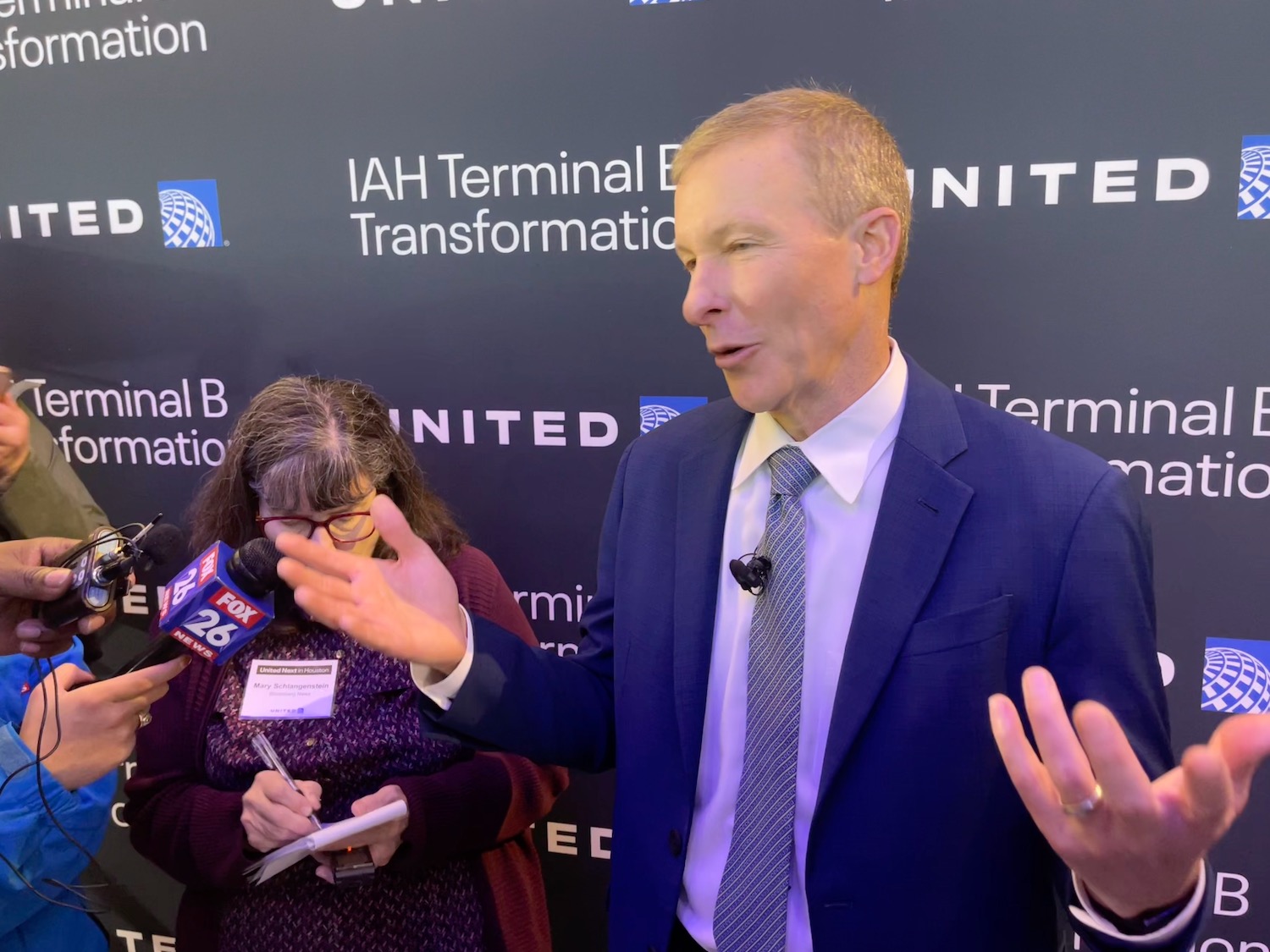
Airline tickets could soon become more expensive as rising oil prices driven by the escalating Middle East conflict begin to ripple through the aviation industry. United Airlines CEO Scott Kirby is already warning that if fuel prices remain elevated, airlines will soon have little choice but to raise fares.
Rising Oil Prices Could Soon Push Airline Ticket Prices Higher
Oil prices have surged in recent days as the conflict between the United States, Israel, and Iran intensifies, raising concerns across the airline industry that fuel costs could soon translate into higher ticket prices.
Energy markets have reacted sharply to the escalating geopolitical risk in the Middle East. Brent crude has surged and in some cases briefly traded above $90 per barrel amid fears that the conflict could disrupt oil flows through the Strait of Hormuz, one of the most critical chokepoints in global energy supply. Oil future prices surged 35% this week in the USA, the highest ever weekly jump ever recorded, after President Donald Trump demanded “unconditional surrender” from Iran.
That matters enormously for airlines.
Fuel is typically an airline’s single largest operating expense after labor, and sudden price spikes can have a dramatic impact on profitability. To compound the matter, when consumers must spend more to fuel their cars and homes, they have less disposable income to buy airline tickets.
Airlines Are Especially Vulnerable Right Now
One key difference between today and earlier eras of aviation is that most U.S. airlines no longer hedge their fuel costs. Practically, that means they are directly exposed to rising oil prices and jet fuel costs have already jumped sharply in recent days, with spot prices reaching levels not seen since 2022.
United Airlines CEO Scott Kirby has already warned investors that the surge in fuel prices linked to the Iran conflict could significantly impact airline finances if it persists.
“If it continues we’ll feel it in Q2 also. And if fuel stays at these levels, ticket prices will probably start moving up pretty quickly.”
Kirby’s chilling comments came during a discussion on aviation at the Harvard John A. Paulson School of Engineering and Applied Sciences on Thursday (March 5, 2026).
Because airlines sell tickets months in advance, they cannot immediately pass those higher costs on to passengers. Instead, carriers often absorb the initial impact before gradually raising fares or adjusting capacity.
The Wild Card: How Long The Conflict Lasts
The biggest variable right now is the duration of the conflict.
Energy markets are reacting not just to current supply disruptions but to fears that the situation could escalate further and threaten shipping routes across the Persian Gulf.
If the conflict spreads or if tanker traffic through the Strait of Hormuz grins to a sustained pause, oil prices will climb even higher.
For airlines, that scenario would represent a worst-case outcome.
Higher fuel costs, longer flight routes due to airspace closures, and operational disruptions are already creating additional strain on the industry.
Assurances from the Trump administration that it would insure oil shipments through the Strait of Hormuz and in some cases, provide U.S. Navy escorts, have done little to ally fears and stabilize prices.
Just 10 days ago I wrote that a “black swan” event could turn the airline industry from profit to loss and it appears that may be happening now.
CONCLUSION
Airline ticket prices are not rising overnight, but if oil prices remain elevated due to the expanding Middle East conflict, travelers should expect airfares to creep higher in the weeks and months ahead.
Fuel is simply too large a component of airline costs to ignore. And when oil surges, airlines will have little choice but to pass at least part of that increase along to passengers, even though the competitive nature of the global market makes this difficult.
Should you buy your summer travel today before the price goes up? In a world that is so unstable, I hesitate…yet I’m thinking about it (perhaps the subject of another post).





But, but… the (astro)turf-war in Chicago…
Ready. Fire. Aim. Zero thought given to what this buffoonery means to the people they’re supposed to “protect”. I am so embarrassed to live in this god-forsaken shit-hole. And before anyone tells me to “leave”, you leave. I didn’t vote for this circus.
Then do something about it.
Airfares have been WAAAAAAAAAAY too low for too long. Their labor costs have exploded. Input costs are way up. They should go up and people should get used to it. They will blame on oil prices but in reality these airlines gave away the store to their work groups and will pay the price.
Airline prices are what the market says they are. Airlines are free to raise prices anytime they want.
They will blame fuel prices because that is what is to blame. Airlines spend in the billions on fuel each year, and have profits that measure in millions. If those fuel prices double… do the math.
Say goodbye to spirit, Avelo, and Jetblue
Iran is so terrible but the goals of the war have not been clearly considered. It’s likely that the war is due to dementia. Early dementia often presents as bad judgment. Biden had early to moderate dementia. Trump clearly has early dementia. It’s too politicized to have a medical board examine presidential candidates so an age cut off is better. A president should not be in office past 70. Some people in their early to mid 70’s are really sharp but discriminating against them would be for the good of the country.
Matthew K is right.
The airline industry ALWAYS sits on the verge of a black swan event and they develop faster than anyone can plan for.
Raising fares only reduces demand so carriers with the most capacity growth are the most vulnerable and that includes AA and UA.
1990 is right that turf wars in Chicago are part of the problem; UA can’t suddenly pull all that extra capacity after committing to its regional carriers – or own employees to fly that capacity.
and fuel prices have always been higher on the west coast and the gap is getting bigger because so many refineries and pipelines in the west are out of service, either temporarily or permanently. AS and UA are most vulnerable.
DL’s refinery provides the greatest benefit when fuel prices spike – it acts as a hedge – and when crack spreads for heavy distillates such as diesel and jet fuel increase. that is happening now.
and, finally, UA faces having to raise labor costs after years of expanding off of its employees backs.
When all of these factors come into play at the same time, the glitter that so many have had around UA will get blown away pretty quickly.
Deltas refinery isnt going to save them from rising crude oil prices. Deltas profit isnt so high that is will cover an extra 5-billion in fuel prices
Quite right about UA growing wildly in Chicago, that is at risk now. Crack spreads are now higher than a barrel of oil which hasn’t happened in 20 years. Deutsche Bank put out a note that “airlines around the world vould be forced to ground 1,000s of aircraft”. That event drove DL and NW into bankruptcy.
Even if that’s only half true it’s going to be a very rough landing. Will be interesting to see what UA does in Chicago in response.
fuel prices have driven many airlines into bankruptcy. The legacies all had to drop fuel hedging post 9/11 because their credit ratings fell.
WN held onto hedges but just dropped them last year because the US airline industry has never “won” on hedges.
The DL refinery gets its best benefit in rapidly rising fuel prices – which is what is happening now and also when the crack spread is high. that is also happening now.
DL also has the most conservative growth plan and a far more conservative capex plan.
and DL isn’t in a shootout with anyone. it continues to slowly win in its hub markets and does it year after year.
DL also doesn’t have to settle years long labor contracts.
UA is far more fragile than alot of people want to admit. AA and the rest of the industry is very vulnerable. A couple weeks of rising fuel prices could put B6 in chapter 11 and NK could fail to emerge.
all of the capacity that AA and UA are throwing into their systems won’t come out w/o paying a price for people and planes that have already been put under contract.
WN has yet to demonstrate financially that its turnaround plan is going to deliver profits but it has a deep and healthy balance sheet.
just as post covid, DL and WN were the two most financially strong airlines.
and I don’t think the American people have any stomach for bailing out airlines again.
@Cliff Clavin…who goes by Tim Dunn.
1. WN actually saved billions on fuel hedging from the late 90’s until 2022. It’s not so difficult to find. Just read.
2. As to UA and the FA contract…one could argue they are best positioned now as they have not given commitments to non-essential labor as others have. Delta might have some buyer’s remorse now about paying flight attendants what they are making. UA FA’s are going to regret that day they didn’t agree to a contract earlier. UA shareholders are going to love how it all worked out in the end. DL loses.
3. Bottom line: You are MAGA. It didn’t have to be this way. But you voted this in. And defended the dismantling of our country to the point that it is now dismantling your portfolio. I see the panic in your recent comments this week. You should be panicked. And just wait until November.
of course, anyone that disagrees with you is all the same person.
DL set the bar for unionized and non-unionized labor costs post covid because DL can afford them, including profit sharing.
UA has yet to adopt all of those labor costs including for its mechanics and FAs. UA’s labor costs are much higher when you factor in all of those costs.
UA has more capex commited including for 2026 than the entire rest of the US industry combined.
AA and UA are battling it out for the highest capacity growth of the big 4 and not all of it for either airline involves ORD.
UA has greater risks in a high fuel environment than any other US airline. No other airline has as many risks including unsettled labor contracts, higher fuel costs on the west coast, high growth rates, and above industry average capacity capex.
Kirby is correct. The cost of jet fuel is already high and probably will continue to rise as he will continue the ” Trump war” . ( he usually enjoys naming thing after himself so I’ll give him this one ). He is why we can’t have nice things.
“crude has surged and in some cases briefly traded above $90 per barrel amid fears that the conflict could disrupt oil flows through the Strait of Hormuz, one of the most critical chokepoints in global energy supply.”
The Strait of Hormuz has been effectively closed for a week, and it is NOT going to open up any time soon. This nightmare scenario has come. Get used to it, it is what we are all going to be living with for a long time.
“Oil future prices surged 35% this week in the USA, the highest ever weekly jump ever recorded, after President Donald Trump demanded “unconditional surrender” from Iran.”
The simpering moron doesn’t understand any of the big words he has been given by his handlers, and has no clue whatsoever about anything except stealing from everyone. “Unconditional surrender” means US troops invade and occupy (for decades) a huge country that’s full of people who hate us so much they’ll do anything to kill a few of our soldiers (and who can blame them? – we would feel the same way).
“Unconditional surrender” would require tens of thousands of troops (more than we have available) and a dedicated multi-country coalition committed to achieving that “unconditional surrender”, sustained for years, and absolutely nobody is up for that. This is going to make Vietnam, Iraq and every US overseas military misadventure we’ve ever been stupid enough to try look like a picnic in the park by comparison. The repercussions will be on us for 100 years.
I “locked in” my airfare last night for a flight in May but it is fully refundable to a travel credit, so if fares should drop for some reason…..
I do the same with hotels, car rentals, etc. All cancellable without penalty and then I check weekly for better deals. On a three week trip to Utah, I rebooked the car rental three times over a few months and saved about $250. (And as a frequent renter, I was upgraded at the counter to a Camry hybrid from a compact.)
“One key difference between today and earlier eras of aviation is that most U.S. airlines no longer hedge their fuel costs.”
Why they no longer hedge would make for an interesting future article.
“Facts do not cease to exist because they are ignored.”
In any case, people will continue to travel by plane… The huge demand is there.
On the oher hand, let’s remember that in 2012, DL made a bold move by buying an oil refinery outside Philadelphia, a first for a major U.S. airline… That’s once again THE DELTA DIFFERENCE!
whether it is THE Delta difference or not is debatable but the refinery has saved DL about $2 billion in fuel costs over the decade and a half that DL has owned it.
in the post covid period, when crude oil prices were over $80 for most of 2022, the refinery made $777 million which reduced DL’s fuel costs by 23 cents/gallon.
We are now at $90/bbl oil and we haven’t seen the top yet.
The next couple months could be pivotal for the US airline industry. Far too many airlines have been comfortable w/ low oil prices and have either paid employees with what it saved on fuel or never have spent money to bring up their employees to industry comparable compensation.
again, UA checks all the risk boxes and is probably the only US airline that does.
Airfares rising. So chilling.
Murdering hundreds of school children, all okay. After all, if kids in the USA need to die in mass shootings, it’s only fair that the USA kills kids in other countries. Why should they miss out on all the fun
AI, specifically Anthropic’s Claude, decided that school full of children was a good target. Thank god we are going to replace all white collar work with AI
Poor Americans. Having to deal with high petrol prices because their Dear Leader got led by Israel to start a war.