
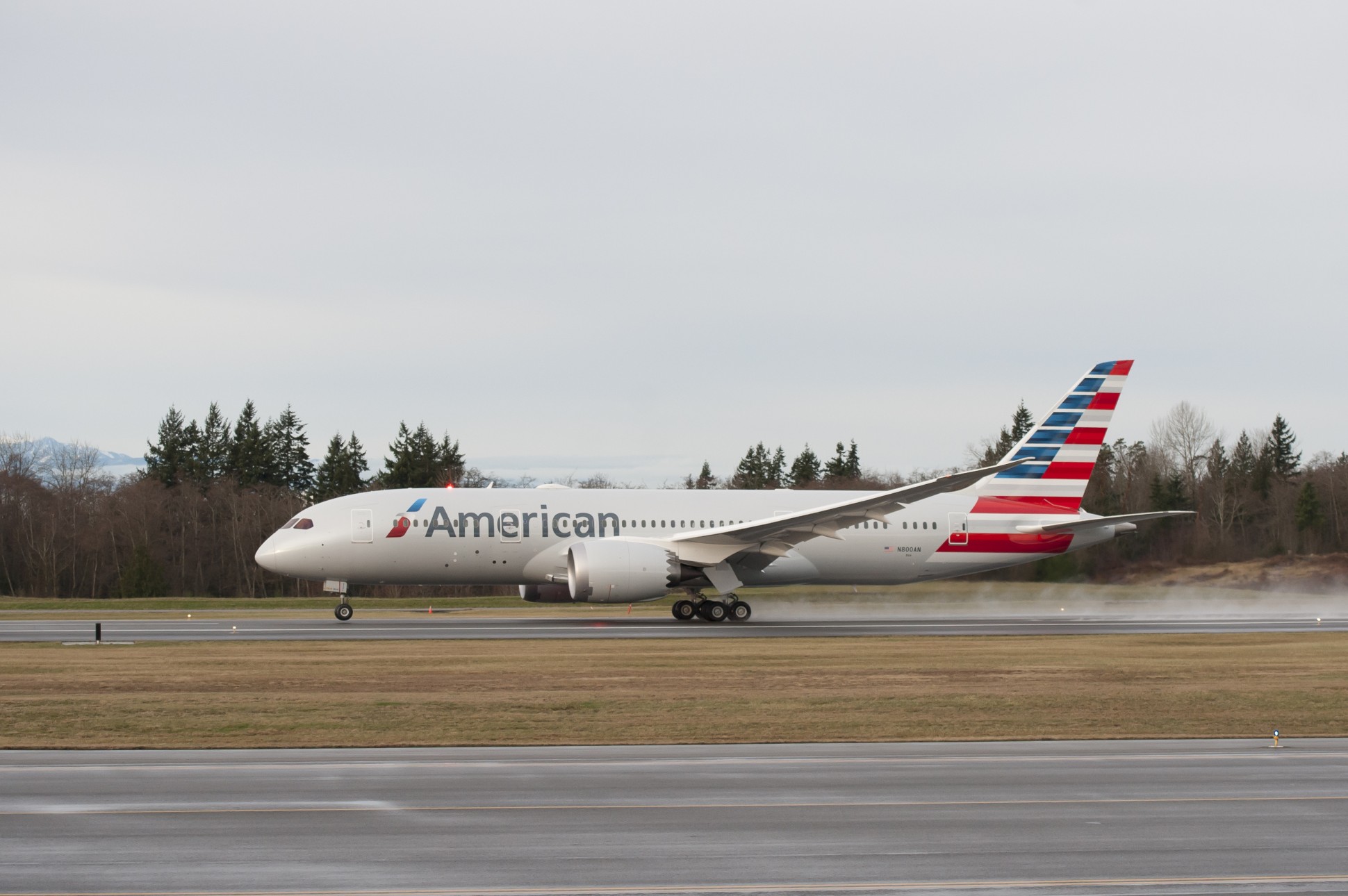
American Airlines flight AA719 from Rome to Philadelphia diverted to Dublin after six of its nine flight attendants reportedly became dizzy or ill. American attributes the incident to an “onboard odor,” but the precise cause remains unclear.
American Airlines 787 Diverts To Dublin After Most Flight Attendants Suddenly Fall Ill
An American Airlines Boeing 787-9 flying from Rome (FCO) to Philadelphia (PHL) diverted to Dublin (DUB) after six of the nine flight attendants onboard reportedly began feeling dizzy or ill.
Flight AA719 departed Rome Fiumicino Airport on July 25, 2026, carrying 281 passengers and 12 crew members. The aircraft was about three hours into its transatlantic journey when it turned toward Ireland and landed safely in Dublin.
Aviation insider JonNYC first shared the unusual circumstances, while emphasizing that his information was unconfirmed:
“AA 719. Flight divert after 6 of 9 FA’s felt dizzy / ill. 100% unconfirmed.”
American Airlines subsequently confirmed that an odor had been reported onboard and that medical personnel met the aircraft after landing.
The carrier said:
“American Airlines flight 719, with service from Rome to Philadelphia, diverted to Dublin due to a reported odor onboard. The aircraft landed safely and was met by paramedics out of an abundance of caution. Flight attendants and one customer were evaluated and released. We provided hotel accommodations and rebooked our customers for travel the following day.”
That certainly confirms the diversion and the odor, but it does not explain why so many members of the cabin crew became ill at once…and how about passengers? Why did only one reportedly get sick?
The flight attendants reportedly experienced dizziness and illness but were not described as unconscious or completely incapacitated. Even so, continuing across the Atlantic with six flight attendants feeling unwell was not a realistic option..
What Caused The Illness?
American describes the event as a “reported odor onboard,” but that still leaves a broad range of possible causes, including:
- Air-conditioning or ventilation equipment
- Electrical components
- Cleaning chemicals
- Galley equipment
- Contaminated air or fumes
The Boeing 787 is unusual because it does not use traditional engine bleed air to pressurize the cabin. Instead, electrically powered compressors draw outside air directly into the environmental control system. That makes the familiar explanation of engine oil contaminating cabin bleed air less obvious here, though it certainly does not make an odor or environmental-control problem impossible.
A malfunctioning air-conditioning pack, an electrical odor, or spilled chemical could still create a localized problem.
In October 2019, an American Airlines flight from London to Philadelphia diverted to Dublin after an industrial cleaning solution reportedly spilled inside onboard and soaked into the carpet. The fumes sickened passengers and crew, with two crew members briefly losing consciousness.
I am not suggesting the same thing happened here, but it was probably something like that.
Passengers Spent The Night In Dublin
After the aircraft landed, paramedics evaluated the affected flight attendants and one passenger. All were reportedly released.
But American had no replacement crew readily available in Dublin, and the aircraft also required inspection after the reported odor. Passengers were provided overnight hotel accommodation and rebooked to continue their journeys the following day.
I’m not sure we’ll get anything further from AA on this, at least officially, but I’d certainly like to know what was the root of that odor and if it was some sort of careless error rather than an “extraordinary event” AA may be on the hook for paying each passengers €600 under EU261/2004.
CONCLUSION
American Airlines flight AA719 diverted to Dublin after six of nine flight attendants reportedly became dizzy or ill during a Boeing 787-9 flight from Rome to Philadelphia.
American confirmed there was a reported odor onboard. Paramedics evaluated the affected flight attendants and one passenger, and all were released. The pilots made the correct decision to divert…with most of the cabin crew ill and no clear understanding of why, continuing across the Atlantic would have been reckless.
image: American Airlines




I’d like to know what type of compensation AA offered. (As you note, EU 261 almost certainly applies.)
Heck ya it does. Thanks to straightforward, common sense, consumer protections, which, someday, we really should have in the USA as well. Like, maybe we should demand our elected officials stop taking legal bribes from industry lobbyists like A4A, and actually pass some air passenger rights legislation like EU261. Please vote accordingly.
One trick pony, always looking for a handout.
AA did the right thing and you think these people deserve something for their trouble.
Sh#t happens, no one died.
Oh well, at least ICE is doing the right thing today on Springfield and sending hundreds of degenerates home to Haiti.
So Kyle believes the Ohio community of Haitians deserves deportation for working, paying taxes and saving this rust belt collapsing town, too high for anything other than collecting welfare. Good job on destroying this nation
Arthur, to answer your question: They should be entitled to €600 per passenger (roughly $682 USD, depending on the current exchange rate).
Under EU261/2004, the statutory compensation is calculated based on the great-circle distance of the flight route and the length of the delay upon arrival at the final destination. The route, Rome (FCO) to Philadelphia (PHL) is approximately 4,357 miles (well over the 3,500 km threshold for the highest distance tier). For the delay, because the flight diverted to Dublin and passengers were rebooked to arrive the following day (a delay exceeding 4 hours), the flight qualifies for the maximum compensation bracket.
For a full Boeing 787-9 payload of roughly 285 seats, that translates to nearly $200,000 total airline liability in cash compensation—separate from the mandatory duty of care (hotel, meals, and transport) that American Airlines also had to provide in Dublin.
If past form is any indicator, AA likely offered the standard corporate playbook: zero mention of EU261, a boilerplate apology, a generic hotel voucher for the night in Dublin, and perhaps an automated nudge toward a meager travel credit or a nominal goodwill e-voucher if pressed.
True to form, they’ll quietly cross their fingers that passengers don’t know their statutory rights under EU261, and then automatically reject the first round of formal cash compensation claims as a matter of routine course until travelers escalate or force the issue.
Good catch on the “reported odor” confirmation, Matthew.
Whether it’s an environmental control issue, a chemical spill, or mystery fumes, this is exactly why EU261 doesn’t let airlines hide behind vague operational excuses. The default position under EU law is that internal technical failures and crew disruptions are part of running an airline, not acts of God.
If this had happened on a domestic U.S. leg, American would have handed out a $12 voucher, told everyone to pound sand, and left them sleeping on the airport floor while dodging accountability. Multi-billion dollar carriers need financial skin in the game so they actually prioritize maintenance, safety, and basic duty of care.