
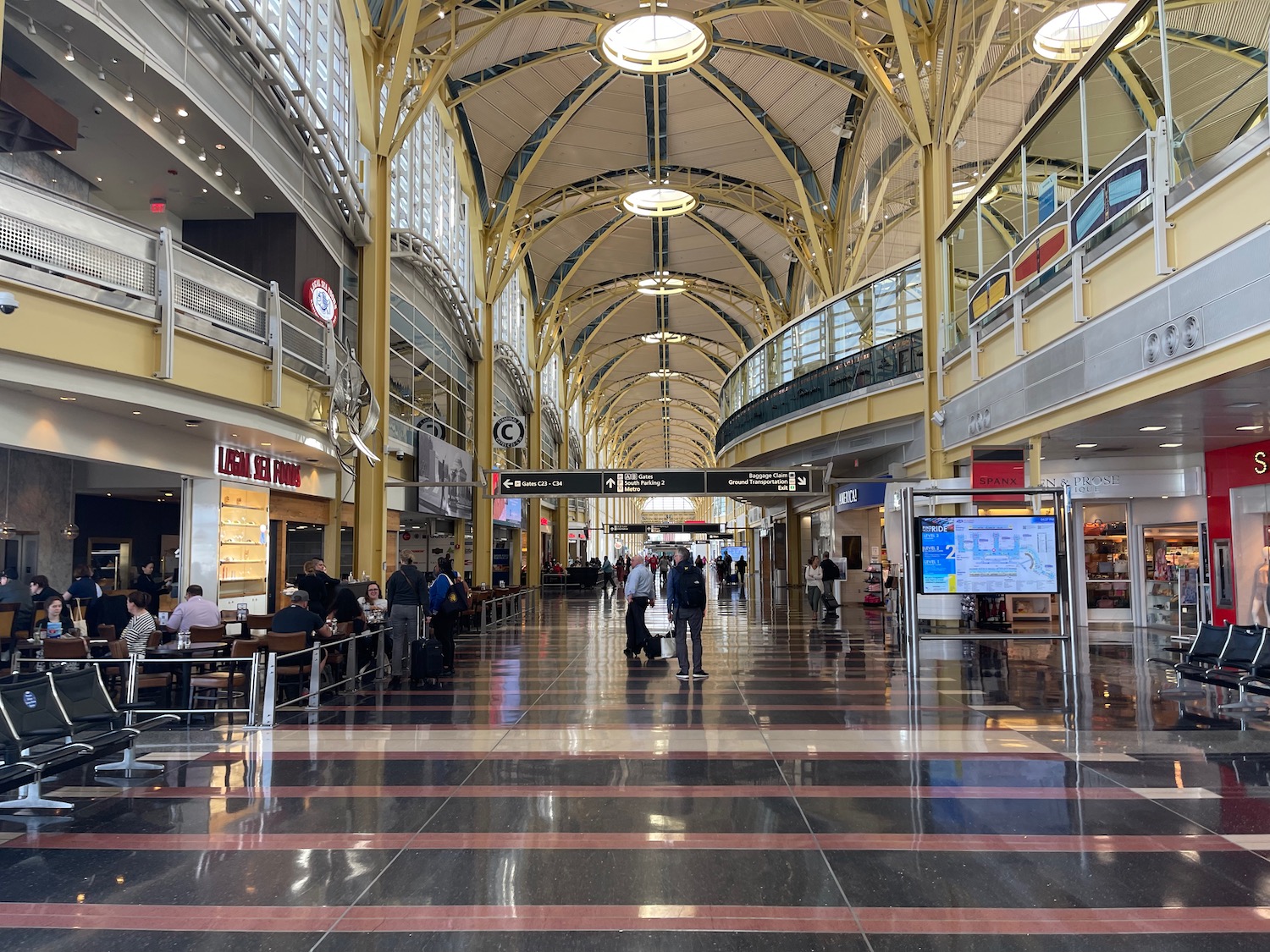
A Washington Post travel writer missed an American Airlines flight after stepping away from the gate for a cup of coffee during a rolling delay. She readily admits she made mistakes, but I’m not sure I would have done it any differently her experience also highlights something inherently unfair about the way airlines manage rolling delays.
She Missed Her American Airlines Flight For A Cup Of Coffee, But There’s More To The Story
Andrea Sachs, a seasoned travel writer for The Washington Post, was booked on American Airlines flight 3207 from Washington National (DCA) to Boston (BOS), scheduled to depart at 5:00 pm.
Bad weather along the East Coast had already wreaked havoc the previous day, and American offered her a waiver to change her trip. She checked the weather in Washington and Boston, decided it did not look particularly ominous, and stuck with her original flight.
But then came the delays.
American began sending notifications in the early afternoon citing air traffic control management. After four updates, departure had slipped to 6:42 pm. Sachs had already started toward the airport several times before finally abandoning her office and heading to DCA. Her reasoning was actually quite sensible: if American suddenly shortened the delay, she wanted to be close enough to board.
At the airport, she initially considered visiting the Capital One Lounge but was told there was a 25-30 minute wait. She wisely kept walking.
So far, so good.
Then Came The Coffee…
At the gate, Sachs received another update showing a 7:36 pm departure. The delay was tied to a ground stop in Boston, and a gate agent subsequently announced, “Wheels up at 8.”
“Wheels up at 8” means an 8:00 pm takeoff. It does not mean leaving the gate at 8:00 pm, and those are two very different things, though apparently this confused Sachs (and others)…the gate agent should have communicated the more relevant pushback time.
Sachs nevertheless figured she had enough time and returned to the Capital One Lounge. There was still a 25-minute wait, so she and another Boston-bound passenger named Meghan put their names on the list.
Eventually they got their drinks.
At around 7:00 pm, Sachs looked at the time and realized that her latest text from American still showed a 7:35 pm departure. She knew boarding should be imminent.
Instead of returning to the gate, Sachs stayed behind with the drinks while Meghan walked over to check the flight. Meghan came back in a panic: everyone had boarded, the aircraft door was closed, and they were not getting on.
That’s a painful lesson, and Sachs deserves credit for writing about it rather than pretending it was entirely American’s fault. But I don’t think American is blameless either. In fact, I’d put the bulk of the blame on AA.
The Inherent Problem With Rolling Delays
I’ve dealt with enough rolling delays over the years to know that you never fully trust them.
If a flight is delayed two hours, I may head to the lounge or have dinner, but I continue watching the inbound aircraft, the app, and not straying to far from the gate because I know a delay can suddenly be shortened.
But stop for a moment and consider how ridiculous that is from the passenger’s perspective.
The airline tells you your flight is delayed until 7:35 pm.
You are expected to plan around that information, except you really aren’t. Because the airline may move the flight forward again, and you’re also expected to know that the new departure time isn’t necessarily the new departure time.
So what are passengers supposed to do?
If you believe the airline, you might miss your flight.
If you don’t believe the airline, you may spend hours sitting at the gate for no reason.
That’s why I find the concept of a rolling delay inherently unfair to customers. Airlines understandably want to depart as soon as conditions permit, and I’m certainly not suggesting a crew should sit around simply because an earlier delay estimate proved too pessimistic. But if an airline is going to claw back a delay, it has an obligation to communicate that clearly and aggressively.
American Should Learn From United
AA has made strides (for example in communicating the reason for delays), but United Airlines does a much better job in this regard.
When my United flight begins boarding, I receive a push notification telling me that boarding has started. Every time, without exception. It’s simple, but extraordinarily useful and something I rely on, especially when a flight is delayed.
American had no trouble sending Sachs delay updates by text, email, and app throughout the afternoon. Yet based on her account, she received no alert that suddenly said, in effect, “Your flight is boarding now.”
Had she received such an alert, she certainly would have abandoned the coffee and hurried back to the gate.
American’s advice after the fact was that passengers should monitor the app, mobile notifications, and airport displays and “remain near the gate close to the posted departure time.”
Fair enough.
But Sachs was monitoring American’s notifications. Her latest text still showed a 7:35 pm departure. She was also at the airport precisely because she understood that the delay might change.
What she apparently did not receive was the one notification that would have been most useful: boarding has begun. That is something American should fix…and that’s why I put most of the blame on AA here.
What Would I Have Done Differently?
Honestly, I’m not sure I would have done anything differently. I guess now, knowing that AA may not send out boarding notification texts, I’d have monitored the gate a little more closely. When the agent said, “Wheels up at 8” I probably would have clarified what time she expected to begin boarding.
But I cannot be too hard on Sachs and would have probably headed to the same lounge myself had I faced such a delay (had I gone to the Admirals Club instead, there may have been an announcenet there, but the Capital One Landing at DCA is the best in the system). A passenger should not need to understand the nuances between wheels-up time, pushback time, ATC ground stops, and rolling delay estimates simply to figure out when the airline actually wants her at the gate.
The airline has better information than the passenger does, but it must clearly communicate it.
CONCLUSION
Sachs missed her American Airlines flight because she went for coffee during a delay and stayed away from the gate longer than she should have. She owns that, though I really don’t see much she did wrong.
Rolling delays ask passengers to accept two contradictory ideas at once: plan around the delay we’ve given you, but don’t actually trust it because we might take it back at any moment. Sometimes operational reality makes that unavoidable. But better communication does not.
If American wants passengers to remain mobile during a lengthy delay, it should reliably push a prominent alert the moment boarding begins, just as United does. A simple “Your flight is now boarding” notification might have saved Sachs a lot of stress and still allowed her to briefly enjoy the lounge.





Just have to stay within a ~5 minute walk of the gate during a rolling delay and keep checking every 10-15 minutes. Sure UA tech is better – getting the boarding now alert might have solved the problem, but also who knows – folks actively try to get on other flights sometimes during a rolling delay or change their plans. Not the time to go to any lounge for any coffee, it’s the time to hover around the gate.
Dealt with one last month on AA where we boarded and then deplaned once it became clear there was an ATC delay and then the rolling delay started… and just kept checking the gate every 15 minutes while walking around, and boarding started a few minutes before one of the times I came back.
The bigger story here is she was willing to wait 25-30 minutes to get in an overcrowded lounge for a “free” drink. Is the pay at the Bezos Post that bad? Hopefully things turn around for her and she can afford a coffee closer to the gate in the future. It can’t be anymore hectic than those abominations Capital One calls a benefit.
Zero sympathy for her, especially from someone who is a travel writer and should know better. I also wonder if “coffee” is being used to cover up for what she really needed.
I was talking a Southwest flight that was delayed out of DCA. I was notified of the delay and took my time getting to the airport. I arrived with over an hour until the new boarding time, but when I went to check a bag and was told that I missed the bag drop-off time based on the flight’s original departure time. They expected passengers to sit around the horrible Terminal 1 A gates for hours apparently. I told the gate agent, “Ah, I see. So only passengers have to be on time and not the airline?” He then laughed and checked my bag anyway.