
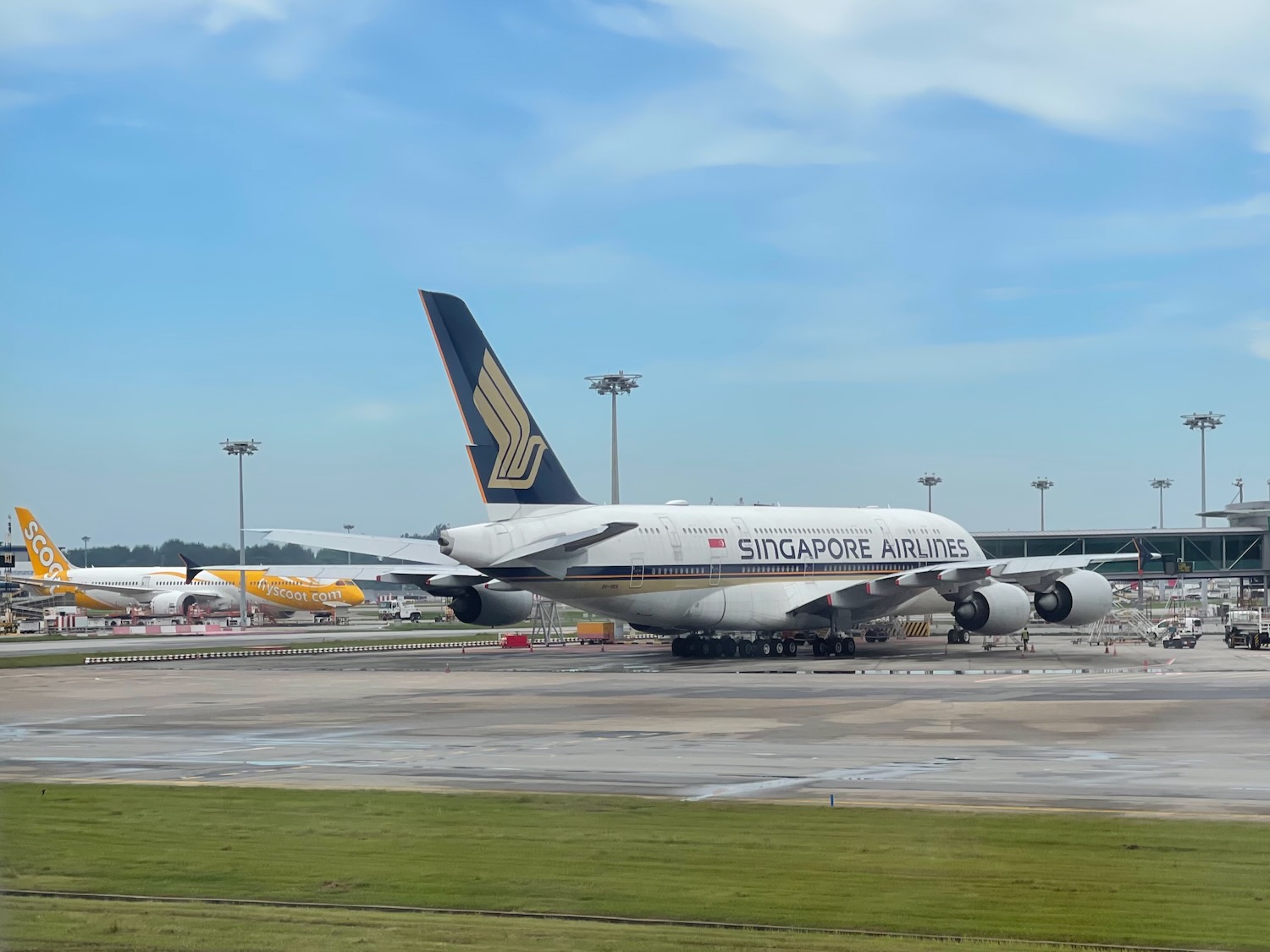
Singapore Airlines carried a record number of passengers and generated record quarterly revenue, yet still fell into the red as surging fuel costs and losses at Air India overwhelmed its otherwise strong performance.
Singapore Airlines Posts First Quarterly Loss Since 2022 Despite Record Revenue
Singapore Airlines Group reported a net loss of S$76 million (59 million USD) for the quarter ending June 30, 2026, its first quarterly loss since the pandemic-era quarter ending March 2022.
Demand was not the problem: Singapore Airlines and Scoot carried a record 10.9 million passengers during the quarter, while group revenue rose 19.3% to a quarterly record of S$5.71 billion. Passenger yields increased 12%, while cargo revenue climbed 33.5% to S$708 million.
But record revenue was not enough to overcome a dramatic increase in expenses.
Net fuel costs rose 78.5% to S$2.25 billion after jet fuel prices spiked amid conflict in the Middle East. Fuel costs before hedging more than doubled, reflecting both higher prices and increased consumption as the group carried more passengers and operated additional capacity.
Operating profit consequently fell 73.8% to S$106 million.
The final result was also dragged down by Air India.
Singapore Airlines owns 25.1% of the Indian flag carrier and recorded a S$42 million share of its losses during the quarter. Air India remains in the midst of an expensive turnaround under Tata Sons, which recently warned that transforming the airline could take up to a decade.
Singapore Airlines has repeatedly expressed its long-term commitment to Air India, and India remains one of the world’s most attractive aviation growth markets. But the investment is clearly creating short-term pain for an airline that otherwise performed quite well during the quarter.
Strong Demand, But A Difficult Cost Environment
Fuel costs eroding profits is going to be a common theme this year as the war in Iran drags on.
Singapore Airlines filled more seats, carried more passengers, and collected substantially more revenue. Nevertheless, its largest expense rose even faster.
The airline has also benefited from travelers avoiding connections through the Middle East, particularly on routes between Europe and Asia. But the same geopolitical turmoil that has helped redirect some passengers toward Singapore has also dramatically increased the cost of operating those flights.
Singapore Airlines warned that continued conflict could disrupt global trade, supply chains, and consumer confidence, though it said demand for both passenger travel and cargo remains resilient.
Be prepared for Singapore Airlines to raise fares as fast as possible to try to recoup more of these losses.
CONCLUSION
Singapore Airlines has posted its first quarterly loss since 2022 despite carrying a record number of passengers and generating record revenue.
The airline’s core business remains strong, but a 78.5% increase in net fuel costs and further losses from Air India turned what should have been a profitable quarter into a S$76 million loss.
The latest trouble for Singapore Airlines illustrates how quickly even one of the world’s best-run airlines can be knocked off course when fuel costs surge and a major strategic investment continues to bleed money.






If only we wouldn’t start reckless wars of choice… oh, no, I’m not referring to Iran; I’m referring to SQ’s involvement with Air India… *ba dum tss*