
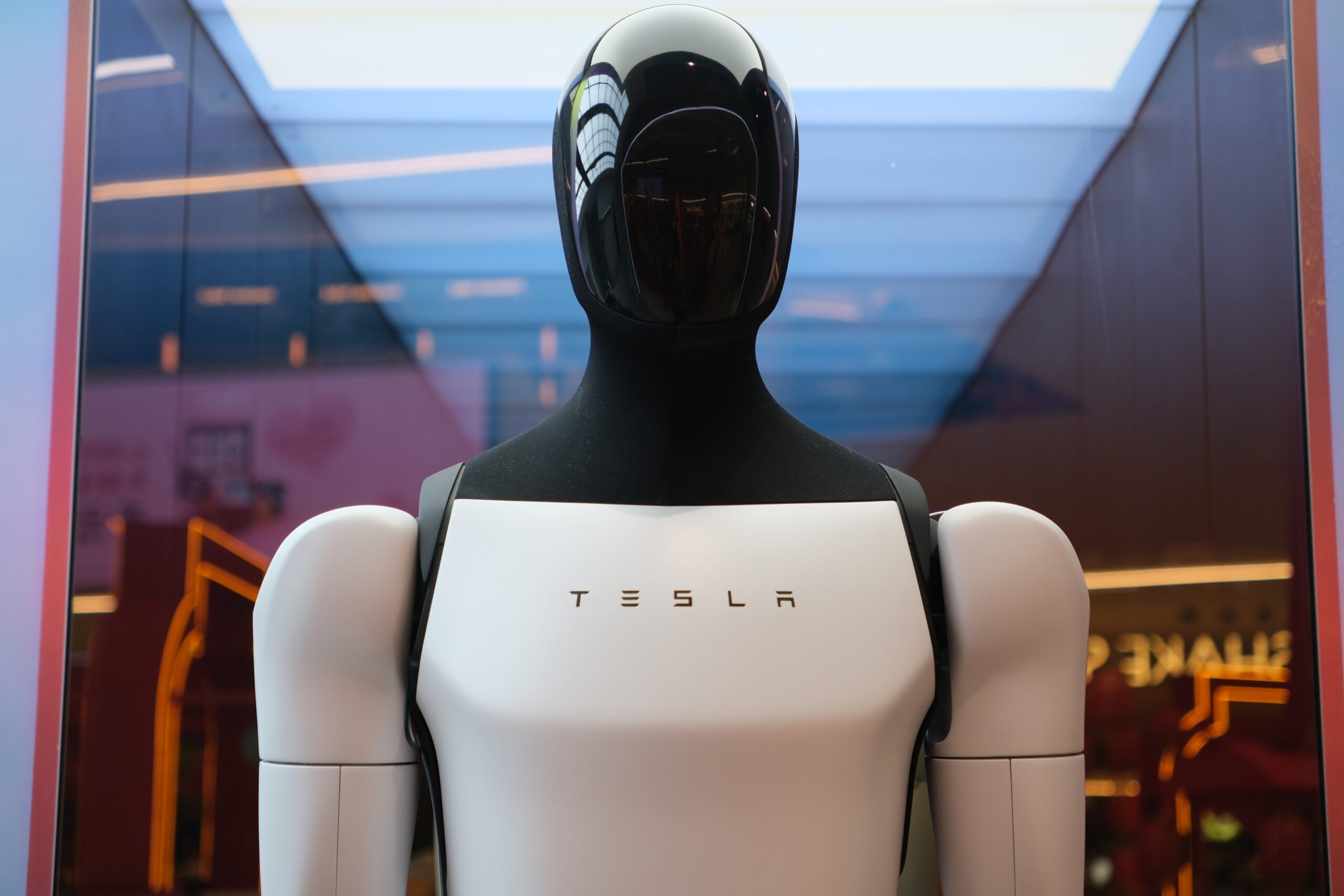
United Airlines has banned humanoid and animal-like robots from both the cabin and checked baggage, following a similar move by Southwest Airlines after a robot passenger went viral earlier this year.
United Airlines Bans Humanoid Robots From Its Flights
United Airlines has banned humanoid and animal-like robots from its aircraft, effective July 23, 2026.
In an internal bulletin, United explained:
“Starting July 23, humanoid and animal-like robots are not permitted in the cabin or as checked baggage, regardless of size or purpose.”
United defines a humanoid robot as an artificial intelligence-driven or remote-controlled machine designed to mimic human form, movement, or cognitive behavior. Animal-like robots are similarly defined as machines designed to mimic the appearance, movement, or behavior of real creatures.
The policy updated is reflected on united.com:
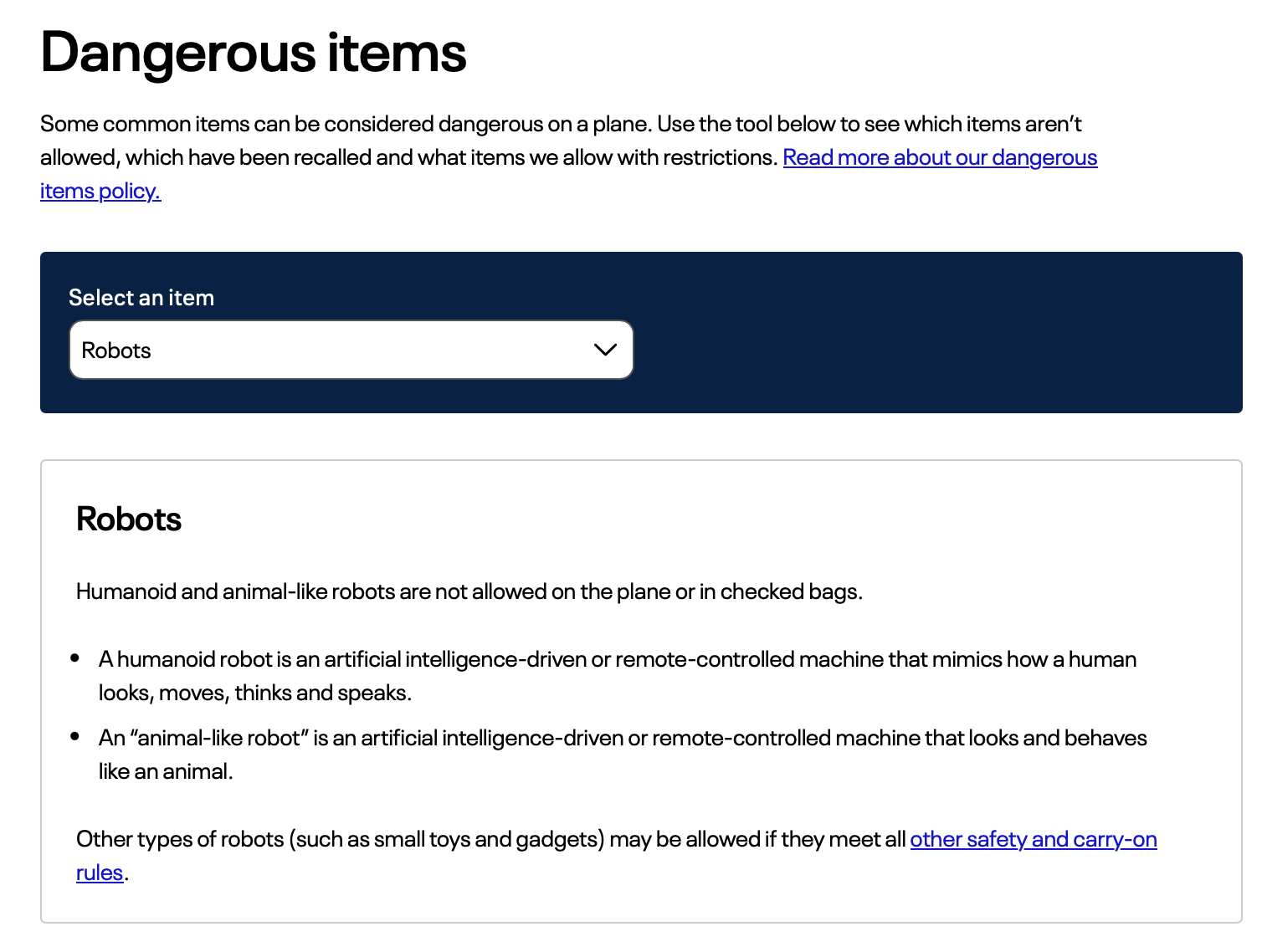
Smaller robotic toys may still be accepted if they comply with United’s normal size, weight, and battery restrictions.
Lithium Batteries Are The Primary Concern
United says the restriction is primarily about safety:
“These devices often include batteries that we do not accept on board or in checked baggage due to the safety risks they present, and we believe this change will help further ensure the safety of our customers and crews.”
Large lithium-ion batteries can create a serious fire risk onboard an aircraft, particularly if damaged, defective, or improperly packaged.
United instructed airport employees to watch for passengers attempting to check or board with prohibited robots. If one makes it onboard, flight attendants are supposed to contact the gate and coordinate its removal.
The robot, presumably, will not be invited to negotiate.
Southwest Airlines Already Banned Robots
United is following Southwest Airlines, which introduced a similar ban in May after several unusual incidents involving humanoid robots. One involved Stewie, a 3.5-foot robot that received his own seat on a Southwest flight from Las Vegas (LAS) to Dallas (DAL). Stewie walked through the terminal, boarded the aircraft, and became an instant social media celebrity.
We just got robots banned from Southwest Airlines. You’re welcome 🫡
Yesterday we flew our humanoid robot Stewie from Las Vegas to Dallas on Southwest…
— Aaron Mehdizadeh (@rentbotsTX)
May 12, 2026
Another humanoid robot named Bebop reportedly contributed to an hour-long delay on a Southwest flight from Oakland (OAK) to San Diego (SAN). The crew raised concerns about where the robot was seated and whether its lithium-ion battery exceeded allowable limits.
Southwest subsequently prohibited human-like and animal-like robots from both the cabin and checked baggage, regardless of size.
United May Revisit This Policy In The Future
United says, “As this technology continues to evolve, we will continue to evaluate if and how we can transport them safely.” It’s fascinating to think about the future of these humanoid robots, isn’t it? Imagine if they become like a personal assistant…they can clean, cook, and carry our bags. Can you imagine a world in which half the plane is filled with robot personal assistants because the help they provide more than makes up for the extra seat they consume?
In the longterm, I’m weary of AI taking away the dignity of work from folks (including attorneys like me), but the idea that robots can make our lives incredibly more efficient and productive is also very appealing.
CONCLUSION
United Airlines has banned humanoid and animal-like robots from its cabins and checked baggage, citing battery and safety concerns.
Southwest adopted a similar policy in May after viral incidents involving robot passengers named Stewie and Bebop.
It was only a matter of time before airlines had to address this. The robots may be coming for our jobs, but they will not be taking our upgrade seats on United (at least for now!).
image: Tesla





Good pre-emptive ban, I guess. Didn’t think we needed this yet, but… good to get ahead of it, no?
I wonder how long it will be before a child brings a doll aboard and the doll is accused of being a robot and denied boarding?
Reminds me of the film, The Creator (2023), which takes place in the year 2070 following a nuclear explosion in Los Angeles. The Western world has banned artificial intelligence, but a fictional region called “New Asia” (modeled heavily after Vietnam, Thailand, and Cambodia) has embraced robots and humanoid simulants, treating them with equal rights. So, soon enough, probably after we false-flag nuke ourselves, there’s bound to be a ‘robot rights’ movement.
Just wait. When the battery issue is resolved we will be told they are there for our safety
lol.
wot is animal? tardigrade? oh they mean the doggos rip
Baffled why anyone would even want to own such a thing.
i have an emotional support robot, is that allowed?
Uh oh… Gary’s now posting on it… https://viewfromthewing.com/united-and-delta-have-officially-banned-humanoid-robots-from-flying-as-passengers/
Looks like Delta also banned these robots!
Wait till every gooner starts traveling with a realistic sex doll and let’s see if the policy changes.
We’re in luck! American still allows whatever kink you’re into.. for now.
Delta banned them too as all the other news sites have noted liebling…