
Southwest Airlines’ decision to pull out of Chicago O’Hare and Washington Dulles may seem minor in the airline’s broader network reshuffling, but it could turn out to be a significant gift for United Airlines, which operates major hubs at both airports.
Southwest Pulling Out Of Chicago O’Hare And Washington Dulles Is A Gift For United Airlines
Southwest Airlines will end service from both Chicago O’Hare (ORD) and Washington Dulles (IAD), removing dozens of daily flights from two airports where United Airlines operates major hubs. While Southwest’s presence at each airport was relatively small, the timing of its exit could provide an unexpected boost for United, especially in Chicago.
Southwest Ends Chicago O’Hare Experiment
Southwest Airlines will soon end its short-lived experiment at Chicago O’Hare International Airport, leaving the airport once again dominated by its two traditional hub carriers: United Airlines and American Airlines.
Southwest first began flying from O’Hare in 2021, operating up to roughly 20 daily departures to destinations including Dallas, Denver, Nashville, Phoenix, Orlando, and Tampa. But those flights represented only a small fraction of Southwest’s Chicago operation, which remains overwhelmingly centered at Chicago Midway Airport (MDW).
Now those flights are going away entirely.
On its face, that may not seem like a huge development. Southwest never had a major presence at O’Hare. But in the current environment, where the FAA is actively trying to reduce congestion at the airport, those departing flights suddenly become extremely valuable.
Slots At O’Hare Are Becoming Increasingly Valuable
The Federal Aviation Administration has warned that airlines have overscheduled O’Hare for the upcoming summer season, with more than 3,000 daily operations planned despite the airport’s manageable capacity being closer to about 2,800 flights per day.
Both United and American have been aggressively expanding schedules in Chicago as they compete for dominance at one of the most important hubs in the country. United alone has been planning around 780 daily flights from O’Hare this summer.
In that context, Southwest’s exit effectively frees up precious runway and gate capacity.
And if any airline is positioned to take advantage of that, it is United.
A Convenient Opportunity For United, Logical Move For Southwest
United has already announced its largest-ever schedule from Chicago O’Hare, with plans to expand both domestic and international flying. But the FAA’s warnings about congestion could (and frankly, should) complicate those plans.
Southwest’s withdrawal from the airport may provide a way for United to maintain some of its schedule. Even if the exact gates or slots do not transfer directly to United, the overall reduction in traffic helps ease the operational pressure the FAA is concerned about.
Southwest’s O’Hare operation always felt somewhat experimental. The airline already dominates Chicago Midway Airport with hundreds of daily flights and dozens of destinations. O’Hare, by contrast, was a small outpost in a fiercely competitive hub environment dominated by United and American. Much like United’s brief foray into Midway years ago, it just didn’t make sense.
Operating a handful of flights from Terminal 5 was never going to fundamentally reshape Southwest’s position in Chicago. Returning to a Midway-only strategy in Chicago simply makes more sense for Southwest operationally.
Southwest Is Also Leaving Washington Dulles
Chicago is not the only airport where Southwest’s retreat benefits United.
Southwest has also announced it will end service at Washington Dulles International Airport, another airport where United Airlines operates a massive hub. Like O’Hare, Southwest’s presence at Dulles was relatively small, with only a limited number of daily flights compared to the hundreds operated by United.
United has been aggressively expanding at Dulles in recent years, positioning the airport as its primary East Coast connecting hub with growing domestic and international service. Southwest’s exit removes a competitor from an airport United already dominates at.
For Southwest, focusing on nearby Baltimore/Washington International Airport (BWI) makes far more strategic sense. BWI has long served as one of Southwest’s largest East Coast bases and offers a smarter way to consolidate operations
For United, however, Southwest’s departure from both O’Hare and Dulles represents a quiet but meaningful competitive win. and comes after Southwest Airlines also pulled out of United’s massive Houston Bush Intercontinental (IAH) hub in favor of Houston Hobby (HOU).
CONCLUSION
Southwest Airlines’ decision to leave Chicago O’Hare and Washington Dulles may not dramatically reshape the competitive landscape overnight. But in a capacity-constrained airport where every flight slot matters, the move creates an unexpected opportunity.
With the FAA already warning airlines about overscheduling and congestion at O’Hare, fewer Southwest flights could make it easier for United Airlines to preserve its aggressive summer expansion plans.
Consumers will not benefit from this move, but it makes sense for Southwest Airlines. Customers impacted by these flight cancellations will be offered refunds or rebooking from cross-town airports.
image: Southwest Airlines






It seems that the only reason is financial… If the airline made enough money on these routes or the expense was worth the revenue, WN would remain in ORD.
It’s not a big surprise with two large bases (MDW and MKE) nearby…
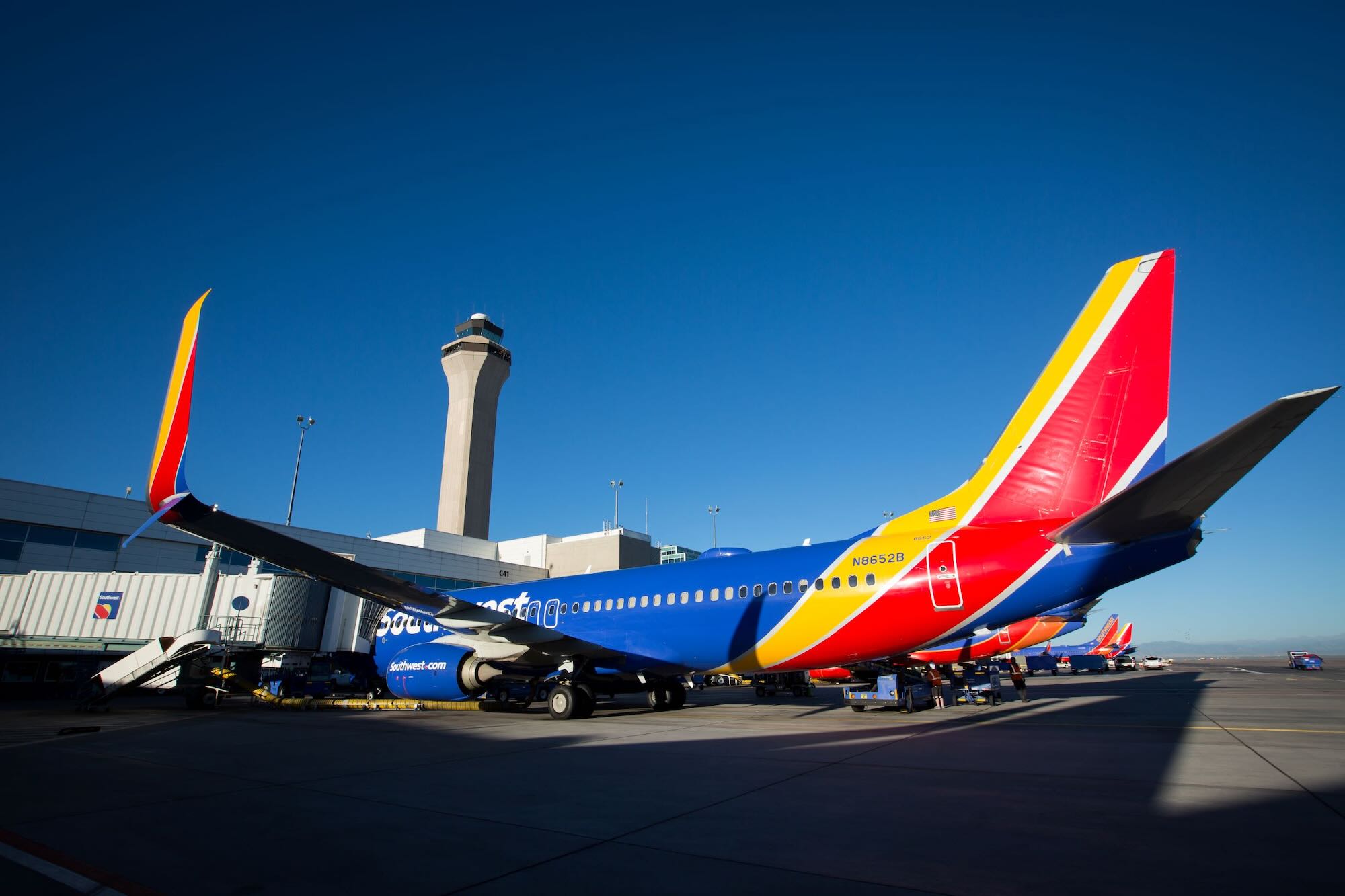
Note that the veteran Southwest Airlines B737-800 jetliner in the article photo is 11.4 years old.
If the Strait of Hormuz is blocked for an extended period jet fuel prices will force airlines to abandon ‘strategic’ flying and retreat to their strengths as SW is wisely doing. Unprofitable capacity will exit the market one way or another and the weaker players’ capacity will be the first to be abandoned.
Dulles is a horribly mismanaged airport run by the corrupt Washington Metro Airport Authority, a quasi-governmental agency accountable to no one. With one of the highest emplacement fees in the USA, IAD is very challenging for low cost airlines to operate from. JetBlue bailed out years again, other LCC options are extremely limited.
RFD Chicago Rockford International, formerly Greater Rockford Airport, remains nearly a ghost town.
While United Airlines has increased flying at Dulles, UAL has not expand service there “aggressively”. UAL is still running only four domestic departure banks daily at IAD.
I wonder if UAL would return favour and withdraw service from Baltimore (BWI) airport.
some sources say that the FAA is pushing for limits of 2400 flights/day at ORD which is below summer 2025 levels. If that is the case, there will be far more significant cuts than the 8 or so flights at ORD that WN had remaining.
WN is the first of what will certainly be many capacity cuts that will come out in the next few months. Petroleum analysts say that jet fuel will remain well above what airlines planned for 2026 well into the fall at least even if the Strait of Hormuz returns to normal tomorrow – which isn’t happening.
and it really does not look good for UA to have competitors caving in its hubs as UA looks to get back into JFK.
“it really does not look good for UA to have competitors caving in its hubs as UA looks to get back into JFK.”
Great ‘analysis’. Right up there is Riyadh delivery positions and $1B in MRO profits. Poor LTD.
none of which changes that UA acts like the bully even while asking for the American people to pay the price for UA’s strategic mistakes of the past by letting them back into JFK.
Of course, you do everything you can to avoid admitting that.
Competing is bullying for UA and fine for DL? Too funny. Sorry that UA competing is so upsetting, but you’ve had a decade to get used to it. It’s just a matter of time.
DL doesn’t tell investors that its hub competitor is only there temporarily.
DL doesn’t incessantly badmouth its low cost and ultra low cost competitors.
Mark my words: UA’s aggressive predatory behavior is coming back to bite.
Given that the FAA intends to cut ORD flights BELOW 2025 levels, sounds like Kirby’s donation to 47’s inauguration have backfired not just once (at EWR) but now yet again.
Actually, Glen Hauenstein said that much about the ULCCs, and that’s bullying then Richard Anderson, Herb Kelleher, Bob Crandall and Gordon Bethune are guilty of bullying too. Sounds like pretty good company.
DL execs have repeated a couple of times what UA said for years.
and, again, you ignore the part about how many competitors have left AA or DL hubs vs. UA hubs and what UA has said about its legacy competitors that no other US airline has said in at least decades.
and the biggest part is that the FAA very might well take an axe to UA’s ORD growth plans which will be the second UA hub that the FAA has intervened in for operational reasons that look a whole lot like more successful politic persuasion by UA’s competitors than for UA itself.
a no-growth UA at EWR and ORD? a simply stunning slapdown of Kirby and Ko. if it comes to pass
I bet UA would love ORD to be as successful as the EWR capacity caps did. UA +2.8% NYC market share advantage.
perhaps the FAA’s entire point to UA and the City of Chicago is that if you want to add lots of capacity and passengers, incentify your carriers to use larger aircraft.
It speaks volumes how many more passengers ATL as a whole and DL at ATL carries through the airport because of larger aircraft.
Given that UA’s CRJ550s seat just 2/3 of what AA has on E175s and 1/3 or less of UA mainline, the FAA is not against increased capacity but rather UA’s intent to do it very inefficiently.
as for NYC market share, DL’s profits in NYC are undoubtedly much higher because the share of LCCs and ULCCs at JFK and LGA are so much lower now – without DL running them out of town.
Some people will never grasp the concept but the point is revenue and profit maximization and not trying to compete with the volume of the NYC subway.
But you erroneously predicted that DL would enjoy a permanent NYC market share going forward. Add it to your long list of wrong calls. Riyadh delivery positions is still my fav. Too funny.
petulant child.
So far as we know, today is not the end of time.
and you still can’t grasp that size should not be the ultimate goal for a for-profit company which UA is. DL understands full well that its primary goal is profit maximization and it does that flying 10% less ASMs than UA but earning 50% more profits than UA – even w/ UA’s billion dollar/year labor cost advantage
2026 is not going to a great year for UA as growth comes to a screeching halt due to high fuel prices and the FAA’s intervention in yet another fatally flawed UA strategy, this time at ORD.
You were the one predicting DL would be permanently larger in NYC. You were wrong as usual. Perhaps you should refrain from trying to predict things. See Riyadh Air delivery positions.
With services being canceled at IAD, flights at BWI and DCA will now increase. WN says it will offer a combined 271 daily departures from DCA and BWI.
Southwest only has 3 daily flights at IAD. This is not a huge loss.
As others point out, United’s expansion at Dulles hasn’t been aggressive. They still only have 4 banks. Once they add more banks, I’ll believe there’s some aggression.
While the FAA is looking to reduce ORD, it’s still not a slotted airport, and Southwest only has about 14 flights a day. Not some huge windfall that would benefit UA or others in the event of any FAA reductions.
I am not sure why the FAA is concerned with the number of aircraft movements at O’hare since they had 972,000 in 2005 and only 857,000 in 2025 while they now have 8 runways. They didn’t have 8 in 2005.
Below is from AI:
2005 Configuration: Primarily operated with an inefficient intersecting runway system (the modernization program only began in 2005).
2026 Configuration: The airport has transitioned to a highly efficient layout featuring eight total active runways—specifically six parallel runways and two crosswind runways.
Operational Capacity: The new configuration allows for a much higher throughput, enabling arrivals and departures to operate simultaneously on different runways in the north and south halves of the airport.
Flychicago
Flychicago
O’hare can have quadruple parallel landings and also 2 parallel takeoffs at the same time. Ot they can do 3 landings and 3 takeoffs parallel. They can also operate 7 runways at once in certain times. They can have the most simultaneous movements of any airport in the world.
+4
Jetblue has also been reducing routes where United flies, too. Feels like collusion/coordination. Probably not good for consumers…
1990, “Jetblue has also been reducing routes where United flies, too.”
What routes exactly are those? Do tell.
Two fewer airports for southwest customers to connect to their interline partners.
This seemed doomed to fail at ORD with them over in T5 all the way at the end of the terminal. Most people in chicago that aren’t frequent fliers didnt even know southwest was at ORD. Last time I remember seeing, their load factors were terrible