
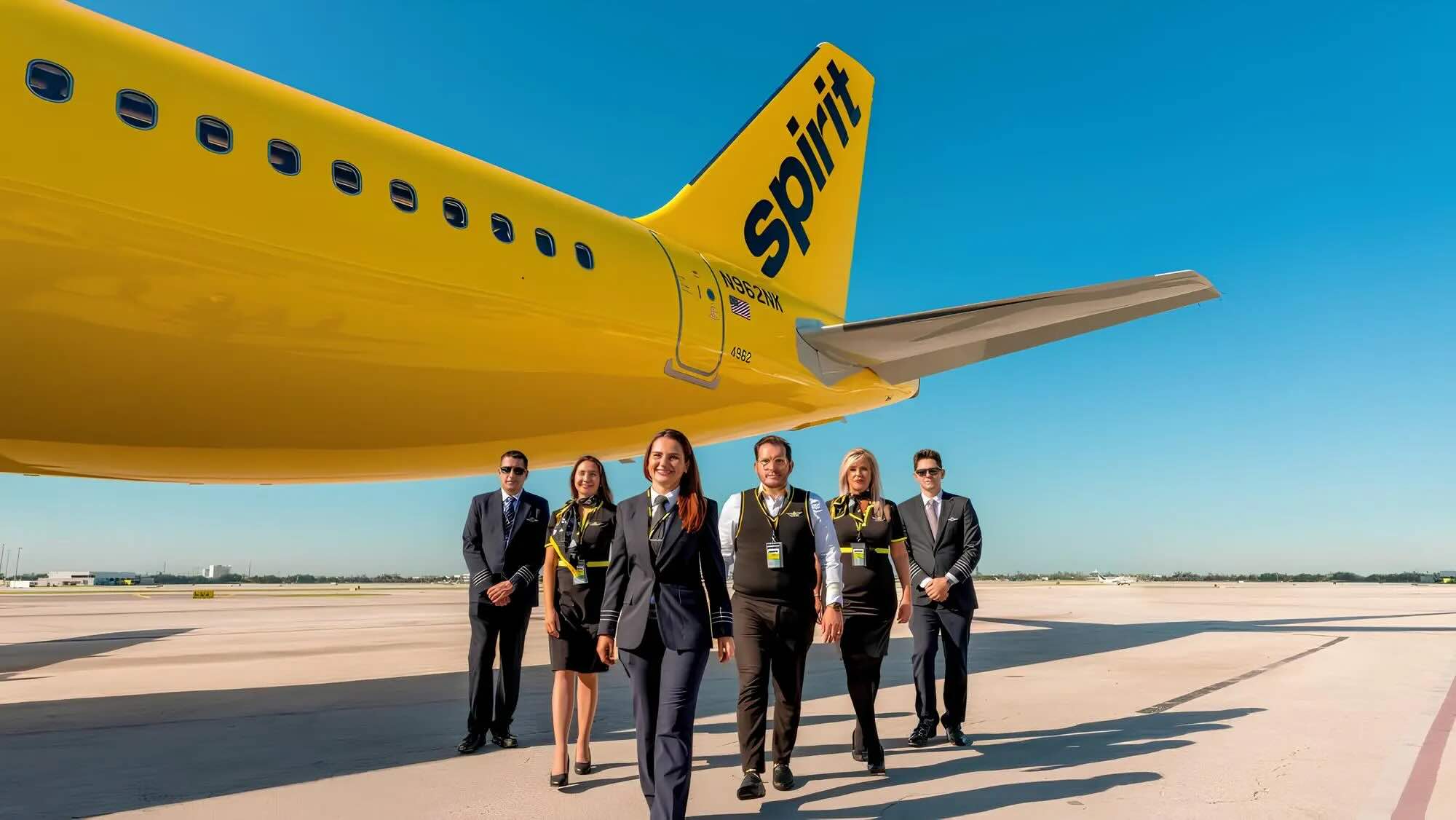
While rumors of its death may be greatly exaggerated, Spirit Airlines is once again at the center of media reports warning of imminent shutdown and liquidation. Such rumors are not definitive, but must be taken seriously now more than ever as the bankrupt carrier struggles in a new environment of surging oil prices.
Spirit Airlines Faces Liquidation As Low-Cost Model Breaks Down
Spirit Airlines is once again fighting for survival, with a new report in Bloomberg suggesting the carrier may be forced into liquidation in the coming days (or even hours) as rising fuel costs squeeze an already fragile balance sheet.
The immediate trigger appears to be a spike in oil prices tied to the ongoing conflict in the Middle East. Higher fuel costs are hitting all airlines, but they are especially punishing for a carrier like Spirit, which has little margin for error as it tries to emerge from Chapter 11 bankruptcy and return to profit by shrinking its fleet and route map.
But focusing only on fuel misses the bigger story.
The ULCC Model Remains Under Pressure
Spirit’s struggles are not just cyclical. They are structural.
For years, Spirit built its business around ultra-low base fares paired with a long list of ancillary fees. That model worked when legacy carriers could not or would not compete at the very bottom of the market. But the legacies wised up during the pandemic.
American Airlines, Delta Air Lines, and United Airlines now offer basic economy fares that are often competitive with Spirit on price, but come with a far more compelling overall product.
Even when stripped down, legacy carriers still offer:
- greater schedule frequency
- more reliable operations
- superior loyalty program earning
- a more seamless network for connections
- longhaul intercontinental routes
Spirit, by contrast, is left trying to compete almost entirely on price, and even that advantage has eroded. It has no premium cabins, longhaul routes, or lucrative credit card deals that are critical to the profit of network carriers.
Labor is more expensive. Airport fees, especially at major airports, remain elevated. And now fuel costs are climbing again.
That combination is toxic for a carrier whose entire model depends on being the lowest-cost option in the market. When your costs rise but your pricing power does not, the math simply stops working.
The current spike in fuel prices may ultimately be the straw that breaks the camel’s back, but it is not the root problem.
Spirit was already in a precarious position, with mounting losses and limited strategic options following the collapse of its planned merger with JetBlue. It was also dealt a difficult hand with the Pratt & Whitney engine recall debacle.
Higher fuel costs simply accelerate a trajectory that was already in place.
I’m Still Rooting for Spirit
The news is grim even if liquidation is not imminent. As I said last August, I may poke fun at some of the Spirit clientele, but I’m rooting for Spirit Airlines…I always root for competition in the airline marketplace.
Spirit keeps pricing in check on other carriers and offers valuable competition in an environment in which network carriers are salivating for budget carriers to fail so that they can raise prices.
I don’t believe the success of Ryanair or EasyJet is unique to Europe…I do believe there is a market for budget carriers in the USA, but the high cost of doing business at major airports and rising labor costs makes it far more difficult here than across the Atlantic.
I wrote those thoughts above almost a year ago but those particular issues remain front-and-center, even as the shock of rapidly surging oil prices has accelerated solvency issues.
CONCLUSION
Spirit Airlines may soon face liquidation. More than just rising fuel prices or bad timing, the demise of Spirit is a story about a business model that no longer works as competitors got smarter and costs rose. As I always have, I am rooting for Spirit to pull through and thankful for the competition it has brought to the table.
I’m still hopeful that a nationwide low-cost carrier can emerge that will keep prices in check and make airfare possible for those who are most sensitive to price, but the writing is on the wall for Spirit…the future looks glim.
image: Spirit Airlines





The more airlines around, the better for consumers.
Also check this out:
“Europe has ‘maybe 6 weeks of jet fuel left,’ energy agency head warns” – https://www.theguardian.com/business/live/2026/apr/16/uk-february-gdp-report-economy-iran-war-stock-market-reeves-ftse-sterling-live-updates
Well said, Aaron. No one should be celebrating airline failures, especially not on here. We should all want more, healthy competition.
I don’t want competition. I want certainty. If AA can’t get me there, UA can. If neither offer direct service, then maybe WN does from MDW. I have no need to fly any other airlines and I don’t care if they vanish, especially those that make the proles think they can fly. Death to all ULCCs.
More competition means more flights, more certainty, and cheaper prices for consumers.
Yeah ” Dire Straits “. Donald it’s a never ending mess you’ve given us.
Assuming the worst, with the report yesterday from Neeleman about his assessment of Jetblue, this report of a possible liquidation of Spirit, the merger of Allegiant and Sun Country and the rumors of talks about a United/American merger … the industry could look very different by the end of the year.
How much money should airlines continue to lose so that it’s better for consumers?
How much money should your grocery store lose every year so that you can continue to shop there?
From what I hear the typical economy passenger no longer has the money to fly. That’s why all other airlines are leaning into the front of the plane, cause that’s where the money is in a K shaped economy. So economy airlines likely feel the crunch. More to come…
And remember your liquidation is limited to 100ml in a 1 quart bag.
As is known, the struggling NK is facing a serious risk of liquidation, and a decision on whether to completely cease operations is expected to be made this week (third week of April 2026). On the other hand, experts recommend that passengers use credit cards when purchasing tickets (for chargeback rights) and consider alternative flight options in case of a possible disruption. More power and best of good luck to NK anyway!
Perhaps the most frightening thing is that this situation is only the tip of the iceberg for the U.S. airline sector… It’s best to wait for official confirmation and see how things develop.
It’s worth constantly remembering that B6 tried to buy them and was not allowed because it was going to affect budget airlines, yet NK’s collapse doesn’t seem to affect anything. Something is seriously wrong here.