
United Airlines reported better-than-expected second-quarter results and raised its full-year earnings guidance, even as sharply higher fuel prices erased much of the benefit from record revenue.
United Airlines Posts Record Revenue, Raises 2026 Profit Outlook
United Airlines has reported second-quarter operating revenue of $17.7 billion, a 16% increase over the same period last year.
The airline earned $805 million on a GAAP basis, or $2.46 per diluted share. Excluding special items, United reported adjusted net income of $649 million and adjusted earnings of $1.99 per share, beating Wall Street expectations.
United also raised its full-year adjusted earnings guidance to between $9 and $11 per share. The previous range was $7 to $11, meaning the airline now expects results to land toward the stronger end of its original outlook.
That confidence comes despite a tremendous fuel bill this last quarter.
United spent $5.1 billion on aircraft fuel during Q2, an increase of 84% over last year. Fuel expense rose by approximately $2.3 billion year-over-year, while United estimates that its expected 2026 fuel bill has increased by nearly $6 billion compared to its assumptions at the start of the year.
CEO Scott Kirby said:
“The United Next strategy continues to deliver durable earnings and margin expansion despite a volatile operating environment.”
United says it recovered approximately half of the second-quarter fuel increase through higher revenue. It expects to recover 80% to 90% during the third quarter and fully offset the increase by the fourth quarter.
Strong Revenue Across The Business
United’s revenue growth was not confined to one portion of the aircraft.
Premium-cabin revenue increased 16% year-over-year, while Basic Economy revenue rose 11%. Corporate and other contracted business revenue increased 27%, MileagePlus revenue rose 11%, and cargo revenue grew nearly 23%.
Total revenue per available seat mile increased 12.1%, even as capacity grew 3.5%.
That is an impressive combination…United carried more passengers, charged more for the capacity it offered, and saw growth across premium, economy, corporate travel, loyalty, and cargo.
Starlink also continues to move quickly through the fleet. United says approximately 450 aircraft are now equipped, with nearly 1,000 expected to have the high-speed internet system by the end of the year.
Operationally, United reported its best second-quarter on-time departure rate since 2021. Newark, which has historically been the weak point in United’s network, recorded its best-ever second-quarter on-time departure performance.
Did United Beat Delta This Quarter?
United and Delta each reported approximately $17.7 billion in adjusted operating revenue for the second quarter, making the comparison particularly interesting.
United reported adjusted earnings of $1.99 per share, compared to $1.56 at Delta. On that widely quoted metric, United came out ahead.
But United did not produce more total profit.
Delta generated $1.4 billion in adjusted pre-tax income, compared to $843 million at United. Delta’s adjusted pre-tax margin was 7.7%, while United’s was 4.8%.
The difference between the per-share and total-profit comparisons is largely explained by the number of shares each company has outstanding. United divides its earnings among roughly half as many shares as Delta, making its earnings-per-share figure appear higher even though the company earned less money overall.
So the fairest conclusion is that United beat Delta on adjusted EPS, while Delta remained substantially more profitable on the same amount of adjusted revenue.
United also faced a larger fuel burden. It spent $5.1 billion on fuel during the quarter, compared to $4.4 billion at Delta. That helps explain why United converted identical adjusted revenue into less profit.
A Strong Result, But Fuel Remains The Story
United expects third-quarter adjusted earnings of $2.50 to $3.50 per share. The airline says that figure would have been approximately $1.12 higher without the renewed fuel-price increase seen during the first half of July.
That neatly illustrates the problem.
United is producing record revenue and enjoying remarkable pricing power, but fuel is consuming a large portion of the benefit. The airline has managed to raise fares without materially weakening demand so far, but there is always a limit to what customers will absorb.
United also indicated that fourth-quarter schedules currently on sale will be reduced. That capacity discipline should help preserve pricing, though it may also mean fewer inexpensive seats for travelers.
CONCLUSION
United produced record second-quarter revenue, exceeded Wall Street’s earnings expectations, and raised the lower end of its full-year profit guidance despite an enormous increase in fuel expense.
United also posted higher adjusted earnings per share than Delta on essentially identical adjusted revenue. But Delta converted that revenue into far more total profit, with an adjusted pre-tax margin nearly three points higher.
Both airlines remain in a commanding position in the U.S. airlines industry. United’s quarter was strong, but Delta still won the more meaningful profitability comparison.






UNITED rising
Absolutely.
“UNITED rising” Agreed. United is crushing it.
LTD says, “UA is taking on debt on lower earnings – in part due to higher fuel costs – in order to support the massive fleet growth even as UA cannot add capacity at the rate of new aircraft is coming in”
Actually, UA’s adjusted net debt decreased by $263m while DL’s increased by $51m in Q2 2026. Sorry.
In 2026 UA added 56 net aircraft vs 15 for DL. The average fleet age for both airlines is now 15.1 years. In the very near future Delta Air Lines will have the oldest fleet of the Big 3 network airlines. UA announced they will retire 19 aircraft in 2026 and 80 more in 2027.
Q1 2026: Net Income/OCF/Capex/FCF in $b
DL: 1.6/1.6/1.4/0.2
UA: 0.8/1.6/1.3/0.3
1st Half 2026: Net Income/OCF/Capex/FCF in $b
UAL: 1.5/6.4/3.2/3.2
DAL: 1.3/4.1/2.7/1.4
Since 1/1/22: OCF/Capex/FCF in $b (net aircraft added)
UAL: 35.7/25.3/10.4 (+296 aircraft)
DAL: 31.6/22.2/9.4 (+188 aircraft)
“United’s quarter was strong, but Delta still won the more meaningful profitability comparison.”
*hands Tim a trophy*
Countdown to Tim Dunn telling us why United is in big trouble based on these numbers
I wonder how much difference is due to the extra capital expenditures UA currently has due to their fleet renewal. They’re taking on a record amount of planes, though that cash outlay should decrease in a few years when delivery rates subside.
Also, how much is due to the difference in credit card revenues generated by the AMEX vs Chase deals?
Good questions.
It is true that UA is buying significantly more planes than DL. UA is in the middle of the largest fleet purchase in American aviation history, with roughly 800 new aircraft scheduled for delivery through 2032. In contrast, DL has a smaller, more modest order book of about 350 aircraft.
In summary, the war between the two U.S. airline titans continues at full speed.
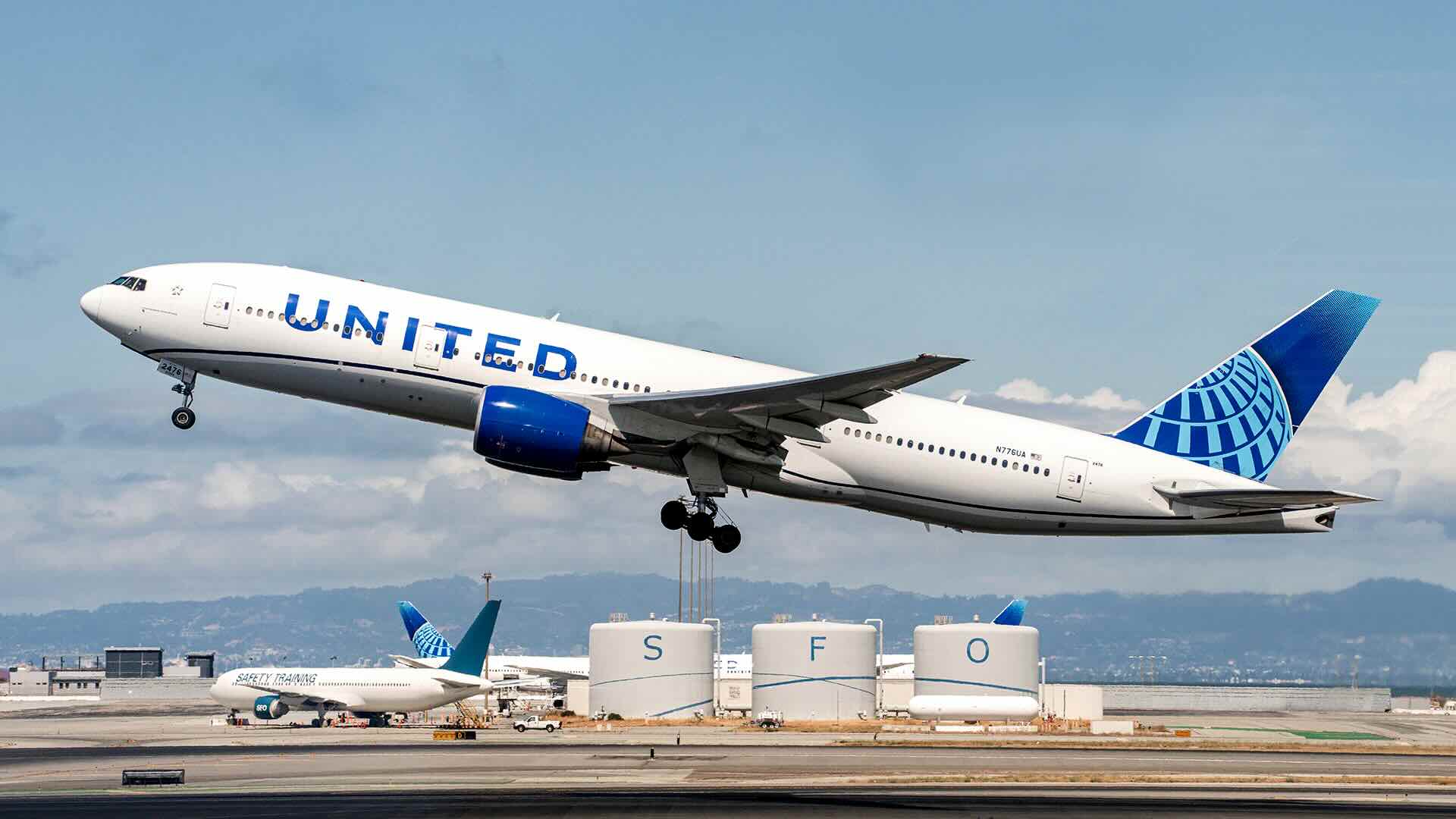
For aviation enthusiasts → The UA jetliner seen in the foreground in the article photo is a B777-200. It is 30.3 years old and is currently en route from SFO to ORD.
Good doctor, it appears N776UA, operating as UA2480, is scheduled to arrive 16 minutes early; however, ORD-regulars will note that often early-arriving aircraft merely sit on the taxiway as they wait for preoccupied gates. Such fun!
Dear ORD, always hyper busy… Safe flight and landing to UA2480!
It is worth noting that growth for both airlines was entirely salvaged by wealthier consumers. For the first time in DL’s history, premium ticket revenue ($6.92 billion) surpassed economy cabin sales ($6.85 billion).
I saw a great video on this exact subject…
https://youtu.be/VVcCqMAfMyk
He makes great content – and touches on some great points between delta and united.
https://youtu.be/VVcCqMAfMyk
Right on the $. Thanks for sharing.
holy cow. the real reasons get so sorely missed.
The difference between DL and UA’s revenue is DL’s higher credit card/loyalty revenue – which is a comparable measure since both DL and UA offer the same loyalty type programs and because of DL’s refinery business – which is not comparable.
DL paid 25 cents/gallon less than UA for jet fuel for the quarter – and the refinery was offline part of the quarter.
DL gets revenue from Delta Tech Ops – and that was over $300 million for the quarter. UA doesn’t have that line of business – or at least not enough to break it out as a separate business.
DL simply gets a higher percentage of its revenue from higher margin non-transportation sources.
UA took a charge for labor contract settlement, presumably the final piece of the retro it has to pay its FAs and also got an earnings credit due to sale/leaseback transations; it increased debt via more sale/leaseback transactions and also took on debt to provide a cash cushion due to “geopolitical uncertainty”. UA took on more debt including to ensure it can pay for all of the massive number of aircraft it has on order esp. in the next few years.
UA flew 10% more ASMs than DL which is the ONLY metric on which it beats DL or anybody. On financial metrics, UA underperformed DL by a country mile including in net profit – even w/o the refinery.
As I said would be the case months ago, DL’s financial lead over UA is widening and that will continue throughout the year.
It is not a surprise that this is the time when DL is shifting its competitive focus to the west coast and Asia/Pacific markets; DL simply has a far larger financial advantage over everyone else in the industry and they are using that to grow in UA strength markets after having spent the last decade growing at AA and WN’s expense.
Another bad take from Tim:
DL Q2 Pax Rev: +13% UA: +16.4% – so UA is taking Pax share (relative to DL anyway need to see the other airlines report to know for whole market). UA’s revenue growth exceeded DL’s in literally all markets.
DL total revenue increase of $3.1B vs UAs $2.45B so you’d say Delta’s whole business is growing faster… but
DL Overall revenue was boosted by $950M of increased refinery sales (which are a function of the oil price and you see that in their refinery costs also increasing 83% lol…) – so really they are growing slower than United.
Now TD would love to say “wah wah Delta is growing more profitably etc.” but lets dive into that too – DL’s yield grew 12%…. United’s yield grew 12.1% so basically the same. Delta’s CASM grew 21% and CASM-Ex 6.8% for UA CASM grew 15.8% and CASM-EX 6.1% – so United grew revenue faster than Delta, with comparable yield growth while costs grew less than Delta. Tim: How on earth do you get to the conclusion that the gap is widening between the two? Delta’s load factor fell 1% while United’s rose 1.2% – so Delta is also losing pax… Nice
Sure Delta has a refinery and a better loyalty agreement, but as an airline United is clearly closing the gap on Delta, and has been proven many times over, once an airline becomes more dominant its loyalty business can improve economics over time – literally proven by Delta in 2010-2020.
It was good to see that Delta finally crossed that 1,000 aircraft mark that you said they would beat UA and AA to, they now have 1,004! United has 1,100 – and got to 1,000 like a year ago – you were really wrong on that prediction weren’t you Tim? AA has also smashed DL in the race to 1,000. UA’s regional fleet is bigger than Delta’s too!
Tim, I really hope you don’t work in aviation because your analysis of these results was poor at best.
Good stuff Andy.
Also, interesting is PRASM/unit revenue in different geographic areas.
UAL/DAL
Domestic+12.2%/+12.0%
Pacific+14.0%/+7.0%
Atlantic+12.1%/+7.0%
The UA domestic PRASM growth is impressive give their ASMs grew 6.6% YOY and DL was flat. That completely contradicts LTD’s nonsense. Bring on those 22 new IAH and 14 new IAD gates this year.
DL made $800 million more on the bottom line than UA.
put the microscope back in your pocket.
DL outperformed UA and they are using their financial superiority to take on UA in UA’s most significant region; TPAC and the west coast.
LAX-ORD, EWR, MNL, HKG.
Did I miss any that have been announced just in the past year?
In 2026 United:
+ $200m in net income
+ $2.3b in cash flow
+ $1.8b in free cash flow
+ 56 net aircraft vs +15 for DL
– $263m net debt vs + $51m net debt for DL in Q2
1st Half 2026 Net Income/OCF/Capex/FCF in $b
UAL: 1.5/6.4/3.2/3.2
DAL: 1.3/4.1/2.7/1.4
to precisely no one’s surprise, you cherrypick data to avoid admitting the obvious reality which everyone knows which is that DL runs a better airline and a better business.
UA is taking on debt on lower earnings – in part due to higher fuel costs – in order to support the massive fleet growth even as UA cannot add capacity at the rate of new aircraft is coming in – so UA’s fleet utilization goes down. They have a bad case of FOMO so hold onto older and less fuel efficient widebodies even as they add CRJ 550s and 450s, the least cost efficient aircraft in the US airline fleet.
As I have said repeatedly, there are real and valid reasons why DL makes more money than UA even though UA flies more capacity and it has only partly to do with DL’s pricing strength in its hubs
DL’s pricing strength is clearly failing, their load factor went down while they increased prices and UA’s went up. Tim can you please just once look at actual data to support your conclusions?
we all know that you are paid UA cheerleaders but could you possibly look at the ENTIRE picture instead of cherrypicking out the tidbits that allow you to paint a narrative which no one in their right mind believes is accurate.
UA underperformed DL again.
They mix the cake differently but it is still flat and tasteless.
Some day you two will be able to admit that DL runs a better airline and a better business but until the day when you can admit that – or at least stop with your non-sensical rants, I will have a “job” to do.
By the way Timmy, I don’t disagree that Delta runs a better business than UA. Never have disagreed tbh, you just conflate airline with business whenever it suits you. Airlines suck as a business, UA is more purely an airline than Delta and so Delta benefits from its conglomeration. But I don’t fly on Delta’s refinery, don’t use its MRO business and don’t use an Amex Skymiles credit card so the only business I care about is their airline, which clearly underperformed UA this past quarter.
I should also clarify, I don’t own stock in either (maybe through index funds which would mean I’m more invested in DL than UA due to its market cap?), I don’t work for either, never have worked for either. I fly both of them regularly and I don’t hate DL’s product, I just find UAs to be better, I also think UA is doing more to win customers over whereas it feels like DL is just content with trying to charge people more for no additional value. I do live at a UA hub so I do fly them more but I’m usually just trying to find the best way to get to my destination for reasonable value.
LTD says, “its (DL) cancellation rate is coming down”
How could it not from those lofty heights, but it was still worse than UA’s in June. Didn’t you claim months ago that the problem was fixed? Oops.
fixing the problem and getting back to zero is not the same thing.
and you still argue against a 1% difference in cancellation rate while failing to admit that UA loses bags at a faster rate than any other US airline.
don’t worry though.
DL made twice as much money in the 2nd quarter as UA – and DL is coming for UA’s crown jewels.
LAX-MNL Is now confirmed
“1% difference”
Sorry, Delta Air Lines’ 2026 cancellation rate is 34% higher than UA’s. Delta cancelled 5,330 more flights. Yikes!
good thing DL made an easy to remember double the amount of profits that UA made in 2Q2026.
the earnings gap is widening as UA falls further behind DL.
No wonder DL is going for UA’s jugular in DL’s TPAC and west coast growth strategy
In 2026 United:
+ $200m in net income
+ $2.3b in cash flow
+ $1.8b in free cash flow
+ 56 net aircraft vs +15 for DL
– $263m net debt vs + $51m net debt for DL in Q2
United is knocking out of the park.
Tim Dunn, admittedly I just skip over reading your posts. The amount of effort you put into this is perplexing,
I’m truly jealous of the amount of your free time you have.
there is never too little time to speak the truth and put the obnoxious UA fan nuts in their place
You should really ask your therapist to explain psychological projection to you. I think you would find it quite helpful with your issues.
denying a reality which everyone except you and the rabid UA fan nut jobs can see is your (collective) gig, not mine.
Incessantly posting cherrypicked data and ignoring the bottom line and the result is a sure of pathological denial of reality.
DL earned twice as much money as UA in the 2nd quarter by flying less even as it continues to announce one new route after another that goes after UA’s strength markets.
Do spend time with your shrink if that is what you need to return to reality.
After years of feeding on AA and WN, DL is shifting its competitive focus to UA with new routes from LAX to HKG, ORD, EWR, and now MNL.
all of the cherrypicked data you vomit won’t change the reality that DL is going for UA’s jugular
Sorry the facts are so inconvenient for you. Yep. DL made more net income for Q2, but UA made more net income for 2026 and had far more cash flow and free cash flow. The two airlines had almost the same cash flow and free cash flow for Q2 with all the advantages DL has that you erroneously said would lead to UA’s demise.
What happened to those labor costs? DAL’s CASM-ex was higher than UA. Then there are the CC, FFP, MRO advantages, but yet United is still smoking DL financially in 2026. And DL now has the oldest fleet, is falling behind on wifi, can’t fix its cancellation problems and still sucks at aircraft interior renovations/installations. Yikes!
re bel,
UA’s net income in the first quarter of this year was boosted by sale-leaseback transactions which increased debt while DL’s was depressed by re-evaluation of its equity holdings.
the point which you can’t seem to admit is that DL’s financial strength over UA is what is giving it the ability to grow into UA’s strength markets – the west coast and Asia/Pacific where DL has now announced 4 major routes in a year – LAX-ORD/HKG/EWR/MNL and there will be more.
You have never answered the question as to how UA managed to beat DL in net income in 1Q2025 and yet end up wiht a $1.6 billion earnings deficit by the end of last year – and the same thing is setting up again.
You desperately bang the keyboard grasping for cherrypicked data to avoid admitting the big picture – because you know the truth about which I speak is what matters and not your incessant need to tout UA as the best airline when it is not.
UA is a big airline that has trash talked every airline in the US industry except DL because UA – whether you can admit it or not – knows it cannot win a competitive battle against DL.
DL has a mile long track record of growing in areas where other carriers were once larger and that is exactly what is unfolding on the west coast and TPAC.
vomit up your cherrypicked statistics for the next 5 years as DL eats UA’s lunch if it makes you feel better.
The predator has now become the prey to a much better run airline and business.
TD says, “UA’s net income in the first quarter of this year was boosted by sale-leaseback transactions which increased debt while DL’s was depressed by re-evaluation of its equity holdings.”
I’m so sorry you only like GAAP when they favor your tortured arguments, and yes, investing in airlines is not financially smart in most cases. You might be the only ‘analyst’ alive who believes that one quarter’s net income is the sole avatar for the health of an enterprise. Who needs real analysts, right? Hilarious!
United Airlines will benefit tremendously for years for the incredible deals on aircraft that they negotiated during Covid while other airlines were hunkering down. The price of those aircraft have skyrocketed and UA will be able to generate tons of cash whenever they want to do sale-leasebacks. Cash is king! You also conveniently ignore that net income is reduced with growing enterprises (see Amazon). Long story short, you’re not much of an ‘analyst’.
United is crushing it.
In 2026 United:
$200m > DL in net income
$2.3b > DL in cash flow
$1.8b > DL in free cash flow
+ 56 net aircraft vs +15 for DL
– $263m net debt vs + $51m net debt for DL in Q2
UA & DL both around 2x net leverage
UA & DL average fleet age both 15.1 years
Fleet size 2016/2026:
UA: 737/1,122 +385/52%
AA: 930/1,030 +100/11%
DL: 832/1,004 +172/21%
US domestic mainline market share (passengers) 2016/2025
DL: 16.4%/17.8%, +9%
AA: 17.2%/17.3%, +1%
SW:18.2%/16.9%, -7%
UA: 13.0%/16.6%, +28%
Ah, yes – the usual arguments from Tim about why Delta posted better financials than United, and how Delta is a better airline as a result. And Tim may be 100% right – Delta MAY regularly produce better financial results via most common measurements.
And yet Tim forgets – on here, and all the other blogs he posts comments on, they all are focused on people who want to buy airline TICKETS instead of airline STOCKS. People don’t buy products because the parent company posted better quarterly results. They go to, and purchase from, businesses that provide them the best value proposition for the product (or experience) they wish to receive.
Don’t believe me? Here are some simple examples:
– The bank with the highest profit margin in 2025 was JPMorgan Chase. I think few would say they are the “best” bank, and that they provide the best customer experience. Smaller, locally owned banks regularly trounce Chase in customer satisfaction surveys, as to Credit Unions.
– The grocery store with the highest profit margin in 2025 was Sprouts. It is a fine store, but has a limited, focused product line and many items sold there are more expensive than the same product at other stores. It’s great for investors, but I doubt everyone would call Sprouts “best” for consumers. Or is everyone who buys food at Kroger, Publix, WalMart, Albertsons, Aldi, etc. misguided?
– How about phones? This comparison may be a little more fair to compare Delta to United et.al. Apple has the highest profit margin among phones, and it also has a loyal cadre of fans and dedicated users (and internet supporters who take great offense at any criticism). But there are plenty of quality Android phones from other makers, and when comparing specs (battery life, memory, processor speed) you either get less for the same price with Apple, or pay more to Apple to get the same as the competition. And Apple tends to live on it’s reputation rather than its current reality. So I believe the comparison to Delta really fits! Again – Apple is great for investors, but not so stellar for consumers.
Focus on the experience, not the financials. Yes, it matters that an airline is profitable. Spirit is a good example of why that’s necessary. But being “more profitable” doesn’t mean a “better” airline experience for consumers. Yep. Delta made money – but the idea that any other airline will not continue to challenge them for passengers, create growth, increase loyalty, etc. because they made a little less money is childish.
Paul and Andy,
of course, let’s just talk about the experience and forget the financial details.
Problem is that Matthew teed up the conversation including with the header “Did United Beat Delta This Quarter?”
Instead of just saying, “no, they did not” Matthew launched into non-sense about EPS that has nothing to do with the fact that the number of pieces of the pie doesn’t change the size of the pie.
As hard as it is for you and Andy and others to admit, DL runs a better business AND a better airline.
UA had the opportunity to overtake DL in operational metrics when DL slipped on a banana because of its pilot issues – but DL’s on-time is back at the top of the industry and its cancellation rate is coming down.
and, yes, UA still loses bags at a faster rate than the rest of the industry.
So, of course, let’s not talk about financial issues even though so many people desperately want to believe that UA can whip DL financially.
and, no, let’s not talk about experiences because UA consistently is behind DL in customer service metrics as well as the entirety of DOT metrics.
Just admit it and quit arguing. DL runs a better business and airline.
See, Tim – I’m fine with most of your assertions. And you’re right – this article is about the financials, Delta vs. United, so discussing and comparing them is completely appropriate. But, it’s the last part of what you say that I cannot agree with. You say, “Just admit it and quit arguing. DL runs a better business and airline.”
I agree that Delta is running a better BUSINESS – the financials speak for themselves in that matter. But I absolutely disagree that Delta runs a better AIRLINE.
Anecdotal evidence aside, Delta, so far this year, has provided the flying public, with:
– way higher flight cancellation rates YOY
– pilots producing a website apologizing for operational deficiencies
– a significant drop in on-time performance compared to past years
– missteps and significant delays with new seats roll-outs
– long delays in Wifi upgrades, hoping LEO pans out, while watching the implementation of consistently-reliable and truly high-speed internet at dozens of competing airlines
– eliminated food service on shorter routes
– “Pay to play” segmentation of business class seating
– decreased value in SkyMiles
Those are not the actions of the “best run airline.” And before you start in “whataboutism” (baggage mishandling, whatever…) I’m not saying other airlines don’t have their issues either. What I AM saying is that your attribution of “better financials” >>> “better airline” is false. Top-tier financials don’t equate to a better product for consumers. There are lots of airlines that beat Delta’s on-time and cancellation rates, that beat Delta’s on-board product offerings, that beat Delta’s route structure, and that beat Delta’s pricing (not necessarily the same airline for each).
Delta is good. But they are not the best. At least, not the best as an AIRLINE, based on the way they are operating and the decisions their management is making this past year.
all of that, Paul, and you can’t deal w/ the actual facts and data which do show that DL IS running a better airline than not just UA but also AA, its primary global competitors.
The latest DOT data shows that DL on a YTD basis is running the best on-time of the big 4 and the cancellation rate issue never amounted to much more than a single percent difference in cancellation rates – and DL mainline was not much if any worse than DL Connection carriers – which have no pilot staffing issue and run better operations (according to DOT stats) than other airline regional carrier groupings.
I didn’t say that DL is running the BEST or most consumer friendly airline; no for profit company exists to make consumers happy at their own expense.
I’ll respond to just a few of your charges, though. You do realize that UA moved first on unbundling business class even though DL said it would do it first? that is certainly not best for UA, now is it?
are those billboards that were put up by UA mechanics (or their union) still up in downtown Chicago calling out the company’s outsourcing and slow negotiations? Did DL FAs storm a company event to protest their lack of pay? In fact, DL FAs and mechanics and every other non0union employee have received YET ANOTHER pay raise.
DLs pilot stunt ranks as one of the dumber strategies; DL’s profits – including profit sharing for DL pilots – will likely be stronger than the rest of the industry COMBINED.
I’m here simply to point out the facts.
DL is indeed running the best business and best airline AMONG its US competitors. Perfect, no. But other airlines are a whole lot further from perfection than DL.
@Tim: “… The latest DOT data shows that DL on a YTD basis is running the best on-time of the big 4 and the cancellation rate issue never amounted to much more than a single percent difference in cancellation rates …”
Please try to remember you think the spread in cancellation rates of “not much MORE than a single percentage difference” is small and not a big deal, because:
1) In the very same sentence, you crow about Delta having the best YTD on-time arrival rate… which isn’t even a single percentage difference – in fact, it’s LESS than a single percent (0.6% to be exact over its nearest Big Four competitor)
2) You have numerous past postings where you also harp on whomever is last in baggage mishandling rates, which has been (and currently is) United among the US “Big Four” – and is only about a QUARTER of a percent difference between United and Delta (0.27% for May).
TL/DR “Tim Logic:
– Delta 0.7% worse: “Not a big deal!”
– Delta 0.27% – 0.6% better: “Clear evidence that Delta runs the best airline!”
Your inconsistencies in your logic and reasoning is why so many people post contradictions to your assertions.
Also – it’s funny. Scroll back up and read my posts again – you’ll notice I didn’t claim anywhere that UNITED is better. In fact, I only used the word “United” once when I agreed the article “…is about the financials, Delta vs. United” I was comparing Delta to ALL US airlines – which Delta should be performing better than, if they are indeed the “best run airline” as you believe. But YOU keep going back to “I can’t accept that DL is better than UA”. You have an obsession with trying to prove United runs a bad airline, and try to use Delta’s successes to make the point, with contradictory logic and inconsistent reasoning.
Show us on the doll where United hurt you.
There is no inconsistency in what I think or write, Paul.
I have repeatedly said this incessant nitpicking over fractions of a percent on operational metrics that change month to month is infantile. But I respond to exactly what other people post.
You and others crowed about how bad DL’s pilot notification issue would hurt it and yet it has clear not turned out that way; in fact, UA had an on-time and cancellation rate lead over DL but DL has regained the on-time lead and is making good progress on the cancellation rate – which again is a percent difference.
The whole reason why I hate all of these childish arguments about minute changes in operational metrics is because they are rooted in the same logic, or lack thereof, that people like rebel uses in cherrypicking a datapoint here or there in order to avoid admitting the big picture.
I have asked him a million times to explain how UA managed to beat DL last year in the first quarter in earnings burt end up with a $1.6 billion earnings deficit at the end of the year.
Instead of answering that question, he continues to tout UA’s YTD earnings this year which was driven by sales/leaseback transactions that added to debt, a statistic that he doesn’t like to mention. He talks about net debt without noting that even UA execs just said on their earnings call that they are borrowing money to increase cash due to macroeconomic uncertainty – but they didn’t say that UA has the largest capex in its history on tap for this year due to Boeing now delivering planes to UA at a record pace.
Given that UA execs acknowledge that high fuel prices – which surged just hours after UA released its earnings due to round 999 of the Iran drama – are limiting its ability to expand.
Unlike rebel, I am happy to look at not just one data point for one period but also to look at ALL OF THEM over time.
Any reasonable and logical exercise shows that UA is weaker relative to DL than it has been at any time post covid esp. looking forward.
UA is already halfway to the annual earnings deficit it had last year while DL usually does poorly in the first quarter.
And the big picture is that DL’s stronger financial position not just now but going forward is why DL feels this is the best time to go after UA’s family jewels (I prefer crown jewels but 1990 is right that UA is not royalty).
while rebel loves to cherrypick data points trying to deny the reality that DL is a better run airline and business, DL simply will continue to hit UA where it counts.
DL has a long track record of growth at the expense of competitors; they paid little attention to UA for years but UA’s turn is here and DL is hitting hard.
cherrypicking all of the datapoints you or anyone wants doesn’t change the big picture which is that DL is going to aggressively grow in UA’s key markets which will strategically weaken UA and strengthen DL.
No amount of cherrypicked data will change that clear reality.
Yes, you are inconsistent. When Delta is shown by the data to be behind others, you’ll say it’s not a big deal. It’s a small percentage difference. It’s so little it doesn’t really matter.
But when Delta is ahead of others – EVEN BY SMALLER PERCENTAGES – you tout Delta’s position as great! Fabulous! Showing how Delta runs the best airline!
That’s the very definition of inconsistency. And it’s not cherrypicked data. It’s the same data (DOT statistics in core measurements – on time, cancellations, baggage mishandling, and customer complaints). You just can’t see how impossibly nonobjective you’ve become that you no longer provide analysis. You provide propaganda.
But what you haven’t figured out yet is nobody takes you seriously. Pushing your buttons has become a sport in the comments section. The blogs intentionally write articles about Delta and/or United, hoping you’ll come out of your basement and post more nonsense, and we all get a few moments of amusement easily shooting down your assertions. The blogs get more clicks and more money, and we get a laugh at your expense.
Good luck getting recognition from Delta for your endless loyalty. They surely can’t be paying you for the attempt at publishing good PR, because if they are – you aren’t very good at it.
absolutely wrong.
I have consistently said regarding the pilot staffing issues that DL’s cancellation rate is not where DL was.. but I have also said that the difference is not that big in comparison to the entire range of cancellation rates in the industry. AA consistently has a higher rate of cancellation than either DL or UA – but I have also noted that WN consistently has the lowest cancellation rate of the big 4.
You and rebel are incapable of finding perspective. You incessantly harp on data that continually moves while failing to address the big picture – which is simply that DL is a better run airline and business than UA.
You and rebel and many others are simply incapable of admitting that UA is #2 which isn’t a bad place to be – but it isn’t #1.
and your, his and the rest of the UA fan nuts can’t admit that I have been right all along – UA has not managed to grow its way out of the 4th place position in the domestic market while DL is growing in markets where UA has been dominant. It is simply easier for DL to gain from UA in int’l markets than it is for UA to gain from AA, DL and WN in domestic markets.
You are incapable of seeing the big picture which is that DL is using its financial strength to take on UA which DL successfully has done with AA, AS, B6 and WN/
You desperately want to nitpick over tiny little numbers that move month to month so you don’t have to address the big picture and admit that what I said years ago would happen is now happening.
It’s not endless loyalty. It is accurate interpretation of what is going on – something you desperately want to believe describes you but clearly does not.
PP says, “But when Delta is ahead of others – EVEN BY SMALLER PERCENTAGES – you tout Delta’s position as great!”
He just did it in his denial of doing it. UA #4 domestically = 7% behind DL vs a 34% higher DL cancellation rate that TD pretends is minimal. Comical.
as usual, you nitpick over small, continuously moving datapoints while refusing to accept the far larger and ongoing datapoints
1. UA’s baggage handling rate is the worst in the industry; not only has UA never publicly acknowledg3ed how bad their problem is, but they have made no effort to fix it – quite unlike DL’s cancellation rate which results in a far smaller difference in cncellation ranking.
and you do realize that WN, not UA, leads the big 4 in the lowest cancellation rates?
2. UA made just 2/3 of what DL made in net profits last year. Instead of addressing how UA went from a net income leadership role in the industry last year in the first quarter but ended up with a $1.6 billion earnings deficit by the end of the year, you manufacture data about how great UA has done this year – while ignoring that they took on debt and are halfway to the same earnings deficit to DL from last year in just one quarter.
3. UA has trash talked the competition – except for DL – for years. DL has now focused its competitive attention on UA and the markets where UA is strong. Based on what DL has achieved in AA, AS, B6 and WN markets, it is pretty clear that UA will have some severe road rash in mere quarters and will be needing major reconstructive surgery in a few years.
You are completely incapable of admitting UA’s shortcomings or even that it is really #2 at best in the industry so you cherrypick datapoints that everyone knows in context just don’t matter.
TD simply doesn’t understand the basics is the airline business much less percentages.
TD’s top 10
1. “Stop fixating on data”
2. UA has permanently lost NYC share leadership (spring ’25)
3. “It is the Texas and southeast US hubs – where UA is the weakest – that have the great capacity to handle more traffic”
4. Amazon LEO will be better than Starlink. When?
5. DL Tech Ops is headed to $1B profit in next few years; currently a tenth of that.
6. DL can get Boeing delivery slots whenever they want them.
7. DL doesn’t need aircraft in the near term.
8. DL’s A220 delivery delays are a swap for Air Asia’s cancelled A339s slots.
9. UA uses 739s on EWR-LAX transcons.
10. Others are ‘cherrypicking’
poor you.
You desperately need to discredit me so you can avoid admitting that DL is coming to eat UA’s lunch just like it did in NYC and BOS with AA and B6 and AA at LAX.
You desperately want to believe that what happens on the internet matters. DL is going to do what they will do because it makes sense for them and UA can’t do a thing about it. and your protests and attempts to defame me aren’t stopping anything.
You are incapable of accepting that I am talking about United – a company – while you incessantly make the conversation about me.
I said years ago that UA’s strategy to grow out of its 4th place position in the domestic would not succeed while DL is moving aggressively to rebuild its TPAC system – and may well knock UA out of first place.
that has got to be terrifying to you and your boss whose desk you live under but DL execs were bold enough to state their goals; in stark contrast, UA said it would push AA out of ORD, would flood NYC with new flights etc etc – all of which have failed.
This is going to need to be expanded. Top 20, 30? It’s just a matter of time.
TD’s top 10
1. “Stop fixating on data”
2. UA has permanently lost NYC share leadership (spring ’25)
3. “It is the Texas and southeast US hubs – where UA is the weakest – that have the great capacity to handle more traffic”
4. Amazon LEO will be better than Starlink. When?
5. DL Tech Ops is headed to $1B profit in next few years; currently a tenth of that.
6. DL can get Boeing delivery slots whenever they want them.
7. DL doesn’t need aircraft in the near term.
8. DL’s A220 delivery delays are a swap for Air Asia’s cancelled A339s slots.
9. UA uses 739s on EWR-LAX transcons.
10. Others are ‘cherrypicking’
you’ve been reduced to repeating drivel, to absolutely no surprise.
Solely because you can’t acknowledge that UA is not the #1 that you desperately want to believe they are – and because UA is actually well behind DL, DL is winding up to do some serious backside busting.
don’t bother responding with personal attacks.
This, as always, is about UA, not your mother.
I agree. It is drivel all of which you said. We finally agree on something.
https://www.flightaware.com/live/cancelled/
Yikes!
looks like “that other site” deleted all of the drivel you posted there.
yikes!
To Tim Dunn, rebel, Pilot Paul, hi guys, I first want to start off by saying that I DO NOT MEAN ANY DISRESPECT to any of you but my question for all of you is why do you guys care so much about who’s the best airline? In my opinion, THEY ALL SUCK!!! I buy my tickets based on price… PERIOD!!! I am lucky enough that I can afford to fly either first or business (That being said I still watch prices) and I got all the cards that get me into all the clubs, belong to SkyTeam, Star Alliance, One World, got all the miles etc. and to me there’s Really no difference between the three. Some flights are better than others, but all in all they all SUCK!!! Guys, I Really do not see any difference between then and since I don’t own any stock in then Who cares who makes more money? They all lost my luggage, all been late, all canceled flights on me. And none more than the others, THEY ALL REALLY SUCK! But when I fly Singapore, Well that’s an AIRLINE!!!