
Delta Air Lines has quietly positioned itself for the next decade of longhaul growth, and unlike some headline-grabbing route announcements, this one starts with the hardware.
Delta’s Widebody Buying Spree: Where Will All Those New A350s And 787s Fly?
Delta has been on a widebody shopping spree. Between new Airbus A350-1000s, additional A350-900s, more A330-900neos, and an eye-catching order for Boeing 787-10s, the Atlanta-based carrier has lined up a serious pipeline of longhaul aircraft that will reshape its fleet through the early 2030s.
Before we speculate on where Delta might expand, let’s clearly lay out what it has actually ordered and when those aircraft begin arriving.
What Delta Has Ordered And When It Arrives
Delta really has been busy lately. Let’s review the widebody aircraft on order:
1. Airbus A350-1000
-
- 20 aircraft on firm order
- Deliveries begin in early 2027
This is Delta’s new flagship. The A350-1000 is larger than Delta’s current A350-900 fleet and will almost certainly feature a premium-heavy configuration. Think of this as Delta’s next-generation longhaul backbone.
2. Additional Airbus A350-900
- 15 newly ordered
- Deliveries begin in 2029
These will complement the existing A350 fleet and provide either replacement capacity for aging 767s or incremental growth, likely a mix of both.
3. Additional Airbus A330-900neo
- 16 newly ordered
- Deliveries begin in 2029
The A330-900 has proven to be a very efficient and flexible aircraft for Delta. It is not as large as the A350-1000, which makes it ideal for longhaul markets that require premium cabins but cannot support maximum gauge year-round.
4. Boeing 787-10
- 30 aircraft ordered, with options for 30 more
- Deliveries begin in 2031
The 787-10 is a significant development. Delta deliberately avoided the Dreamliner for years. Now it will operate the largest variant. The -10 is optimized for high-density longhaul flying, especially transatlantic and South American routes.
In total, Delta has lined up dozens of new widebodies over the next decade. But here is the key point: not all of this is pure growth. A meaningful portion replaces aging Boeing 767-300ERs and older A330 variants. Still, even accounting for replacement, Delta is clearly building toward a larger and more premium-heavy longhaul fleet.
Now the more interesting question: where will Delta actually use them?
Will Aircraft Alone Create New Markets?
It is tempting to assume that new aircraft automatically mean new destinations. That is not how this works.
If markets like Brussels (BRU) or Geneva (GVA) cannot consistently support Delta service today, an A350-1000 does not magically fix that. Aircraft efficiency helps at the margin. A larger premium cabin can improve yield. But if underlying demand is insufficient, new metal will not create it.
Airlines expand successfully when three things align:
- Strong local premium demand
- Joint venture or partner feed
- Sustainable year-round economics
Without those, growth becomes ego-driven instead of strategy-driven…
That said, Delta has stated that it will expand to more longhaul markets. Delta CEO Ed Bastian explained:
“As we grow our international footprint and prepare our fleet to serve expanded long-haul markets, these aircraft will enhance our capabilities and elevate our premium offerings. We value our long-standing partnership with Airbus, and with these widebody aircraft we will see long-term growth and cost benefits for years to come.”
The beauty of the current plan is that Delta can accelerate (or decelerate) there retirement of its order 767 and A330 aircraft based on market demand in the years ahead; there’s great flexibility there to grow…or not grow.
Europe: Deeper, Not Necessarily Wider
The Atlantic remains Delta’s strongest international region. Expect these aircraft to first reinforce core markets rather than dramatically expand into speculative secondary cities.
New York, Boston, Atlanta, and Detroit to major European capitals will likely see more premium-heavy gauge and frequency refinement before Delta adds a flurry of new dots on the map.
Delta’s strategy in Europe is disciplined. It would rather focus on key markets with high-yield traffic than chase prestige or exotic routes that underperform.
Asia: Northwest Nostalgia Or A Real Comeback?
There is a romantic narrative that Delta might rebuild Asia to something resembling its Northwest Orient days.
That is possible, but complicated. Asia today is not the Asia of Northwest Tokyo Narita hub.
New A350-1000s could certainly deepen Delta’s presence in core Asian markets. But rebuilding an expansive Asia network requires more than aircraft. It requires political stability, strong local partnerships, and durable premium demand.
Delta will grow in Asia cautiously, not nostalgically. It has already done a great job with its Korean Air partnership and it recognizes that it doesn’t have to actually serve a destination in order to make money from it.
Its upcoming launch of Los Angeles – Hong Kong, which United runs 2x daily and Cathay Pacific runs 3x daily, will be an important test. Delta tried, for example, to run its own Los Angeles – London service and it flopped…Delta quickly gave up and leans on Virgin Atlantic for this transpacific service.
If Hong Kong succeeds, I wonder if we might see Singapore and Beijing next? United now offers service from Los Angeles to Beijing but tried Singapore and it did not work.
I don’t see Delta operating a regional operation like United is currently doing in Hong Kong (HKG), but I think we will see more direct transpacific routes especially if there is some return to normality after the Trump administration.
South America: The Quiet Opportunity
If there is a region that may benefit meaningfully from the 787-10 order, it is South America.
These markets often support premium cabins but do not require ultra-long-haul range. The 787-10 is well-suited to that mission profile. Expect Delta to refine and potentially expand in high-demand South American cities where premium leisure and business demand is resilient.
I don’t anticipate many new dots on route map, but there will be more lines and closer cooperation with LATAM.
The Capacity Question
There is also risk.
As I mentioned above, we saw in 2024 that when airlines add too much long-haul capacity, even strong markets can become unprofitable quickly. Premium demand is robust, but it is not infinite. When multiple carriers upgauge simultaneously, yields can erode.
Delta’s staggered delivery schedule, 2027, 2029, and then 2031, acts as a hedge. It allows management to adjust growth to demand rather than flood the market all at once.
It’s the classic Delta formula that it hopes will allow it to continue to be the profit leader in the USA, even as United seeks to catch up through aggressive growth of its own.
CONCLUSION
Delta’s widebody order book is not just about bigger airplanes. It is about building a more premium, more efficient, and more flexible longhaul fleet over the next decade.
The A350-1000 will likely anchor Delta’s flagship long-haul routes beginning in 2027 if there are no more delays. The additional A350s and A330neos arriving in 2029 provide optionality, growth where warranted, replacement where necessary. The 787-10s arriving in 2031 could reshape Delta’s transatlantic and South American flying in a more meaningful way.
But aircraft alone do not create demand. If certain markets cannot support service today, a new jet does not change the fundamentals overnight.
Delta will grow, but it will do so selectively. The more interesting story is not how many planes Delta has ordered, but how disciplined it remains when it comes time to deploy them.
Where do you think Delta will expand first once, if at all, these new widebodies arrive?
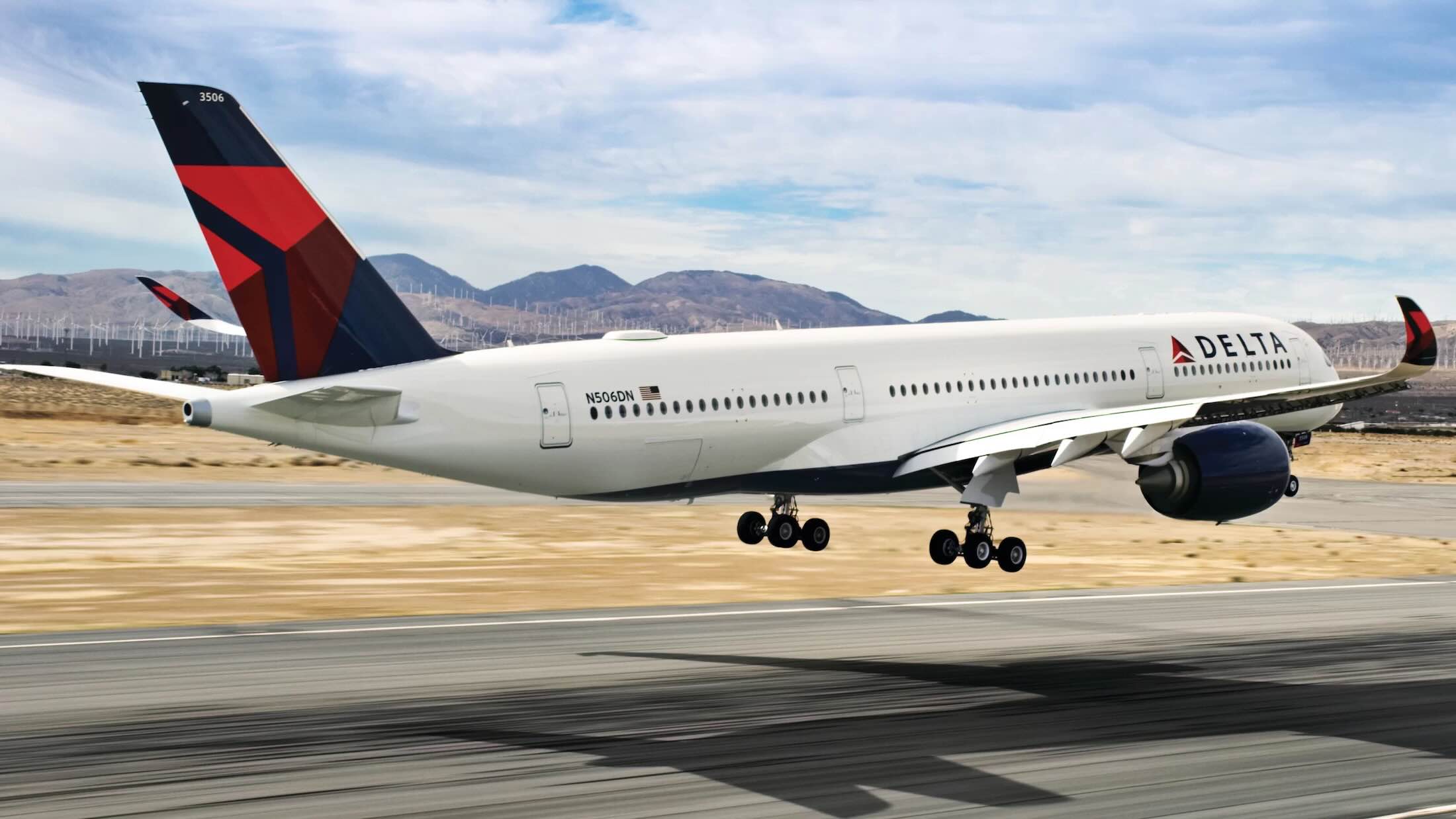
image: Delta






“Delta tried, for example, to run its own Los Angeles – London service and it flopped…Delta quickly gave up and leans on Virgin Atlantic for this transpacific service.”
I believe you meant transatlantic at the end there.
The Asia routes are what are tough to figure out. I just don’t see where Delta has a good West Coast hub to sustain Asia service. By any metric, they’re fighting a losing battle in Seattle and LAX has always been a place where no carrier wins, but just loses money. They’re the smallest alliance on the west coast, by far with arguably the the worst JV partners to Asia and Oceania (where they have none)
Maybe MSP ends up with a lot in 6 years once the good times pare back a bit