
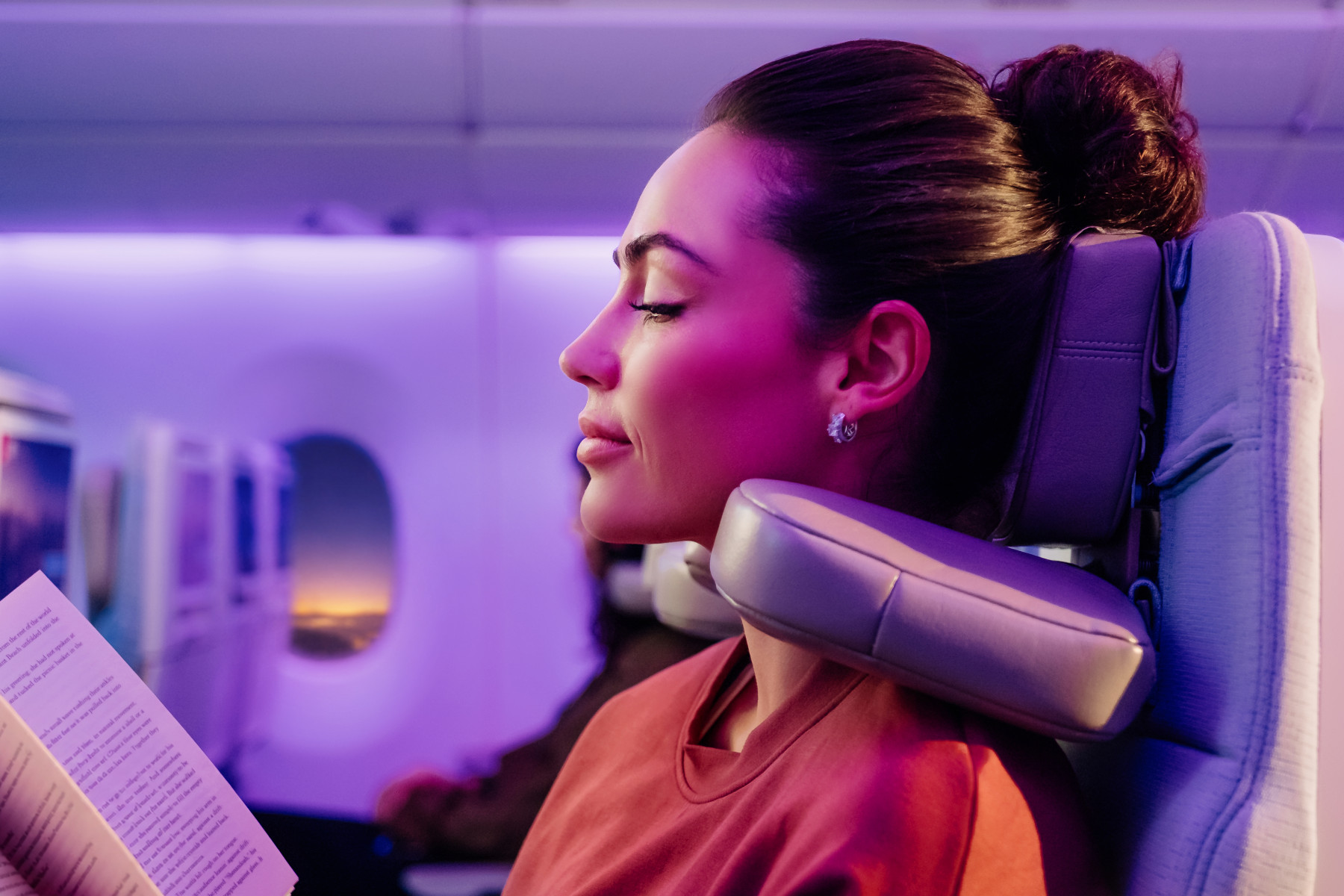
Emirates is introducing a clever new headrest in economy class that may genuinely make sleeping easier, though a supportive headrest cannot compensate for an otherwise uncomfortable seat.
Emirates Introduces “U-Dream” Economy Class Headrest That Cradles Your Neck
Emirates has unveiled a new adjustable economy class headrest designed to support the head and neck without requiring passengers to bring their own travel pillows.
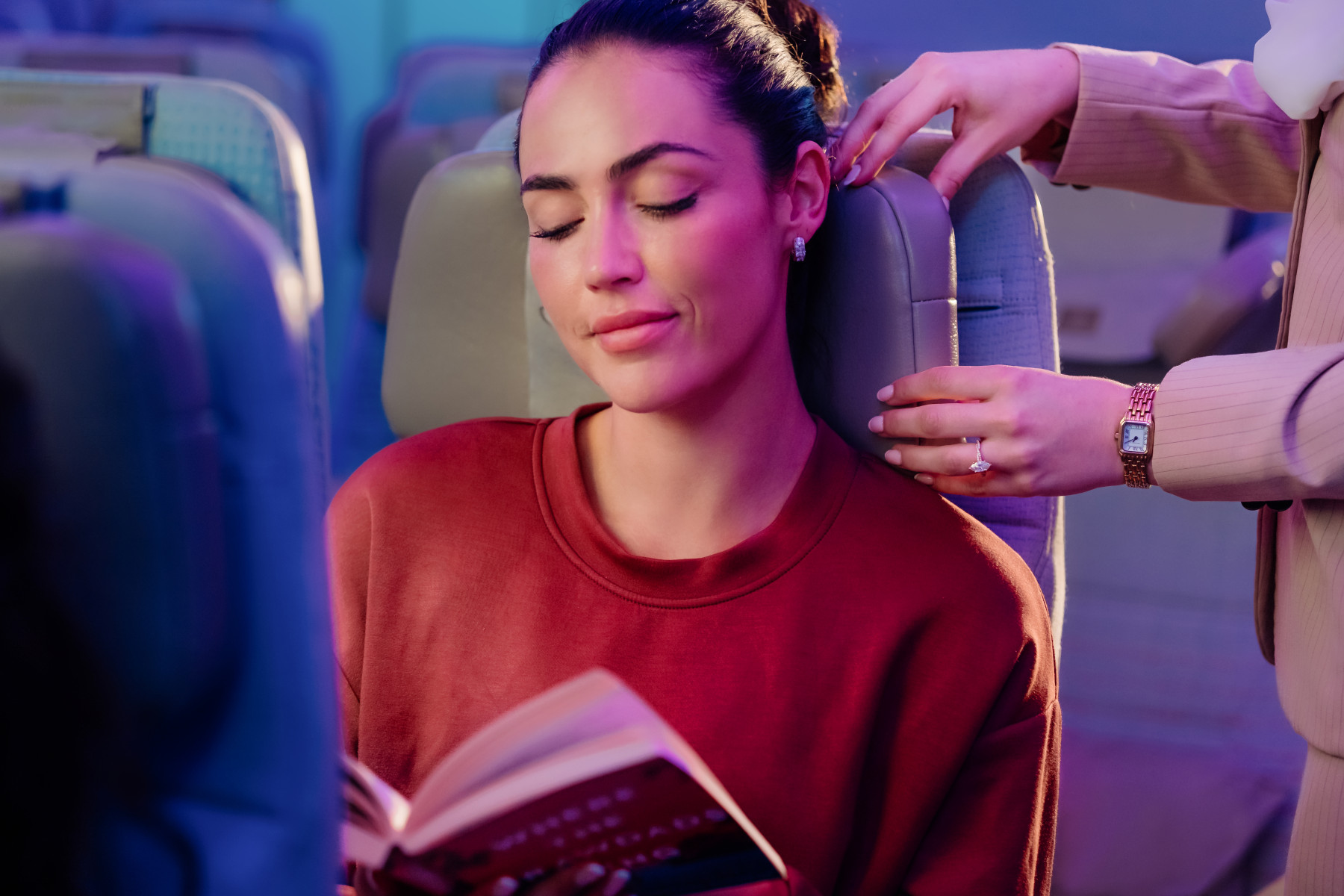
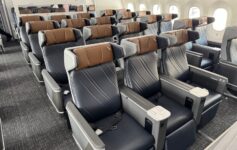
The aptly named U-Dream headrest forms part of the Safran Seats Z400 economy class seat. Its padded leather wings fold inward around the passenger’s neck, helping prevent the head from falling forward or sideways while sleeping.
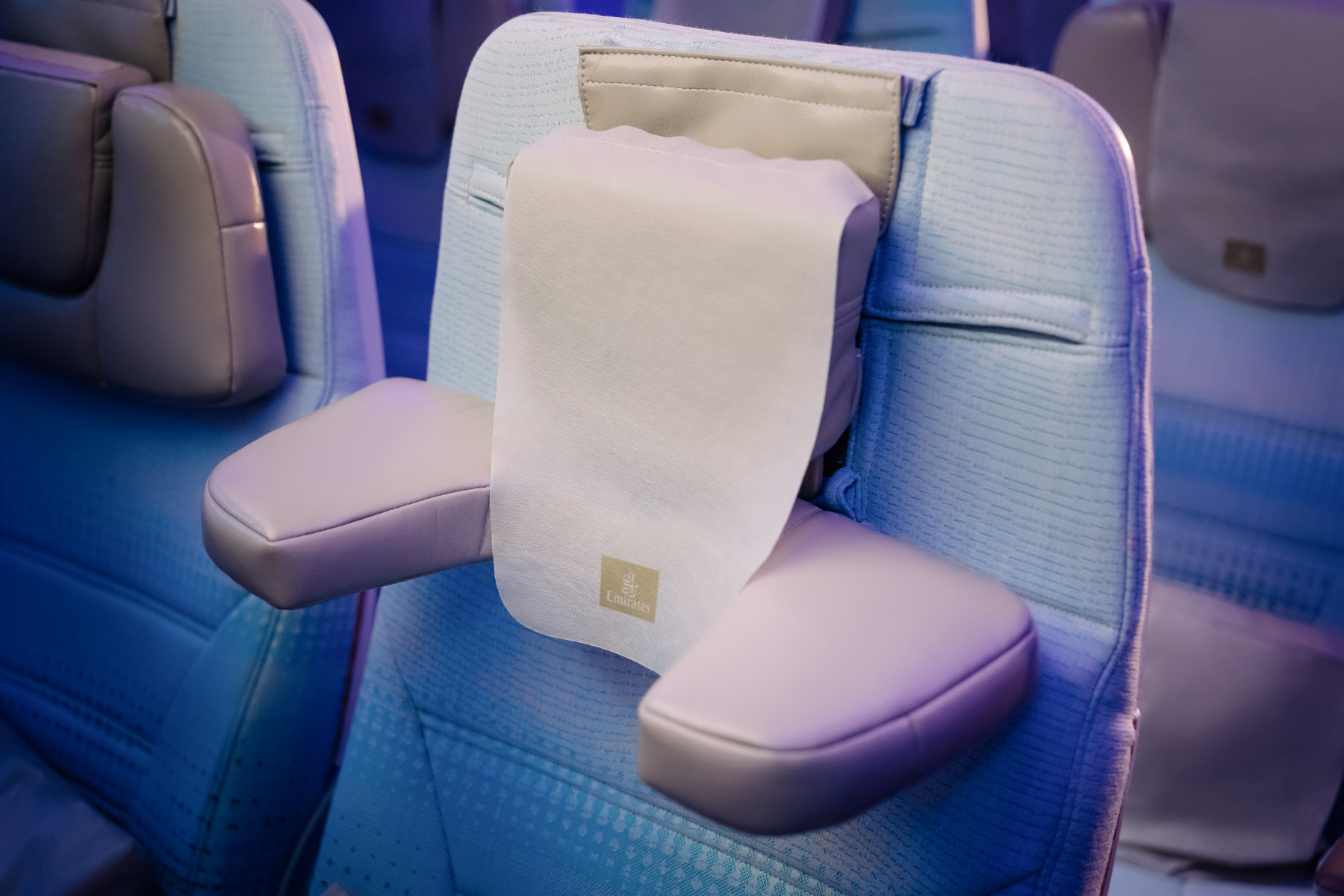
The headrest can also move vertically and tilt to accommodate passengers of different heights.
Emirates President Sir Tim Clark calls it a significant improvement:
“Emirates never rests on its laurels when it comes to customer experience and we have found a way to significantly improve the comfort for Economy Class passengers, especially those travelling long-haul. The U-Dream changes the game if the person wants to sleep – by supporting the neck in full. No more neck pillows needed. It’s another innovation that shows our commitment to customers and cements our Economy Class as the best.”
Here is how it works:
Emirates Will Install U-Dream Headrests Across Its Fleet
The headrest is already flying on three Emirates Airbus A350s. Emirates says all of its A350s will receive the product by the end of 2026.
It will also come installed on the 270 Boeing 777X aircraft Emirates has ordered, whenever those aircraft finally arrive. Beginning in 2027, Emirates plans to install the headrest on retrofitted Airbus A380s and Boeing 777s as well.
The design has received European Union Aviation Safety Agency certification, and Emirates says the headrest can be wiped clean after every flight. Cabin crews will also be trained to help passengers adjust it.
A Clever Innovation, But The Rest Of The Seat Still Matters
In theory, I really like this idea.
Airlines have little appetite for sacrificing economy class seat density, so any improvements must generally fit within the same limited amount of space. A headrest that actually holds your head upright is a relatively simple way to improve comfort without reducing the number of seats onboard.
Anyone who has attempted to sleep in an aisle or middle seat knows the problem. Your head begins to drop, you wake up, reposition yourself, and repeat the process throughout the flight (I just experienced this on a miserable 11-hour economy class flight…stay tuned for details). Conventional adjustable headrest wings help, but they rarely provide enough support to hold your head securely.
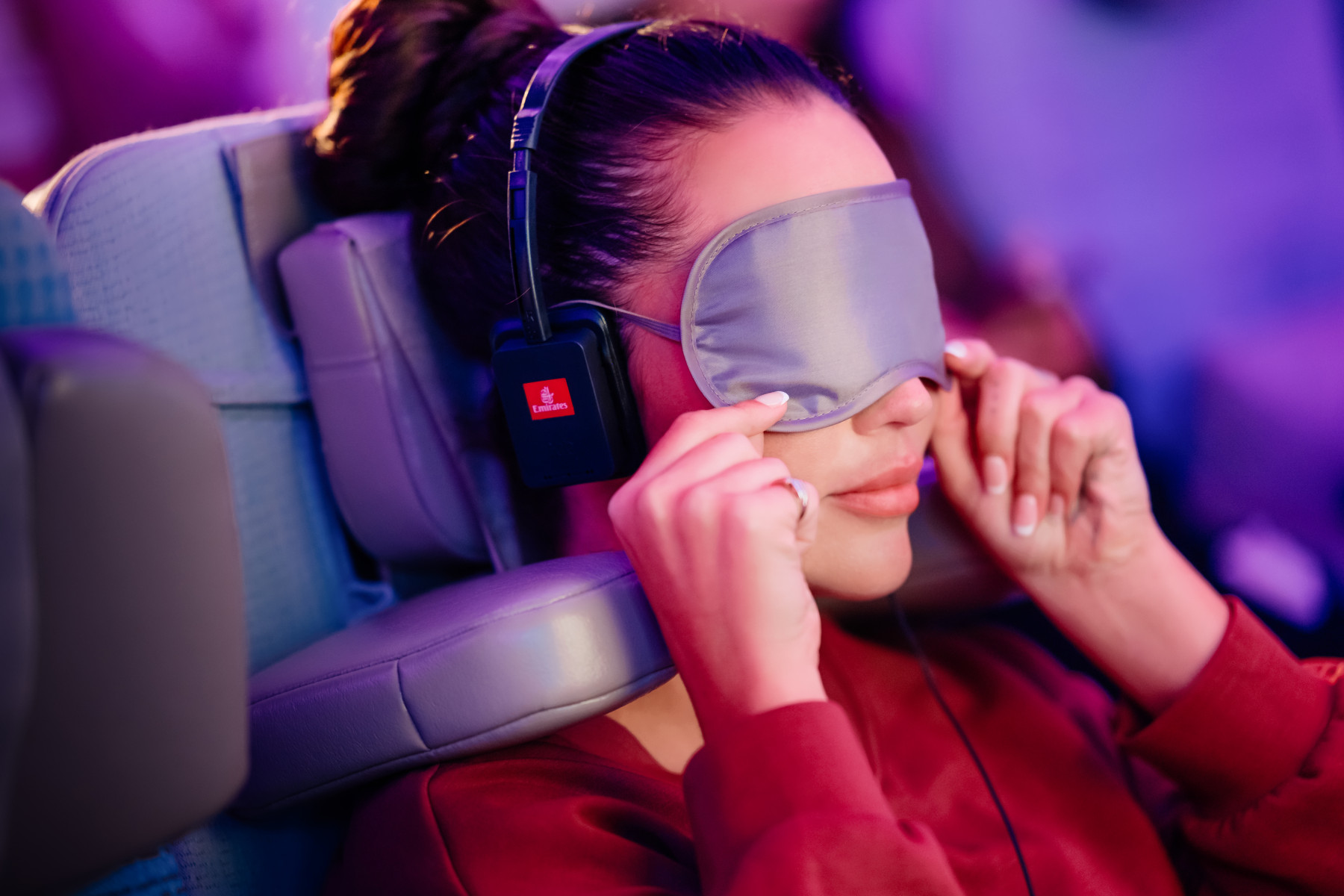
The U-Dream design appears to take that concept much further. It effectively creates a padded cradle around the neck, providing some of the support of a travel pillow without requiring passengers to carry one.
But let’s not get carried away…
The Safran Z400 seat shown in Emirates’ promotional materials looks very slim. A sophisticated headrest is useful, but seat thickness and padding also matter. If the seat cushion becomes uncomfortable after several hours, excellent neck support will not transform the overall journey.
There is also the question of how well the mechanism will hold up after years of heavy use. Adjustable headrest wings often loosen over time, eventually offering very little resistance. Emirates will need to maintain these units properly for the concept to deliver its intended benefit.
Still, this strikes me as one of those rare economy class developments that could provide a noticeable improvement without being simply marketing fluff.
Finally, One Mile At A Time properly wonders whether this is the “game changing” economy class seat that Clark teased last year. I suppose it could be some multi-level seat like the Royal Air Maroc 787-8 business class seat?
CONCLUSION
Emirates’ new U-Dream headrest is a clever and potentially very real improvement for economy class passengers, particularly those attempting to sleep in aisle and middle seats.
It will not compensate for inadequate seat padding, limited legroom, or tight seat width. But if the headrest works as advertised and remains sturdy over time, it could certainly make longhaul travel more restful.
This is the sort of practical economy class innovation I would like to see more airlines adopt.





Well said, Matt. It’s not going to make economy on long-haul flights comfortable, but it likely will improve things. Even slight improvements, like this, are welcome. Emirates has been innovative in the past (literal showers on a380, First class suites, Dom and caviar, etc.), but lately has struggled to innovate (dated lounges, older 2-3-2 business class on many 777), and is dealing with a significant struggle now with a new forever-war in the region (and literal drones hitting DXB…) Sure, a new Premium Economy (recliners) on some aircraft, a350, and I guess these new head rests are ‘something,’ but there probably should be ‘more’ (like upgrading the lounges at DXB, and newer 1-2-1 business class on all aircraft.)
Didn’t BA have fold-down “wings” like, 20 years ago?
If so, I’m not aware!
You may be in excruciating pain for days after your flight due to sitting on what’s essentially an ironing board for 12 hours but at least your neck will be happy – at least for those of us who aren’t tall. I’d vastly prefer seats with more width or seat pitch.
That doesn’t fix the problem, your head falls forward when you nod off, not to the side. Aside from those head strapped to the seat face masks, the only thing I’ve ever seen that provides support from the front is something I saw on Amazon called a bobstopper.