
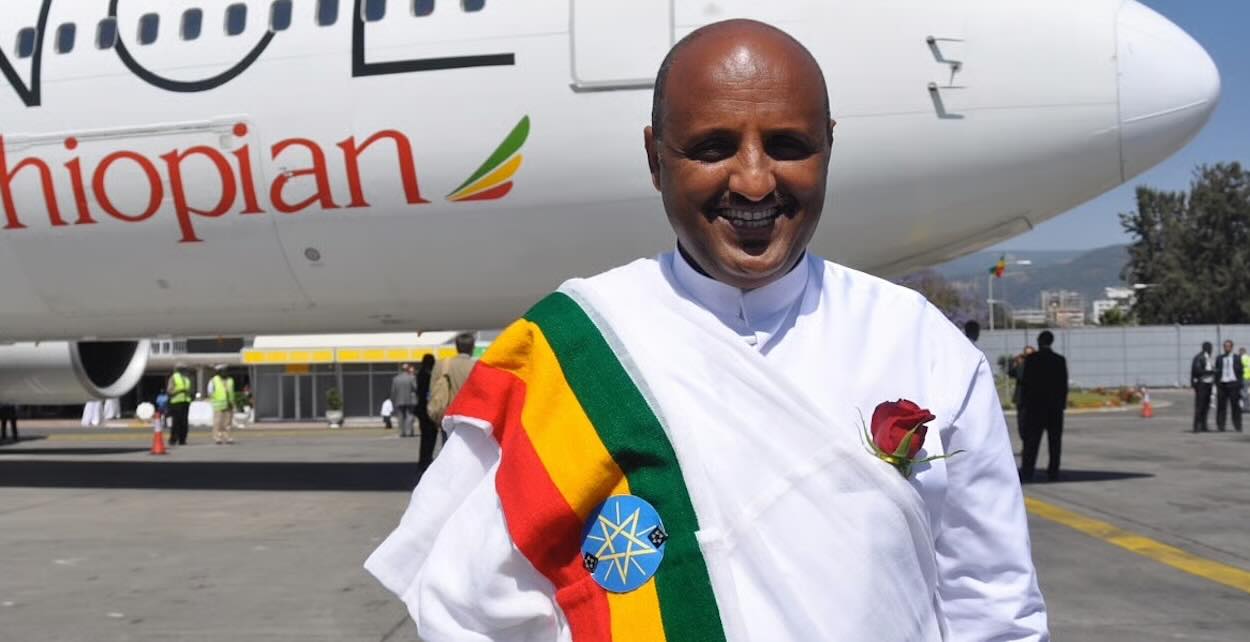
Air India has appointed Tewolde Gebremariam, the former longtime CEO of Ethiopian Airlines, as its new chief executive and managing director. His record in Africa is impressive, but his arrival may also signal a more disciplined, cost-conscious phase for Air India, one that could slow the carrier’s long-promised cabin overhaul.
Air India Names Former Ethiopian Airlines CEO Tewolde Gebremariam As New Chief Executive
Air India has appointed Tewolde Gebremariam as its new Chief Executive Officer and Managing Director, succeeding Campbell Wilson.
Gebremariam spent more than a decade leading Ethiopian Airlines, transforming it from a respected regional carrier into the undisputed aviation powerhouse of Africa. During his tenure, Ethiopian’s revenue more than quadrupled and its fleet nearly tripled. The airline built a powerful hub in Addis Ababa (ADD), expanded aggressively across Africa and around the world, and remained profitable in a region where many national airlines have struggled to survive.
That alone makes him one of the most accomplished airline executives of his generation.
From Ethiopian Airlines To Air India
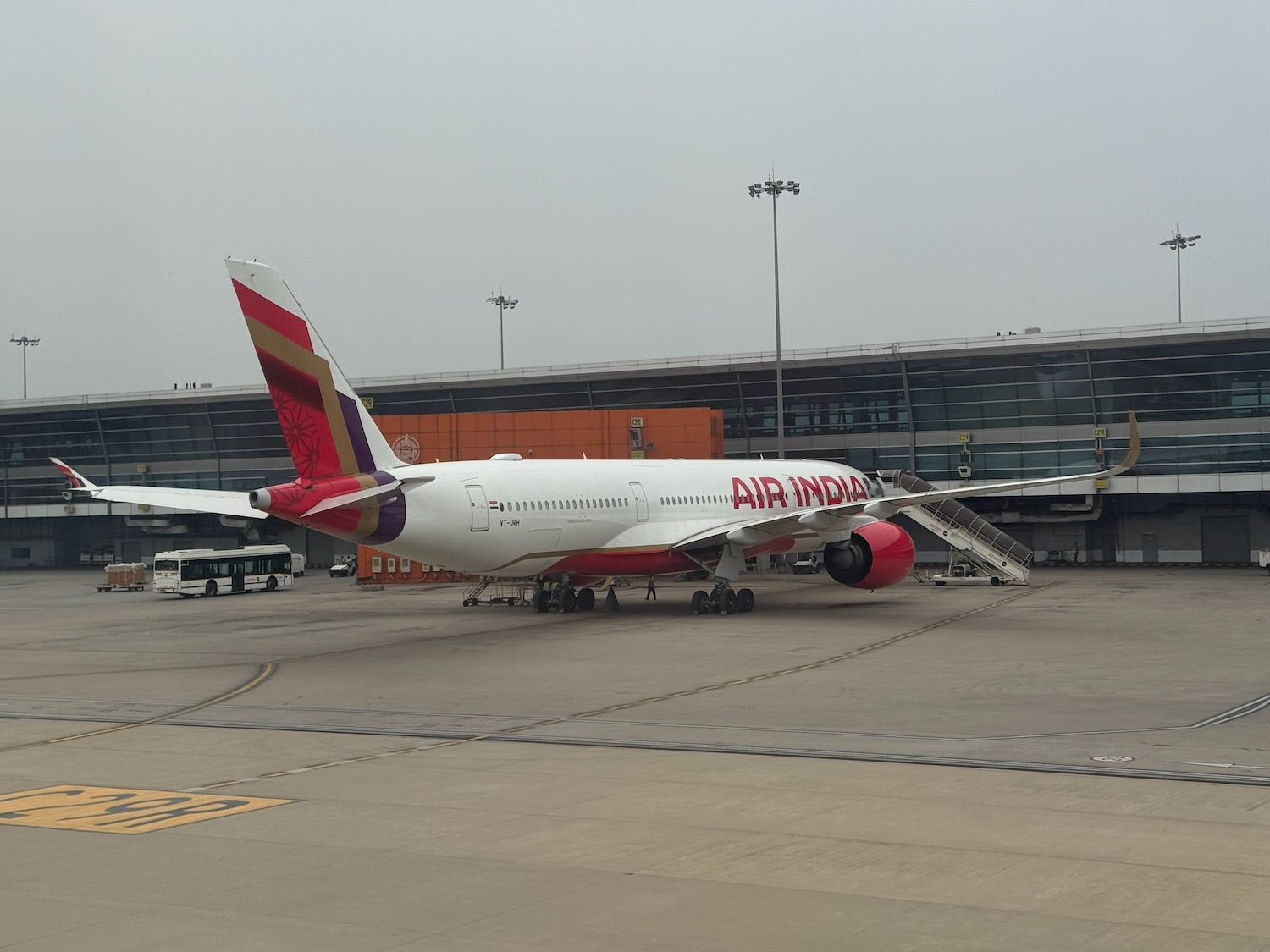
Gebremariam’s challenge at Air India will be much larger and far more complicated.
The airline is still trying to modernize its fleet, improve operational reliability, raise service standards, and restore trust after years of neglect. Air India says it selected Gebremariam because of his experience managing large airline turnarounds, building global hubs, improving safety and operations, and driving profitable growth.
As Air India shifts from its foundational turnaround phase into a high growth & profitable execution phase, Mr. Gebremariam brings crucial capabilities required for Air India’s next leg of journey. He has strong experience in expanding international long-haul networks and building world-class hub operations, an unrelenting commitment to safety standards, engineering quality, and operational reliability. He also has a track record of driving sustained profitability, while navigating complex economic cycles and dynamic global markets together with a deep experience in workforce upskilling, talent development, and embedding a high-performance, customer-first service culture.
That description fits him well.
Ethiopian Airlines became an economic engine for Ethiopia and an essential transportation network for the African continent. It built its own maintenance, training, cargo, and aviation infrastructure while many competitors remained dependent on government bailouts.
Gebremariam also guided Ethiopian through the Boeing 737 MAX crash and the COVID-19 pandemic, two extraordinary crises that would have overwhelmed weaker management teams.
Air India needs that kind of operational discipline.
The Air India Group reportedly lost more than $2 billion during the most recent fiscal year, and Tata has made clear that the turnaround will take years rather than months but also that it is growing weary of losing so much money.
Gebremariam is inheriting an airline that has spent heavily and must now prove that its investments can produce a reliable and profitable operation.
Will Air India’s Cabin Retrofits Slow Down?
Ethiopian Airlines is a solid carrier and runs an impressive operation. But its onboard hard product has always been wildly inconsistent.
Depending upon the aircraft, route, and individual airframe, business class passengers may encounter several different seat types. Some are excellent, like my recent A350-900 flight, some are acceptable, and some feel well past their prime.
Product consistency was never Ethiopian’s defining strength. Air India has the same problem, only on a larger scale.
Some newer and retrofitted aircraft now offer an excellent passenger experience, while many older Boeing 777s and 787s still have cabins that are decades behind the competition.
The airline has promised extensive retrofits, but the process is already moving painfully slowly.
Gebremariam arrives as Air India appears to be tightening its belt and shifting from broad expansion toward financial discipline and execution. That may be necessary, but cabin retrofits are expensive and create additional costs by taking aircraft out of service. I would not be surprised if the pace slows further.
That could leave passengers playing aircraft roulette for years, with modern suites on one flight and an ancient 2-3-2 business class cabin on the next.
Air India insists passengers will see an accelerated push toward modern cabins, improved hospitality, and better reliability. I hope that proves true. But if Gebremariam applies the Ethiopian model too literally, operational efficiency and network growth may take priority over cabin consistency.
A Strong Appointment For A Difficult Job
Overall, I think this is a very strong appointment.
Gebremariam built something extraordinary at Ethiopian Airlines. He proved that a carrier based in a difficult operating environment could become profitable, globally relevant, and strategically indispensable.
Air India has greater resources, a larger home market, stronger premium demand, and the backing of Tata Group. But it also has entrenched operational problems, fierce competition from Gulf carriers, inconsistent service, and a fleet that still includes too many outdated cabins.
The opportunity is enormous, but this will be no walk in the park.
CONCLUSION
Tewolde Gebremariam has one of the strongest résumés Air India could have found.
He transformed Ethiopian Airlines into Africa’s dominant carrier and built an economic powerhouse in a region littered with struggling and failed airlines. Now we will see whether he can bring the same discipline, operational focus, and profitable growth to Air India.
I am optimistic, but also watching the retrofit program carefully.
Air India needs to control costs, but it also cannot become a truly world-class carrier while old 777 and 787 cabins remain in service indefinitely.
Gebremariam has already proven that he knows how to build a formidable airline. Here, he must also build one that is consistently excellent for passengers.
top image: Ethiopian Airlines






Air India needs to control costs, but it also cannot become a truly world-class carrier while old 777 and 787 cabins remain in service indefinitely.
I would argue Air India cannot become a truly world-class carrier with Air India in its name.
This could be a good sign for Air India. Wishing Mr. Gebremariam all the best.
Good.
But Ethiopian lagged on hard product improvements. The is not so encouraging.
And AI has been needlessly slow to improve even short term soft products. A friend reports that even catering in F (something which should require less than a year to improve) was half assed. She is not a booze hound, but noted only mid grade liquor and wines and tasty but far from deluxe dining. Tara barely seems interested in financing such short term items.
the problem with air india may simply be culture clash
for example trump can blame us-china trade defecit on nafta, democrats etc. ,but the answer is way simpler, it just isnt an even fight. china is willing to do way more to enrich themselves, including infringing on copyrights, espionage, slave labor of uyguhrs and the like.
same goes for air india, they are there to serve indian culture with their crew and they are unable yet to serve others, which makes their growth among non indians tough
A big help to Air India is this conflict in the Middle East, because now more folks may prefer a non-stop instead of connecting through a war-zone. (Of course, fuel prices and/or shortages do not help.)
I think Ato Tewolde deserves a lot of credit for the execution of “Vision 2025” but it was by no means a transformation from the ground up. He inherited a sound corporate structure that Ato Girma had put in place over the previous years, and a generational management team of all-stars to support him. The beauty of his tenure at Ethiopian Airlines is that he was able to institutionalise data driven decision making, so that even when he exited somewhat abruptly, there was a seamless transition to Ato Mesfin (coincidentally managed from the background by Ato Girma as well). So yeah, Tewolde is a friend of mine who I’ve known for 20+ years but if I had to pick one person responsible for Ethiopian Airlines of today, it would be Girma ahead of him (and I have no doubt he would say exactly the same).
Nothing is impossible in this universe. AI with AI Air India with Artificial Intelligence is one way to achieve the miracle. Secondly the inclusion of a man known for achieving challenging environments pliable, may turn out to be a well thought out decision. Motivating and Improving morale of staff , on time flight pumctuality delivery, preservation of timeless Indian cultural values systems , hybridization of cargo and passenger travel ( which was done long ago) , looking at local Indian innovations (Jugaad s) scientifically will turn out to be a game changer. The main advantage – If Air India operates long distances within India also competitivelly and offers the food advantage which other carriers don’t provide itmay show results even faster.