
Spirit’s Free Spirit program hit the auction block. Nobody will say if your points survive, but the bidders know something you don’t.
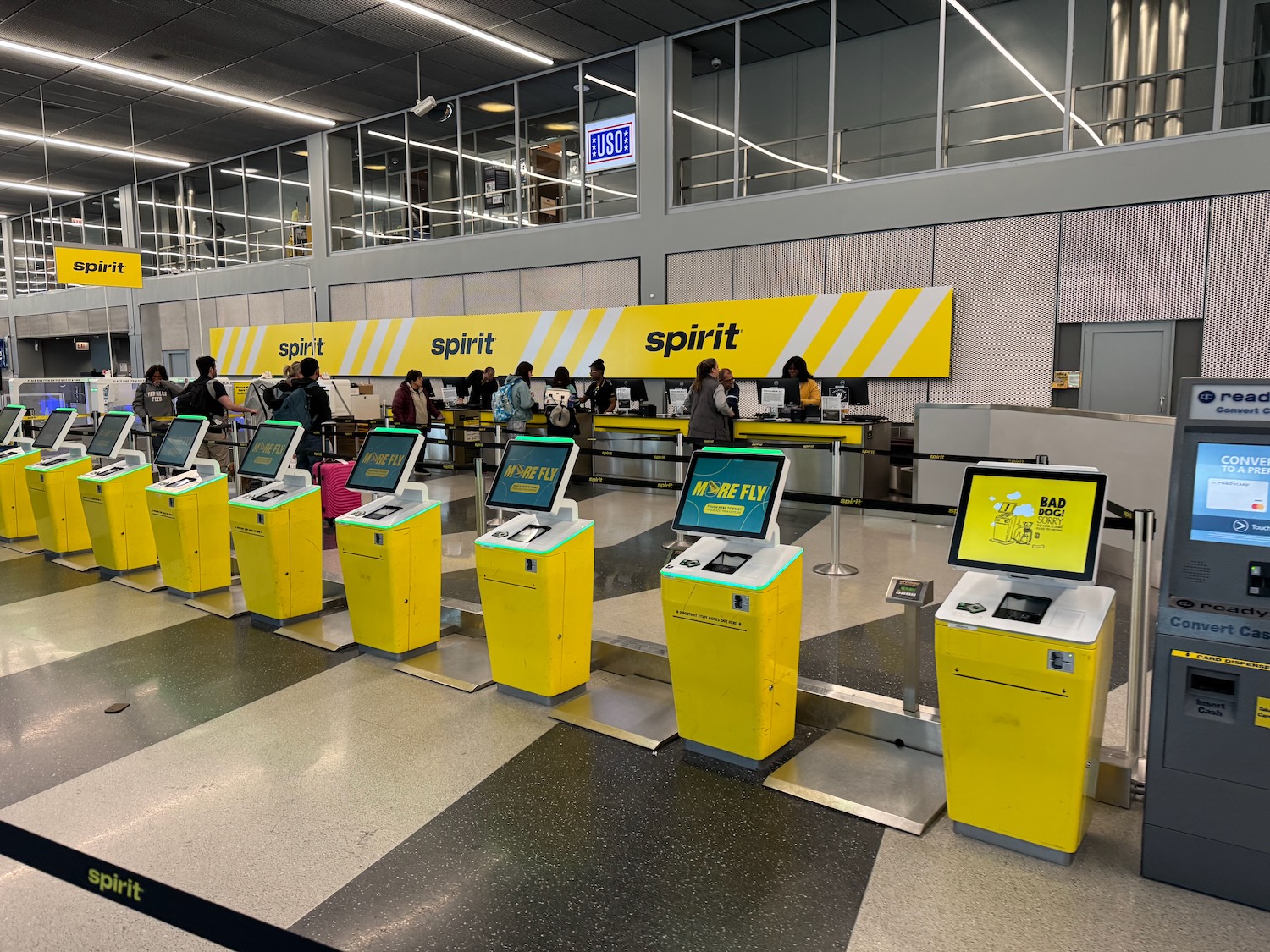
A Loyalty Program With No Airline Attached
As heavily covered here (and everywhere), Spirit Airlines ceased all flights on May 2 and moved from reorganization into a court-supervised wind-down. That part of the story is over. What is happening now is stranger and more interesting: the estate sale. On July 9, Spirit auctioned its 22 LaGuardia slot pairs, roughly 20 aircraft, and the Free Spirit loyalty program itself, with a $533.5 million stalking horse bid set for the jets and both Frontier and American circling the slots. The Dania Beach headquarters campus goes on the block July 22. (Full disclosure: I will absolutely submit a woefully insufficient bid for the A320 tail in the lobby.)
The slots and the jets make obvious sense, and honestly I am glad some carriers will get to boost their fleets some and get those yellow birds back in the sky, though under different colors. I’m romantic about the Marine terminal at LGA so it would be amazing if someone did something worthy of that old Pan Am space.

The oddest asset is Free Spirit. Someone placed a live bid on a loyalty program attached to an airline that no longer exists, and as of this month, no bidder has made any public commitment with regard to honoring the points sitting in member accounts or exactly what assets (other than a former client list) are of value.
When Airlines Die, Points Usually Die With Them
History offers two very different outcomes in the rarest of occasions for which there is an airline that truly disappears with an active loyalty program at the time it ceases operations. When an airline is absorbed by another carrier, miles tend to survive and consolidate. American honored TWA miles, Alaska converted Virgin America balances, and US Airways members landed softly in AAdvantage. Mergers preserve points because the buyer wants the customers, and torching their balances on day one is a bad start. It’s not always a like for like transition. Starwood Preferred Guest points were worth more than Marriott Bonvoy points and Marriott didn’t want to lose those premium customers so they transferred at a 1:3 SPG to Bonvoy rate.
Liquidations are the other approach. When ATA, Aloha, and Skybus shut down, member balances simply evaporated. Nobody bought the obligation because nobody had to. And that is the critical detail in Spirit’s case, it’s not a merger. It is an asset sale out of bankruptcy specifically designed to let buyers consume the assets and leave the liabilities. A buyer can walk away with the Free Spirit brand, the member database, and the co-brand card relationship without assuming a single point of the outstanding balance.
I have written before about the value of Free Spirit points, and about how Spirit’s revamped program was genuinely one of the better ULCC loyalty plays in its final years. None of that matters to a bankruptcy judge or the creditors (nor should it.) Value to members and value to the estate are two different concepts entirely.
So Who Buys A Dead Airline’s Currency?
Think about what Free Spirit actually is once you strip away the airplanes: a file of millions of price-sensitive leisure travelers concentrated in exactly the markets other carriers are now fighting over, complete with travel history and an active credit card channel. That is not a loyalty program as much as a very narrow customer acquisition database dressed up like one.
For Frontier, buying Free Spirit means inheriting the member base of its closest twin just as it scoops up Spirit’s old turf. For American, which wants the LaGuardia slots anyway, the file maps neatly onto its network. This assumes that the two carriers are bidding on the whole of the Spirit carcass rather than just the program. It wasn’t immediately clear to me that was the case. Whoever wins could honor points at a conversion haircut and buy years of goodwill for pennies but why should they? The buyer controls award pricing, so “we saved your Spirit points” is a marketing campaign that mostly costs middle seats that might have flown empty anyway.
But there’s a smarter play, and depending on what it would take to win, there’s probably a value play fit for a venture capital firm. Free Spirit was responsible for somewhere in the neighborhood of half a billion dollar of budget traveler spend. There are other markets for those clients outside of airlines and value even if it’s not premium.
Conclusion
The Free Spirit auction makes it clear that loyalty programs were never really about loyalty or at least they aren’t any more. They are data businesses with wings, and the data survives even when the wings do not. I’ll be watching for who wins this auction but I don’t expect any serious redemption opportunities for Free Spirit members. If the winner is an airline, there could be a conversion offer with or without a haircut (the points themselves weren’t worth much to begin with) and a press release about honoring commitments. If the winner is anyone else, the members themselves remain the product and will be on the other end of a relentless marketing machine. Either way, Spirit will manage to teach one final lesson about the fine print, even from the grave.
What do you think?




I read something about a startup company named Florida Air Express being interested as well in the assets.
Was the bidder Johm Williamson or, maybe, Blake? Coffee is for closers.
Greetings to the great David Mamet!
2nd prize… box of steak knives…
It is worth remembering that even if another airline wins this auction to acquire the NK data business, they are under no legal obligation to convert your old NK points into their own loyalty currency at a fair 1:1 ratio.
They’re not even obliged to have a points system at all. That said, they could do many, many things.
– Use points balance data to segment the database into spending behavior groups.
– Convert the existing points to some other points currency, either at a 1:1 rate, some other rate, or even a “pay to play” rate where consumers could pay to “reactivate” their Free Spirit points in a new or existing program.
– Operate Free Spirit as an independent points program like Air Miles or post-Alitalia MilleMiglia.
If American Airlines gets my email address because they purchased it from Spirit, I will ask them to remove me for their marketing list.
I do know that the Broward County gov’t is interested in the Dania Beach HQ which is something that they are looking to increase their office footprint if needed.