
Europe’s ETIAS authorization arrives in late 2026 with a €20 fee. Here is what it requires, and why your fall trip is probably not affected.

ETIAS Headlines Have Travelers Worried
This week there has been plenty of coverage warning that Americans will soon need a “visa” to visit Europe. It makes for a great scare headline but it’s wrong (at least semantically) on two counts. ETIAS is not a visa, and for most people booking a trip this year, it is not even a thing you have to worry about yet.
ETIAS stands for the European Travel Information and Authorisation System, and it is Europe’s answer to the kind of pre-travel screening the US already runs through ESTA and the UK runs through its ETA. It applies to visa-exempt travelers, which includes US, Canadian, British, and Australian passport holders, among dozens of others. The European Commission has been building it for years, and it has been delayed so many times that a healthy dose of skepticism about any launch date is warranted. The current official expectation is that ETIAS comes online in the last quarter of 2026, with the exact date to be announced closer to the time. Some tests have already begun.
This is what ETIAS actually means for your travel.
What ETIAS Costs And How Long It Lasts
The fee is the detail that shifted, to accompany the ever-sliding launch dates. ETIAS was originally pitched at €7, and you will still find that number floating around outdated articles. The European Commission raised it to €20 in July 2025, and that is the figure that will apply once the system goes live (at least at time of writing.) The EU framed the increase as catching up with inflation since the program was first designed and bringing the price in line with the US and UK equivalents, though tripling it during the same period is out of step with comparable increases.
Travelers under 18 or over 70 are exempt from the fee, though they still need an approved authorization – everyone must file for it. Once granted, ETIAS is valid for three years or until your passport expires, whichever comes first, and it covers as many trips as you want within that window, each up to the same 90 days in any 180 day period that aligns with entry rules. The filing and remembering to submit every three years is the greater imposition than the cost. Measured against a transatlantic plane ticket, this is a rounding error, and the hand wringing about cost is overblown especially as it covers nearly limitless trips over a three year period.
The application is meant to be quick. Most approvals are expected to come back within minutes, and the EU allows up to 96 hours for processing, with longer waits only if your case needs extra review. That last part is the reason not to leave it until you are standing at the airport.
Where It Applies, And Where It Does Not
ETIAS covers 30 European countries (and four additional states that accept it.) That amounts to the Schengen zone plus a handful of associated states, and it notably does not include Ireland, which runs its own immigration rules. If your trip is London and Dublin, ETIAS does not enter the picture at all, since the UK and Ireland sit outside it. Here’s a list of those countries:
- Austria
- Belgium
- Bulgaria
- Croatia
- Czech Republic
- Denmark
- Estonia
- Finland
- France
- Germany
- Greece
- Hungary
- Italy
- Latvia
- Lithuania
- Luxembourg
- Malta
- Netherlands
- Poland
- Portugal
- Romania
- Slovakia
- Slovenia
- Spain
- Sweden
- Cyprus
- Iceland
- Liechtenstein
- Norway
- Switzerland
The following four countries are all small and remain technically outside the EU but still accept it as they are all within the continent.
- Andorra
- Monaco
- San Marino
- Vatican City
It also helps to understand that ETIAS is the second half of a two part system. The first half is the Entry/Exit System, or EES, the biometric border setup that registers your face and fingerprints in place of a passport stamp. EES began rolling out in October 2025 and reaches full operation in April 2026. This is likely part of what has caused some longer lines at EU entry points as of late. ETIAS is sequenced to follow once EES is bedded in, which is exactly why the authorization keeps landing in the back half of 2026 rather than sooner.
Why Your Next Trip Probably Is Not Affected
Even when ETIAS launches, it’s unlikely to flip like a switch. The EU has built in a transitional period of at least six months during which travelers are asked to hold an ETIAS but will not be turned away for not having one. That is followed by an additional grace window for first time travelers. Stack a fourth quarter launch on top of a six month soft rollout, and the practical reality is that a trip booked for this fall or even early next year will very likely not require an approved ETIAS to board or enter.
I am not suggesting anyone ignore it but it’s not a reason to avoid visiting or something that induces stress. When the EU confirms a firm date, apply through the official government portal, pay your €20, and pack your bags. Savvy travelers will avoid coming lookalike third party sites that will happily charge you three or four times the real fee to file a form you can complete yourself in ten minutes. ESTA spawned an entire cottage industry of these middlemen, and ETIAS will be no different. The only legitimate application is the official EU one, and anyone charging a premium is pocketing the difference.
Conclusion
ETIAS is coming, and is far less dramatic than the coverage suggests. Ignore the visa language and what remains is a €20 online authorization, good for three years, covering unlimited short trips across 30 European countries, that most travelers will breeze through in minutes. If it allows faster travel and the use of automated lanes, this will be an improvement for many travelers. The launch is expected in the last quarter of 2026, behind a long transitional period, which means your upcoming Europe trip is probably untouched by it. Keep an eye out for the official launch date, apply only through the government site when the time comes, and ignore both the panic and the upsell artists. This is a minor piece of paperwork dressed up as a border crisis, and treating it that way will save you money and a headache.


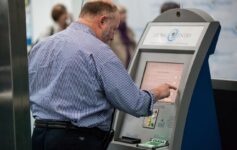



It walks like a visa and quacks like a visa so I’m going to call it a visa regardless of how much they want to pretend that calling it something else changes what it fundamentally is
But, it isn’t a visa. All countries with things like this point out it isn’t. The visa is issued at arrival, and having a ETIAS doesn’t guarantee you entry.
B1 doesnt either guarantee
The bigger questions is what the airlines will do. They, of course, hate having a pax denied entry as they must fly them back promptly. In the first 6 months, where the ETIAS is available but not required, I can image carriers might be OK if you don’t have one. But, you get one “free” entry in the second 6 months. How will the carrier know if I have used mine? Will they just require them for all? The bottom line is simple, the airlines will certainly be very clear at their websites if you need it or not. I have one last European trip next year before renewing my passport, so I’d like to not bother for that trip. We’ll see. Fortunately (or unfortunately) I won’t have to pay.
Why is Ireland missing?
No, it’s still there. Seriously, Ireland is not part of the Schengen Area.
It is 100% true that Ireland is not part of the Schengen Area. While it is a European Union member, Ireland maintains a permanent opt-out from Schengen to preserve its Common Travel Area with the United Kingdom. Because of this, you must pass through border checkpoints and present a valid passport when traveling between Ireland and the Schengen zone.
Actually, I believe Irish citizens can travel into the Schengen countries on a national ID card and will not have to obtain an ETIAS.
Let’s just wait for ETIAS to arrive! This mandatory pre-travel authorization for citizens from 59 visa-exempt countries (including the U.S., Canada, Australia, New Zealand, and the U.K.) visiting the 30 European countries in the Schengen Area, is certainly not a daunting obstacle.
Plus, having a 3-year duration is a nice gesture. You have to get a new one each year for Australia (every 2 for NZ). If you have the same passport, getting a new one should be even simpler Australia (not that it is overly daungting).
For those curious, when in effect, applicants for an ETIAS will be asked about past criminal convictions. They will be under additional scrutiny if they report they were convicted in the last 10 years (20 years for terrorism) of the offenses below. It sounds like being caught lying gets an automatic rejection. Interestingly, in such cases, the recommendation is not to appeal, but to reapply, telling the truth. It’s reported as the quicker solution (not that anyone here committed the following crimes). It’s a far cry from Canada and DUIs.
Terrorist offences
Participation in a criminal organisation
Trafficking in human beings
Sexual exploitation of children and child pornography
Illicit trafficking in narcotic drugs and psychotropic substances
Illicit trafficking in weapons, munitions and explosives
Corruption
Fraud, including that against the financial interests of the Union
Laundering of the proceeds of crime and counterfeiting of currency, including the Euro
Computer-related crime/cybercrime
Environmental crime, including illicit trafficking in endangered animal species and in endangered plant species and varieties
Facilitation of unauthorised entry and residence
Murder, grievous bodily injury
Illicit trade in human organs and tissues
Kidnapping, illegal restraint and hostage-taking
Organised and armed robbery
Illicit trafficking in cultural goods, including antiques and works of art
Counterfeiting and piracy of products
Forgery of administrative documents and trafficking therein
Illicit trafficking in hormonal substances and other growth promoters
Illicit trafficking in nuclear or radioactive materials
Rape
Crimes within the jurisdiction of the International Criminal Court
Unlawful seizure of aircraft or ships
Sabotage
Trafficking in stolen vehicles
Industrial espionage
Arson
Racism and xenophobia
Jeez, looking over that list of disqualifying crimes, it seems the entire Trump administration (not to mention a lot of bloggers and many regular commentators here) would be denied.
One small step towards curing Overtourism.
ETIAS is coming and we probably don’t have to worry yet, etc., etc. Well, EES is already here. I’m interested in seeing if it’s efficient or a disaster. We’re heading to Milan later this week and returning from Rome. I’m more concerned about what is, than what might be.
Everything I can tell is it is a mixed bag. I was through CDG in late April like OJ through an airport (too early? too late?). You hear horror stories. But, aren’t we always in today’s news world hearing about the extreme, even if it’s rare. The good news for you is, if Milan is your entry point and your “final destination,” you’re not missing a connection if things go bad, just getting to the hotel later (maybe a good thing if the room isn’t ready). Assuming your return starts in Rome and is your Schengen exit port, you’ll just need to make sure to arrive early. International-to-Schengen and Schengen-to-international connections are where the danger lays.
Oh, and don’t expect free tap water.
Sorry, at the end it was a joke about tap water at restaurants.
I am no expert, but I don’t expect ETIAS to be the line-creator that EES has been.
As usual, there’s an error in the author’s writing. Iceland is in the Schengen Area though it is not currently an EU country.
EES is pretty terrible in my experience. Long lines to register, buggy registration, super long lines to be scanned for entry.
It’s no better exiting where frequently the machines fail to read your passport or match your face up.
I much preferred when border agents looked at me for 3 seconds or less before stamping me thru between long involved conversations with coworkers.