

It was disgusting, yes, but before rushing to outrage over Philippine Airlines’ lavatory failure, it is worth carefully examining what actually happened and whether continuing the flight may have been the least bad option available.
Philippine Airlines Lavatory Failure: A Gross Situation, But The Hard Choices Behind It
A Philippine Airlines Boeing 777-300ER operating flight PR113 from Los Angeles (LAX) to Manila (MNL) reportedly suffered a complete lavatory flushing system failure mid-flight over the Pacific. According to crew accounts, none of the aircraft’s toilets could properly flush, creating an escalating sanitation issue on a roughly 15-hour journey.
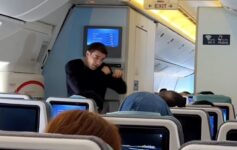
Flight attendants later described being instructed to manually remove waste from affected lavatories in order to prevent overflow and keep facilities usable for passengers. There’s even video:
But per InsiderPH, Philippine Airlines has now issued a formal statement that adds important context:
“Philippine Airlines confirms that an inflight lavatory malfunction occurred on PR113 that departed Los Angeles January 11, 2026. The flight was prepared for a possible diversion, noting that the Guam station was ready to receive the aircraft and support passengers and crew if needed.
“After technical and operational assessment by the flight and cabin crew, the flight continued to Manila. Based on the crew’s final report, normal lavatory function was observed during final approach, and the flight was completed without further incident. We recognize that the situation caused inconvenience to our passengers and crew, and we appreciate their patience and understanding.
“Philippine Airlines acknowledges the professionalism and dedication of the flight and cabin crew in managing the situation in accordance with established procedures, with passenger welfare as the priority. The airline places the highest priority on the safety, health, and well-being of passengers and employees and is conducting an internal review to establish the full facts. It would be premature to comment on specific claims while this process is ongoing.”
The airline suggests that Guam was prepared to receive the aircraft, but the flight was six hours from Guam…it would not have been a quick diversion. A decision was made after what PAL describes as a “technical and operational assessment.” The flight ultimately continued to Manila and, according to the airline, normal lavatory function returned by final approach.
None of this makes the situation pleasant. It was not. Dealing with biohazard improvisation is not part of cabin crew training…
But what were the realistic options?
If all lavatories fail and cannot flush, waste can accumulate quickly. Simply closing the bathrooms is not viable on a long transpacific flight. Overflow is worse than controlled containment. A diversion to Guam would have meant hours of delay, potential crew duty time issues, passenger reaccommodation, and ripple effects across the network.
Airline operations is rarely about choosing between good and bad. It is often about choosing between bad and worse.
Was This A Pragmatic Choice?
From a passenger perspective, continuing the flight avoided a multi-hour diversion and potential overnight disruption. From a crew perspective, however, the situation understandably raises concerns. Handling human waste is not something flight attendants sign up for, and even if gloves and precautions were used, it exposes a gray area between formal procedure and operational improvisation.
A personal confession. After spending so much time in hospital environments over the past year, dealing with human waste does not shock me the way it may shock many of you. It is unpleasant. It is messy. But it is not apocalyptic. If the choice is between overflow that could seep out into the cabin or carefully transferring waste with protective equipment to prevent a worse situation, I can see why someone might consider that the lesser evil and why it would fall on the flight crew to cary out that task.
The larger issue is not whether this was gross or unsanitary. It obviously was. The real question is whether airlines have sufficiently clear protocols for rare but total system failures like this, and whether crew are adequately protected and empowered when forced into extraordinary circumstances.
PAL says an internal review is underway. That is appropriate. The airline has acknowledged the inconvenience, confirmed diversion was prepared, and emphasized passenger welfare as the priority.
In aviation, redundancy usually works. When it does not, decisions must be made in real time with imperfect information. This appears to have been one of those situations.
There is room here for accountability and procedural refinement without turning this into an attack on PAL or Boeing. The fact that the lavatories began functioning against, a least according to PAL, seems to backup the decision made not to divert.
I will say that it would have been true leadership to see the captain come out and scoop up the crap himself.
CONCLUSION
This was an ugly and unfortunate incident. No one should minimize how unpleasant it must have been for the crew involved. At the same time, when lavatories fail in the middle of the Pacific Ocean, there are no elegant solutions.
Philippine Airlines now has the responsibility to determine whether the decision to continue was truly the least bad option and whether future protocols can better protect cabin crew. That review, not social media outrage, is where the meaningful lessons will emerge.
Would you have preferred an immediate diversion to Guam, or do you think continuing to Manila was the more pragmatic call? It appears that many of the passengers did not even know what was going on…





I’ve read in the past that being a flight attendant can be a crappy job. This story proves that true ! Wonder if any passengers tried using the vomit bags for their bathroom visits?
This deserves hazard pay.
Kudos to the FAs, because I highly doubt you would ever see an FA on an American airline (particularly the so-called “best airline in the history of aviation”) do the same…
We were in Delta One on a flight and urine was running out of the lav and my husband asked the FA to put down toweling or napkins to keep it from running down the aisle and he said “not my job”
you’re so right about that!!
Dealing with public sewage should require a number of serious vaccines. And we have learned how unpopular that can be
Yeah, at least get MMR, Typhoid, Hep A/B, flu, etc.
If Brain worm Bobby will still allow them
Can’t believe he’s held on this long. Thought he’d be the first thrown under the bus.
“Airline operations are rarely about choosing between good and bad. It is often about choosing between bad and worse.” Indeed. Too many internet people cannot realize this.
The aircraft’s ability to make it to MNL was predicated on the cabin crew’s willingness to address the situation. That’s admirable. Certainly a US crew would not have been so willing, so what would have happened in that case? Was GUM the only diversion point. Was HNL or back to LAX not an option?
Interesting way of saying “Americans have boundaries”
What you call a lack of boundaries, others might call “taking pride in one’s work.”
Was it just one toilet on the aircraft that was affected?…..sounds like, more than likely, someone discarded something down that toilet (a diaper, sanitary pad, personal garbage ?). I guess they figured it out when the plane was in Manilla.
According to the story I linked to, every lavatory onboard (all 11) began to back-up and risked overflowing.
Ugh. Did realize you were sick over the last year @Matthew. Thanks for keeping up the site in spite of it.
Thankfully, I have not been sick. But I have been caring for those that are.
That sucks. Just to show that despite the trouble. Those PAL FA’s on board are indeed the best.
Was Guam the only way to divert flight?
While it is always easy to give one’s opinion “after reading Monday’s news,” I guess I would have volunteered to lend a hand to the cabin crew. It wasn’t their problem: It was everyone’s problem (agreed: it was the pilots’ problem too). If the toilets overflowed, there would hardly be any corner in the aeroplane where staying away from trouble would have been feasible. Sometimes in life we’re all in ths same boat.