
Saudi Arabia is pulling back government money from NEOM and its Red Sea resorts, redirecting Vision 2030 toward AI. The tourism moonshot is being scaled down.
The Desert Moonshot Hits A Budget
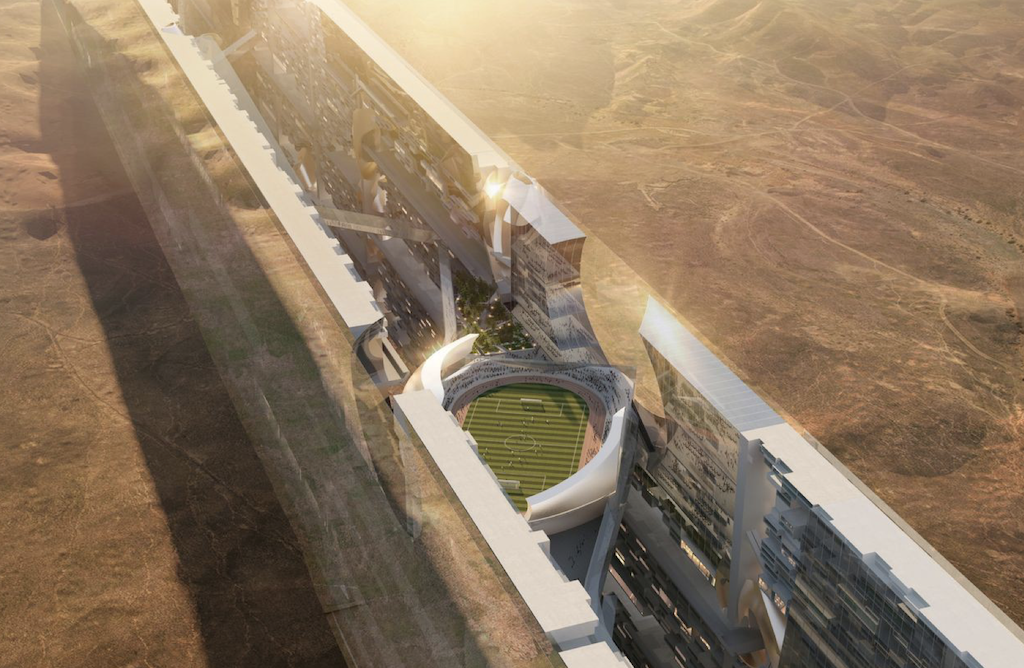
For most of the past decade, Saudi Arabia sold the travel world the most audacious story going. Vision 2030, launched in 2016, was the plan to wean the Kingdom off oil, and tourism was supposed to be one of the pillars holding it up. The centerpiece was NEOM, a $500 billion development announced in 2017 and meant to rise from empty desert. The piece-de-resistance was a 170-kilometer mirror-clad linear city called The Line, a ski resort named Trojena built to host the 2029 Asian Winter Games, and a super-luxury yachting island called Sindalah. It generated magazine covers and renderings that looked like concept art for a science fiction film and this site was among the first to splash its ambitions on the internet.
But the renderings are running into a spreadsheet. In April, at an update to the Public Investment Fund’s 2026 to 2030 strategy, PIF governor Yasir Al-Rumayyan said some priorities had been reshuffled and investment objectives repositioned “with greater focus on AI infrastructure and investments in AI companies.” Translated out of sovereign-wealth-fund language, the government is pulling money out of its biggest tourism bets and pushing it toward artificial intelligence instead. NEOM and the Red Sea Destination, the two projects that were supposed to define the new Saudi Arabia, are the ones getting trimmed but notably, they had the most to lose.
What Got Cut
The reductions are substantive, not cosmetic. The Line has been scaled down from its original ambitions, NEOM has fallen behind on hotel openings, and the broader plan is being reshaped around what can actually be financed and filled. The Red Sea Project, which once advertised a plan for dozens of luxury resorts spread across an untouched coastline including along the Gulf of Aqaba, currently has roughly nine hotels open and a far more modest near-term future than the original brochure promised. Future tourism investment is now expected to lean on the private sector rather than a bottomless government check.
What survives the cut is telling. The PIF is keeping its focus on aviation infrastructure and major events, the things with demand you can measure. Riyadh Air is still launching, the airports are still expanding, and the Kingdom is still hosting Expo 2030 and the 2034 World Cup. Those are the parts of the plan tied to real visitors arriving on real dates. The glass city in the desert is the part that turned out to be optional. In retrospect, it seems obvious that the international airlift needs to be there first to build demand for private investors to step in on accommodations. But where do you put tourists once you have flights, they need a reason to be there. For this ambitious plan, it might have needed to be in greater lockstep with the understanding that initial years will be lean. Before the AI boom, I think the Kingdom was probably comfortable with regional demand and the diaspora but even in Saudi Arabia, there’s only so much money to go around outside of oil & gas.
The country is still home to a Unesco World Heritage Site in Al Ula, mudbrick homes and an area that is often compared to Jordan’s Petra, but that is a step in the opposite direction on the timeline. While safer to build around, it’s firmly in the past and Saudi Arabia tourism wants to be a model for the future.
Why This Was Always The Likely Ending
I do not say this with any glee, because the ambition was genuinely a joy and one that I hoped (and wrote about) coming to fruition. But building an entire tourism economy from scratch on oil-funded sovereign wealth was always a bet on two things staying true at once: that oil revenue would hold up, and that travelers would show up in the desert in numbers that justified hundreds of billions in concrete. When energy markets are in turmoil (due to the Iran war) and a flashier investment story comes along, the slow-return moonshot is the first thing on the chopping block. Tourism infrastructure pays back over decades. AI promises to pay back this quarter, at least in the pitch deck. The reshuffle is less a failure than an admission that the original timeline was fantasy.
For travelers actually wondering whether to go, the practical picture is clearer than the headlines suggest. The Saudi electronic tourist visa is easy, covering more than 60 nationalities and issued online in minutes, and the Red Sea hotels that are open are genuine luxury products. What is not happening is the version where a mirrored horizontal sky scraper city of nine million people rises from the sand. When clients ask me about Saudi Arabia, the honest answer is that it is a fascinating place to visit now and a terrible place to plan a trip around a project that may not exist on the promised date.
Conclusion
Saudi Arabia is not abandoning tourism, but it’s dramatically scaling back, and that is probably the smartest move at the moment. The realistic version of the plan, a strong aviation hub, a handful of legitimately impressive resorts, and a calendar full of global events, may end up serving travelers far better than the sci-fi version ever could have. The lesson here is the one the travel industry keeps relearning. Demand builds destinations, note renderings. The projects that survive a budget cut are the ones that were going to work anyway. The mirrored city may still come someday, and I hope it does, but for now the Saudi tourism boom is landing back closer to reality.
What do you think?




From one pie in the sky to another.
Please continue to invest in EA, it’s known that MBS grew up playing Call of Duty. Redsec (BF6) can be a superior product if the owners continue to invest in it. Please pour money into EA make Redsec the greatest video game of all time , defeat Call of Duty.
I’m in-favor of Saudi moderating itself away from the hardliners (yeah, like letting women drive…psh), but this stuff was cuckoo bananas from the start.
Years ago now, Windstar had put a Red Sea, Suez journey out there for upcoming voyages. It’s still on the list now with geopolitical warnings. Not holding my breath.
Until this much heralded new Airline and the Kingdom itself allows tourist to buy alcohol, it is never going to happen.