
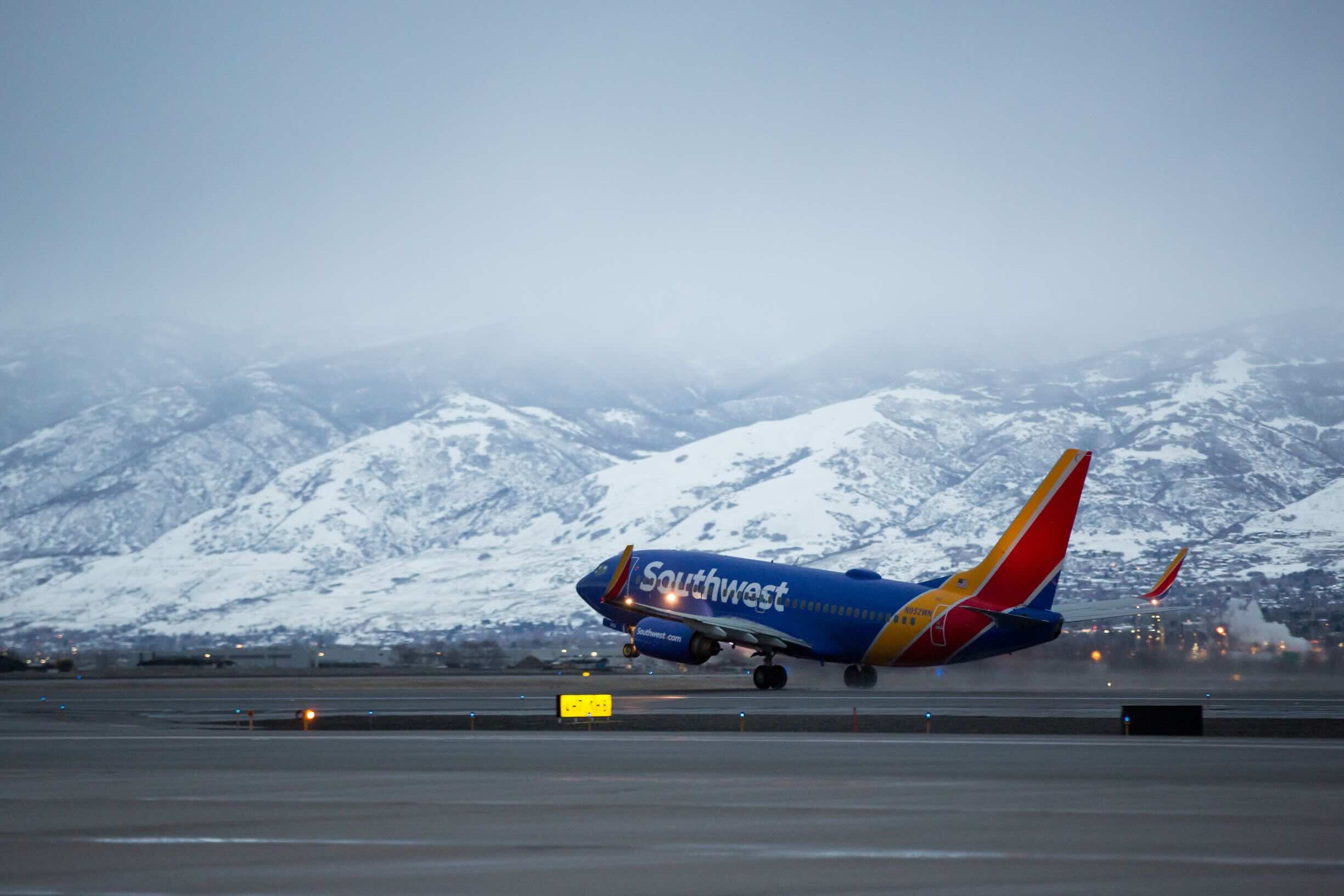
Southwest’s finances may be stumbling right now, but the airline appears convinced its new strategy will deliver a stronger 2026, and its stock market performance suggests many investors agree. I’m not rooting against Southwest, but I remain skeptical that the current optimism will translate into durable success once the real changes finally hit.
Southwest Airlines Profit Drops 42%, But Moving Full Steam Ahead With Transformation
Southwest Airlines reported a sharp drop in profit even as it projects confidence about what comes next. Per CNBC, Southwest’s profit fell 42%, yet the airline is leaning hard into a narrative that 2026 will be the payoff year, with investors seemingly buying in: Southwest’s stock price is up (outpacing even industry profit leaders Delta Air Lines and United Airlines in terms of annual gain), even as the airline is still in the middle of dismantling and rebuilding key parts of what made it “Southwest” in the first place.
That is the tension here. On one hand, the market loves a turnaround story, and Southwest is selling one. On the other hand, much of the carrier’s “historic business model” is not actually fully unraveled yet. The most important phase of the transformation takes effect next year, which means the toughest test of whether this strategy works is still ahead.
Southwest’s leadership is clearly signaling that 2026 will be different. The airline is talking about efficiency, margin improvement, and a more modern revenue approach. CEO Bob Jordan says:
“Because the assigned seating, the extra legroom, kicks in and there’s a lot of value in that, of course, numbers going to be better year over year. The bookings that we’re seeing reflect the business case for assigned seating and extra legroom.”
And that is where my skepticism kicks in.
I am not rooting against Southwest. I want the airline to succeed, because a healthy Southwest has historically been good for consumers, competition, and pricing discipline in the U.S. domestic market. But I do think the stock market celebration that is getting ahead of the operational and strategic reality…typical investors who often seem to want change for the sake of change.
The most cynical interpretation is also the simplest: the juiced-up stock price is exactly what Elliott wants. Not necessarily a healthier Southwest, not necessarily a better passenger experience, but a market that is excited about “transformation” before the full consequences, tradeoffs, and potential blowback are even visible. If you can convince investors that the hard part is behind you and that 2026 will be glorious, you can create a lot of shareholder value without proving much in the real world yet. In that sense, mission accomplished for Elliott.
Southwest’s challenge is that the airline is not just tweaking at the margins, it is changing the ethos that made it distinct. When the full set of changes take effect next year, passengers will feel it, employees will feel it, and competitors will react to it. That is when we find out whether this is a smart evolution or a messy identity crisis dressed up as strategy.
For now, all we really know is that profits are down materially, the stock is up, and the big shift is still in front of the airline.
CONCLUSION
Southwest is projecting a bright 2026 even as profits have dropped sharply this year, and Wall Street is rewarding the promise. I hope the airline proves me wrong, because I am not rooting against Southwest.
But I’m not very optimistic about anything these days and stock prices can be juiced long before a business proves its new model actually works. Next year is when the transformation becomes real, and that is when we will see whether Southwest’s future is genuinely stronger or simply more profitable on paper while losing what made it special.
Will Southwest really turn the corner into a new era of profitability?




“messy identity crisis dressed up as strategy”
Best line i have read this week.
Concise. Coherent. Potentially quite accurate.
Will be interesting to watch in 2026
Everyone I know is avoiding Southwest.
This is the one part of the corporate raider strategy that never makes sense to me. The strategy is sound (buy a company low, trash the place in order to create an air of fake value and improvement, sell high) but it only works if there’s a sucker on the other end willing to do the buying high part. After decades of this stuff, what moron is buying Southwest at a premium now, believing management’s claim that they’ve turned things around? I’d think Elliot’s actions should make Southwest stock a toxic purchase until their turnaround plan has actually yielded the promised results.
I suspect a whole lot of people will be red faced in betting against WN.
WN waited far too long to admit it needed to change – and needed a kick in the pants to come to that conclusion – but the chances are much higher that WN will turn itself around than a number of other airlines.
It is more notable that AA’s margins have underperformed the entire rest of the legacy carrier sector – including AS while it digested Virgin America and HA now – and yet AA continues to price well below its costs, meaning someone – namely their stockholders and the banks from whom AA borrows money – are subsidizing AA’s below average performance.
It is actually AA and UA that stand to hurt the most if WN succeeds in turning itself around and begins to win over and regain high value passengers that WN lost.