
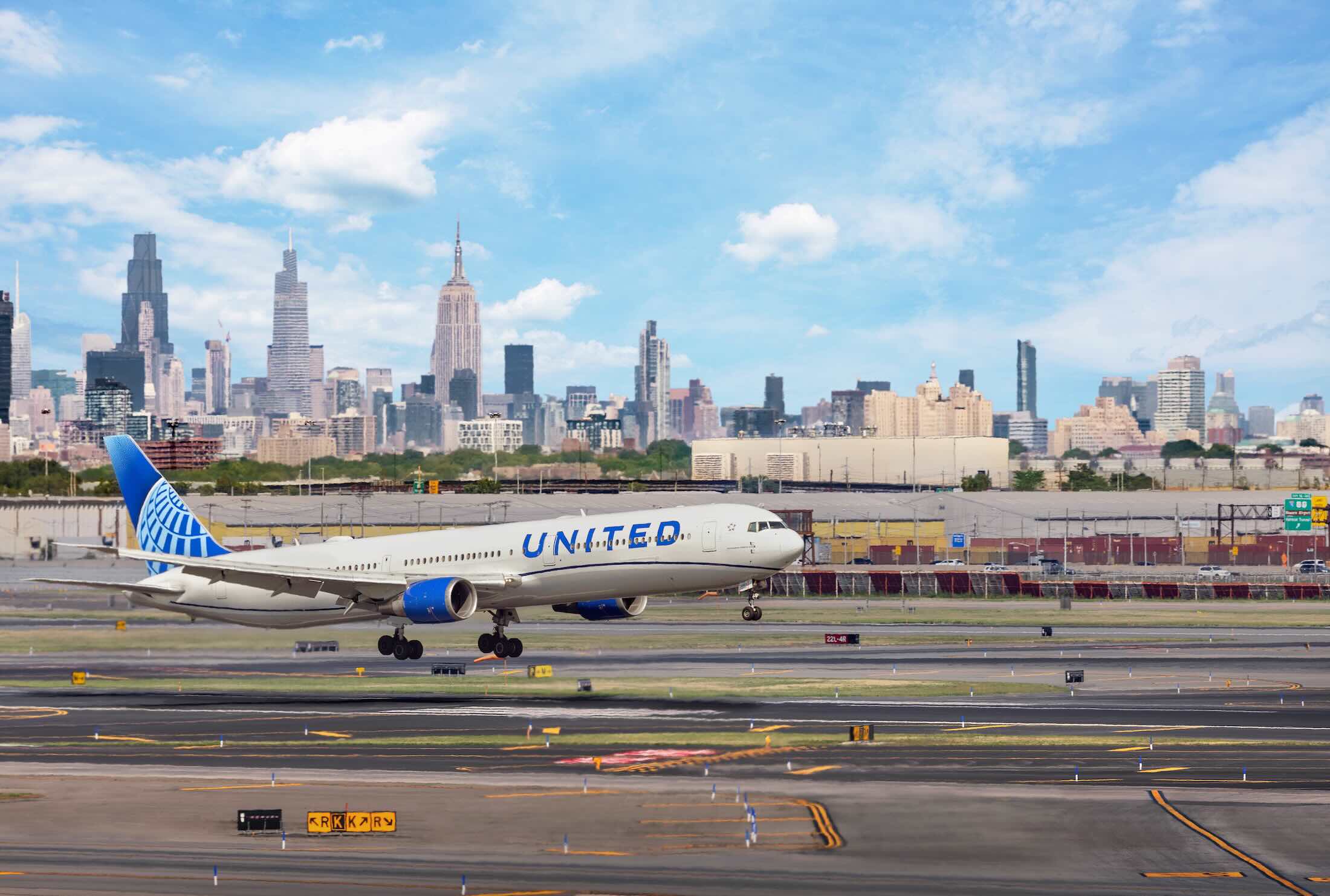
According to United Airlines CEO Scott Kirby, airfares do not rise when they should. They rise when airlines are “forced” to act. In that, Kirby muses, is a lesson on how airlines can get away with raising fares.
United CEO Says Airlines Foolishly Only Raise Fares In A Crisis
United Airlines has offered a candid explanation for why airlines only push through enduring fare increases when something breaks: internal dysfunction.
During United’s 2026 Q1 earnings call, CEO Scott Kirby explained that airline pricing is often held back by internal politics.
Revenue management teams understand that demand for air travel is relatively inelastic and that fares could be higher. But marketing and communications teams push back, warning that higher fares send the wrong message or risk backlash. And those teams tend to win.
The result is that airlines underprice their product until something forces their hand.
That “something” is usually a crisis, like we are experiencing now the fuel spike related to the Iran War.
Kirby was asked by Scott Group of Wolfe Research, “Why does the industry need a crisis to start pushing through such higher yields? Why can’t we do it more sustainably?”
Here is Kirby’s rather extended statement in reply:
“I’ve watched this for at least 25 years now, and I’ve come to the conclusion that I guess I’ll start with the conclusion. Every airline CEO should have to have spend two years at a reasonably senior position in revenue management to understand it. At its core, most of them haven’t. That’s the reason it’s harder to get fares up.
“I think what happens at airlines is the math geeks that are really smart that run revenue management, I’m looking at one of them in the room. Sorry to call you a geek, Dave [Bartels, United’s Vice President of Revenue Management], but he’s awesome. I’m one of them too, know that air travel demand is inelastic and that there’s room to price more appropriately for our cost to capital and to return our cost to capital.
“The people in marketing and government affairs are better at telling the CEO, “Oh, that’s a bad message,” and da, da. They’re much better communicators to CEOs, and so the pressure internally in the organization is really hard to raise fares. I mean, it seems crazy right now that you have a couple of airlines that are raising fares like crazy, and then they run a fare sale every week. Like the marketing team disconnected from the revenue management team, and the marketing team are better marketers, and so they tend to win is really what happens. You see it in a crisis, and by the way, another almost sure bet is in late October or November every year, there’s going to be fare increases.
“I eventually figured this out 20, 25 years ago, that in October the teams finished the budget, and they rolled it up to the CEO and the CFO, who pounded the table and said, “That’s an unacceptable result.” They said, “Go raise fares,” which they did. That’s not exactly a crisis, but it takes something like that, and it’s goofy to me that that’s the way it happens. It’s nonsensical, but I actually think that’s the reason that it happens, and I’ve thought that for a long time. A crisis causes it to go up more.”
Kirby called it “goofy” and “nonsensical,” but said that is how the industry works.
This Time Might Be Different?
In that context, the current fuel shock is doing exactly what past crises have done: forcing fares higher across the board. United has already pushed through multiple fare increases and is seeing yields up roughly 20% year-over-year, with demand still holding.
Kirby suggested this time might be different and that once fares rise, they may not fully come back down. In past cycles, airlines gave back pricing power once conditions normalized. This time, he thinks some of those increases could stick (which he also sees as a “catch-up” since inflatoin-ajdusted fares of today are still lower than they were pre-pandemic).
That reflects a broader shift in how United sees itself, at least theoretically. I’ve written multiple times before about how Untied is no longer trying to compete purely on price, but building what it calls a “brand loyal” airline, one that can charge more because customers are willing to pay for a better product. Again, in theory…
CONCLUSION
As Kirby sees the industry, for years airlines have told a simple story: fares are low because competition is fierce and demand is price-sensitive. He thinks that is only part of the truth.
The other part, as United just acknowledged, is that fares have often been held down by internal resistance to raising prices.
It takes a crisis to override that resistance. And when it does, airlines discover customers will often pay more than expected. If that lesson sticks, the current round of fare increases may not be as temporary, regardless of how far oil prices retreat.
Do you think Kirby is right about rising airfare?
> Read More: United Thinks It Can Pull A “Concorde Moment” And Keep Airfares High, Even If Fuel Prices Drop
image: United




Kirby is a tool.
A tool who along with his team has completely transformed UA into the 2nd most valuable airline. There’s a lot of airlines out there that would kill for such a tool.
And when the market changes (and it will) he will be forced to drop fares. They are really just catering to the higher spend customer, and that I will not last. The market stars to tank, a war goes on even longer, an ai bubble burst will change his toon very fast. He is so full full of himself and is focusing on now or 6 months into the future, and that is a dangerous game to play.
You could not be more wrong as a 30 year UA employee and 40 year airline industry employee, I have never seen an upper manager CEO as focused as Kirby on long term. I have worked for too many CEOs to count over my career and all of them were only concerned for the next year or two, none looking 5 years down the road. Bethune himself told me a long term plan at an airline is 6 months and to look 5 years in the future is not reasonable in the airline business. So as I said you could not be wrong on Kirby’s time line at least.
Once again Kirby spouts stupid lies. Or maybe he’s just forgetting who’s been the CEO for years now. To say that he’s not averse to jacking airfares to the sky (no pun intended) is the understatement of the year.
Kirby has been pearl clutching about how people need to take out a second mortgage to fly a family of four to Orlando for years now. Yet according to his own argument he’s been the one holding things back.
I’m with @1990 – What a tool indeed.
Fares won’t raise if UA is the only one raising them.
The industry has to go along with it, but they don’t, due to the reasons he laid out.
That’s his point.
The fares “might stay high” only because airlines like United keep the prices high. The majors tend to follow each other in implementing fare hikes. Only one airline is needed to make the first move,
It usually only takes one airline to start a race the bottom.
I love reading posters who criticize the high cost of airline tickets. We all, by now, know that, adjusted for inflation, airfares are ridiculously low compared to the days of regulation. Airfares prior to the recent increases were lower than 20 years before, adjusted for inflation. Airlines don’t make money doing their primary function: flying pax. You all sound so naive.
Kirby’s basic thesis that air travel demand is inelastic is wrong but he wants to blame everyone else.
UA itself is cutting capacity in the face of high fuel costs; if demand was inelastic, UA could push through fare increases and maintain demand.
Not only do competitors force prices down but higher fares knock off some travel demand starting first w/ the lowest fare passengers. UA has made it clear that it is upgauging by adding basic economy passengers and yet those are the first to not accept fare increases.
Corp communications depts. can and do explain price increases if they have to – they certainly did when UA raised checked baggage fees which got far more press than fare increases.
Kirby can’t understand that his basic understanding of the airline industry is lacking and reality, not what he wants it to be, dictates reality.
He also supported killing ULCCs and the government is bailing out NK and he thought he could flood EWR, ORD and SFO w/ more flights and the DOT also put a stop to his anticompetitive and reliability gutting strategies.
For as much as people love to tout how well connected Kirby is to the president, he clearly has not gotten his money’s worth and has drawn more negative government attention than any other airline CEO in perhaps forever.
“Dave” probably refers to Dave Bartels, the VP of revenue management
Yup. Correct.
And Kirby is 100% correct. For 27+ years in corporate in this industry I have seen it, yet the Kettles complain when they are paying the lowest airfares adjusted for inflation ever, with more choices than ever.
As an aside to the feckless name callers above, and I don’t mean Spectrum Boy this time, those his non sequitur rant has the normal sycophantic humour, let me let you in on a little secret SK does not care what you say or post, United does not care what you say or post, and the fact SK lives in your cranium rent free just adds more humour to it all. Flying is a privilege (and a for profit business) not a right or handout kids.
No Sh88, Sherlock.
SK doesn’t care what ANYONE thinks because he is convinced the world revolves around him.
His problem – and reality – is that he works in a highly regulated industry and his attempts at taking out the competition and growing even beyond UA’s current size have been consistently stopped by the DOT even though he supposedly expected to get special treatment from the president.
Kirby has no klue. He can either pretend that UA is wounded and disadvantaged (which they are not) or he can tout its size – which is correct.
He cannot tout how great UA is and is doing and expect the rest of the world to think UA needs, leave alone will steward, some of the industry’s choicest assets.
Of course UA is raising prices. It is nonsensical to think depts. at UA can’t figure out how to support price increases because it happens all the time.
The reason UA can’t raise prices more is because of competition -exactly what UA desperately wants to eliminate which he repeatedly and loudly proclaims on a never-ending sound loop
Oh Spectrum Boy, you have a sad because Scott Kirby lives rent free in your head kid. He probably stumped your mom too. Lol
You still mad United was tops this quarter?
UA was only “tops” because it engaged in sales/leaseback transactions that boost its income at the expense of its long-term debt.
If you think that is a win, go for it.
UA has 10X the amount of aircraft related debt that DL has and UA’s aircraft debt will increase based on lower income due to higher fuel and lowe rcash flow.
UA’s massive aircraft order book is a liability right now.
You just don’t like the facts that I present including SK’s “need” to be seen as the smartest person in the room – which he clearly is not.
Thank you for outing yourself as a paid UA employee whose job is to defend UA and Scotty
The fare increases are here to stay because there will be less competition on the other side of this, or less capacity from the competition. Not because airline suddenly decide to keep airfare higher.
And that’s called ‘competition’ in the industry!
UA CEO Scott Kirby succeeded in transforming the long-established airline into a leading carrier in a relatively short time. And even soaring fuel prices and turf wars don’t seem to be slowing his impetus.
A question I’d like to hear answered is what Kirby really trying to achieve. Every day we hear another rant about how he wants airfare to be higher. Of course he does. Michael O’Leary wants airfare to be higher. Greg Foran wanted prices higher at Walmart, Air NZ, and now Kroger. What CEO doesn’t?
Kirby should just stfu already.
What SK didn’t mention is that the place where fare prices are relatively inelastic are with 1K and Global Services passengers. With increased fares, too many people will be eligible in 2026. GS members will change their behavior if their status is threatened. 1K members will buy more expensive fares if they are faced with being stuck with Platinum.
Come this fall, I expect to see announcements about changes to MileagePlus categories.
What SK didn’t mention is that the place where fare prices are relatively inelastic are with 1K and Global Services passengers. With increased fares, too many people will be eligible in 2026. GS members will change their behavior if their status is threatened. 1K members will buy more expensive fares if they are faced with being stuck with Platinum.
Come this fall, I expect to see announcements about changes to MileagePlus qualifications.
I think you are correct.
So basically competition is suddenly a bad thing?