
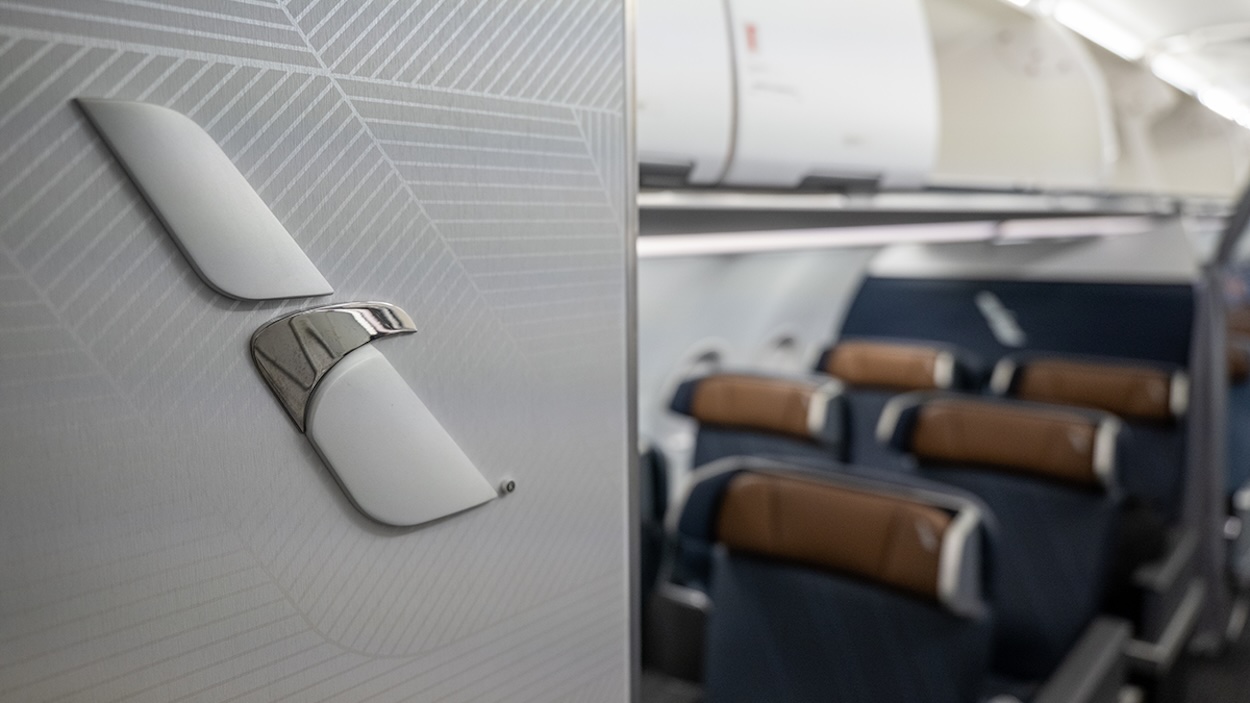
American Airlines is refreshing its Airbus A319 and A320 cabins with more first class seats, larger overhead bins, power at every seat, and updated interiors. That is good news if you are sitting up front, but the economy class story is a mixed bag.
American Airlines Adds More First Class Seats, But Economy Gets Tighter On A319, A320 Aircraft
American Airlines is moving ahead with its Airbus A319 and A320 retrofit program, a project that will bring more premium seats and updated cabin finishes to two of the carrier’s older narrowbody fleets.
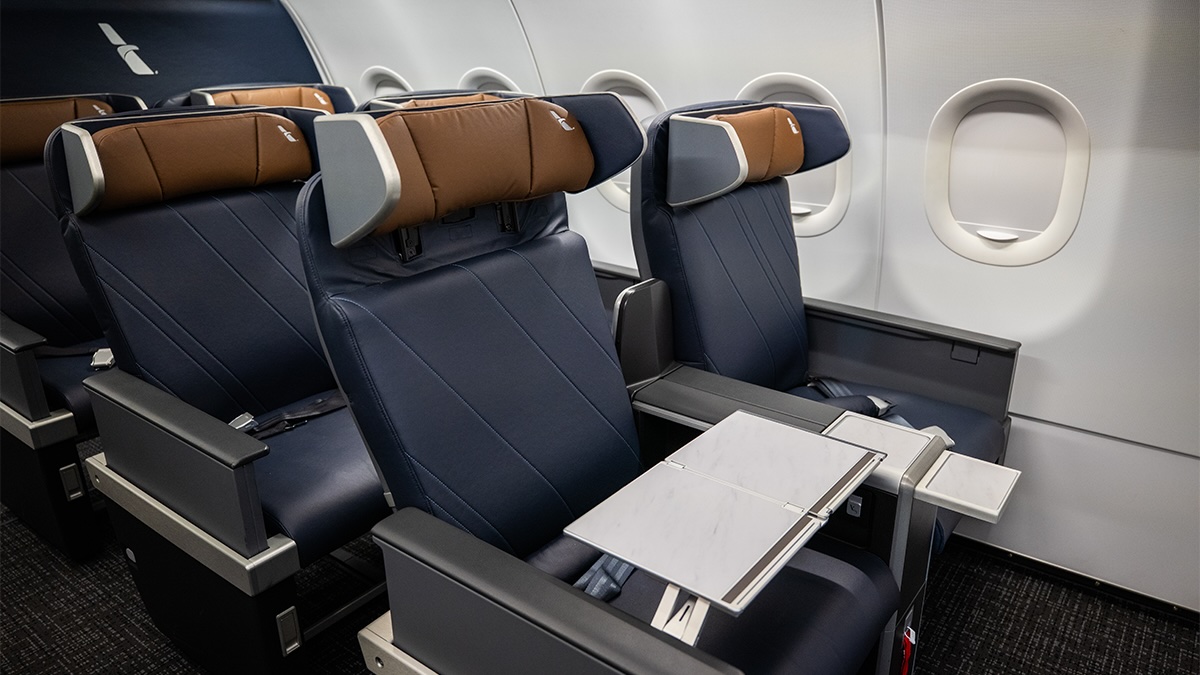
Per American Airlines, the refreshed aircraft will feature larger overhead bins, enhanced mood lighting, updated trim and finish, and power at every seat. In first class, the redesigned seat includes privacy wings, additional storage, and two cocktail trays. The premium cabin count is also increasing. American’s A319s will go from eight first class seats to 12, while its A320s will go from 12 first class seats to 16.
American says it is responding to premium demand, and the airline is not alone. Delta Air Lines and United Airlines have both been adding more premium seating as travelers show a willingness to pay more for extra space, priority treatment, and a better onboard experience (though United scrapped plans to go from 12 to 16 first class seats on its A320s) but never ended up doing
American also says the A319 and A320 interiors will resemble the design language on its new Boeing 787-9 and Airbus A321XLR aircraft. That makes sense. The airline wants a more consistent look across the fleet, and some of the refreshed cabins do look sharp.
But there is a tradeoff.
More Premium Seats, Less Room In Back
On the A319, overall capacity increases from 128 seats to 132, with first class growing by four seats while economy remains at 120 seats. On the A320, capacity appears to remain at 150 seats, but first class grows from 12 to 16 while economy drops from 138 to 134.
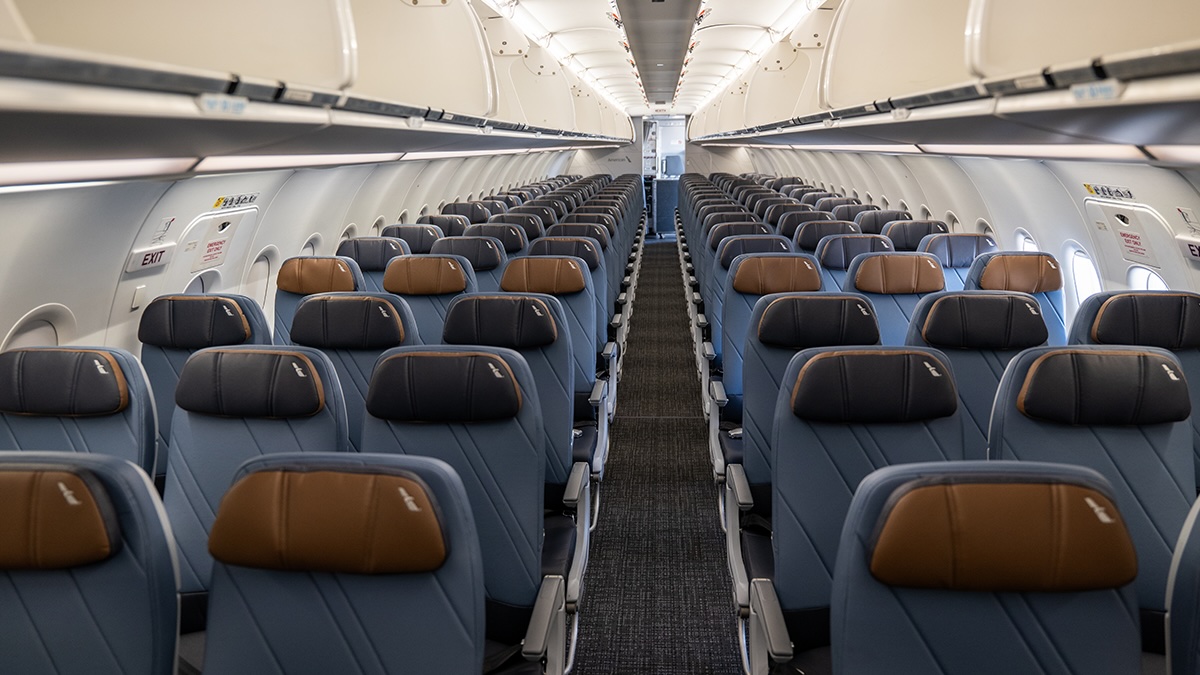
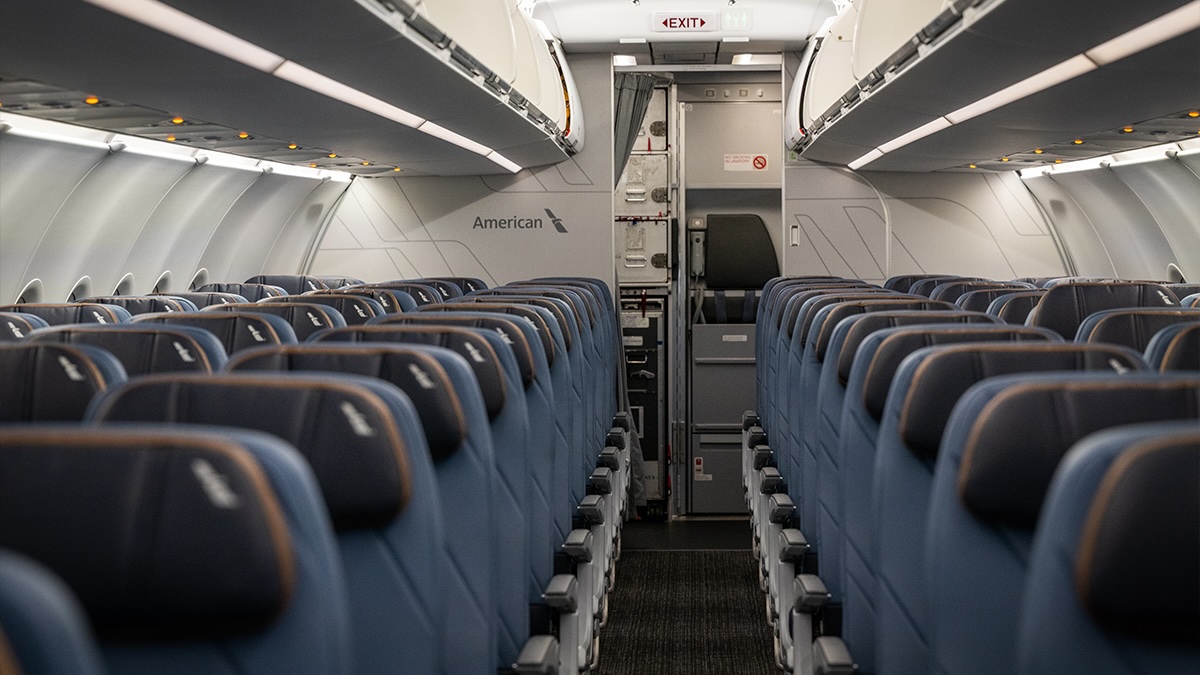
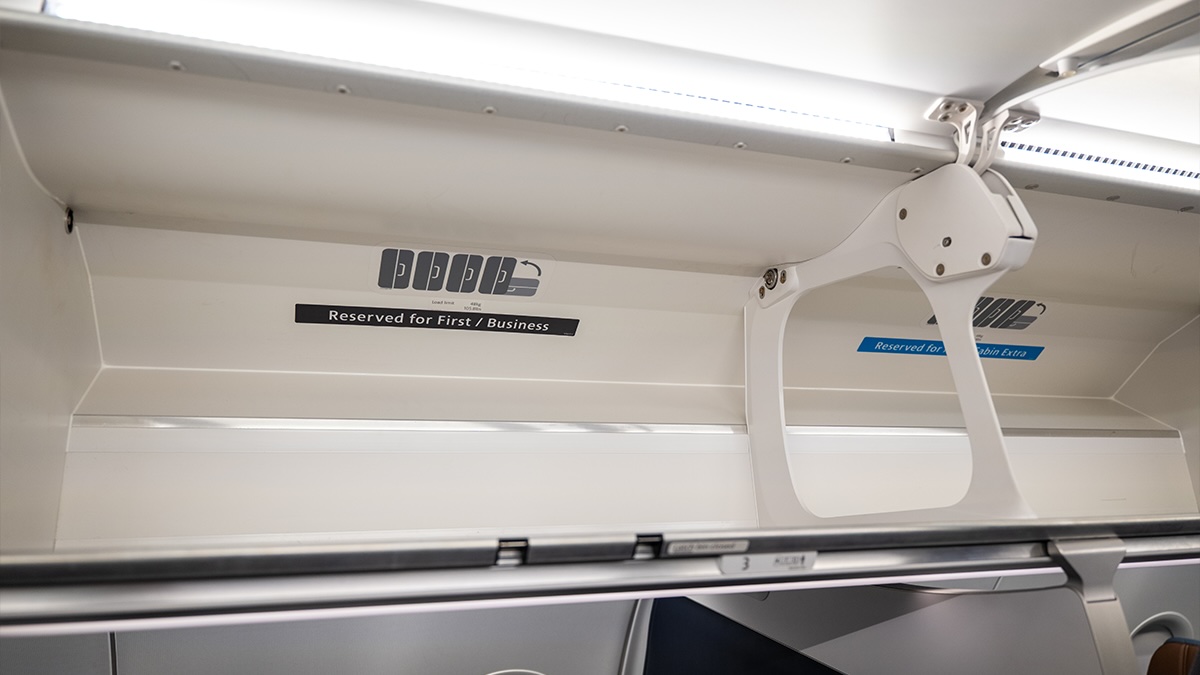
That may sound like a net improvement, but the cabin is being reworked to make this possible. Seat pitch is being reduced, and the rear galley area is being modified so lavatories can be pushed farther back. That creates more cabin space for seats, but it also means a tighter experience in economy and less generous workspace for crews.
American will argue, not unfairly, that it is adding what customers value: more premium seats, more overhead bin space, power, and free Wi-Fi. The A319 and A320 aircraft will also receive Starlink in 2027, and American is also offering free high-speed Wi-Fi for AAdvantage members across its narrowbody fleet.
Free, fast Wi-Fi does make any flight go by faster…it’s now the most important thing to me when I fly domestically.
But American is also moving ahead without seatback screens and, on the legacy American A319s that still had screens, those screens are being removed.
Do Screens Still Matter?
United has gone all-in on seatback screens, arguing that they create a better and more consistent onboard product. Delta has also retained screens on much of its fleet and led the U.S. industry on such standardization. American has generally taken the opposite approach, betting on personal devices and connectivity instead.
Maybe American is right. Most passengers travel with a phone, tablet, or laptop, and if Wi-Fi is fast and free, that solves much of the entertainment problem. But I still wonder whether seatback screens make a difference in brand perception.
A screen makes the cabin feel more premium. It also gives the airline a way to control the onboard experience and promote its own products and partners, as we’ve seen with United Kinective. That may sound superficial, but I notice that when screens are present, passengers use them…and tend to enjoy them.
If American wants to charge a premium, especially as it competes against Delta and United customers, does removing screens help that case? I am not sure it does.
The counterargument is straightforward: screens are expensive, add weight, require maintenance, and may not materially move revenue. If American can offer free Starlink Wi-Fi and passengers are happy using their own devices, then perhaps screens are not worth the cost. I’m not booking away from AA because of the screen issue: I’m booking more AA because of the Wi-Fi issue.
Time will tell, but this strikes me as a risky gamble from AA because it won’t be able to go back and add screens later, except at great expense.
CONCLUSION
American Airlines is adding more first class seats to its Airbus A319 and A320 aircraft while refreshing the cabins with larger bins, power at every seat, mood lighting, and updated finishes.
For premium passengers, this is good news. More first class seats should mean more opportunities to buy up, redeem miles, or perhaps even clear an upgrade now and then. For economy passengers, the picture is more mixed. The cabins are getting tighter, seatback screens are not part of the plan, and American is relying heavily on free high-speed Wi-Fi to carry the passenger experience.
That may work. But as United and Delta continue to lean into seatback screens as part of a broader premium brand strategy, American is making a different bet. We will see whether passengers notice, and whether they care…





American is always behind the ball on every trend, so this decision guarantees an industry-wide shift away from premium seat demand.
My thoughts exactly.
Sorry, Peter. It seems all the blogs are basically gonna highlight the loss of MCE. *sad face*
Extra legroom economy is generally what I care about. On a 2-3 hour flight, a FC seat is nice, but not necessary at all. First class catering is nice sometimes, not nice others, but I can usually eat before or after the flight and have a snack on board. So having extra legroom seating is what I personally value the most.
based on that, then your A319 pick should be UA>AA>DL.
in Y+: UA is 35″ seat pitch, AA is 34″ (before and after the retrofit) while DL is 33″
https://www.united.com/en/us/fly/company/aircraft/airbus-319.html
https://www.aa.com/i18n/travel-info/experience/planes/planes.jsp
https://www.delta.com/us/en/aircraft/airbus/a319
Just a reminder to readers, This is the same cabin layout as Delta
Both yes and no…
Yes → Following recent fleet retrofits, AA’s A319 cabin layouts closely mirror DL’s. Both airlines use a high-density, 132-seat configuration designed to prioritize premium seating and revenue.
No → AA and DL feature different A320 cabin configurations, total capacities, and passenger amenities.
Nope. Screens aside – take the A319. UA has 36 extra legroom seats and only 126pax. DL and AA are 132pax but different extra legroom layout – Delta has 30 – it just doesn’t sell the exit row as comfort. AA has 24 (which includes the exit row).
So UA > DL > AA on the A319 – anyone see that differently?
On the A320 DL is clearly in last place with 157pax – not pleasant. I don’t think I’ve seen the AA seat map for the new A320 so not sure what they’re doing with MCE (but I can guess). If UA is sticking with their existing config, that’s the most pleasant for the folks in the back, and they are maintaining 36 extra legroom seats.
So I guess UA > AA > DL on the A320 unless you are flying first and the extra 4 first class seats on DL/AA are what you are after.
Per their own websites, DL & AA both have 24 Y+ seats on the new A319. I understand your exit row point but if Delta doesn’t treat that row as Y+ from a service perspective, I don’t either.
AA First class on the A319 retrofit is 37″ pitch across the board.
DL First class on their A319 is one row of 35″ with the other two rows at 37″
AA’s Y+ is 34″ seat pitch.
DL’s Y+ is 33″
AA regular Y is 30″
DL regular Y is also 30″ with a few rows at 31″
I’ve been in those DL bulkhead First class seats with 35″ and it feels like less than that because, unlike other first class seats, there’s obviously no room in front of you and the bulkhead pitch is also less than the other first class rows. Obviously, these are silly high-class problems but if you’re choosing based on comfort, I wouldn’t choose DL. You’ll almost find the bulkhead seats empty if you book late. The delta regulars know as well as anyone to avoid that row.
It’s all pretty small differences but the DL A319 loses across the board for me. I’d easily take the new or old AA A319 over Delta
The UA F is 37″, more in Y+ at 35″ and the same 30″ in the back of the bus.
I personally don’t think more Y+ = better plane but Delta has the least legroom in the premium sections of the plane.
To the attention of AA management!
Seasoned AA shouldn’t make things worse while trying to make them better!
For aviation enthusiasts → AA currently has 132 A319s (average age: 22.2 years) and 48 A320s (average age: 25.2 years) in its fleet.
So if you choose AA economy you’ll be getting a Ryanair experience.There are real physical dangers putting often overweight passengers into cramped seats in a semi stressful situation.By comparison I flew Tunisia Air economy in January from Geneva.The seating was as roomy as PE transatlantic and a breakfast was served on a 2 hr.flt.The ticket was approx.$65 USD.We always perceive our western ways as somehow better,superior.Nope not always.
why not split economy into two more and less legroom like widebodies?
with spirit gone and southwest becoming more premium there may be room for low cost style seating on legacy carriers
AA’s 319 and 320’s are their only aircraft left with full walls between First and Economy so Row 1 of MCE economy has to stash everything in overheads. Hopefully this reboot eliminates that problem.