
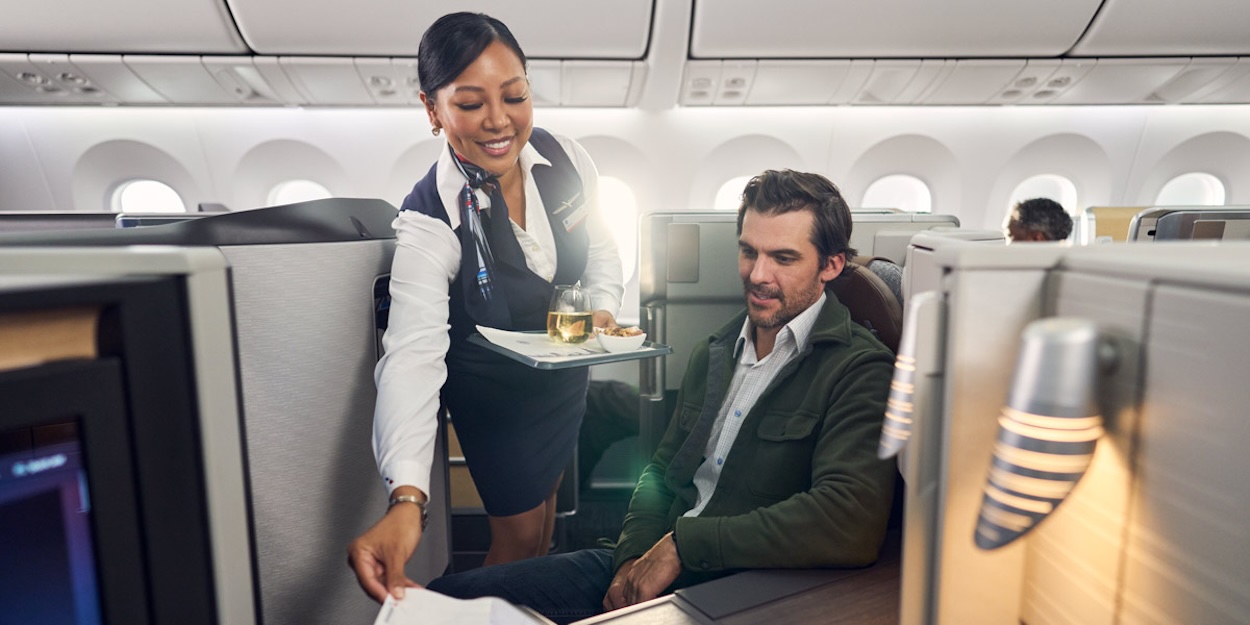
American Airlines is making clear that it would rather sell first class seats than give them away as complimentary upgrades. That may make perfect business sense, but it also chips away at one of the core reasons travelers chase elite status in the first place. Is this a penny-wise, pound-foolish approach or does the “if you want first class pay first class” mantra win out?
American Airlines Wants To Sell First Class Seats, Not Give Them Away To Elites
American Airlines CEO Robert Isom is not exactly hiding the strategy: American wants to sell more premium seats and give away fewer of them as complimentary upgrades to AAdvantage elites.
As flagged by View From The Wing, Isom recently spoke about American’s premium strategy and the airline’s belief that customers are increasingly willing to pay for first class, premium economy, and extra-legroom seating rather than relying on upgrades.
American, despite often lagging its peers in execution, has no reason to leave money on the table if passengers are willing to pay for the seat and in my experience, prices it a level that makes it very hard to turn down. For example, on a recent trip I was offered the following buy-up during check-in from Palm Springs (PSP) to New York (LGA) via Phoenix (PHX) and Chicago (ORD):
- PSP-PHX – $68
- PHX-ORD – $169
- ORD-LGA – $194
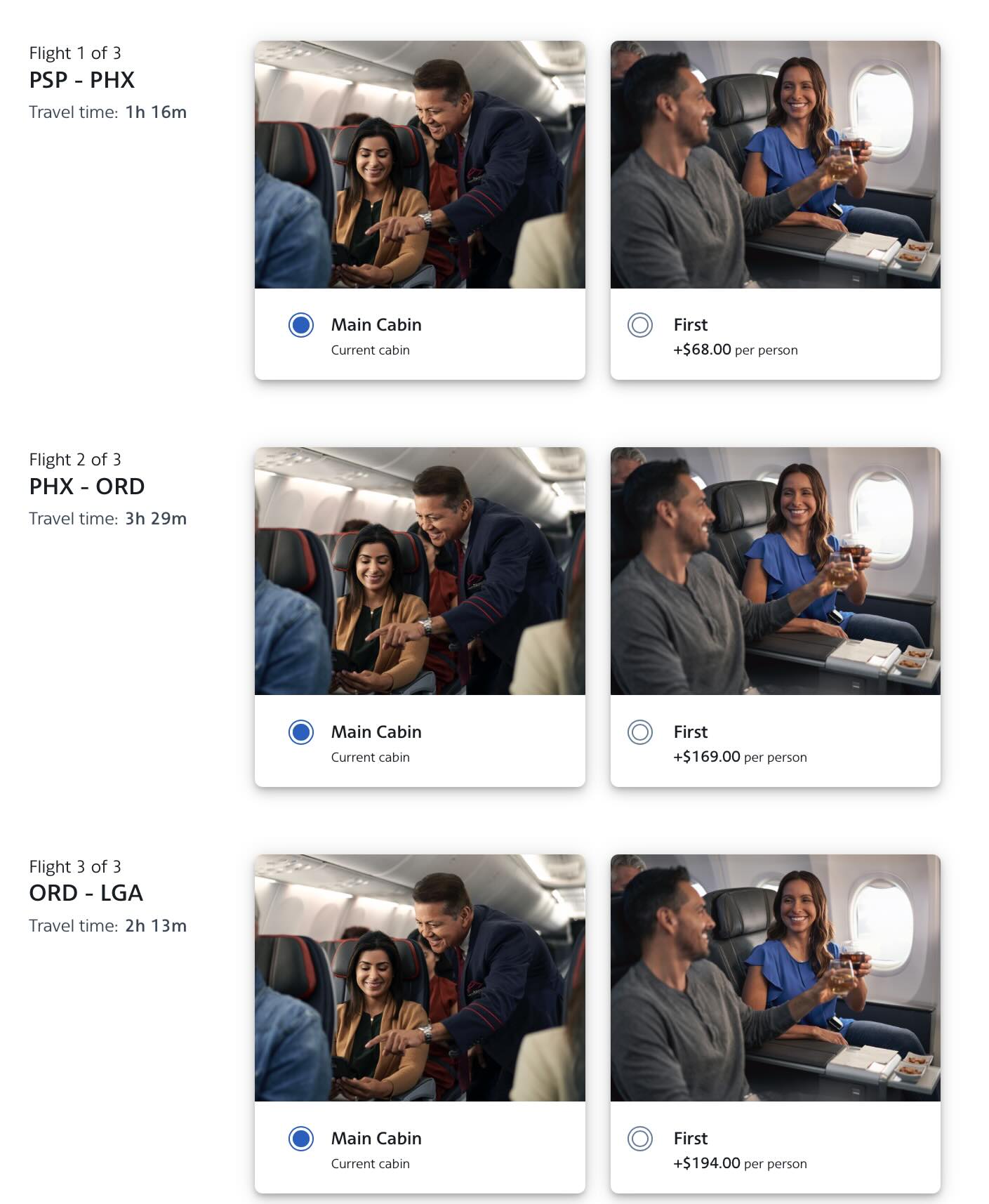
Honestly, the pricing is compelling…about $50/hour, which is my threshold pricing to upgrade on a domestic flight without a lie-flat bed.
I knew I wouldn’t get upgraded as a Gold member, but the $169 for the Phoenix – Chicago flight struck me as a great deal.
And from American’s perspective, the logic is simple: a first class seat sold for cash is more valuable than a first class seat given away to an elite traveler at the gate.
That is especially true as American adds more premium seats to aircraft and tries to close the revenue gap with Delta and United. The airline is not investing in more premium capacity because it wants to hand it out free to Platinum Pro and Executive Platinum members. It is doing so because it thinks more people will buy up.
That’s bad news and good news at the same time.
This Makes Sense For American
Let’s be fair to American Airlines: this is a rational business move.
If customers are willing to pay for first class, American cannot be begrudged for selling first class. Airlines are not charities, and elite upgrades are not contractual entitlements. Complimentary upgrades have always been subject to availability, and if fewer seats are available because more people are buying them, that is the market working.
In that sense, elites cannot really complain that American is selling the product it has long tried to monetize.
For years, U.S. airlines trained travelers to expect domestic first class as an upgrade lottery prize. That was a strange model. First class cabins were often full of passengers who had not paid for first class, while airlines simultaneously complained that they needed to improve profitability.
Now the model is changing. Premium cabins are a revenue product that is working thanks to smarter pricing and incessant buy-up offers.
But It Undermines Elite Status…
The problem is that this also undermines the value of elite status.
Complimentary upgrades have long been one of the emotional hooks of airline loyalty. Even if the upgrades did not always clear, the possibility mattered. You stuck with one airline, endured worse routings, paid slightly more, concentrated your spend, and in return you had a shot at first class.
If that shot becomes increasingly implausible, elite status starts to feel less compelling…it was a key driver that moved me to step off the United Premier 1K hamster wheel last year (and I’m very much enjoying life as a “free agent” flying whatever airline suits me best).
Yes, elite members still receive benefits: priority check-in, priority boarding, preferred seats, fee waivers, better phone support, same-day flight changes, and mileage bonuses. Those benefits have value. But let’s not pretend they carry the same emotional weight as sitting in first class.
An upgrade is tangible. It changes the experience, turning a miserable flight into a tolerable one or a tolerable flight into a pleasant one. Upgrades are the sort of benefit that makes a traveler feel recognized…and spend more money on future tickets.
If American sells nearly every premium seat and leaves elites fighting over scraps, AAdvantage status becomes more transactional and less aspirational and that may cause more people to act like me…forget elite status, I’ll just buy what makes the most sense.
Airlines want customers to be loyal, but they also want customers to pay for everything that used to make loyalty feel special. At some point, travelers will ask what elite status is really worth if the best benefits are increasingly monetized away. American may respond that the most loyal customers are precisely the ones willing to buy premium cabins, not wait for free upgrades. That is probably true for some high-value customers. But it is also a very different value proposition from the one many AAdvantage elites signed up for…and there is really no need for elite status if you are buying first class tickets anyway, right?
CONCLUSION
American Airlines is doing what makes sense for American Airlines: selling more premium seats and relying less on complimentary upgrades. I cannot fault the business logic. If customers will pay for first class, American should take the money.
But this does erode the value of elite status. Complimentary upgrades were never guaranteed, but they were a cornerstone of the loyalty bargain. If American keeps shrinking that upgrade pool, elite status becomes far less interesting. I don’t think there’s any turning back, but Isom’s euphoria over denying elites complimentary upgrades may turn out to bite.
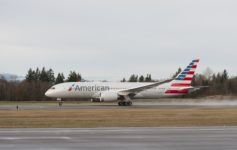
image: American Airlines



the advantage of elite status is earning more miles per ticket, plus some of the other perks
WFBF
The only CPUs should be for the ultra high end tiers that are not published such as United Airlines Chairman’s Circle
What if airlines discounted the buy-up offers for their elite members?
Nothing new here. You have correctly noted many times before that upgrades are almost a thing of the past except for the most elite fliers (i.e. Concierge Key and maybe EP on AA). This isn’t just an AA issue. My experience with UA is the same, and I assume with DL as well. If I recall correctly you have increasingly simply purchased FC when you needed a FC seat. For me, on AA, the most tangible benefit I receive is being able to select a Main Cabin Extra seat when I book any AA flight at no charge. That’s what keeps me very loyal to AA. When they take that away (and I am sure they will) then the equation changes.
“Airlines want customers to be loyal, but they also want customers to pay for everything that used to make loyalty feel special”
And that’s the main issue, isn’t it? The airlines can’t have it both ways.
I think this is a good move from AA. Instead of complimentary upgrades for AA elites, complimentary access to Admiral’s Club Lounges or Flagship lounges for AA elites would be more valuable in my opinion – much like European carriers. Of course, the issue here will be overcrowding of lounges.
We have to stop using the word elites, when we refer to customer with status.
Elites are the customer who buy First.
Also the word has changed . 30k to 40k a year on spent is nothing . It doesn’t even cover the annual wage of ONE entry level employee.
I regret not taking a $404 upgrade to a 787-8 lieflat on DFW => HNL earlier this year… ugh
UG prices offered are definitely not insane generally
I regret you didn’t take it either!
I’m going to venture a guess that you still have elite status with United, just not at the 1K level? Because status still has plenty of benefits, even if status at the higher tiers may not be as valuable without the upgrades.
Matthew, you (used to) write a lot about United Airlines. Is this new American procedure any different than the old United “tens of dollars” (instead of hundreds or thousands) upgrades procedure? The reactions to American doing it seems to be identical to the reactions when United did it: airline managements like it as a revenue enhancer, frugal frequent flyers (no alliteration intended) who desire complimentary upgrades dislike it.
Sure, my reactions are similar and I still don’t like that UA does this.
I am a fan of reasonably pricing first class and not having to play the lottery game.
Admirals club access is already available with loyalty point rewards.
I would welcome the return of 500 mile upgrade certificates that could be confirmed in advance, and would have real value.
I like the current advantage program. My only suggestion would be for AA to remove the fuel surcharges on BA flights.
In the month of May on AA I cleared:
– CHA-DFW
– DFW-SEA
– PHX-AUS
– ORD-XNA
– XNA-LAX
– LAX-HNL
– HND-LAX
– LAX-DFW
(I also cleared MAJ-PNI & PNI-TKK on UA).
I just don’t think the sky is falling at all in the upgrade world. At least not as an EP on AA.
I forget where I read it (in these august pages, perhaps?) or to whom it was attributed, but it’s worth remembering that the purpose of any loyalty program is to encourage irrational behavior. So yes, “Airlines want customers to be loyal, but they also want customers to pay for everything that used to make loyalty feel special”, and that’s the point. Caveat emptor.
The most rational elite chasing option, IMO, is to go credit card at multiple airlines for things like bags and better boarding group (if those matter to you) and then spread out segments and spend as to simultaneously hold low level status on multiple airlines, and choose routes almost solely by price and time. Status during IRROPs is huge and even low level status phone lines have much better reps than the useless reps at the general member lines. UA Silver and AA Plat out of Chicago has been a solid pairing for me.
Bring back the 500-mile upgrade stickers!
I got my free 4 months of Platinum Pro Status through Hyatt on American last Fall and cleared on every flight I took except one BOS-CLT flight. I will say nearly all the flights, except for CLT-BOS, were 70 seat regional jets mostly touching my home airport of SBN (with a few segments out of ORD as well).
Sounds like the problem is that upgrades have become the core offering of status programmes. As Matthew said, there is a whole basket of benefits but they are really undervalued as flyers and airlines focus on upgrades. Even in these comments, several have said they cleared upgrades almost every tine, so why buy First?
I’d suggest the airlines remind people of the value of being able to talk to a helpline, free changes, etc and offer maybe three free upgrade vouchers a year plus of course the paid upgrade offers. Keep the benefit alive without it being expected all the time
Being “elite” no longer seems to be without its drawbacks…
I don’t find this to be rational at all. I’ve been EXP for some years now. Most of that is through business spend on my AA cards. The miles I get through those cards are pure gold to AA in a P&L sense. As a result I always search AA first – which is exactly what a loyalty program is supposed to do. It’s already ridiculously tough to use my SWU’s. If American notably lowers my upgrade odds then the advantages of high tier status over just holding a AA credit card are minimal.
AA is pulling in a lot of money from my $200K a year spend on their cards plus my paid airfares in coach and domestic first. If they want to anger me further then I’m substantially better off becoming a free agent and using a credit card that will serve me rather than American. That would result in a notably lower amount of income from me, which is simply stupid by AA. I ditched Delta some years ago because they made the price of loyalty prohibitive. Now American is slavishly following the same path, except with worse financial fundamentals. I didn’t expect much from American but I did think they would know better than to shoot themselves in the foot like this. My mistake.
Giving first class seats away was a dumb idea from the start, creating an obnoxious entitlement culture that’s difficult to walk back. The only way to break the curse is to change the policy and let seats up the front go out empty if nobody is willing to pay for them with either cash or miles. Any challenge to the entitlement culture will undoubtedly cause much weeping, wailing, and gnashing of teeth on the pages of FlyerTalk, et al, but in the long run it’ll be commercially advantageous.
The only thing dumber than giving them away is selling them for cheap so that loyal members who spend lots of $$ through tickets, shopping, credit card spend etc get hosed by having someone buy up for cheap. That just drives away loyal customers and rewards disloyal ones. As a business owner myself I find that driving away loyal high margin customers is kinda sorta a bad idea, even for short term gain.
I typically book most of my hotels through the AAdvantage hotel sight to make my elite status for the year (usually over 300K+ loyalty. In that process, I use the Citi AA Exec card to pay. So, AA makes money on the hotel side and the card side ($5.6 Billion last yr from co-branded cards). I got about 10 free upgrades to biz last yr so the relationship worked well. There are too many options for hotels so they will lose most of my business, Maybe the math makes sense (in general) for them? Jeopardizing their credit card income seems like a substantial risk.
With this AA approach, chasing elite status solely for the promise of complimentary space seems like a losing battle. Instead, loyalty status is shifting to become a utility tool primarily used for free checked bags, priority airport handling, and free access to extra-legroom economy seats at check-in.
An unusual approach from Robert Isom & Co. that could weaken the fundamental psychological contract of airline loyalty… As is known, for decades, business travelers have accepted suboptimal routes, rigid schedules, and high personal spending in exchange for the guarantee of a realistic chance of securing a first-class seat.
I’m one of the many reasons you never get upgraded.
Never be a status chaser.
You have many pax who would only consider AA, DL, or UA for most flights (certainly domestic). Many pax have limited real options on those three due to location (e.g., ATL, DEN, DFW, DTW and on and on), The airlines have figured out they need not give you much to encourage loyality. If you’re out of ORD, AA might lose you to UA if they don’t make you “feel special.” But UA does the same thing. So, they figure, we’ll gain as many as we lose. So, our planes are as full, and we get extra dollars selling stuff we used to give away. Smart business model. As a guy who pays for F/J, I wish unsold F/J sears went out empty. That would encourage me to fly your airlines, and I’m the dude paying for F/J, not paying for Y getting p!$$ed I not moved up for free.
Then what value is there for pouring your loyalty and money into a specific program? I don’t begrudge you the financial situation to be able to fly up front on paid tickets but for us mere upper-middle class types, paying thousands of dollars for a single airline ticket is a recipe for a destitute retirement.
Status gives reasonably normal types who are motivated the chance to fly up front when seats are available. Take away upgrades and exactly what major benefits are offered that can’t be gotten just from having an airline credit card?
Basically every full service airline in the world grants few/no complimentary upgrades to elites while giving them lounge access. That’s a model which has been working everywhere without any issues.
The money that US airlines make selling lounge memberships is trivial compared to the revenue they grab from engaged frequent flyers, and they’re also selling those memberships at a discount through credit cards and other similar avenues.
The logical thing to do in the circumstances would be to simply align with the global alliance rules and give access to OWS/OWE/*G/E+ customers before all flights in all cabins. Most of them can already access through credit cards etc so the additional burden on lounges wouldn’t be massive, and airlines would be able to come up with a positive marketing narrative in swapping a ‘lottery’ for a guaranteed benefit (maybe paired with a few upgrade certificates on top).
Delta did it. American followed suit. That leaves United and Alaska as the only airlines in the USA that have not stopped or cut back on giving comp up Where else will one go?
EXP flying main cabin with 6 first class seats available less than 24 hours before departure and the app still hasn’t upgraded me yet. AA is clearly not upgrading as per their policy for elites upto 120 hours. They are infact holding it till the last second. This is an official quiet memo.