
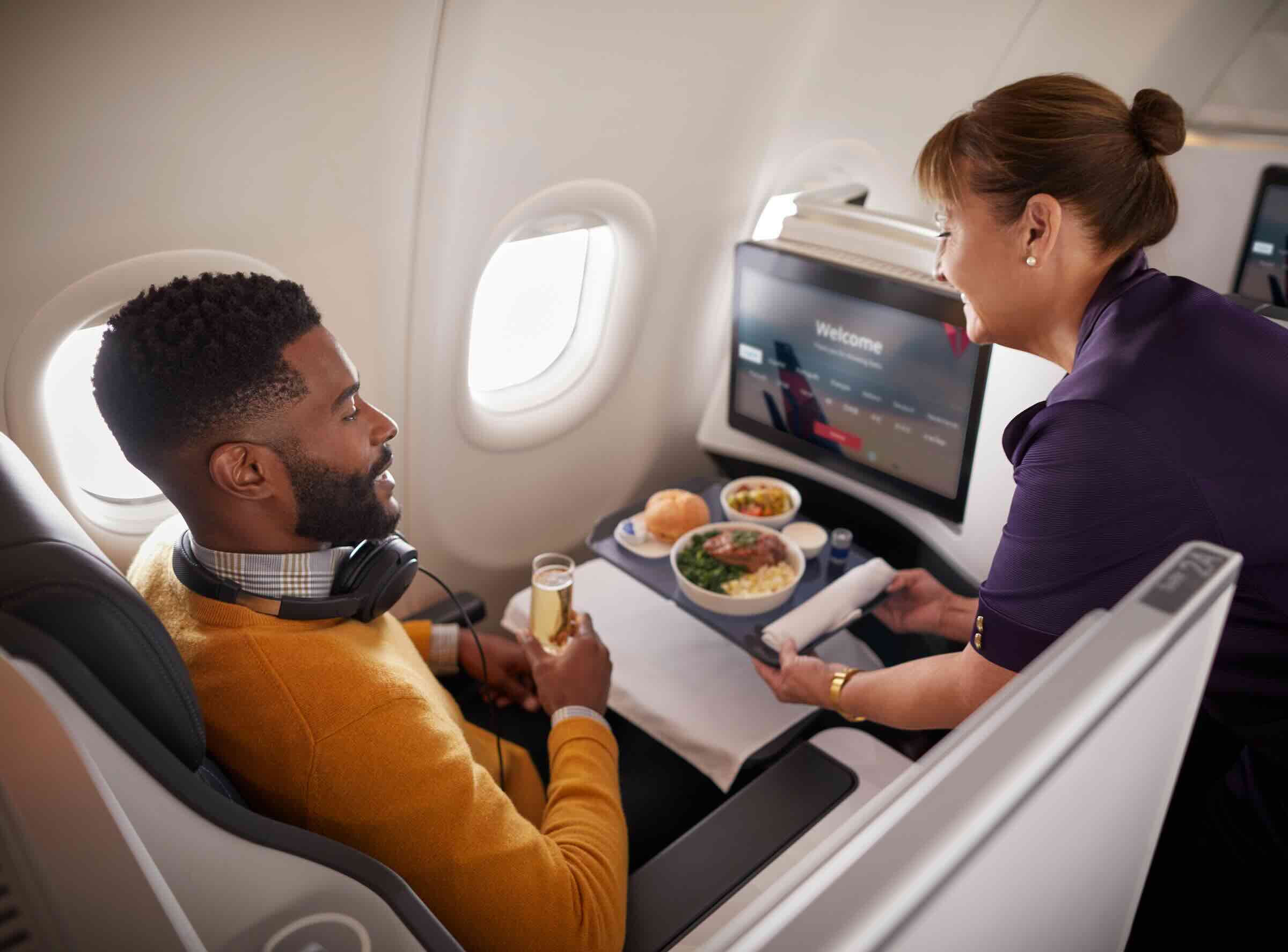
Delta Air Lines is expanding its Basic, Classic, and Extra fare structure across its premium cabins, and the cheapest options may be largely unavailable to corporate travelers.
Delta’s New Basic First Class Fares May Be Off-Limits To Business Travelers
Delta has completed the rollout of Basic, Classic, and Extra fares in Delta Comfort and is now extending the same structure across First Class, Delta Premium Select, and Delta One.
That means passengers buying premium tickets are beginning to face a familiar choice to coach travelers: buy the cheapest fare with significant restrictions or pay more for flexibility and additional benefits.
But Delta appears to expect many corporate travel programs to remove that choice altogether.
Delta Expects Corporate Travelers To Avoid Basic Premium Fares
During Delta’s second-quarter earnings call, JPMorgan analyst Jamie Baker noted that Basic Economy became particularly lucrative because most large corporations prohibited employees from booking it.
Baker recalled a previous Delta estimate that roughly 90% of its managed corporate accounts had blocked Basic Economy and asked whether Delta expected companies to respond similarly to the new basic premium fares.
Delta said it did. Daniel Janki, Delta’s Executive Vice President and Chief Operating Officer, said:
“We do expect that to be very similar.”
The airline explained that even when offered in premium cabins, basic fares remain restrictive and therefore do not work particularly well for corporate customers.
“The basics still, even in the premium cabins, are restrictive, and that doesn’t really work with our corporate customers.”
That is an important insight into the economics behind Delta’s latest fare segmentation.
A business traveler may technically be able to buy a Basic First Class or Basic Delta One ticket, but a corporate travel policy may block the fare because it lacks the flexibility required when meetings change or trips are canceled.
The employee would then have to buy the more expensive Classic or Extra version of the same seat.
Not Every Fare Will Be Offered On Every Flight
Delta also made clear that all three fare categories will not necessarily be available on every flight.
The airline plans to decide which options to sell based on demand for each flight and market. On routes with strong business demand, Delta could limit or eliminate the cheapest premium fare while emphasizing more expensive, flexible products.
That gives Delta another lever to manage pricing beyond the traditional fare buckets airlines have used for decades.
The airline can vary not only the price of a First Class seat but also the bundle attached to it, making the cheapest version available when needed to stimulate demand and withdrawing it when customers are likely to pay more.
Delta characterizes this as offering more choice to customers. That is true in a technical sense, but the larger purpose is plainly to generate more revenue from passengers who value flexibility, mileage earning, seat selection, upgrade eligibility, or other benefits.
Basic First Class Is Not Necessarily A Bargain
The idea of “Basic First Class” initially sounds contradictory. A passenger is still purchasing a larger seat at the front of the aircraft, but some of the benefits traditionally associated with a premium ticket, like lounge access and seat assignments, may be stripped away.
Delta has already introduced this model in Delta Comfort, where customers can select among Basic, Classic, and Extra bundles. It is now rolling the same framework into First Class, Premium Select, and Delta One.
The cheapest premium fares may appeal to leisure travelers who know their plans will not change and care primarily about the onboard experience. Corporate travelers, however, often need refundable or changeable tickets and may never even see the Basic option in their company booking portal.
That distinction is precisely what makes the model attractive to Delta. The airline can advertise a lower premium-cabin entry price while collecting more from business travelers and others who require flexibility.
The result is clear: consumers are paying much higher fares if they want the same flexibility as they enjoyed previously on discounted premium cabin tickets.
CONCLUSION
Delta says its new premium fare families provide customers with more choice, but the airline also expects corporations to block the cheapest, most restrictive options just as they did with Basic Economy.
For many business travelers, Basic First Class may therefore exist in theory but remain unavailable in practice. They will still sit in the same cabin, but their employers may require them to purchase a more expensive version of the seat…further helping Delta’s bottom line while receiving no additional benefit in return.
image: Delta





Leave a Reply