
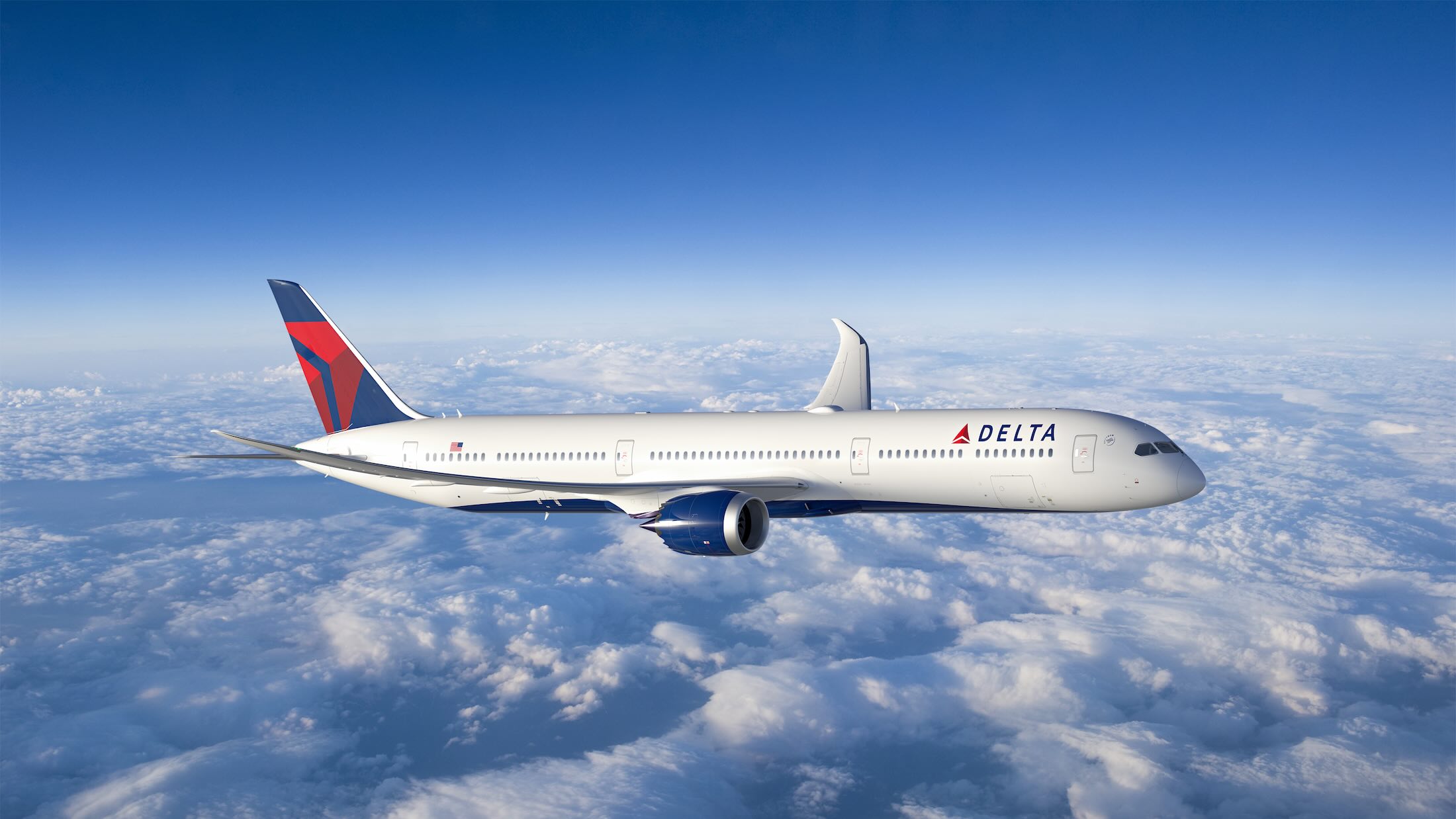
Delta Air Lines has offered its clearest indication yet of how it intends to configure its future Boeing 787-10 Dreamliners, revealing that more than half of the aircraft’s seating will fall into premium cabins.
Delta Reveals How Premium Its Boeing 787-10 Will Be
When Delta ordered 30 Boeing 787-10 aircraft earlier this year, with options for 30 more, it promised larger premium cabins but stopped short of revealing how premium-heavy the aircraft would be.
Now we have a much better idea.
During Delta’s second-quarter earnings call, Chief Commercial Officer Joe Esposito compared the incoming 787-10 to the Boeing 767s it will eventually replace:
“You’re going from 30% premium seating in a 76 to over 50% in a 787.”
Esposito added that the 787 can carry twice as much cargo as a 767, while offering substantial improvements in fuel efficiency, capacity, and overall margins.
If that sounds familiar, it should: United Airlines has recently debuted its latest generation 787-9 with “Elevated” interiors which are 44.6% “premium” if you count only Polaris Business Class and Premium Plus premium economy, but 62.2% premium if you count EconomyPlus extra legroom economy.
What Does “More Than 50% Premium” Actually Mean?
More than 50% premium seating does not mean half the aircraft will be filled with Delta One Suites.
Delta uses “premium” broadly to distinguish seating outside its standard Main Cabin product. On the 787-10, that will include:
- Delta One Suites (business class)
- Delta Premium Select (premium economy)
- Delta Comfort+ (extra legroom economy class)
Delta has not disclosed the number of seats in each cabin, nor the total seating capacity of the aircraft.
Still, the figure suggests a dramatic reduction in the proportion of ordinary economy seats compared to the 767s the Dreamliner will replace. Delta is not simply buying a larger and more efficient aircraft. It is using that additional space to reshape the cabin around higher-yielding passengers.
That strategy is consistent with what Delta is doing throughout its fleet. Premium capacity continues to grow, while Main Cabin capacity is shrinking. Delta said during the same earnings call that its premium capacity was up by low single digits, while Main Cabin capacity was down 2% to 3%.
A Much More Productive Replacement For The 767
Delta has ordered the largest Dreamliner variant, the 787-10, which is best suited for high-volume routes across the Atlantic and to South America rather than longhaul Asia flights, which the Airbus A350-900/1000 will handle.
Deliveries are expected to begin in 2031.
Delta previously said the 787-10 will provide approximately 25% better fuel efficiency per seat than the older widebody aircraft it replaces. The airline also promised more capacity, larger premium cabins, and improved cargo capability. The cargo point should also not be overlooked. Delta reported a 39% increase in cargo revenue during the second quarter, and management views cargo as an important contributor to the profitability of its international network.
The Boeing 767 remains a passenger-friendly aircraft in economy class thanks to its 2-3-2 configuration, but it is increasingly inefficient compared to newer widebodies and offers limited space for premium seats and cargo.
The 787-10 solves those problems, though likely at the expense of economy-class comfort. A standard 787 economy cabin is arranged 3-3-3, with narrower seats and more middle seats than the 767.
For Delta, however, the economics are compelling. It can carry more passengers, devote a much larger portion of the cabin to premium products, transport twice as much cargo, and burn less fuel per seat.
CONCLUSION
Delta has not yet revealed the final seat map for its Boeing 787-10, but it has now disclosed the most important detail: more than half of the aircraft’s seats will be categorized as premium.
We will have to wait to see how Delta divides that space among Delta One, Premium Select, and Delta Comfort, but the direction is unmistakable and mimics what United Airlines has recently introduced on its latest 787-9 fleet. The future, as Delta sees it, is in premium seats.
image: Boeing




thank you for another accurate and fact-based article, Matthew.
The 787-10 is part of DL’s upgauging across its network; the cabin size intentions mirror what it is doing with the A350-1000.
DL is using large widebodies – the 787-10s and 350-1000s to increase efficiency including cargo capacity while also increasing the amount of premium seating which DL defines to include everything except standard economy.
the standard 9 abreast on a 787-10 will result in narrower economy cabin seats than on Airbus widebodies as well as the 767s they replace.
Once this transition (from 717 to a220, from 757 to XLR with lie-flat, from 767/330ceo to 787/339, and the 35K), a lot of the complaints about inconsistent premium hard-product won’t have merit.
Seems very thoughtful DL CEO is providing enough space for all the non-revs to fly premium seats.
Matthew, you hinted at one aspect of this strategy that both Delta and United are employing (and I predict American will try to follow). As we’ve seen the industry shift from over the last few decades from really large planes (747s at United, 777s at Delta) to slightly-smaller, longer range aircraft (A350s and 787s) the ability to haul both passengers and full cargo volumes was further squeezed. And you said, the way it’s going to be done will promise “…more capacity, larger premium cabins, and improved cargo capability.” It’s the cargo that matters, at least more than carrying additional economy passengers.
For those not familiar with the operational specifics, no plane can both fill up the fuel tanks (fly it’s fully certified range) while also filling up the cabin and cargo holds. It will hit a maximum weight limit first, and something has to be sacrificed at the edges of the operational envelope. IOW, fly a 787 about 1,000 miles less with the max certified passenger load and max cargo, or fly fewer passengers/cargo the full distance. But you can’t do both.
Airlines can split the revenue sources into three broadly-defined categories: 1) High-yield passengers (credit card branded, loyal folks sitting in premium seating), 2) Low-yield passengers (vacationers buying the Cheap Seats in economy), and 3) Cargo (which can be quite lucrative). If you cannot fill up the plane with all three and still fly the longest routes, it makes sense to cut back on the lowest-yield product – economy passengers.
Tim pointed it out too, saying Delta is going to A350s and 787s “… to increase efficiency including cargo capacity.” Yep – he gets it. But you don’t get more cargo capacity when you max out your planes with 80% economy / 20% first class and fly them close to max range, like back in the old days. That high a seating density will hit the weight limits before you fully fill up the cargo pits.
Therefore, configure your planes with more high-yield premium seats. Lower the total available seating by installing bigger seating you can charge more for. That reduces your zero-fuel weight, allowing you to fly closer to the max range and not have to pull off cargo. You now get to maximize your two highest yielding revenue streams: the high yield passengers, and the cargo.
It’s a smart move on Delta’s and United’s part. I think people criticize the airlines for appearing to prioritize the wealthy travels in first class over the everyday passenger in economy with the push for larger premium cabins. But the reality is they are choosing the cargo over the everyday traveler. There’s still good money to be made with cargo, and Delta and United are positioning themselves to take advantage of it.
well said.
DL’s A350-1000s will have one of the lower configurations for operators of the type other than such as for QF which are using the aircraft to fly very long haul flights.
DL’s 359s carry 10 more passengers than UA’s “standard” 789s which are already fairly premium configured. DL’s newest 359s have greater range and cargo capacity than AA and UA’s newer more premium 789s.
The 350 is just a larger, more capable aircraft and Airbus has managed to get more range out of the 35K than the “base” 359.
Cargo is a big revenue source over the Pacific and the 35K has tons of cargo capacity.
and, you are right that it is impossible to fully fill most aircraft with passengers and cargo but cargo is heavily eastbound across the Pacific which is the shorter leg on TPAC flights. The 35Ks should certainly be able to fly with very heavy cargo loads and full passengers in DL’s configurations on all but flights from SE Asia to the west coast and from India to interior US hubs and even then they can carry heavy cargo loads but not on a year round basis
An extra legroom economy seat is far from Premium. It’s a regular crummy economy seat from a decade ago, granted much thinner than in the past. Oh how easy it is to scam the suckers out there into believing 50% of the plane is “Premium”.