
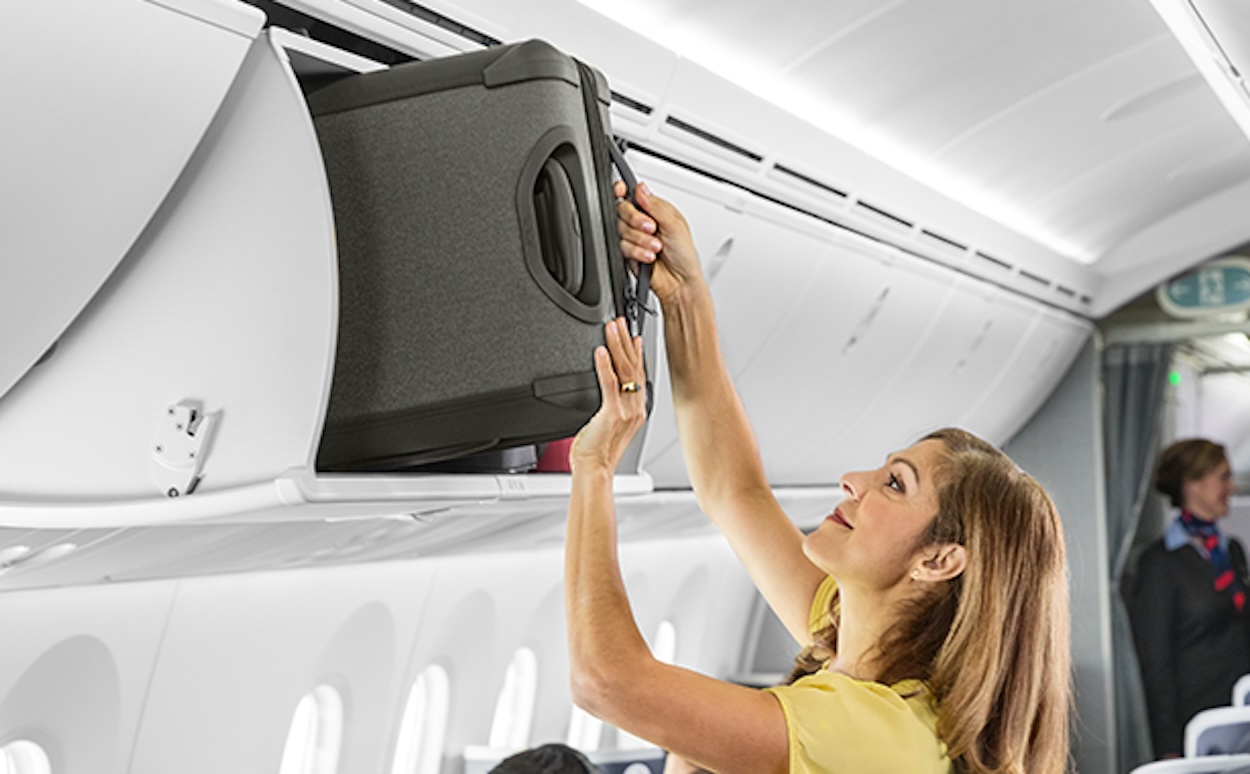
IATA has launched a new safety campaign reminding airline passengers to leave their bags behind during an emergency evacuation after a startling new survey revealed many passengers still do not know better.
Leave Your Bag Behind: IATA Warns Passengers Not To Grab Luggage During Aircraft Evacuations
The International Air Transport Association has launched a new passenger safety campaign called “Save a Life, Not a Bag”, urging travelers not to take cabin baggage during an aircraft evacuation.
That such a campaign is necessary is unsurprising and yet still maddening.
We have all seen the videos. An aircraft is being evacuated, slides are deployed, passengers are moving down the aisle, and some person is standing there trying to retrieve a roller bag from the overhead bin as if this were a normal arrival at the gate.
IATA says passengers must follow crew instructions, leave all baggage behind, and move quickly to the nearest usable exit. Following that instruction, of course, may mean the difference between a successful evacuation and one that can turn deadly.
Do Passengers Really Not Know This?!
IATA commissioned a survey of recent air travelers in the United States, United Kingdom, United Arab Emirates, and Singapore. The results are disturbing.
While 80% of those surveyed claimed to know what to do in an emergency evacuation, only 61% correctly answered that they should leave all personal items and exit the aircraft. IATA also found that one in ten passengers admitted they might still take baggage during an evacuation, or follow others who do, even when instructed not to.
Are people really this stupid?
I do not ask that only to be provocative. I genuinely wonder whether passengers fail to understand the rule, or whether professing ignorance simply makes it easier to morally justify putting property ahead of other human beings.
Because that is what grabbing a bag during an evacuation does. It puts your laptop, your passport, your purse, your duty-free, or your precious roller bag ahead of everyone behind you if retrieving those items slows down the delay (see, I’ll add that caveat).
IATA’s Director General Willie Walsh put it plainly:
“Taking bags during an evacuation is not a minor issue. Every second matters. Even taking one bag can affect the safe evacuation of everyone onboard. Crew instructions are clear and simple: leave everything behind and move quickly.”
Walsh may have messed up British Airways/IAG, but he’s exactly right here.
Every second matters and if you stop to pull down a bag, you delay others. If the bag snags, blocks the aisle, injures someone, or damages the evacuation slide, your selfishness becomes everyone else’s problem.
Locked Overhead Bins?
The more drastic idea being floated is locked overhead bins during critical phases of flight.
I understand the impulse. If passengers cannot be trusted to leave their bags behind, perhaps they should not be able to reach them during an evacuation. But I am increasingly convinced that is not the right answer.
In a perfect world, locked bins would prevent passengers from grabbing their luggage. But in the real world, I worry that some passengers would waste precious seconds trying to force the bins open, argue with crew, or panic because they believe something essential is trapped above them.
Maybe lockable bins could be engineered in a way that works safely and predictably. I am not dismissing the concept outright. But adding another point of passenger confusion during an evacuation strikes me as risky. The better near-term solution is relentless education, blunt announcements during an actual evacuation, and more awareness that passengers are not simply abandoning their property forever.
IATA notes that 60% of passengers say they would be less likely to take baggage if essential small items were already secured on their person. That is a practical point. Keep your passport, wallet, medication, phone, and other truly essential items on your person during takeoff and landing or at least in the seatback pocket in front of you.
Airlines can also help by making clear that evacuated carry-on bags will be retrieved and reunited with passengers as quickly as possible. People panic because they fear losing important possessions. That fear does not justify blocking an evacuation, but it should be addressed and there should be a priority put on prompt retrieval of all items onboard.
CONCLUSION
IATA’s “Save a Life, Not a Bag” campaign should not be necessary, but apparently it is.
For the avoidance of doubt, during an aircraft evacuation, leave everything behind. I remain skeptical that locked overhead bins are the best solution, because passengers who are foolish enough to grab bags may also be foolish enough to fight the lock. Education is better, but it has to be blunt and repeated.
Keep your true essentials on your person and get off the airplane when instructed.
Your bag can wait. The people behind you may not be able to!
image: American Airlines





“Keep your true essentials on your person” (passport, wallet, keys, phone, etc.) and even then, all that can be replaced.
(and, I know this may be controversial, specifically at LALF, but, do bring your pet with you.)
Locking overhead bins is not the answer if people can still reach their bags under the seat which also should not be taken
Perhaps there should be a quiz followed by a signed pledge before leaving the gate. And still the selfish might ignore it
Why is that so shocking in an uncaring selfish world we live in today.