
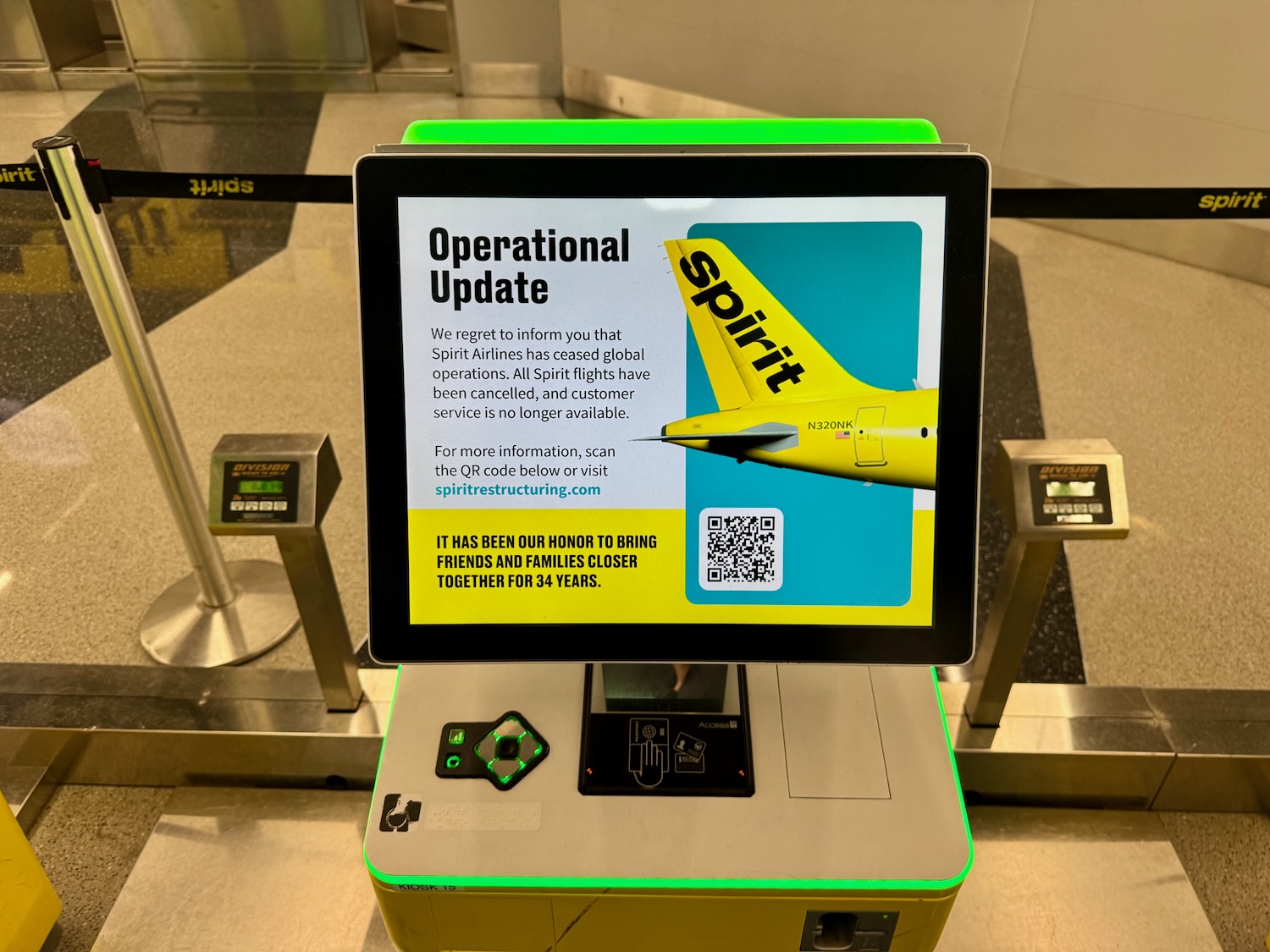
A viral grassroots campaign wants everyday travelers, former employees, and Spirit fans to buy Spirit Airlines and relaunch it as a community-owned “Spirit 2.0.” It is certainly a long shot unlikely ever to come to fruition, but I love the sentiment behind it: not every distressed airline has to be carved up by private equity.
Can The People Really Buy Spirit Airlines?
A grassroots effort to buy Spirit Airlines and relaunch it as “Spirit 2.0” has commenced. The campaign, called Let’s Buy Spirit Air, invites travelers to make non-binding pledges toward a community-owned version of Spirit Airlines.
The basic idea is simple: instead of allowing private equity or larger airlines to pick over Spirit’s remains, passengers, employees, and communities would band together and try to buy the airline themselves.
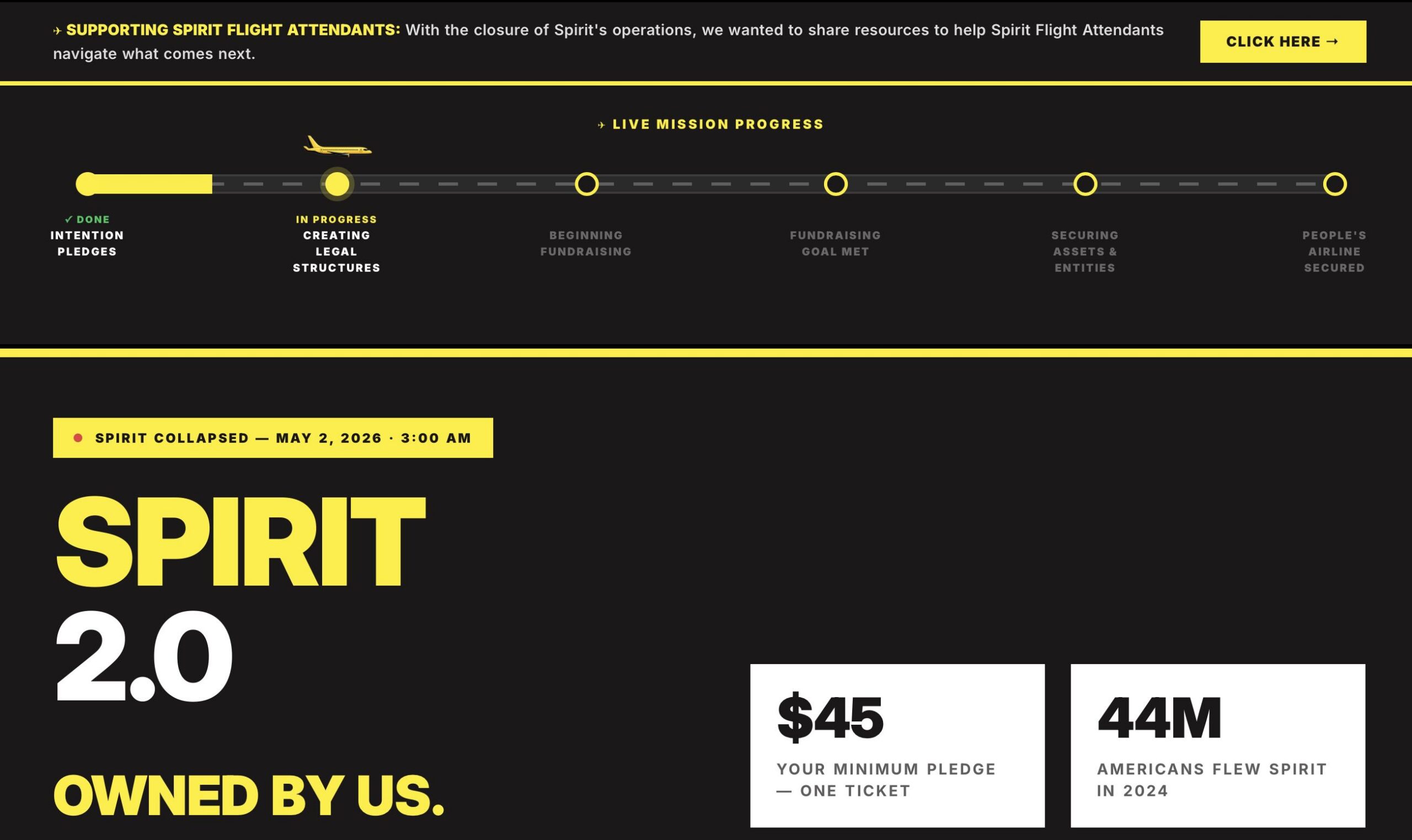
The effort was launched by Hunter Peterson, a voice actor and so-called “Spirit superfan” who posted on social media after Spirit ceased operations. He described the idea as starting almost like a joke before quickly taking on a life of its own. Peterson built the website quickly, and the campaign began collecting non-binding pledges rather than actual money.
The model being invoked is the Green Bay Packers: broad community ownership, one vote per member, and an airline that theoretically answers to passengers, employees, and the communities it serves rather than hedge funds or private equity. The campaign states that people can register intent to contribute starting at $45, but no money moves yet.
The Idea Is Nice, But The Obstacles Are Huge And Reality Makes It Impractical
I love the idea. But the the difference between a pledge campaign is very different than even a GoFundMe drive.
Spirit was not for everyone, but Spirit mattered in terms of opening air travel to more people and forcing competitors to respond. It was mocked endlessly, often deservedly, but many people flew Spirit because it was the only fare that made the trip possible.
Losing that matters, though I must underscore here that the airline was not at all sustainable in its current form. In its final quarter of operation it lost over $300 million!
There is something wonderful about the idea of passengers and employees trying to rescue an airline instead of watching creditors, competitors, and private equity firms divide the carcass. But let’s be realistic.
Buying and relaunching an airline is not like buying a coffee shop or even a sports team. Spirit’s problems were deep: debt, rising fuel costs, failed merger efforts, aircraft constraints, and an ultra-low-cost model that became much harder to sustain. Spirit collapsed with $8.1 billion in debt and the bankruptcy court is likely to favor an asset auction designed to maximize recovery for creditors.
Thus, a community ownership model may be beautiful in theory, but creditors are not sentimental. Aircraft, gates, slots, leases, systems, certificates, employees, and debt obligations are not going to be handed over because the internet likes the idea. If a court can get more value by selling aircraft, gates, and other assets to established players, that will certainly happen.
A people-owned Spirit may be unrealistic, but the demand for a carrier like Spirit is real. The frustration with a system that seems to leave consumers with fewer choices and higher prices is real. The fact that the campaign is not taking money yet makes me more inclined to view it as earnest rather than predatory. It may be naïve and both legally and financially impossible, but it does not appear to be some obvious cash grab at this stage.
But the problem, once again, is that the Spirit Airlines model no longer works…facility and labor costs are too high in the USA for a low-cost model to work. How does it work so well in Europe? Look how little employees are paid…
CONCLUSION
The viral “Let’s Buy Spirit Air” campaign is certain to fail: buying a failed airline out of bankruptcy, relaunching it, satisfying creditors, securing regulatory approvals, and building a sustainable business model is practically insurmountable.
Still, I do love the sentiment. If every struggling low-cost carrier disappears, passengers will pay the price. But maybe that is necessary at this point considering how much money the so-called “ultra-low-cost” industry continues to lose? The cheap fares were have enjoyed on Spirit were propped up by investors losing money. I’d hate for everyday folks to lose their shirts on a business model that simply is unsustainable.



Shut up and take my money!!!
“A people-owned Spirit may be unrealistic, but the demand for a carrier like Spirit is real.”
Yes it is. Just as there is demand for a five cent cigar, a ten cent Coke in returnable bottles, and the buffet at Las Vegas casinos.
There will always be a demand for things that are subsidized by others.
In the case of Spirit Airlines, their tickets were subsidized by lenders, suppliers, employees, and the taxpayers of Florida which subsidized their headquarters and operations center.
LOL…at least somebody else ‘gets it’!