
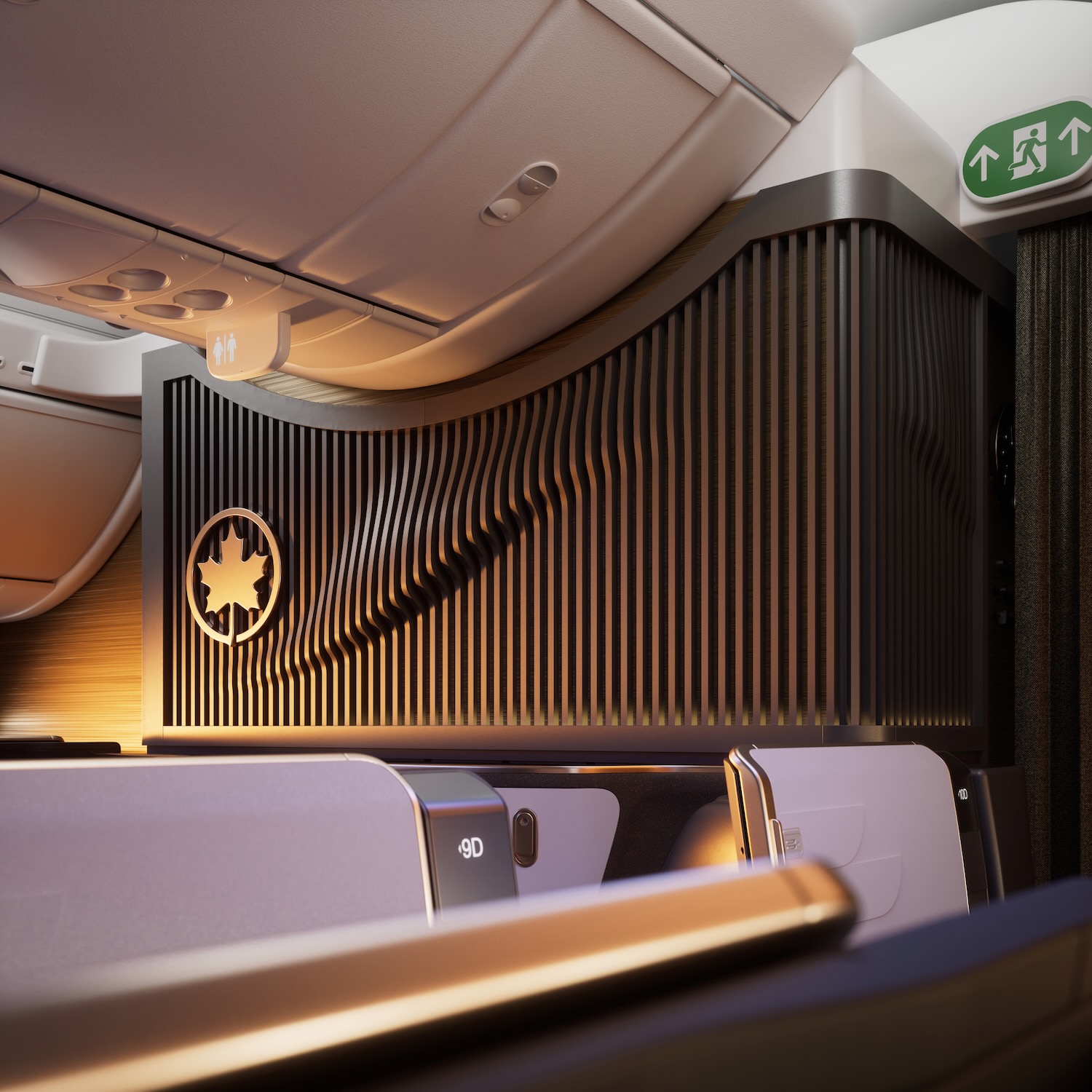
Air Canada has unveiled a new generation of cabins, including updated business class seats on both the Airbus A321XLR and Boeing 787-10. While the seats themselves are not unique, the attention to detail will set these products apart, at least according to Air Canada’s Chief Operator Officer.
Air Canada Unveils New Business Class Suites And Next-Generation Cabins
Air Canada has revealed its new “Glowing Hearted” cabin concept, which will debut on upcoming Airbus A321XLR and Boeing 787-10 aircraft. The update includes new business class seats, upgraded premium economy on the Dreamliner, and improved economy cabins.
Mark Nasr, Executive Vice President and Chief Operations Officer at Air Canada, explained:
“This investment is about fundamentally redefining the experience of flying with Air Canada. From the moment of stepping on board, we’re setting a new standard for how Canadians and the world connect with our brand. Details matter: we listened closely to feedback and challenged ourselves to create an experience defined by a strong Canadian sense of place, alongside a commitment to craftsmanship, functionality, and long-term durability. This investment in the care and comfort of our customers is a key element of our New Frontiers growth strategy to become one of the world’s leading airlines.”
Let’s start with the 787-10.
New Business Class On Air Canada Boeing 787-10
Air Canada will introduce a new Boeing 787-10 business class seat based on the Adient Ascent platform, the same general platform now being used by several carriers including United and American.
This is a reverse herringbone seat with doors, and include:
- Suite doors
- 4K OLED screens
- Bluetooth audio
- A/C power, USB-C, and USB-A
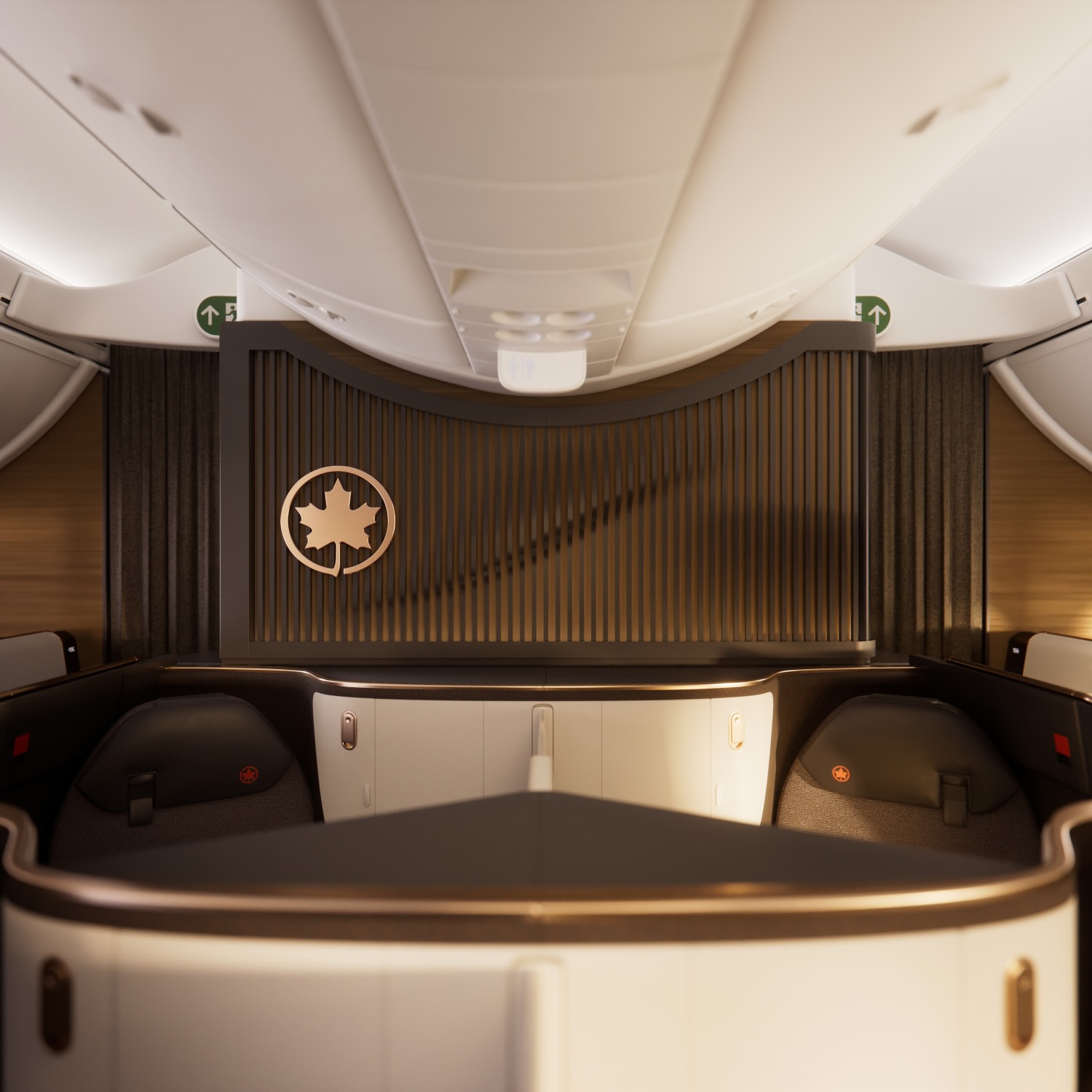
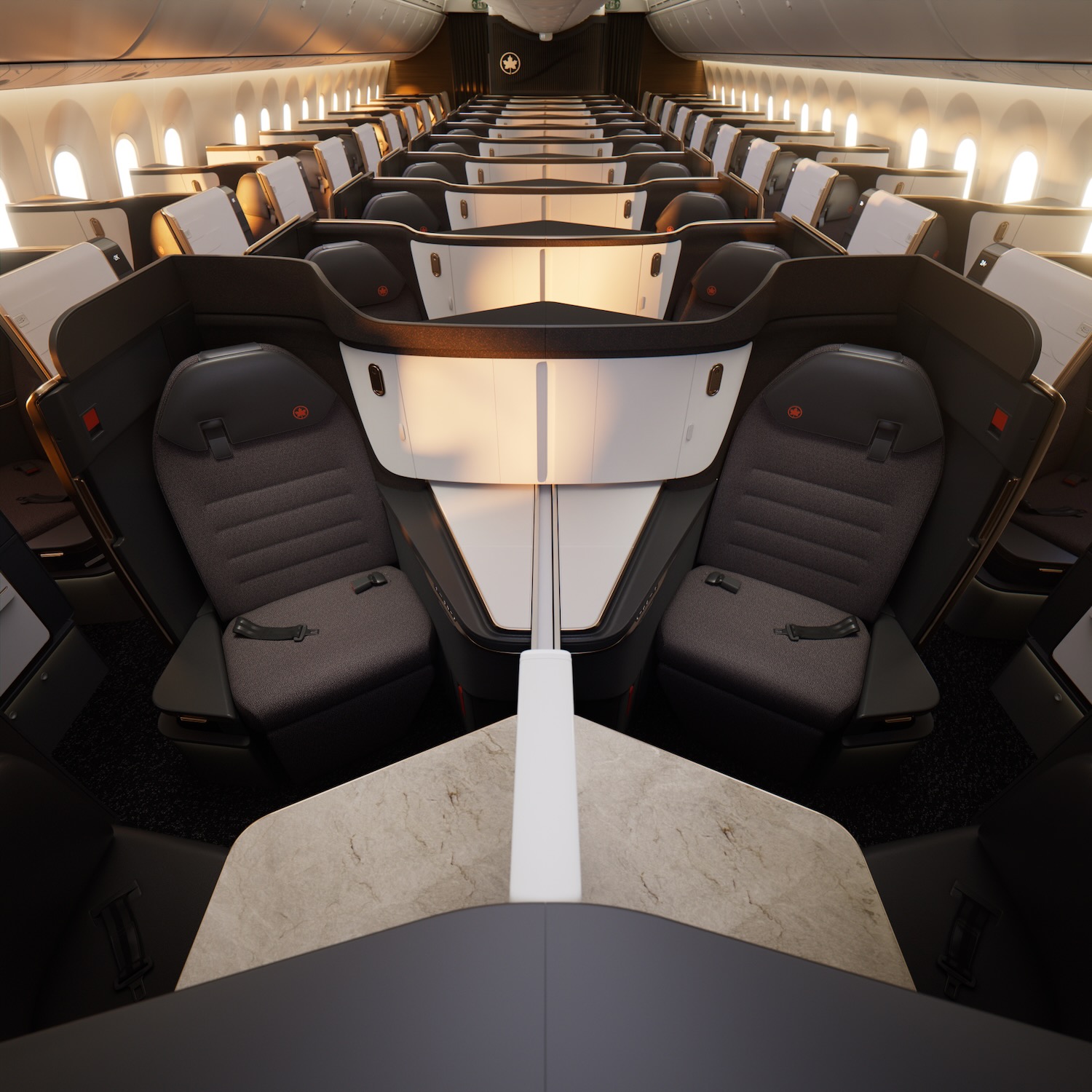
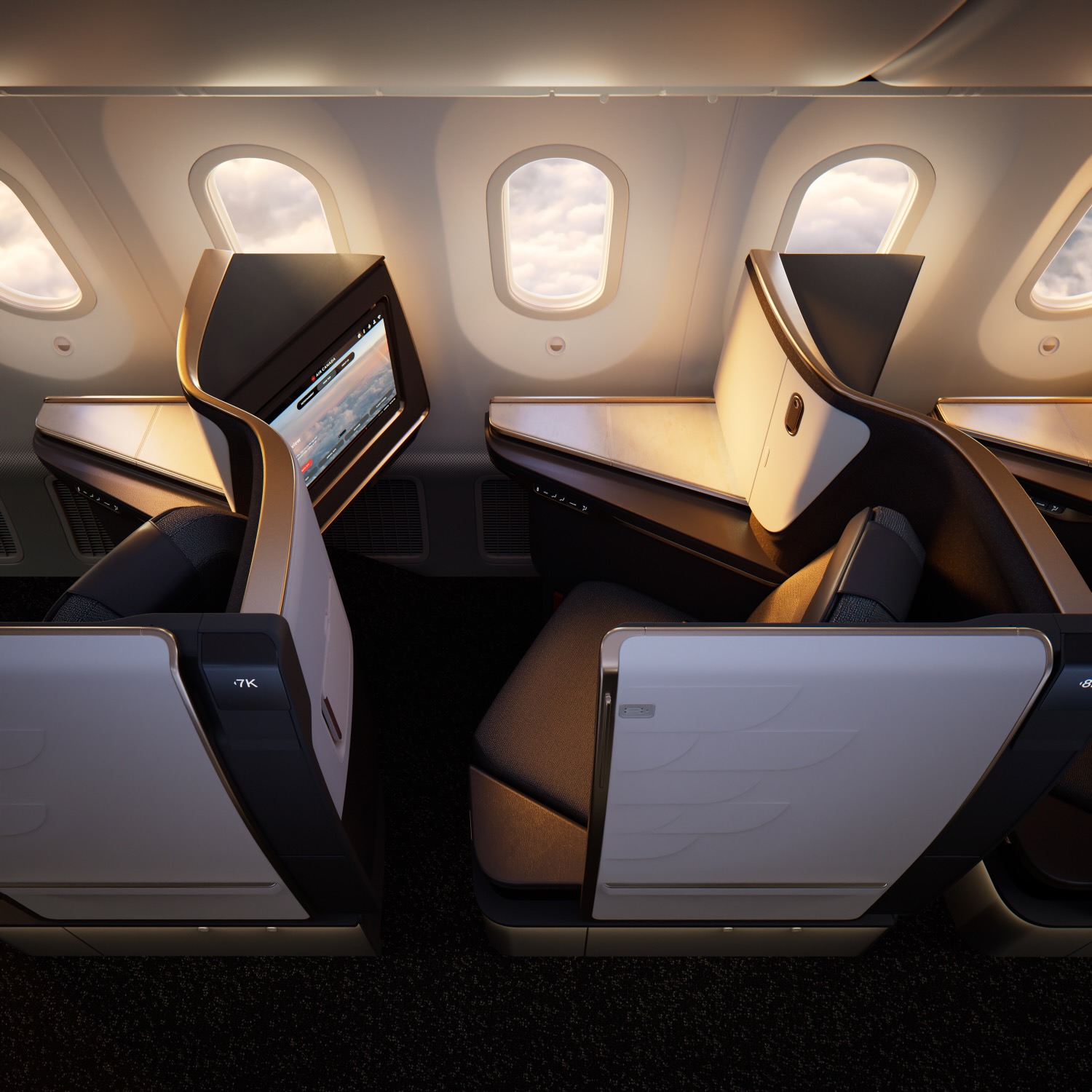

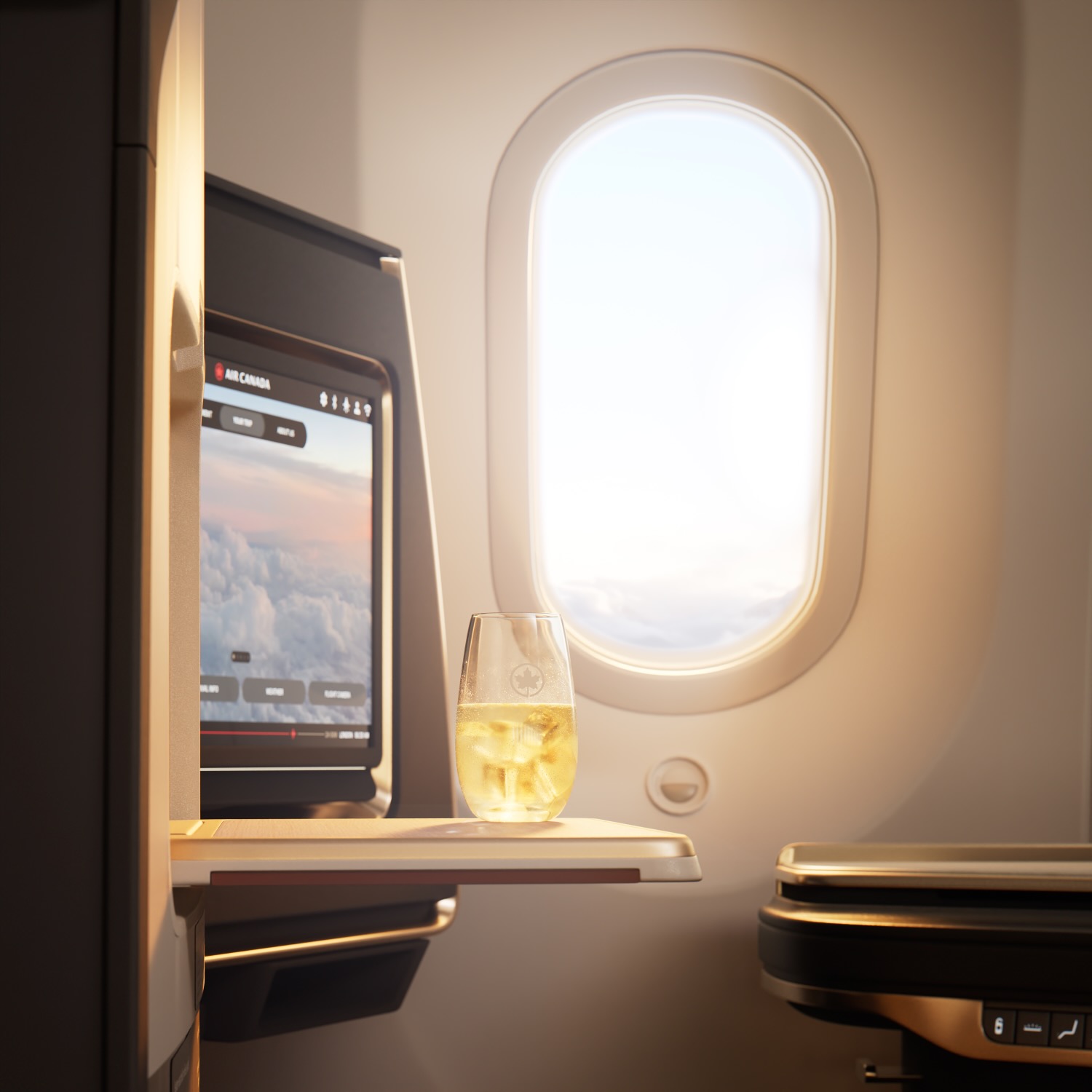
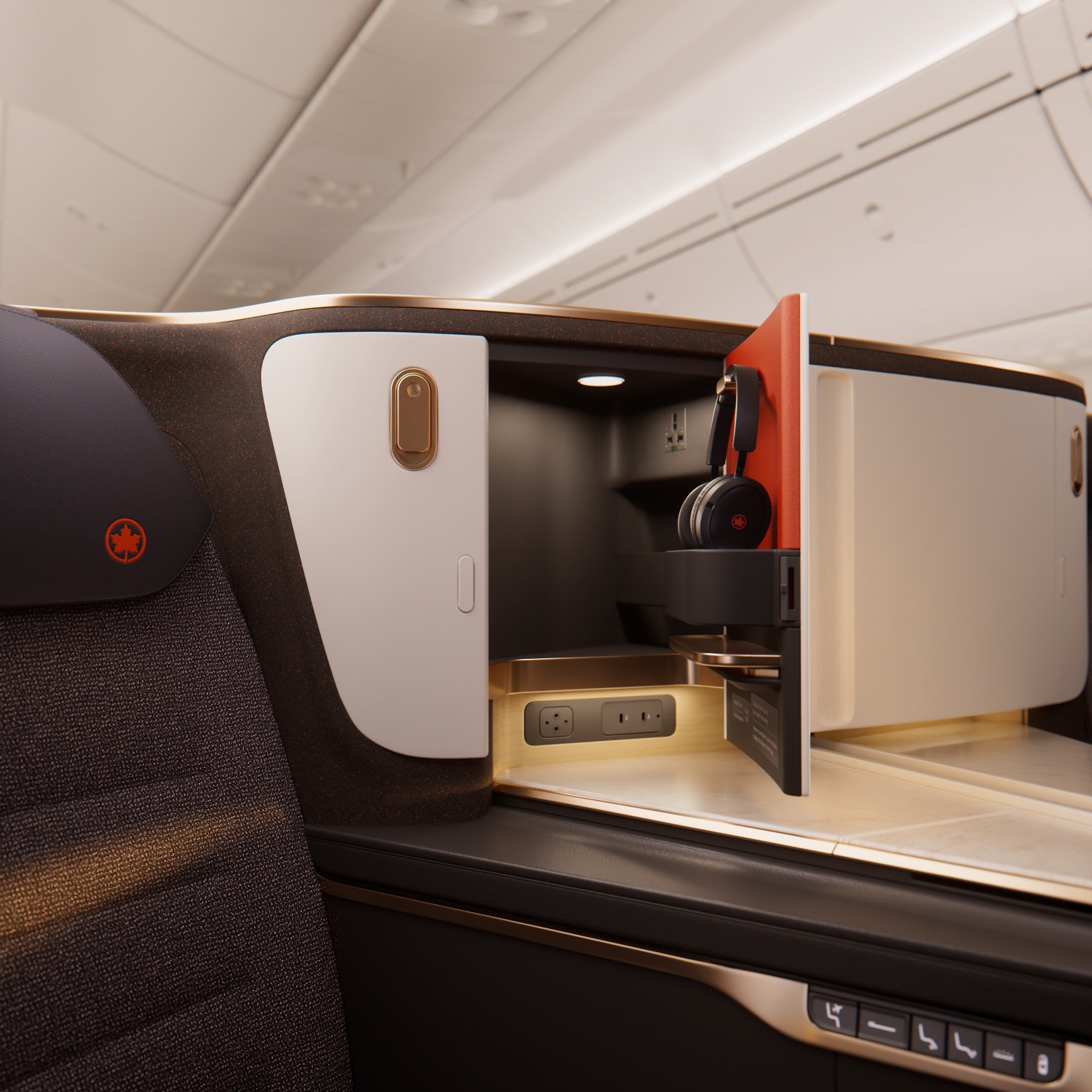
Air Canada will also introduce a new “Signature Plus” concept at the front of the cabin, with four larger suites designed for couples traveling together, including a companion dining setup….a similar concept to the United Polaris Studio and American Flagship Preferred on their new Dreamliners. These will have 27 inch screens and beds that are 6 foot, 5 inches in lie-flat mode.

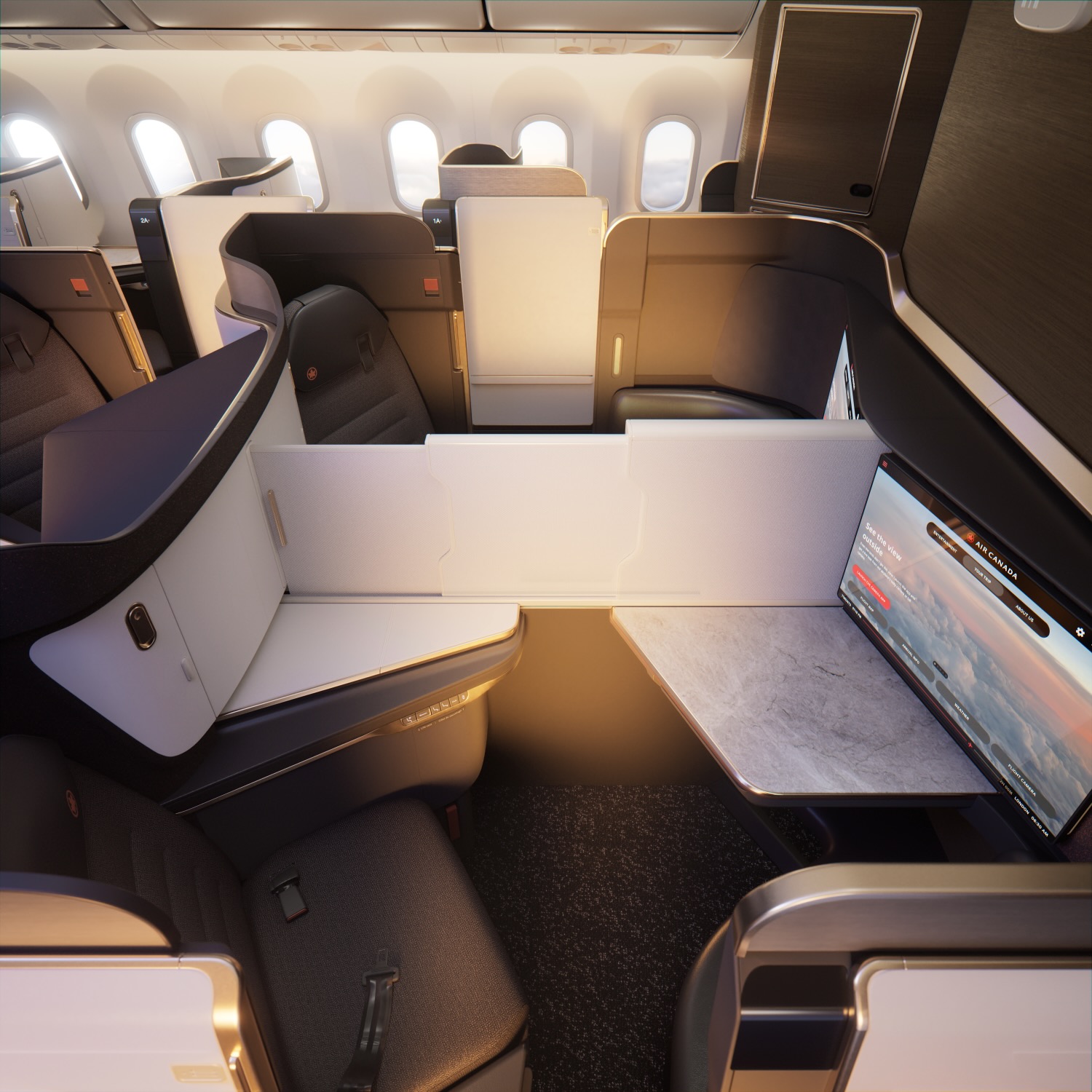
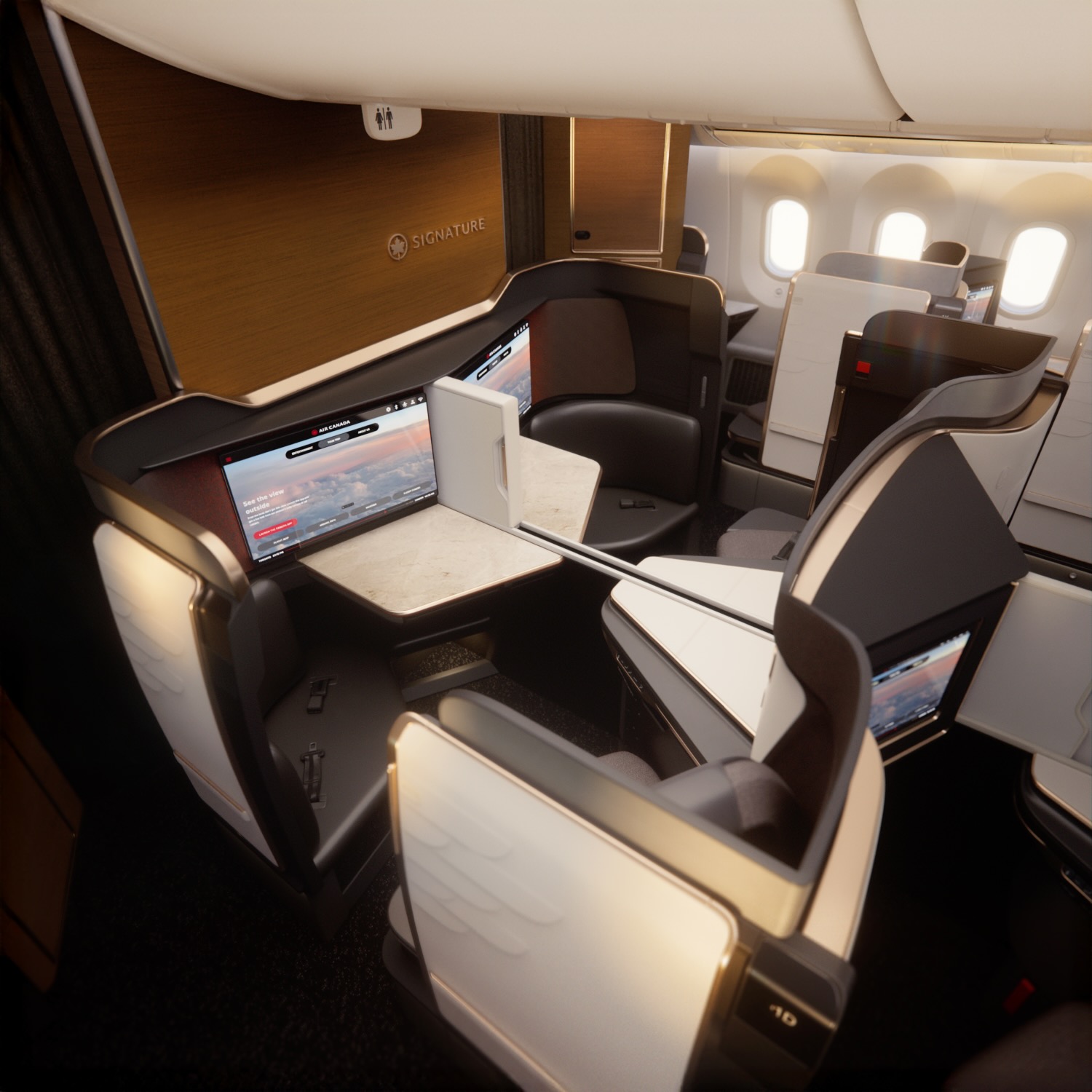
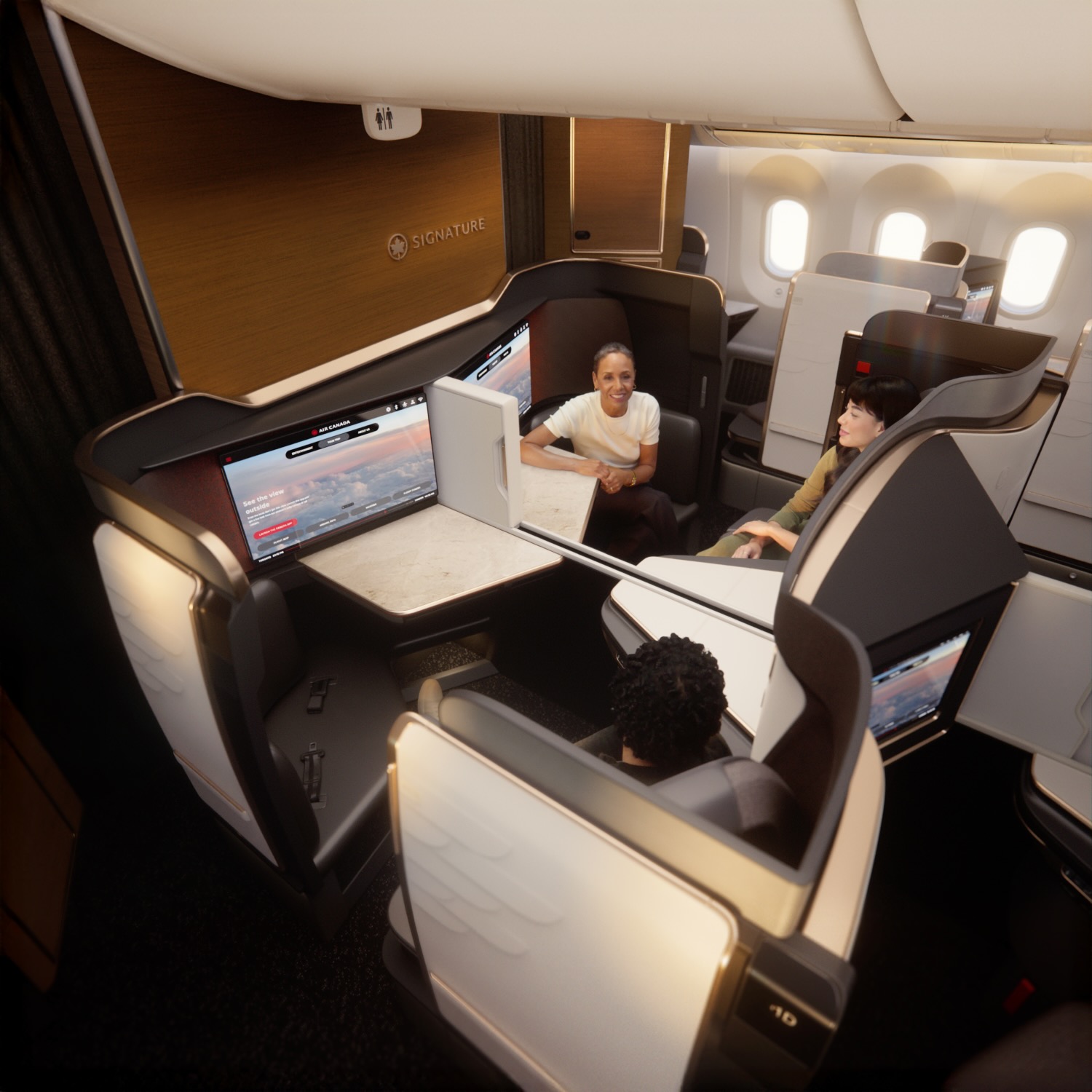
The 787-10 will feature 332 seats, including:
- 42 business class seats (that includes the four “Signature Plus” seats)
- 28 premium economy class seats
- 262 economy class seats
More on premium economy and economy below. The 787-10 is expected to enter service in late 2026.
New Business Class On Air Canada Airbus A321XLR
Air Canada will install 14 lie-flat seats on the Airbus A321XLR, marking the first time the airline has offered a true longhaul-style business class product on a single-aisle aircraft.
The seat is based on the Collins Aerospace Aurora platform, with a herringbone layout (same as the American Airlines A321XLR).

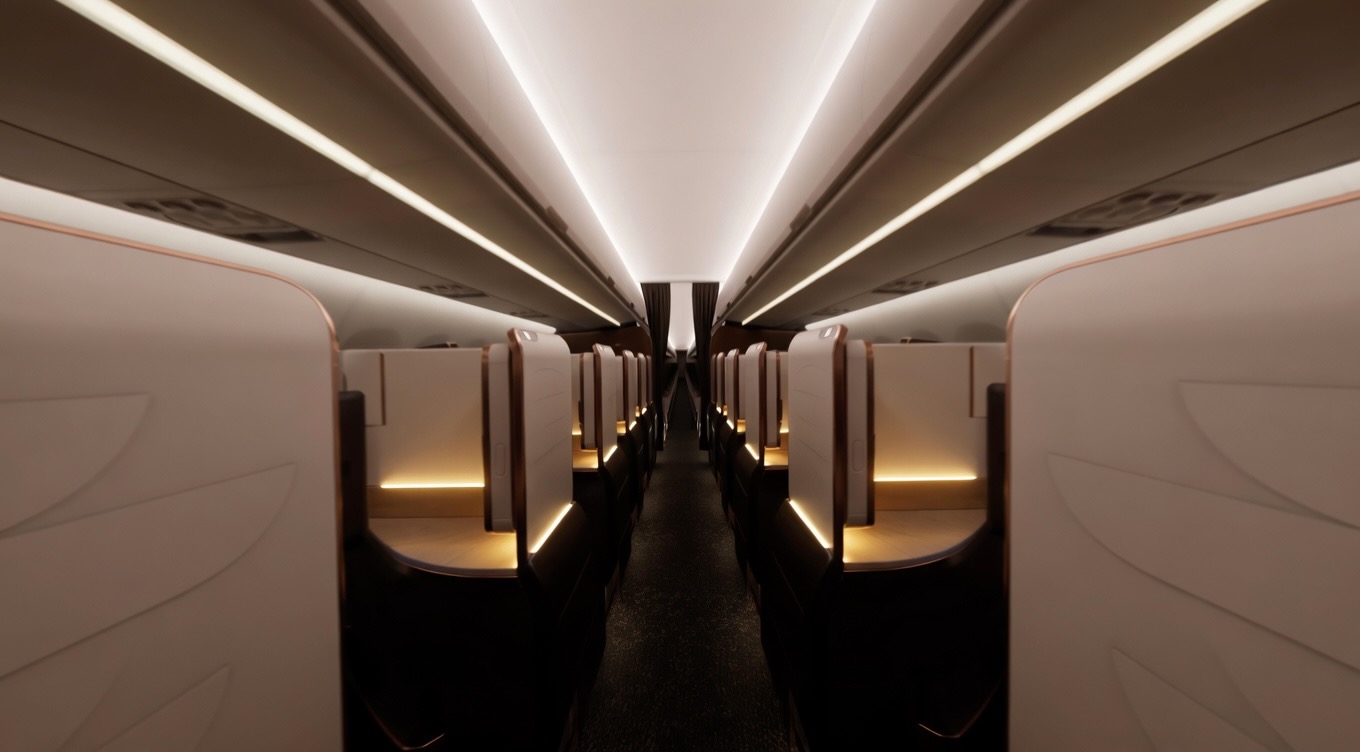
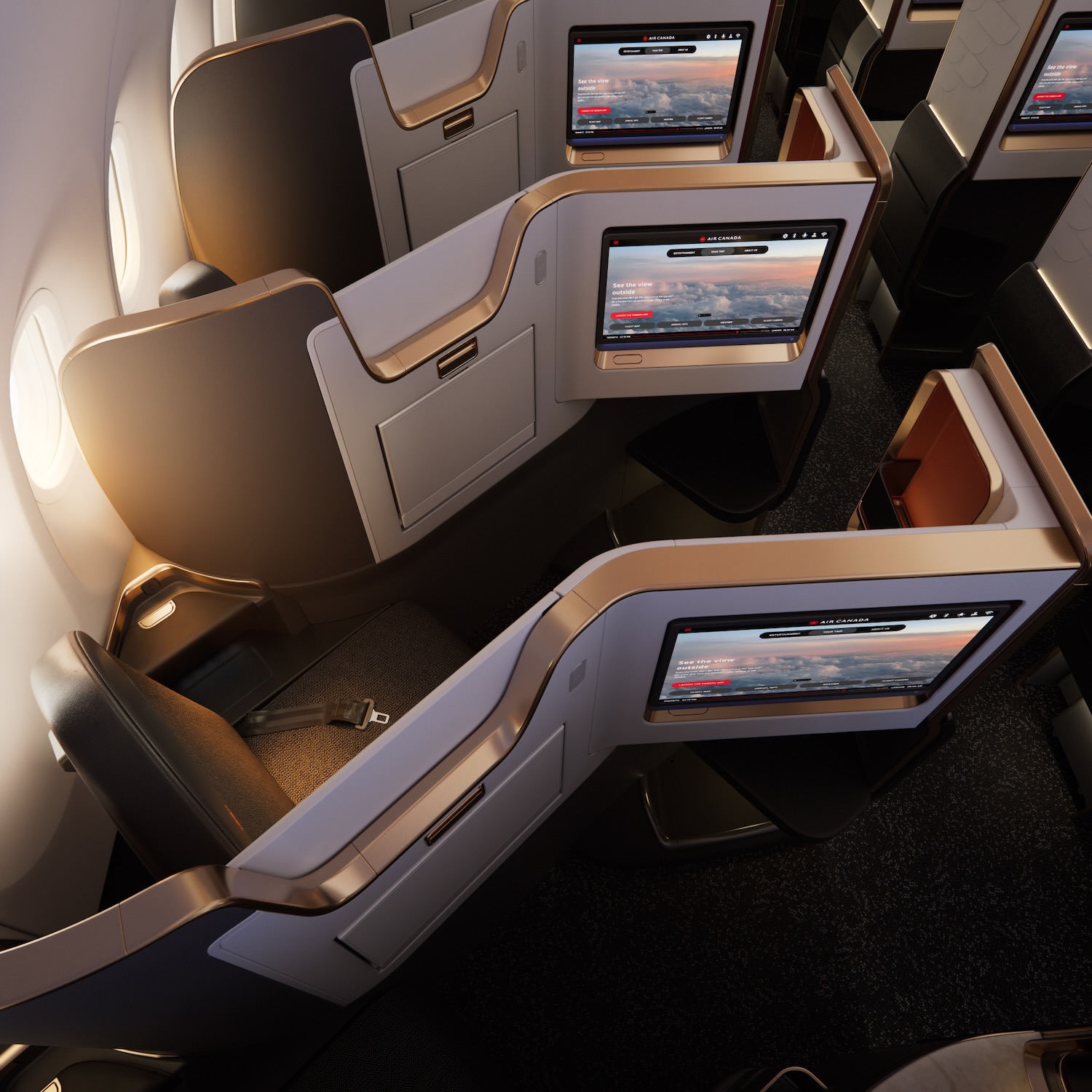
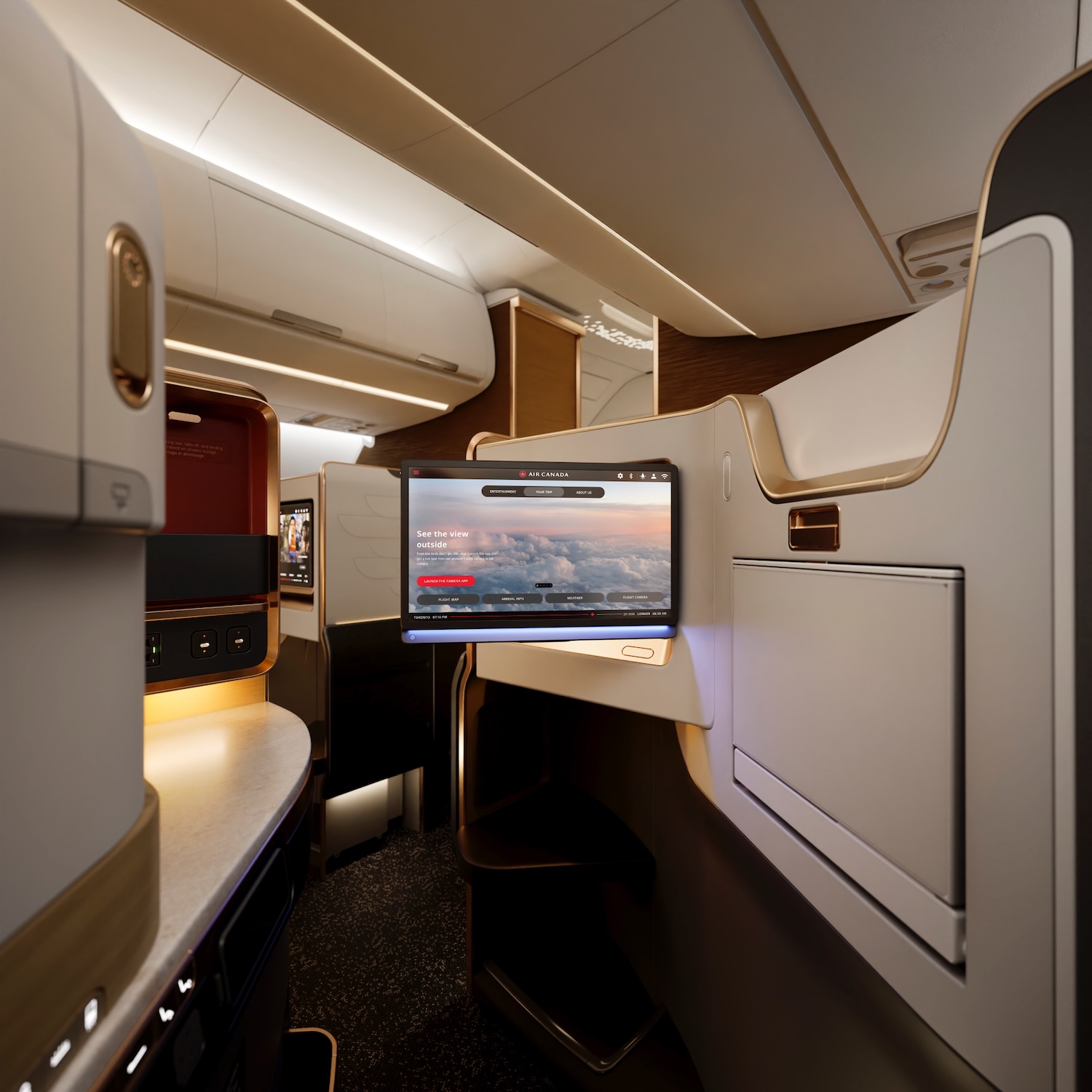
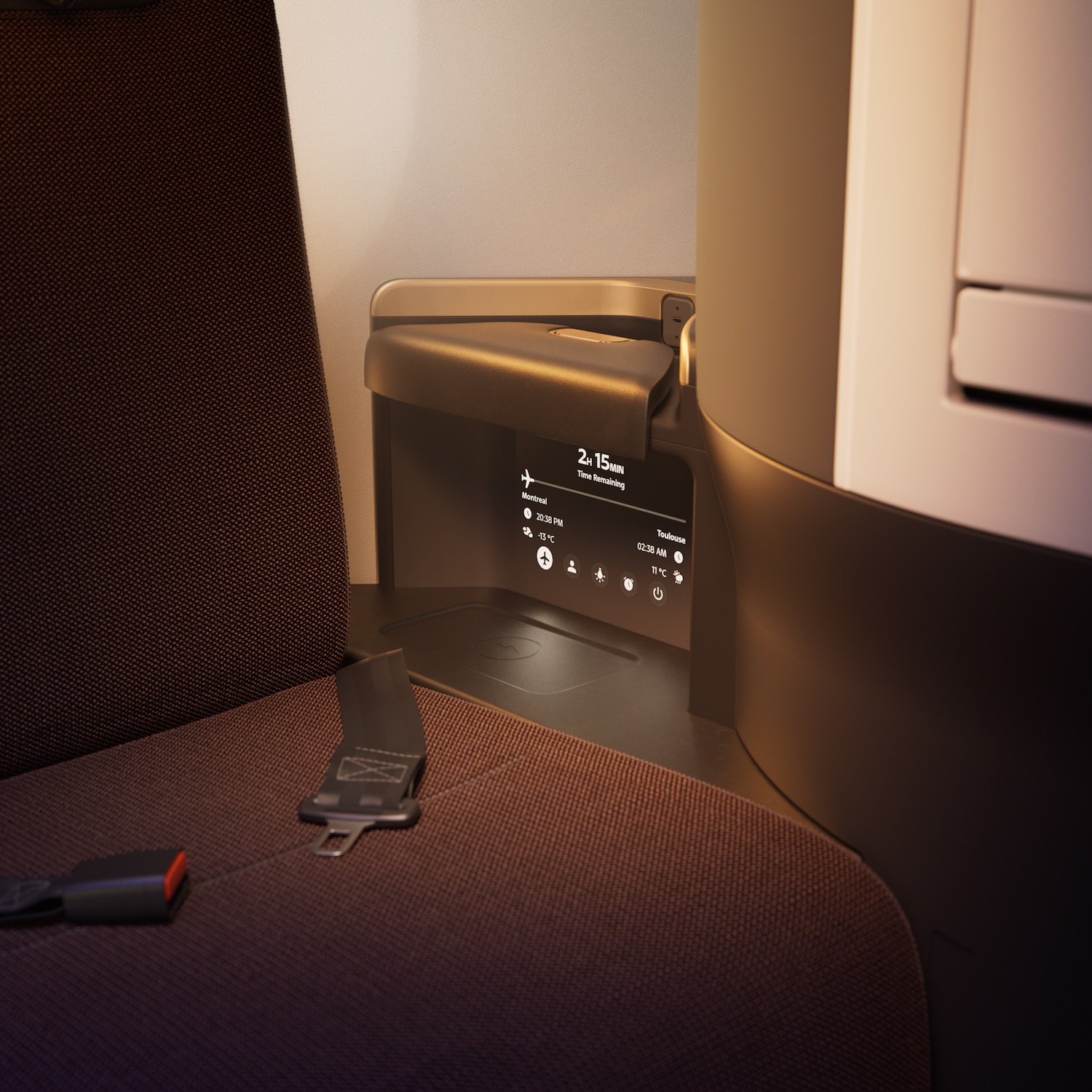
Notably, Air Canada is not installing doors here.
That is a deliberate choice. Instead of chasing maximum privacy, the airline has opted for a more open cabin feel, which Nasr argues should reduce the claustrophobic effect some feel on narrowbody aircraft with high walls and doors.
This is one of the more thoughtful decisions in this entire rollout and the lack of doors apparently allow for a longer bed and wider aisle…which, as someone who thinks doors are a gimmick, seems like an excellent tradeoff.
> Read More: Business Class Doors Are Just An Unnecessary Gimmick
The A321XLR will feature 182 seats, including:
- 14 business class seats
- 168 economy class seats
It will enter service in May 2026.
Upgrades Across Premium Economy And Economy
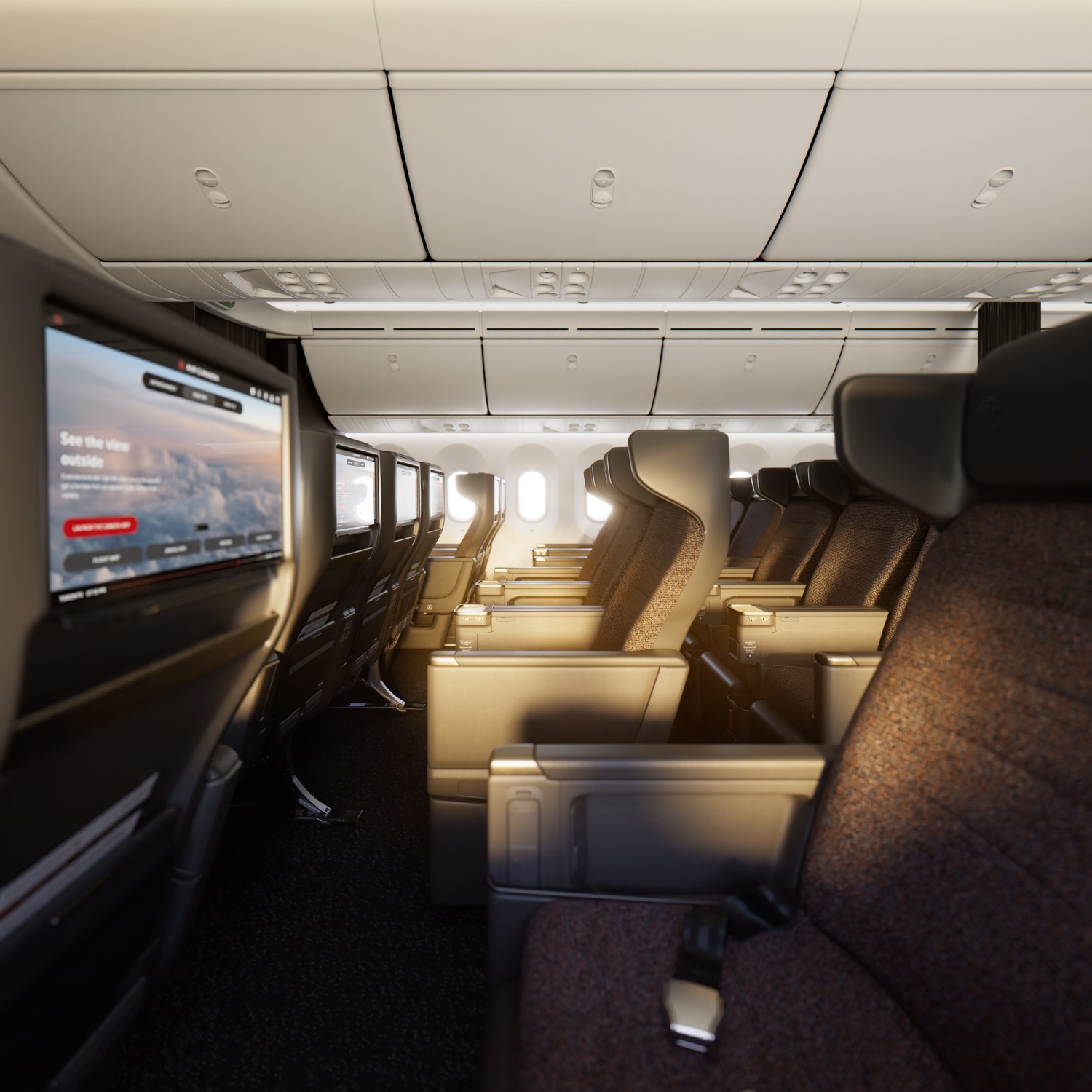
Air Canada is refreshing all cabins on both the 787-10 and A321XLR.
Across the aircraft, passengers can expect:
- 4K OLED screens in all cabins
- Bluetooth audio connectivity
- “high-powered” USB-C and AC power at every seat (I love that Air Canada emphasizes that USB-C ports will be able to charge laptop computers)
- New ergonomic seating (I feel like we always hear that, but the coach seats of today are much less comfortable than the well-padded coach seats of yesteryear)


Premium economy will also see the addition of privacy wings on the 787-10, but the A321XLR will not offer premium economy (unlike on American and United), with Air Canada not seeing a business class to install one.

Updated Onboard Service
In addition to this new hard product, Air Canada plans a refreshed soft product onboard as well:
To be unveiled later this year, the end-to-end hospitality experience will be distinctly Canadian and include upgraded service, food and beverage elements and elevated amenities.
I guess I don’t fly Air Canada enough to grow bored of the parsley omelet that hasn’t changed in 30 years, but I quite like the food on Air Canada…I hope AC does not overthink it and does not remove one of the greatest innovations to economy class dining.
> Read More: Air Canada’s Genius Meal Service Concept
Part of the “refresh” onboard will include easier Wi-Fi access (Air Canada is installing Starlink across its fleet) and an updated and expanded pre-order menu for business class passengers, with a focus on Canadian-inspired dishes and ingredients.
Retrofits Coming To Other Jets
Air Canada is also “upgrading the interiors on other fleets.” While Air Canada specially mentions the Airbus A320 and A321 moving to mainline and the Boeing 737 MAX moving to Rouge, its leisure subsidiary, per VFTW, the existing 787-9 and potentially the 777 fleet will be retrofitted with “Glowing Hearted” cabins while the A330 will not (it will maintain reverser herringbone seats which are still quite competitive).
My Take
The new cabins look great and the widebody product is exactly where it needs to be to remain competitive. The narrowbody product is interesting because of how Air Canada has resisted the urge to “over-engineer” the space. I look forward to trying it and seeing if the cabin feels more spacious without doors and lower partitions between seats.
Design-wise, Air Canada is leaning heavily into a “Canadian aesthetic” (whatever that even means), with wood accents and neutral tones. Based on the renderings, I love the cabin finishes and as much as I love PriestmanGoode, I think these cabins look sharper than the United 787-9 cabins (designed by PriestmanGoode, which is a rockstar in this industry).
The biggest takeaway is not the seats themselves, but the attention to detail. Air Canada appears to have thought carefully about how these cabins will actually feel in practice, not just how they look in renderings, which is sometimes a stab in the dark but here seems very carefully considered by Nasr and his team.
CONCLUSION
Air Canada’s new cabins look very good. They are not groundbreaking, but they do not need to be.
At this point, business class has largely converged. The differences come down to execution, finishes, and the small details that shape the experience like the soft product, which Air Canada will also update later this year.
The new 787-10 suites will keep it competitive, while the A321XLR may make transborder connections on Air Canada a far more pleasant experience for U.S. travelers.





Lovely. We need more lie-flat on narrow-bodies. Consumers looking for premium are not interested in recliners for redeyes or 5+ hour flights. Well done, Air Canada. They join AA, B6, and UA with lie-flat on newer a321. Delta is an outlier (in a bad way); they were trying for lie-flat, but reverted to recliners. Tim can explain why they gave up (but don’t believe him when he says ‘actually, it’s a good thing.’)
As a frequent AC flyer, I have to say I love what I see here and look forward to experiencing it in the flesh. Funny comment on the parsley omelette. I was flying YUL-LHR in March and naively asked the flight attendant what was for breakfast and we had a good chuckle when she said: “you mean, other than the same parsley omelette that we’ve been serving for at least ten years? Classic.
AC continues to “fly the flag” with grace.
Great write-up, Matthew! I’m particularly interested in the Starlink integration Air Canada is rolling out. As someone who often has to manage travel bookings or check financial updates mid-flight, do you know if their new Wi-Fi infrastructure provides enough security for handling sensitive transactions, or should we still rely heavily on VPNs? I’ve been reading some regional tech compliance reviews lately, like the ones at https://guiade20betchile.com, which discuss digital security and licensed platform integrity, and it made me wonder how much the airline handles on the backend to protect passenger data during live connectivity. Would love to hear your take on whether these “next-gen” cabins include enhanced cyber-security measures for the IFE screens too.