
Florida’s cruise dominance was supposed to be permanent. Then Royal Caribbean’s flagship (world’s largest), Icon of the Seas, sails from Galveston in 2027.
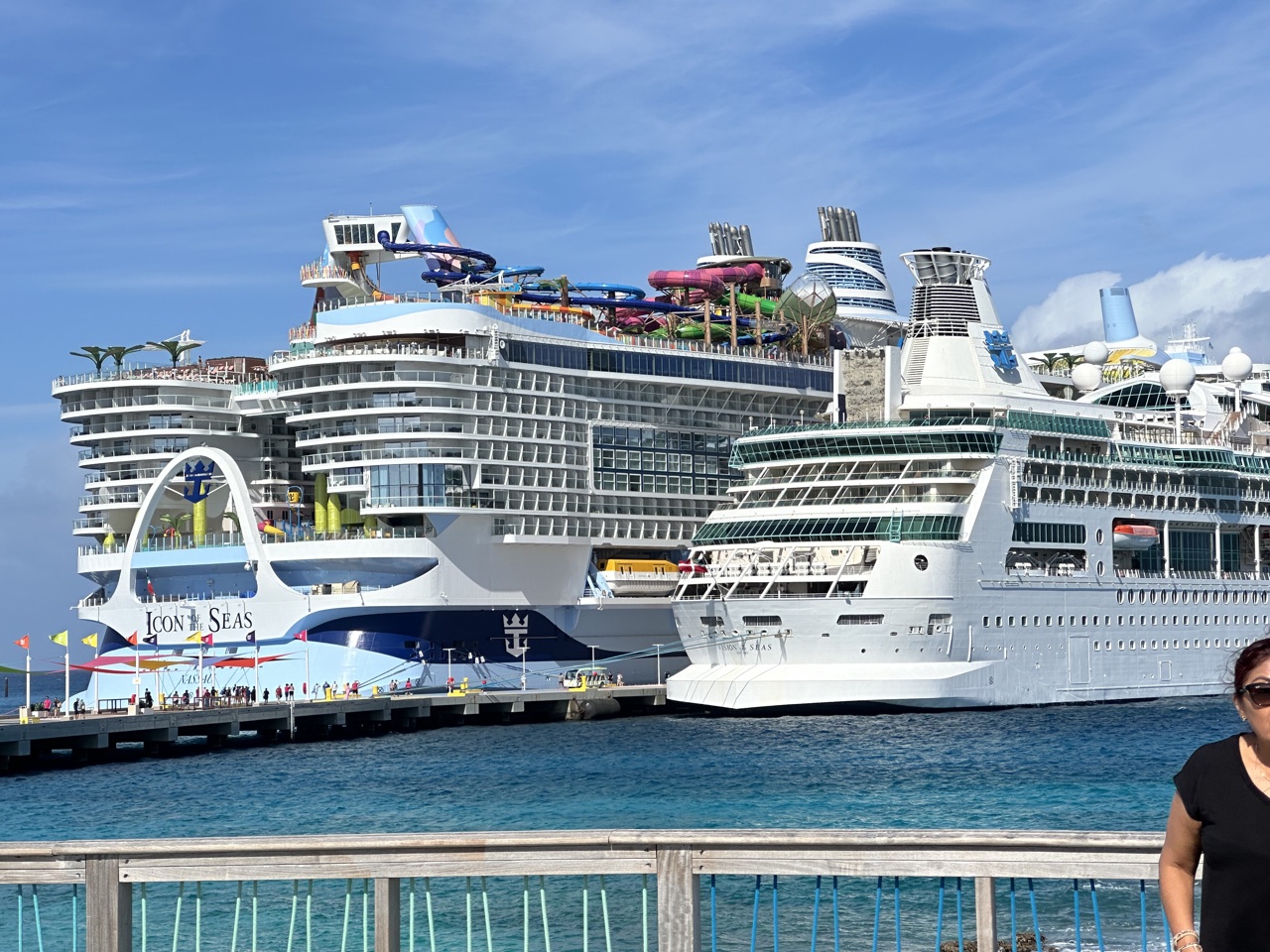
Icon Of The Seas Is Moving To Galveston, Not Florida.
Florida has owned cruise homeporting for forty years. PortMiami, Port Canaveral, Port Everglades, the geographic and infrastructure case was so overwhelming that “cruising from Texas” has been seen as an “also ran.” Galveston was a Carnival outpost, Disney occasionally sailed from Texas as well, but it was typically the place where older ships that couldn’t hold a premium went to die.
That is no longer the case. The Port of Galveston just approved a $2.4 billion, 20-year master plan with a stated goal of becoming the third-largest cruise homeport on Earth. And the proof point landed last November when Royal Caribbean announced that Icon of the Seas, its flagship, and the largest cruise ship in the world will move to Galveston in August 2027 for a full slate of 6, 7, and 8-night Western Caribbean itineraries.
Icon only launched a couple of years ago and is one the most impressive contemporary vessels with 7,600 travelers onboard. I sent my parents on the launch voyage.
Why The Shift?
It’s a dramatic change to go from Miami to Galveston. The Port of Miami is 8-9 miles from Miami International Airport and just a 15-30 minute drive dependent on traffic and time of day. Galveston is 48-70 miles from Houston airports George Bush Intercontinental or Houston Hobby and 50-90 minutes by car.
This is a statement move and likely in partnership with the city of Galveston, state of Texas, and cruise port initiatives. But it’s not just out of goodwill or even tax and fee incentives, though that likely plays a part. Royal deploys ships where demand is overwhelming and the port infrastructure can handle a ship that size. It’s betting that Texas can fill 7,600 staterooms a week, year-round, at premium pricing, and that Galveston’s port can berth, fuel, provision, and turn around the largest ship in the world in a single port day.
The confidence to move its most visible asset (over a billion dollars) into a market that has not traditionally captured premium travel spend for the sector is a huge gamble. But if it works, it opens up a new market, frees a dock at Miami, and makes Royal an anchor tenant (pun intended.)
The $2.4 Billion Plan Was Built To Catch Exactly This Moment
The Port of Galveston master plan, approved in early April, lays out a 20-year build cycle: a fifth cruise terminal opening in 2028, a sixth in the mid-2030s, a seventh between 2040 and 2045. The port already operates four cruise terminals with Terminal 16, the newest at $156 million, recently opened in November and immediately welcomed MSC Cruises as Galveston’s fourth cruise line.
The port’s 2026 projection is 445 sailings and 3.9 million passenger movements, which already makes it the fourth-busiest cruise homeport in the United States. The port’s 2030 projection is five million passengers. By 2045 projection is over ten million. Those numbers, even discounted heavily for typical port-authority optimism, would put Galveston ahead of Port Canaveral (Orlando) and within striking distance of Port Miami inside 15 years.
Why Texas, And Why Now?
Three structural forces are converging.
First: Drive market. Cruise lines have spent the post-2020 era obsessing over drive-to homeports, passengers who can reach the ship by car and skip the air booking. It makes cruisers more likely to return and more frequently and frees budget that might be used to fly travelers up for spending more onboard (though gas and parking still eat into that budget.) Galveston is within an 8-hour drive of roughly 65 million people across Texas, Oklahoma, Arkansas, Louisiana, and the Mississippi River corridor. PortMiami’s drive market is smaller. Port Canaveral’s is smaller still.
Second: Airlift normalization. The proliferation of nonstop service from interior US cities to Houston Intercontinental and Dallas-Fort Worth has erased one of the historic disadvantages of Texas homeporting. A passenger from Denver, Minneapolis, or Salt Lake can now reach Galveston as easily as Fort Lauderdale (though Spirit’s death just made this slightly harder) or Miami, often more cheaply.
Third: Florida saturation and political risk. PortMiami and Port Everglades are at or near pier capacity for mega-ships. Permitting is slow, environmental review is contentious, and the political environment around the cruise industry in Florida has been increasingly volatile for years now. Galveston offers space, willing infrastructure investment, and a state government that treats the cruise industry as an asset rather than a controversy. That opinion may change if it overtakes PortMiami, but what makes this unique is that Miami is a destination unto itself already, even without the cruise business, adding mega ships further constrains the infrastructure it shares with the beach, events, and business. Galveston is not Houston and will be better suited to tailor aspects of its economy for the shift.
The Real Story Is Not That Texas Got A Big Ship. The Real Story Is The Map.
Florida will remain the cruise capital for the foreseeable future. But Texas is making a serious push and Royal Caribbean is meeting that effort. Icon as an anchor will delivery more resources and draw to the port and potentially open a new market for both. However, even more marquee shifts are needed. The port may also consider incentives not only for newer ships but make it less comfortable for older vessels that reduce premium appeal. Still, sailing from PortMiami or spending a few extra nights in Magic City will hold more appeal than Galveston. But that could change.
What do you think about Royal Caribbean moving its significant asset, Icon of the Seas, to Galveston?






Let’s note that RCI’s Icon of the Seas is the largest cruise ship in the world by gross tonnage (248,663), a title also held by sister ship Star of the Seas.
Until they have a totally isolated section for premium passengers like MSC Yacht Club, I wouldn’t be caught dead on board a Royal Caribbean cruise.
You can just skip “Royal Caribbean”for me and say I’ll never be caught on a cruise.
I’ll never understand the attraction of cruises to anyone under 70. The financial math never makes sense and I see these saps getting off at a port and run around trying to fit everything in before the ship leaves. They are so easy to spot. “But, but, but I went to 3 islands and saw a comedian”.
It’s an easy way the middle class never gets ahead when they realize how much they ended up spending on their “cheap” cruise.
I used to think like you, but totally changed my mind after my first cruise:
https://liveandletsfly.com/explora-cruise-report/
The prosperous and prompting Explora Journeys … Owned by MSC, the world’s largest container shipping company by both fleet size and cargo capacity,
which is why I’d only sail in Yacht club, the closest to the old first class sections on ocean liners
meh. part of the fun for me is people watching. if I don’t like the dining room experience, I can book reservations at the restaurants, or get room service and not feel like I’m being rushed through meals. if I want seclusion, there’s plenty of options without having to get crazy with spending.
a cruise is not really a way to go see places in the world. it’s a relaxation. entertainment if you want, or just eat and lounge if you want.
people who want to use a cruise as a way to explore the world, no, that’s not a good fit. just book at a location and explore.
but if you want to sit at a pool for a few days, not worry about making arrangements for breakfast, lunch and dinner, people watch, do some light shopping at random ports of call where you can catch some of the local flair, and maybe catch a comedian, well, a cruise might be for you.
For the maritime enthusiasts, the current position of ICON OF THE SEAS is at Gulf of Mexico reported 14 minutes ago by AIS. The giant vessel is en route to the port of Costa Maya, Mexico, sailing at a speed of 18.8 kn (35 km/h | 22 mph) and expected to arrive there on May 4.
As some know, Texas has experienced a “cruise boom,” and the Port of Galveston acts as a key, underserved hub for the central U.S., reducing the need for guests to travel to Florida.
RCI should also send the Star of the Seas to the Lone Star State!
For maritime enthusiasts again → The ship visible to the right of the RCI “Icon of the Seas” in the article photo is the RCI “Vision of the Seas”, which is ideal for cruisers seeking a relaxing, scenic journey with the amenities of a larger cruise line in a more manageable, smaller setting.
Matthew – What’s the daily rate to buy bots like Güntürk Üstün for comments?
You think the good doctor is a bot? For what possible reason would anyone waste their time? He’s never tried to spam me with links or anything like that. I don’t need to buy comments.
Is this a ‘bit’?
A “bit” in the Phil Hendrie style?
My friend went to the Dickens festival last year in Galveston. It seemed like great fun and this Decemberi I wanted to join in. However trying to find a short cruise itinerary that matches the dates is impossible. I wish festivals and cruise lines would consider match ups!
Dodge Island can only handle so much, particularly with freight. Look at a map of the Miami coastline in the are and you’ll see that expansion options are somewhere between slim and none.
If you consider the drive market an 8 hour drive, how could Port Canaveral be smaller than Port Miami? If you are 8 hours north of Miami, you are laterally passing Port Canaveral on the way there and there is nothing within an 8 hour drive of Miami, south or west, that isn’t also within an 8 hour drive of Canaveral.
Icon moving to Galveston isn’t a sign that Florida is less of a cruise port location. Icon is the oldest of the class which already includes Star of the Seas and Legend of the Seas, with Hero of the Seas and two as yet unnamed on contract