
Delta now earns more from premium than in coach, and United and American keep pouring seats into premium economy. The back of the plane is shrinking.
Premium Economy Is Carrying The Industry
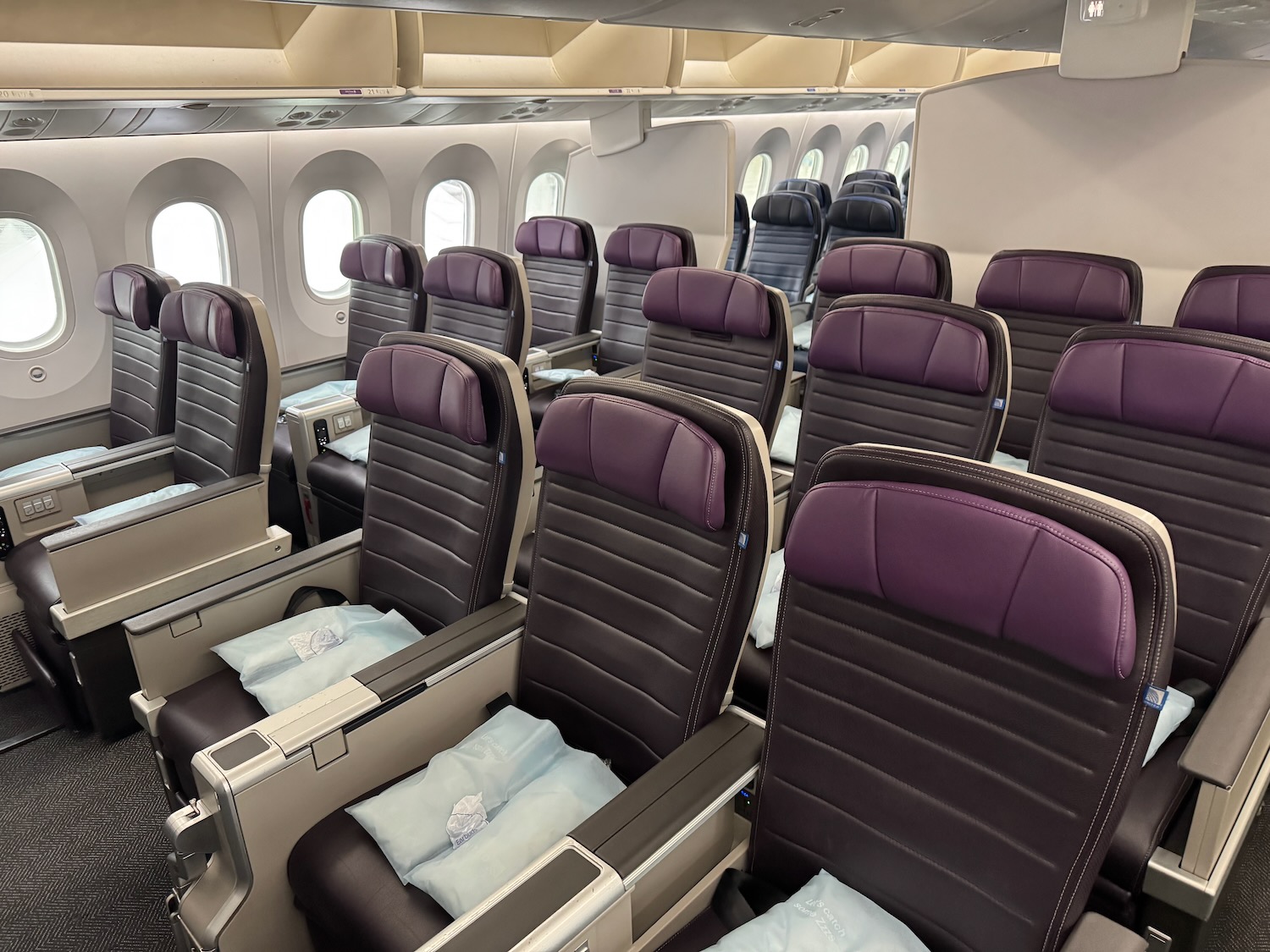
For years the cabin between coach and business class was an afterthought, a few rows with a wider seat and a footrest. Airlines were wise to experiment as they have with more room in coach, better IFE, or wifi. But we have watched Premium Economy mature and for good reason. That cabin is now the center of the business. Delta crossed a line late last year that tells you everything about where this is going, with premium ticket revenue surpassing main cabin revenue for the first time in the company’s history. The front of the plane, broadly defined, now outearns the back.
The reason is not complicated. Households earning more than $100,000 a year account for roughly 75% of all leisure airline spending in the US, and those travelers have shown they will pay for a bigger seat without stepping all the way up to a lie-flat fare. Premium economy sits exactly in that gap. It captures the leisure traveler who wants more room on a long flight and the budget-conscious business traveler whose company will not approve business class. Airlines have noticed that this customer is both willing to spend and reliably profitable.
The Seats Are Multiplying While Coach Stalls
Watch where the carriers are actually putting their money and the strategy is obvious. American Airlines is expanding its premium and lie-flat seating by roughly 50% by the end of the decade, which the airline itself describes as double the growth rate of its main cabin. Its newest Boeing 787-9 was built around a denser premium section, including a redesigned premium economy seat with privacy headrest wings, calf and foot rests, and wireless charging. That is not a tweak. That is a fleet being reshaped around the front.
United is on the same path, targeting a 75% increase in premium seats by this year compared to 2019. Premium seats now make up about 12% of everything United flies, and premium revenue has been growing at double-digit rates while basic economy grows in the single digits. Delta is adding capacity almost entirely through interior upgrades and new aircraft aimed at the front, with effectively none of its growth landing in the main cabin. Three of the largest carriers in the country are telling you the same thing. The growth is up front, and coach is being held flat or squeezed.
Some carriers, Japan Airlines, ANA, and LATAM all offer Premium Economy travelers on international long haul routes lounge access. As of last year, almost all airlines offered amenity kits in premium economy cabins and elevated menus that are above coach’s “chicken or beef” but below business class. Singapore Airlines even offers its Book The Cook service. Those are genuine distinctions above coach that mirror domestic first class (but not trans-continental flights) but without the pomp and ceremony.
Airlines Incentivizing Travelers To Sit Up Front
The push is showing up in loyalty promotions too, which is where it gets interesting for anyone earning miles. Through August 31, Lufthansa and the Miles & More program are offering 50% more award miles and status-qualifying points for flying premium economy on Lufthansa Group carriers. That is a deliberate nudge. Airlines do not hand out bonus status points on a cabin they want to shrink. They do it on the cabin they are trying to fill and normalize. Get customers to try the product, and then when the promo is gone, they come back again.
This is the part I spend the most time on with clients. Premium economy is frequently the smartest use of cash on a long-haul flight when business class award space has dried up, which during peak summer is most of the time. The cash premium over coach is rarely brutal, the seat genuinely changes how you arrive, and on many routes the points-and-status earning now outpaces what you would get sitting in back. For travelers who refuse to burn 100,000 miles each way on a lie-flat seat, this cabin has become the value sweet spot rather than the consolation prize.
There’s A Psychological Bend To This Too
Some travelers see true business and first class as a superfluous luxury – even on expensive trips. One client was planning a heavy travel year with multiple trips touching almost every continent and a maximum budget of $300,000, a sum that begins to approach the median price of a single family home. Yet unless the flight was excessive (16-20 hours in a single leg), they wouldn’t spring for business class because it was too expensive for a 7-10 hour flight. With similar thinking, a client taking his family to Europe last year spent more than $40,000 on his trip, but was comfortable traveling in premium economy.
There’s a stigma about flying in business or first class and some don’t see themselves as “luxury” or “fancy” travelers, even though their budgets disagree. Just last week, a client was willing to spend more on a trip to Antarctica with an expedition operator which is decidedly not luxury, over a luxury product that has a comparable expedition team, equipment, and experience at a lower price point for white glove service and caviar on-demand. They chose to pay more for less, because they didn’t need a luxury experience.
Regardless of the price point, and regardless of the product, some travelers who know they are not going to be happy in deep coach, still won’t opt for business class even when premium economy is more expensive as the writers of Live And Let’s Fly have covered for years. The reason is because they don’t even look as they aren’t that (luxury) type of traveler. Other places in the economy have a similar dichotomy. Chili’s increased sales two years ago by 34% because customers hadn’t realized that it was cheaper to get a bigger, better burger, fries, and a drink (plus bottomless chips and salsa) from them than it was to drive-thru McDonald’s. Most customers see McDonald’s as a cheap meal for the family even if it’s now more expensive than a full-service restaurant.
These value proposition isn’t always that premium economy is a “poor man’s business class”, sometimes it just matters that it’s a more comfortable version of coach.
Conclusion
Coach isn’t disappearing (though it’s shrinking), and plenty of travelers will keep buying the cheapest seat on the plane because price is the only thing that matters to them. What is changing is where the airlines aim their best product and their marketing dollars, and the answer is no longer the lie-flat suite that grabs headlines. It is the cabin most people overlook on the seat map. For the airlines, premium economy has turned into the rare product that delights customers and pads margins at the same time. For travelers, that alignment is worth using while it lasts.
What do you think?



I fully agree, I see that airlines are now adding more Premium Economy seats to their planes. Never made sense that there were only 3 rows vs 5-7 rows. Lie down seats are great but the price point makes is unaffordable for some. The only thing I don’t like is getting stuck in the middle seats of PE. Especially on the 4 across middle. Getting PE on the 2 seat with a traveling person, for the price, I’ll take that over Lie down anyday (Unless the flight is over 12+ hours).