
Ryanair made billions flying people cheaply, while US legacy airlines lean heavily on banks. That contrast says a lot about what airlines really are now.
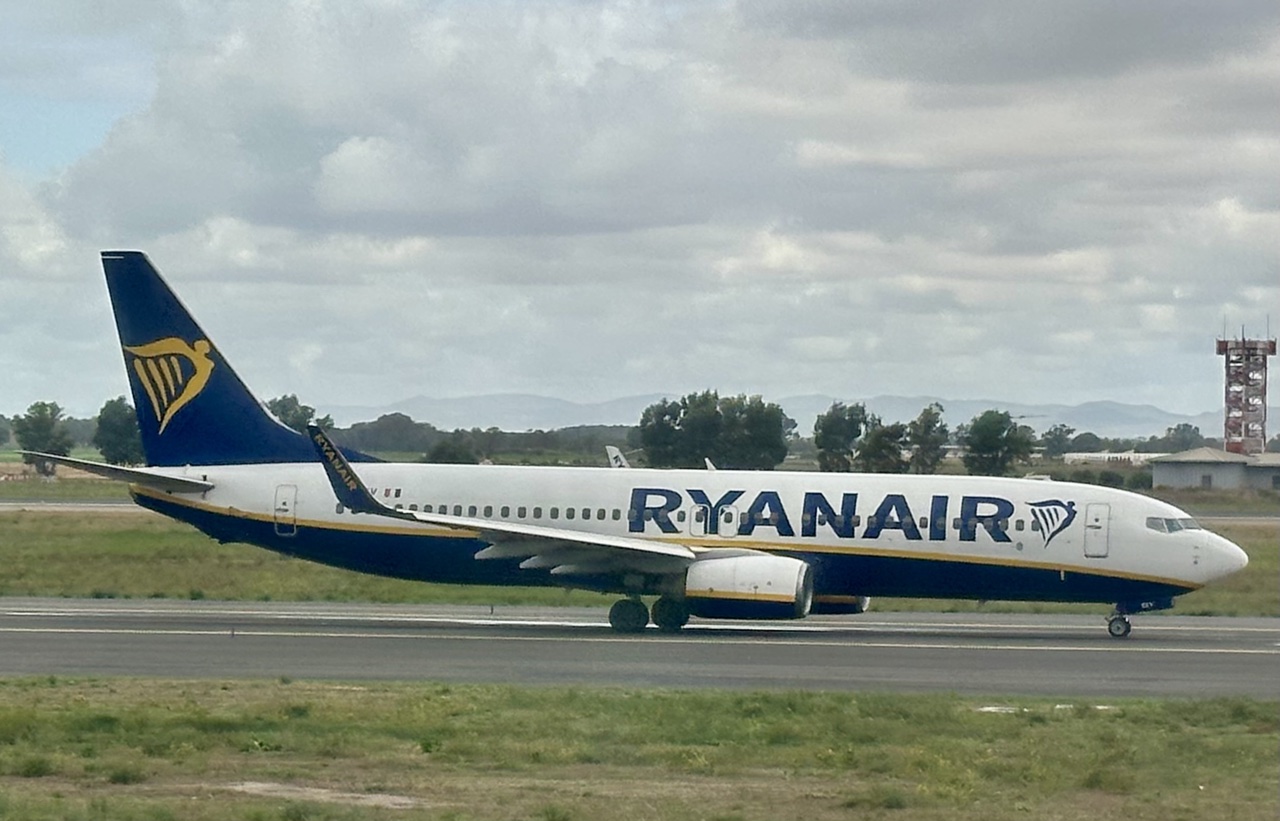
Ryanair Made Real Airline Profit
There is a version of the airline business that still works without a giant credit card partner standing behind it. It is not glamorous, not premium, and not built around lounges, suites, aspirational award charts, or the fiction that a short-haul economy seat is a lifestyle product. It is Ryanair, and the numbers are becoming harder to dismiss.
Ryanair’s FY26 results show pre-exceptional profit after tax of €2.26 billion, up 40% from €1.61 billion in FY25. Traffic rose to 208.4 million passengers, revenue climbed to €15.54 billion, and ancillary revenue reached nearly €5 billion. The half-year figure was even stronger. Ryanair’s H1 FY26 report showed profit after tax of €2.54 billion for the six months ended September 30, 2025. The €1.72 billion number often cited was not the six-month result. It was the September quarter profit. That correction does not weaken the argument. It makes the argument stronger.
Ryanair is not doing this because it has a bank buying billions of miles. It does not have a Delta-American Express, United-Chase, or American-Citi machine reshaping the income statement. It has a low-cost operating model, dense aircraft, a narrow fleet strategy, high utilization, limited complexity, and a customer proposition that is brutally clear. You are buying transportation first, then paying extra for the things the airline has deliberately stripped out of the base fare.
That is not a customer-friendly model in the warm and fuzzy sense. Ryanair has never tried to be Singapore Airlines, and no one boards expecting it. But as an airline business, the model is refreshingly honest. The fare gets people to book, the cost base makes the fare possible, and the ancillary machine turns a cheap seat into a profitable trip.
American Is A Loyalty Program With Airplanes
American Airlines reported record full-year 2025 revenue of $54.6 billion, but only $111 million of GAAP net income, according to its 2025 financial results. That is a microscopic margin for a company of its size, especially one carrying the fixed costs, labor costs, fleet costs, and operational complexity of a global network carrier.
Now look at AAdvantage. American’s 2025 annual report says cash payments from co-branded credit card and other partners were $6.2 billion in 2025. Citi also became the exclusive issuer of the AAdvantage co-branded card portfolio in the US starting in 2026, following American’s expanded 10-year Citi agreement.
There is an important accounting caveat here. You cannot simply subtract $6.2 billion from $111 million and declare the flight operation lost that exact amount. Loyalty accounting includes deferred revenue, mileage liability, marketing performance obligations, redemption costs, and other moving pieces. But the relationship between those two numbers is still impossible to ignore. American made $111 million in GAAP profit while collecting $6.2 billion in partner cash tied to AAdvantage and co-branded credit cards.
That tells us what the valuable asset really is. American is still an airline, of course, but the airline is also a distribution engine for AAdvantage, and AAdvantage is the bridge to the bank. The airplanes create the loyalty currency’s emotional value. The bank monetizes it at scale. The result is a transportation company whose most attractive economics may come from something other than transportation.
Delta Has Stopped Pretending
Delta is the best-run of the US legacy airlines, which makes the credit card point more important rather than less. Unlike American, Delta can credibly point to operational reliability, premium revenue, a strong brand, and a more coherent commercial strategy. It is not limping along on loyalty alone. But Delta’s relationship with American Express has become so large that it is now central to any honest description of the company.
Delta reported $5.0 billion of net income in 2025, according to its full-year results. In the same release, Delta said American Express remuneration grew 11% to $8.2 billion in 2025. Its 2025 Form 10-K says Delta expects that figure to grow to $10 billion over the next few years.
Delta has built a premium travel and payments ecosystem, and the Amex relationship is one of the pillars holding it up. The airline deserves credit for that. It has done a better job than its peers convincing customers that loyalty, status, lounge access, and credit card spend should all live inside the same branded universe. And as we have cited before, the Delta American Express cards alone process about 1% of total US GDP.
But that also means Delta is no longer a clean comparison to Ryanair. Ryanair’s profit comes from running an ultra-low-cost airline. Delta’s profit comes from running a premium airline, a loyalty platform, and one of the most powerful co-brand credit card relationships in the country. That may be a better business, but it is not the same business.
United Is The Same Story With Chase
United sits somewhere between Delta’s polish and American’s dependence. It has improved meaningfully, it has a strong international network, and it has leaned hard into the idea that MileagePlus should be more than a frequent flyer program. That strategy is visible in the financials.
United reported $3.35 billion of net income in 2025 on $59.1 billion of operating revenue, according to its 2025 Form 10-K. The same filing shows $3.85 billion of other operating revenue and states that the increase was driven partly by mileage revenue from non-airline partners, including credit card spending with JPMorgan Chase. United also disclosed billions of dollars in revenue tied to marketing, advertising, non-travel miles redeemed, and other travel-related benefits from partner agreements, including its Chase co-brand relationship.
As with American, this is not a clean dollar-for-dollar subtraction exercise. Airline loyalty accounting is too complicated for that, and some of the economics are spread across revenue recognition, future travel obligations, and marketing arrangements. But it is fair to say that United’s profit story is deeply tied to MileagePlus, Chase, and the sale of miles and customer access.
I wrote about this recently in MileagePlus Changed the Game. Here’s What’s Really at Stake, and the trend has only sharpened. United is not merely rewarding people for flying. It is reshaping loyalty so that credit card holding, card spending, elite qualification, and redemption behavior all reinforce one another. The airline seat still matters, but it increasingly functions as part of a broader financial ecosystem.
The Contrast Is Brutal
This is why Ryanair’s numbers matter. They cut through a lot of the romance and marketing language around airlines. Ryanair is making money by doing the least sentimental version of the airline business: keep costs low, keep planes full, keep aircraft moving, sell the base fare aggressively, and charge separately for everything else.
The US legacies are doing something much more complex. They operate hubs, lounges, corporate contracts, long-haul fleets, premium cabins, alliances, irregular operations desks, status programs, and massive labor structures. Then they use loyalty programs and credit card partnerships to turn that complexity into something banks want to buy access to.
That model can absolutely work. Delta proves it can work very well. United is pushing deeper into it. American is trying to make AAdvantage and Citi the center of its long-term recovery. But it only works because the bank relationship is not a supplement anymore. It is core to the financial model.
A Reuters review of United’s loyalty changes captured the broader trend: airlines are increasingly using loyalty programs to drive credit card adoption and spending. Ryanair does not have that cushion. It has to make the flight work, and yet it does and leads the world in that regard.
The ULCC Model Is Still The Cleanest Airline Model
Are ultra-low-cost carriers the only airlines that can make money? No. There are profitable network airlines, profitable hybrid carriers, and profitable state-backed or geography-protected carriers around the world. Delta is clearly profitable. United is profitable. The point is narrower and more interesting than that.
If the question is whether an airline can make serious money from the transportation product itself without a giant US-style co-brand credit card machine, Ryanair is the cleanest proof that it can. The model is not universally loved, and it does not work in every market under every management team. Spirit’s collapse in the US shows that a low-cost label does not magically solve debt, competition, labor pressure, aircraft issues, or execution mistakes. Frontier, Allegiant, Wizz Air, easyJet, Volaris, and IndiGo each show different versions of the low-cost idea, some stronger than others financially. Frontier remains in a precarious state while Allegiant just closed its merger with Sun Country and appears to be succeeding at the moment, though they also asked the government for assistance during the Iran war.
The common thread is not that every cheap airline wins. They do not. The common thread is that the model starts with the flight trying to pay for itself. The airline is not asking a bank to make the economics feel better after the fact. It is designing the trip so that the fare, the cost base, and the ancillary revenue all work together from the beginning. That is why Ryanair is such an important counterexample. It proves that critics that say that the ULCC model doesn’t work are wrong. It also disproves the notion that the pure play airline concept (without state sponsors, subsidies, or a loyalty business to offset losses) can no longer succeed.
Without Loyalty Programs
Delta may be the world’s most profitable airline (at least the ones where we can publicly measure their data), United, American, and Southwest competing right alongside them. And we may not be able to simply extract the revenue from loyalty programs to call a business a success or failure and recalculate the math, after all, some are buying cash tickets because of the loyalty program and that’s hard to show up in the revenue numbers.
But the point stands that without the revenue from loyalty programs that we can derive directly, all of the “profitable” models that “work” become unprofitable and by a lot. The biggest loser among them is American, but United and Delta are not far behind. None of them can compete with Ryan Air without a loyalty program. Global airlines like British Airways, Air France/KLM, and Lufthansa Group struggle too. Singapore Airlines does well but its loyalty program contributions are harder to identify.
Conclusion
Ryanair’s results are not a love letter to cheap travel. They are a warning label for the rest of the industry and a rebuttal to those who believe that only traditional and premium carriers can succeed – that notion is mathematically false. A brutally disciplined low-cost airline can still make real money by flying people from one place to another, which should not sound radical but somehow does in the modern airline business. But not only can their model make money, it’s not entirely clear that the “most profitable airlines” can purely from flying people and things.
The US legacies have built something powerful, but it is not simply an airline model anymore. American, Delta, and United are transportation companies wrapped around loyalty programs, credit card partnerships, and customer data platforms. That may be smart, and in Delta’s case it may be exceptionally smart, but it also means their profits are not clean comparisons to Ryanair’s profits, and may, in fact, not be profitable at all without banks propping them up.
What do you think?






Excellent analysis. Would love to see how things look for the foreign equivalents to the US Big 3- airlines like Air France or ANA or Qantas. They don’t have the ability to siphon off a portion of the oligopolistic card surcharges still allowed in the US- that’s really the source of US3 profits. How are operationally similar airlines without much access to that revenue stream doing?
IAG show an impressive level of profitability, but people will often say that a good part of that has to do with their LHR dominance. They’re also trying to grow their loyalty ecosystem but won’t be able to get anywhere near the scale of their US counterparts.
Most of the other European legacy carriers are pretty embedded in local politics and even geography to allow for meaningful comparisons (labour costs are an important variable and a structural disadvantage for those based in the richer parts of the continent, and you can’t really move your hub and offices from BeNeLux to Czechia or something).
I think that, outside of the real low-costs, Aegean and Air Baltic are probably the only two European airlines whose performance can be realistically assessed on its own financial/operational merits.
For aviation enthusiasts → FR currently has 344 aircraft (average age: 10.8 years) in its fleet.
FR, with a history spanning over forty years, is one of the most commercially successful and profitable airlines in the world. The pragmatic Irish carrier transformed European aviation by pioneering an extreme low-cost, no-frills model that made air travel accessible to millions.
For aviation enthusiasts → The photo in the article shows one of the 197 B737-800s in FR’s current fleet, which have an average age of 16.7 years.
You forgot the third option – be funded by the saudis/UAE. Emirates is the most profitable airline in the world atm Kyle.
@Christopher Rupp – I mentioned state-sponsored carriers, and subsidies both of which cover Emirates, Etihad, etc. But I didn’t dive deep into that because it’s not really a business model and I don’t trust the numbers either way.
If just the basics is a money maker, what did Spirit do wrong?
Yeah, and since they are ‘banks with wings’ we really shouldn’t allow airlines to perform a sleight of hand with accounting to silo the profits from those credit card and loyalty programs away from the profits sharing with workers; because, that’s how airlines pretend they make no money, but still do, just to avoid tax and employee obligations. On the consumer side, we’re also getting screwed because these corporate pseudo-currencies are so unregulated that these companies can change terms on a whim and restrict availability so much so that you can hardly use your points for what you want. Long-haul J? Sorry, no availability with that ‘fare code’ (yet, wide-open seats).