
Chicago says its $8.8 billion O’Hare bet is on track. The bill for who actually pays it is just arriving.
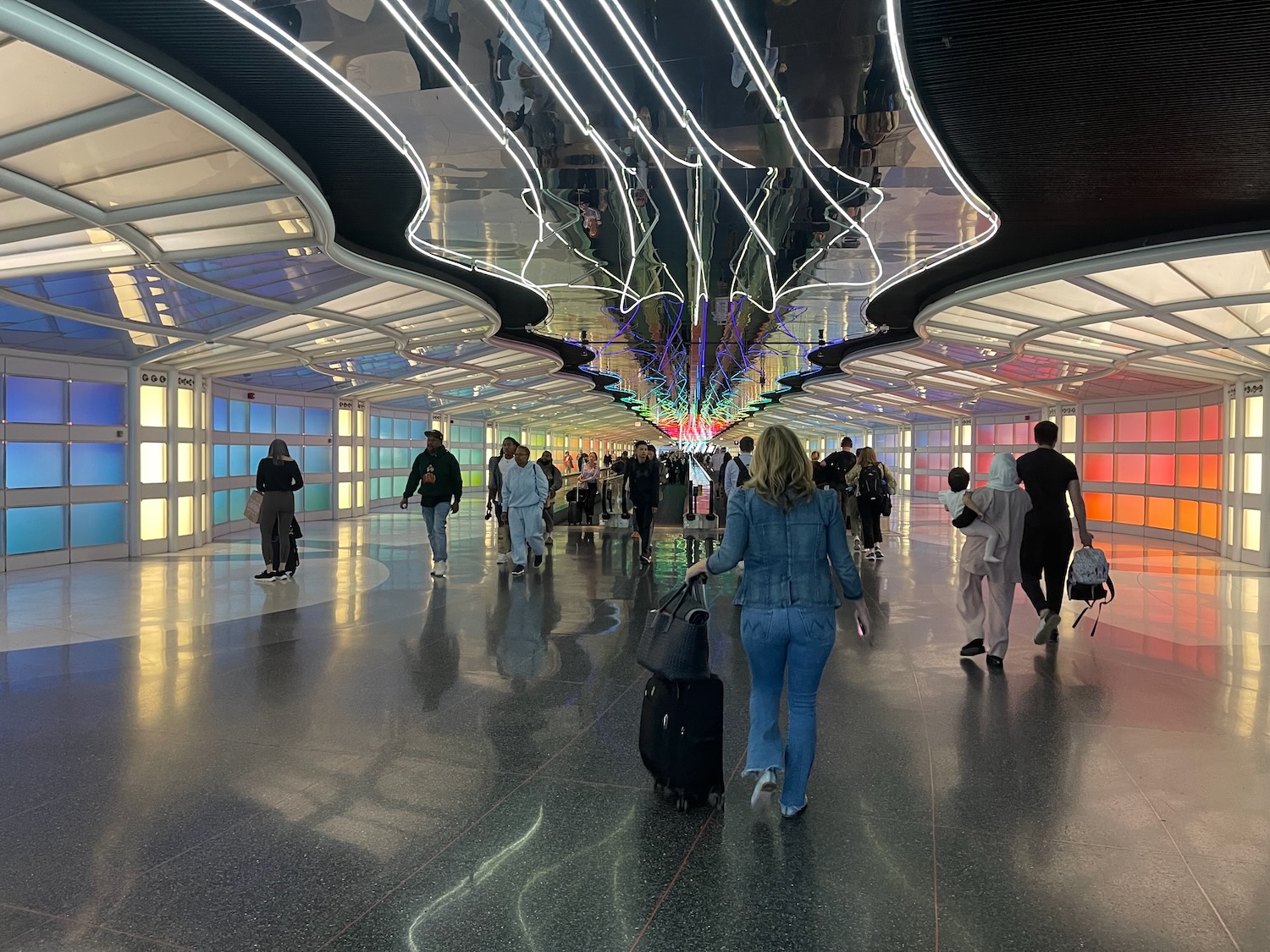
Chicago’s Aviation Chief Maintains Schedule
Chicago’s aviation commissioner used a public appearance this week to reassure the city that the $8.8 billion O’Hare expansion plan, including the airport’s first new concourse in more than 30 years, remains on track. New gates, a rebuilt Concourse D, and years of construction were sold to the public as the inevitable cost of keeping O’Hare competitive with Dallas-Fort Worth and other airports racing through their own multibillion dollar overhauls. Much of this feels a little late to the party as many airports have already completed their renovation projects from the bi-partisan COVID-era infrastructure bill.
But O’Hare’s expansion flies in the face of movements by federal regulators. The FAA spent this summer reducing not expanding capacity. Regulators capped O’Hare’s peak day operations at 2,708 flights between May 17 and October 24, a move Matthew covered when it happened as ending a pointless capacity war between United and American. Chicago is spending billions to build more gates at the same airport federal regulators instructed airlines to fly less.
The airport genuinely needs modern infrastructure. United and American genuinely packed too many flights into too few peak hour slots, which is exactly what Matthew described when United kept doubling down on Chicago even as the economics worsened. But a city cannot credibly sell an $8.8 billion “we need more room to grow” pitch in the same season the FAA rules there is not enough room in the sky above that growth.
Who Actually Writes The Check
Airport megaprojects nationwide, from DFW’s roughly $12 billion overhaul to JFK’s $19 billion rebuild, have a well documented habit of running years behind and billions over their original numbers. O’Hare’s own expansion has already grown from its original scope since it was first pitched. Nobody at this week’s press appearance offered a number for what happens if Concourse D, like most airport megaprojects before it, comes in over budget.
Airport expansions are financed overwhelmingly through bonds backed by landing fees, gate rents, and passenger facility charges, all of which airlines pass straight through to ticket prices. But this is different, the airlines are footing the bill, more specifically, American and United which both operate significant hubs at the airport. They are on the hook for $8.8bn today, but what could change is cost overruns. If the expansion price creeps and development slows, Chicago may look for other areas of funding beyond United and American and that traditionally would come from public sources. Infrastructure work is subject to delays and overruns and notorious for not hitting delivery or budget schedules, but in Chicago, this seems like a higher likelihood.
Conclusion
Chicago is not wrong to build. O’Hare needed a new concourse decades ago. And while the project may remain on track now, it is unlikely to stay that way. The budget that’s been showcased now has already grown, but both American and United have indicated there’s not more fruit to shake off the tree if cost overruns and delays occur. This is a case of a wink and a nod in which we all agree that this is the budget and the timeline and it totally won’t stray from those targets. The smart money (and there’s probably a Kalshi-type bet available) is that this ends up neither on time, nor on budget, and that Chicago tax payers end up footing the bill either directly (bonds) or indirectly (airport usage fees tacked on trips.)
What do you think?



Ohare has the most runways of any airport in the world, so what should they do? Not expand the concourses? Part of the reason the FAA has capped the flights is because the construction has made moving airplanes around the airport a mess. That is only temporary.
Will it be over budget? Probably… but increasing inflation and tariffs sure aren’t helping. And once they tear down terminal 2, United will have no choice but to see this through to completion