
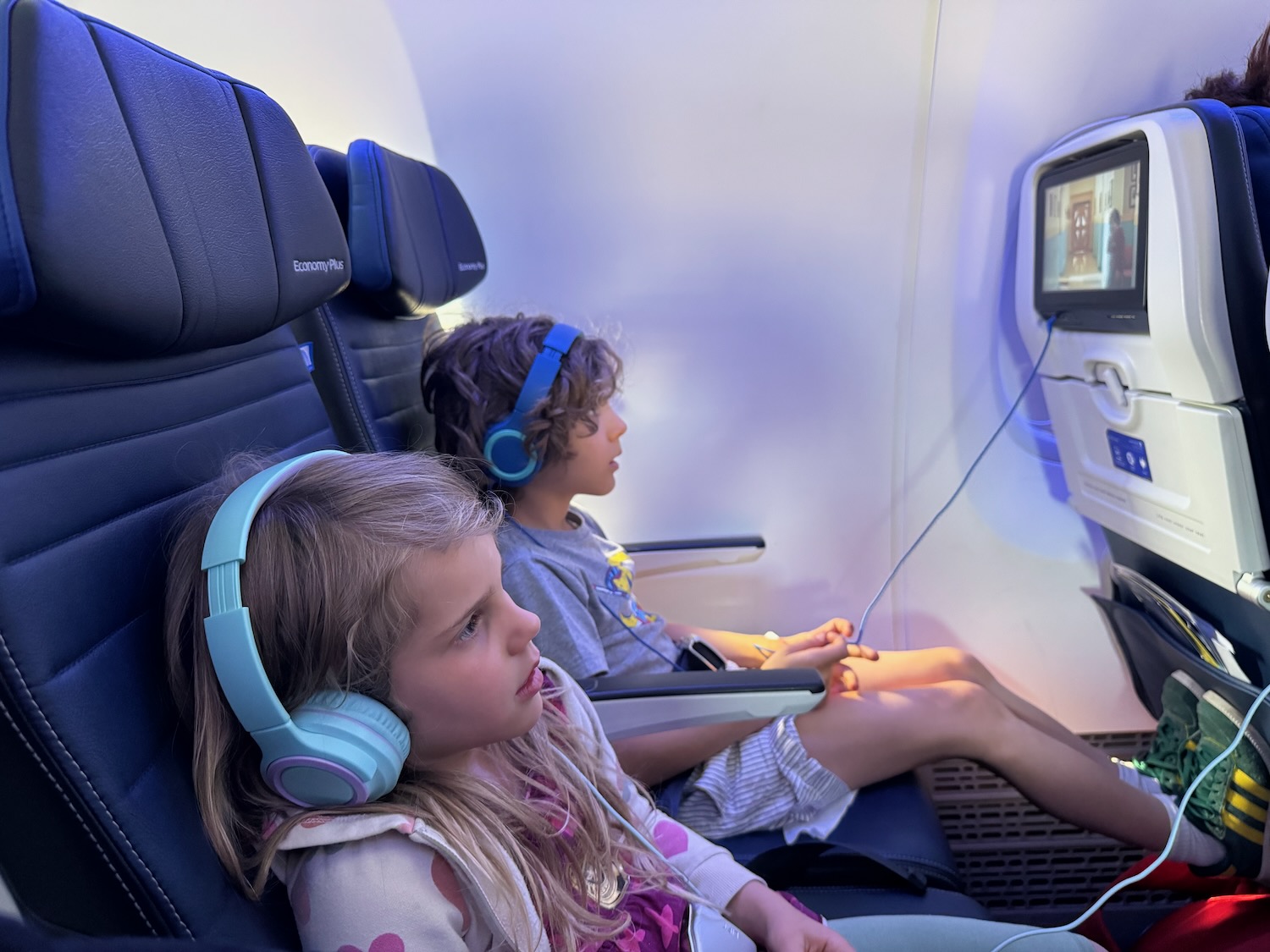
United Airlines tried to persuade a federal judge that a “window seat” describes where a seat is located, not whether a passenger can actually look through a window. The judge was not persuaded.
United Says A “Window Seat” Does Not Necessarily Include A Window
United Airlines must face a proposed class action lawsuit from passengers who say they paid extra for window seats, only to find themselves seated beside a solid cabin wall. U.S. District Judge James Donato rejected United’s attempt to dismiss the case, allowing passengers to proceed with claims that the airline misrepresented what they were purchasing.
United argued that the term “window seat” merely identifies a seat next to the side of the aircraft, rather than promising an actual window or an outside view.
I first wrote about this lawsuit last year, which alleges that United sold certain seats on Boeing 737s, Boeing 757s, and Airbus A321s as window seats even though no window was positioned beside them.
Such seats are not unusual. Aircraft windows do not always align neatly with cabin rows. The problem is that passengers say United labeled them as window seats and sometimes charged extra for them without disclosing that the “view” would consist of a blank wall.
Passengers choose window seats for many reasons. Some enjoy looking outside, while others find that a view helps with motion sickness or anxiety. Whatever the reason, it does not seem unreasonable to expect a seat sold as a window seat to have a window.
United nevertheless argued that it had made no contractual promise of an exterior view. According to the carrier, “window” simply identified the seat’s position relative to the aisle.
Judge Donato concluded that the passengers had plausibly alleged otherwise. United’s booking displays, ticketing documents, and boarding passes allegedly identified the seats as window seats, which may have created an enforceable promise that passengers would receive exactly that.
United Now Warns Passengers About Windowless Seats
United declined to comment directly on the pending lawsuit, but noted that it updated its website and mobile app in 2025 to provide customers with more information when selecting seats.
United now identifies certain seats as having no window, which is precisely the sort of disclosure the plaintiffs argue should have been provided in the first place. That change also weakens the practical force of United’s semantic defense. If a window seat never implied the presence of a window, there would be little reason to begin warning passengers when one is missing.
The lawsuit seeks to represent a large group of passengers who allegedly paid extra for window seats without receiving a view. The plaintiffs are seeking millions of dollars in damages.
Delta Air Lines faces a similar proposed class action lawsuit in New York concerning windowless seats sold as window seats. Delta has also sought dismissal of that case, which remains pending.
CONCLUSION
United argued that the word “window” refers to the location of a seat, not the presence of an actual window. A federal judge has now rejected that argument as grounds for dismissing the case.
The lawsuit will move forward, and United may have to defend the curious proposition that a passenger who purchases a window seat should not necessarily expect to see outside.
> Read More: United Airlines Faces Class Action Lawsuit For Selling “Window Seat Without A Window”





I had this happen to me on a SWA flight. Window seat with no window…
HOWEVER, no place on the SWA WEB site do they ever call it a window seat. They just show the seat on the seat map as being next to the “wall” as apposed to the aisle.
United clearly knew it was being deceptive, since they had to change how they marketed those seats afterwards. So, let the lawsuits flow, and ideally, simply refund the folks who paid extra for something they didn’t receive. In the aggregate, those are millions of dollars in fees over a decade, and there’s definitely a paper trail. Using AI, it wouldn’t be too hard to specifically refund specific people for the failure to deliver to them exactly what was ‘sold’ to them. Some may not say that they actually care, but, most folks are disappointed when they see that wall with no window.
The scumbags running the airlines KNEW that that there were certain rows without a window but delibertely refrained from noting that fact as theywere more concerned about profit than the truth.
I have flown many longhaul on UA and AA, on 787 dreamliners. I like window seats to look out at the beautiful views below. They always blackout the windows and I can’t see out. Should I be compensated? I want in on the lawyer gravy train! Let’s sue someone and hope we win a settlement!
My starting place is there would never be a lawsuit if there was no window in row 27 or whatever. The reason this caught the attention of lawyers is because it’s in an extra legroom economy section. So many folks paid additional fees to select the seat. The question in my mind is what the damages would be, because while they did not receive a window, they did receive the extra legroom and the lack of someone sitting on their left, and they usually charge the same amount for window or aisle (middle seat extra legroom economy is usually cheaper).
Obviously United needed to correct this on the website and they have – not to the extent of Singapore’s seat map which shows a window with an X through it where there is no window, but it does now say no window. Heck they can market it as a benefit – no window = guaranteed no glare on the IFE!
Personally I think United should install a virtual window a la Emirates middle first class suites – i’m sure that’s a cost effective solution to this very important problem!
It will be interesting to see if United ever sold these as “window seats” or if someone simply selected them from a seat layout. You may ask why it matters but it does. I don’t remember any airline actually using the term “window seat” when they sell seats. Typically you go to a seating layout and select a seat. Frankly, there are a number of sites that have very good layouts of planes interior (I still miss Seat Guru) and it is on the consumer to know what they purchase. My late wife liked seats by the window but wanted to make sure it actually lined up so I always checked the layout of the specific plane before choosing seats. Anyone can do this at no cost.
Frankly, I think United (and others) are in pretty solid legal position here as they can argue that they never misrepresented the seat by simply showing it on a layout. It was the consumer that picked that specific seat. We shouldn’t reward ignorance.
How utterly absurd and mean-spirited of such a major company. Of course a window seat means it comes with a window, a porthole you look out of; unless of course United et al have bought into the “alternative reality” the entire country uses to justify our current black-is-white, Alice in Wonderland topsy-turvy existence.
This is a missed opportunity by United. The way people like to keep their window shades closed for the entirety of the flight these days, they could have probably marketed this seat as not having a window and charged even more for it
In order to avoid windowless window seats during online check-in, it’s best to compare the airline’s digital check-in seat map simultaneously with exact seat configurations on a site like AeroLOPA. While a few airlines warn you if a window is missing, you can verify accurate window placements in advance by looking up your exact aircraft model.
They (more airlines than UA) must look back upon this with hindsight, realizing they could have prevented most of this. Certainly, they can modify their websites/apps to show windowless “window” seats as such. They will certainly need to add disclaimer language (“in the event of equipment change a seat assignment next to a window may become next to a blank wall,” but written better). Agree to a class-action settlement that gives the lawyers their pound of flesh in cash, coupons for others (free seat selection in same class on a future flight), and the commitment to annotate the seat maps. Do they really win if it just a semantics exercise? Take the hit, move on.