
United and Virgin have the numbers to prove Starlink works for business travelers. Now they have to translate that to revenue.
What United And Virgin Are Reporting
In a press release earlier this summer, United says more than 18.6 million passengers have flown on Starlink internet service-equipped aircraft across 311,000 flights since spring 2025, connecting 9.9 million devices. On its Q2 earnings call, the airline told investors that Wi-Fi satisfaction scores on Starlink satellite internet aircraft run more than double the rest of the fleet, and Scott Kirby described getting the service on every airplane as a step function increase. An NPS differential that high is unheard of from aircraft to aircraft without an otherwise monumental difference in product, like United’s “coffin class” 8-abreast business class product that flies to Hawaii vs the brand new closed-door 1-2-1 Polaris suites on other products.
The engineering behind the categorically better performance, according to experts, is speed and latency carries more of that performance load. United’s digital technology team puts round trip times on Starlink flights in the 20 to 40 millisecond range, against roughly 2,000 milliseconds for geostationary satellites sitting far higher above the earth. That is the difference between a useful connection and a connection that gives up on you before you can get anything done. Download speeds have been reported as high as 250 mbps (for context, home internet often starts at 100 mbps, though some plans offer gigabit service on fiber products in limited areas.) But it’s also the high speed uploads that make Starlink’s particular brand of low earth orbit satellite internet service successful. Upload speeds are often the best in the industry and it’s not close.
Virgin Atlantic has the number that impresses me most. Since launch, customer satisfaction scores for onboard connectivity have risen by more than 40 points, and 75% of customers now connect on Starlink wifi A350 flights against 10% across the rest of the fleet. Satisfaction scores are opinion and there could be other reasons to subjectively score an A350 higher than a tired A330, for example. That second pair is behavior, measured on the same airline in the same period, and a jump from 10% to 75% is not something that can be ignored. It’s a tangible demonstration of passengers changing their behavior once the product works. These figures were reported by Inc., which interviewed executives at both carriers.
Notably, I found some conflicts with the Inc. story. By pure coincidence, I too, was recently on a Virgin Atlantic flight between Orlando and Manchester, England. Our own NPS was lower because the business class product is a relic (though there remain some charming aspects) and the wifi was not, in fact, included on our flight as the Inc. writer found.
The Fleet Math Undercuts The Story
All 12 of Virgin’s A350s carry the service, five months ahead of schedule, and that is the entire equipped fleet. Roughly two-thirds of the airline is due by the end of this year, with the balance arriving in 2027. But the airline reports that it takes 3-4x as long to fit the 787 equipment.
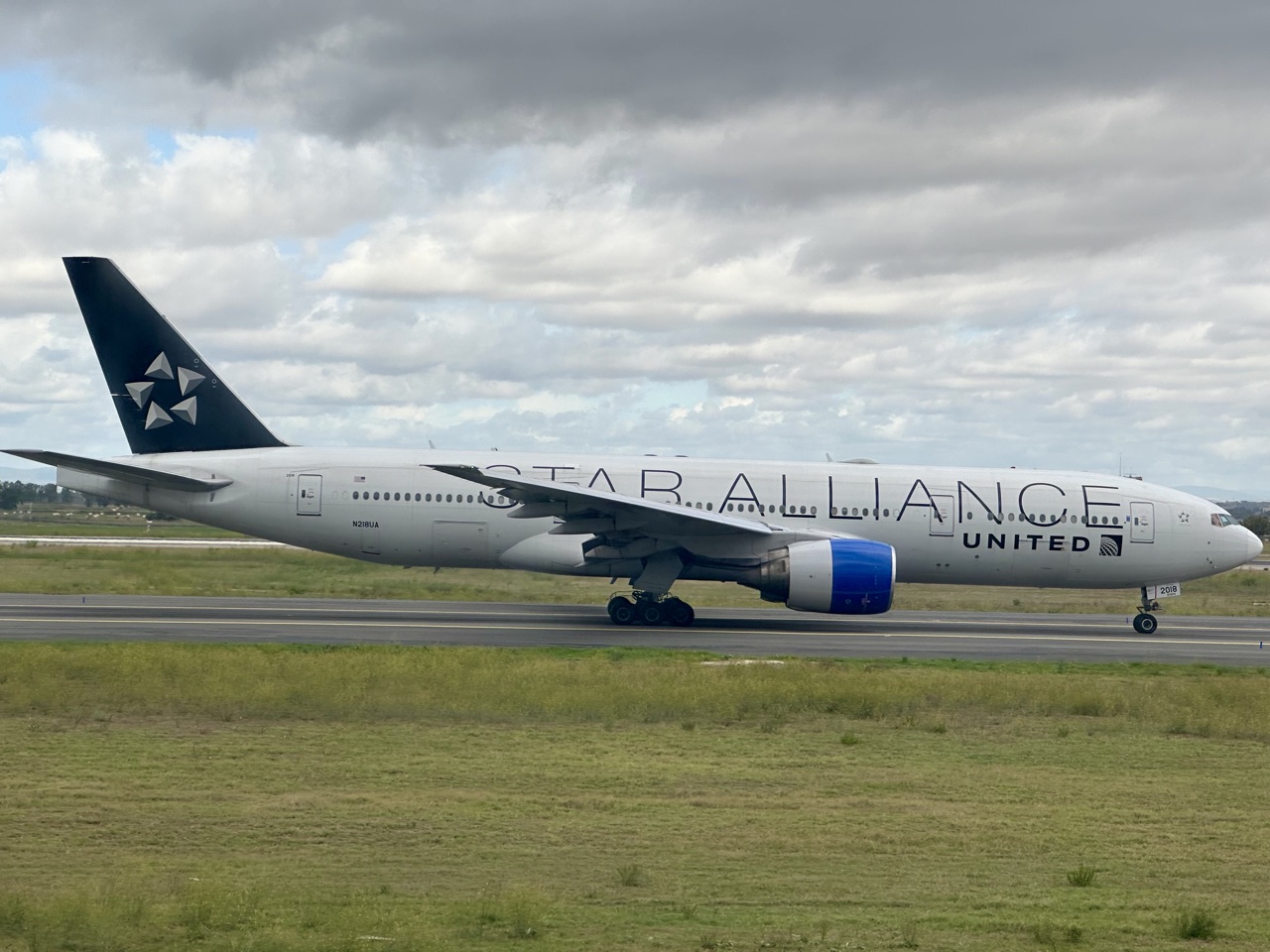
United is in a similar position at larger scale. More than 400 aircraft carry the service today (higher than I expected), with close to 1,000 expected by December, against a mainline fleet in the same neighborhood before you count regional partners. In late June a Boeing 777 flew the first Starlink transatlantic service from Newark to London, and the widebody fleet is not due to be finished until the summer of 2027.
British Airways shows what happens when the schedule collides with reality. It equipped five aircraft between March and May, then paused installations until October, citing hangar capacity during the peak summer schedule rather than any problem with the hardware.
How Long Until Every Airplane Has It
Unlike British Airways, for United, installation speed is not the bottleneck. Starlink hardware goes on in a single 8-10 hour shift, and United’s total runs about three days per aircraft once you include stripping out the legacy system. Virgin turns an A350 in 24 hours and a 787 in three to four days.
The constraint is hangar slots and the willingness to take airplanes out of revenue service, which is exactly why British Airways stopped for the summer. Every carrier doing this is competing against its own peak season for maintenance capacity, and no airline pulls aircraft in July to install Wi-Fi.
Like Virgin, United is targeting its full fleet by the end of 2027. American committed in May to Starlink on more than 500 narrowbodies beginning in early 2027, a decision that fits the pattern I described when I wrote about American growing itself into a hole, where the capital keeps going out the door while the earnings do not come in. Matthew covered Frontier committing to Starlink for 2027 without saying whether passengers would pay for it. Delta does not begin installing Amazon Leo until 2028 – maybe they will have satellites by then to support Delta’s global operations.
Nobody Has Figured Out How To Sell It
The commercial problem is sitting underneath a genuine competitive advantage. You can’t buy it. There is no fare search filter for Starlink, no reliable schedule attribute, no guarantee, and an equipment swap the night before erases whatever you thought you booked. That remains a problem.
The demand is documented. A Viasat survey of more than 11,000 travelers found 75% are more likely to choose an airline offering quality inflight Wi-Fi, and 22% will not consider a long-haul flight without it. United’s own people say consultants deliberately book themselves onto equipped flights but significant dissatisfaction and a lack of trust when that purchase decision does not deliver the intended benefit.
United’s Starlink is free for MileagePlus members. Virgin’s is (allegedly) free for Flying Club members (thought that wasn’t my experience), and the airline says it is pulling new members into the program. Alaska and Hawaiian gate theirs behind Atmos Rewards with T-Mobile paying as presenting sponsor. The price of free Wi-Fi is a loyalty account, which is a smart trade for the airline and a familiar one for anyone who has watched carriers convert amenities into program economics.
That’s clever for now, but if the consultants flying (and booking lots of expensive, premium, last minute space) are willing to choose a product solely for a specific attribute, they are also likely willing to pay something for it. Right now, that’s not an option because British Airways can’t get planes equipped, and United doesn’t have enough coverage – American isn’t even attempting to convert long haul.
The question I keep coming back to is what happens when equipment is available fleetwide. Does Starlink become a merchandised attribute you can filter and pay for, the way seat pitch and bags became line items? Does it get guaranteed, with compensation when the swap goes the wrong way? Or does it stay a brand halo that shows up in satisfaction surveys and never appears on an invoice? When clients ask me to route them for a working flight today, I can make an educated guess from the aircraft type. I would rather sell them a promise the airline is prepared to keep.
It makes me doubt that stats, if I’m honest. If Starlink was that big of a strategic advantage (and it would be for me), there is a huge incentive to earn and maintain the longest possible lead. Delta has already stated they won’t attempt a comparable product until at least 2028, assuming Leo is comparable. American isn’t going to compete on its most expensive flights, clearly part of its pivot to premium, British Airways for trans-Atlantic service is in no rush at all, Virgin has a year to complete its fleet. If United was willing to invest now, even when that means taking an aircraft out of service and straining operations, but expediting its install plans, it could leap forward and steal customers. A pizza shop manager once told me, “never let the customer taste the competition” and that’s exactly right in this situation. Maybe not in Atlanta, but on a trans-con from Newark to LAX, would a Delta flyer switch from JFK if it meant they could work at blazing speeds for a five to six hour flight? I think they might. If United has at least 18 months if not 36 of uncontested advantage and the price is more or less the same, Delta flyers (and American, of course) may make the switch and decide they like Polaris better and utilizing those hours vs an agonizing experience on current offerings.
I’m fully aware that airline logistics are complicated, expensive, and difficult. But with this type of strategic advantage it would be my sole priority.
Conclusion
The advantage United and Virgin are reporting is credible, and the behavioral numbers are more persuasive satisfaction scores. Business travelers value their time and battling slow wifi or losing a working day has a cost. These are the most coveted, least price sensitive customers and they will vote with their feet… or seat.
What neither carrier has yet is the fleet to make the promise, or a mechanism to sell it. An advantage a customer cannot reliably buy is not a competitive advantage, it is a marketing asset waiting for logistics to catch up. The airline that works out how to surface equipped aircraft at booking and stand behind them will convert this into bookings well before its rivals finish drilling holes in fuselages. That is the part of this race worth watching, and so far nobody is running it.
What do you think?




I just booked a long flight on Qatar instead of their competitors only because they had Starlink and I figured it would allow me to be a bit more productive but mostly pass the time quickly. Airlines without reliable – and on many carriers and platforms it’s routine that the internet isn’t operational – high speed connections are already at a real disadvantage.
Kyle says, “United is in a similar position at larger scale. More than 400 aircraft carry the service today (higher than I expected)”
It’s actually 500+ now and all the wide body aircraft before next summer.
Can’t wait to see the Tim Dunn mental gymnastics about how Delta flying SEA-NRT is better than United with 1000 starlink planes by end of year
Not being addicted to having connectivity everywhere I go, it’s difficult to imagine ‘winning’ referring to either Untied or Virgin neither of which IMO achieve mediocre at their best.
Would I trade better service and comfort for wi-fi? Never. Life is too short.