
DOT paused refund enforcement for renumbered flights while it rewrites what counts as a cancellation. The pause ends June 30. The definition fight matters.
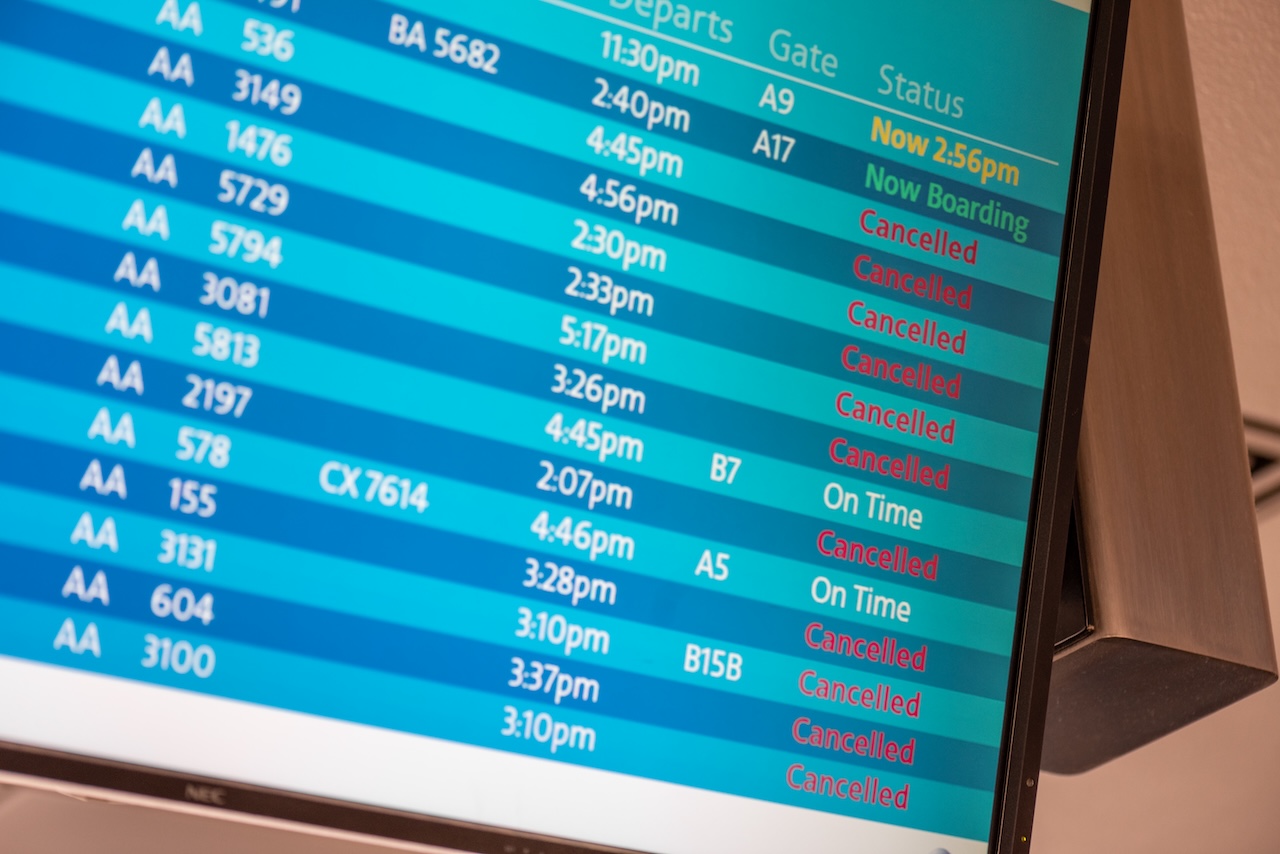
The Refund Rule Airlines Hated Is Quietly Shrinking
In October 2024, the Department of Transportation gave US travelers the strongest refund protection they have ever had. The automatic refund rule requires airlines to promptly return your money, not a voucher, when your flight is cancelled or significantly changed and you choose not to travel. No forms to hunt down, no chatbot purgatory, and the airlines can’t get away with “let me offer you a credit.” Airlines fought the rule, lost, and have been working the referee ever since.
But most travelers have never thought about what exactly counts as a cancelled flight? It sounds like a philosophy seminar question, but real money turns on the answer, and the current administration is in the middle of rewriting it.
In Europe, the question is clear and the refund amount speaks to the distance of the flight, how late it was if only delayed (with time blocks and guidance, as well as class of service.
What A Renumbered Flight Has To Do With Your Refund
Under DOT’s regulations as they are currently written, a flight that gets a different flight number than the one you bought is treated as a new flight, which makes your original flight a cancelled one, which makes you refund-eligible. Airlines renumber flights all the time for operational and scheduling reasons, so under a literal reading, a renumbering with no other changes triggers refund rights even though the plane leaves the same gate at the same time.
Airlines complained, and on December 5, 2025, DOT paused enforcement of the flight cancellation refund requirements for renumbered flights through June 30, 2026, so long as you are rebooked on the renumbered flight and it operates without any significant change or delay. In isolation, that is a defensible call. Nobody seriously argues you deserve a refund because UA 1234 became UA 1236 and nothing else moved.
The problem is not this narrow pause. The problem is what it opens the door to. DOT is using the pause window to run a new rulemaking, informally called Refund III, to consider modifying the definition of a cancelled flight itself, with the earliest decision on a final rule expected around the same June 30 date. Once the definition of “cancelled” is on the operating table, the patient can come out looking very different.
Why The Definition Fight Matters More Than The Pause
Follow the pattern. In November 2025, DOT shelved the proposed rule that would have required cash compensation for airline-caused delays and cancellations, the closest the US has ever come to European-style passenger rights. The renumbering enforcement pause followed weeks later. Now the definition that underpins the entire automatic refund framework is open for revision, at the request of the industry that pays the refunds.
Every consumer protection lives or dies on its definitions. If “cancelled” gets narrowed, the refund rule stays on the books and applies to fewer situations, which is the quietest way to weaken a rule without the headline that comes from repealing it. This is why the EU’s 206/2014 rule is the gold standard for international flight delay compensation. A schedule change rebranded as a “consolidation,” a renumbering paired with a quietly retimed departure, a cancellation reframed as a substitution: every gray area the new definition creates is a refund that becomes a customer service negotiation instead of a legal obligation. Airlines did not ask for this rulemaking out of administrative tidiness.
Travel insurance is still the best option for those facing a significant delay, and some credit cards offer better protection than others. But with Chicago O’Hare reducing air traffic this summer, domestic flights might need a greater customer service plan than other years. Carriers will still pursue travel credits even for those entitled to a refund and an alternative flight. However, when flights are significantly delayed beyond their scheduled departure time, those too should qualify. With this change, it’s even less likely we will see that much needed revision.
What Travelers Should Do Between Now And June 30
First, some protections remain. The automatic refund rule remains in force for the time being. A cancelled flight, or a significant change, generally a departure or arrival shifted by more than three hours domestically or six internationally, an airport swap, added connections, or a downgrade, still entitles you to a cash refund if you decline the new itinerary. The enforcement pause covers only the narrow renumbering scenario where nothing meaningful changes, per PIRG’s rundown of current rights.
Second, the paper trail everything this summer. Smart travelers will screenshot their original itinerary when booked and compare it against any “schedule change” email. If the flight number changes and the timing moves too, the pause does not protect the airline, and travelers can hold the line on a refund rather than accepting a voucher. Honestly, I wish more would because awareness would grow and so too would flight protections in my opinion.
Third, watch what comes out of Refund III. Rule making invites public comment, and they should be reviewed closely by the traveling public and concerned travelers like our readership. The October 2024 rule exists because enough travelers got burned by voucher games during the pandemic that the politics finally shifted. This writer doesn’t hold hope for the rule remaining in place much longer.
Conclusion
The renumbering pause itself is small, sensible, and expiring on June 30. What surrounds it is neither small nor reassuring. A shelved compensation rule, an industry-requested rewrite of the word “cancelled,” and a refund framework that is barely a year and a half old is already being sanded down at the edges. Travelers will notice during the next mass disruption, when the question of whether their flight was cancelled or merely transformed determines whether the airline owes them cash or a coupon. Keep your receipts, know the three and six hour thresholds, and pay attention to what DOT publishes at the end of this month. The fine print is where your refund lives, and the fine print is exactly what is being rewritten.
What do you think?






So the administration will make it so that big business wins and the little guy gets hosed? I wish we could expect better.
I, for one, am tired of all the winning.
Time for an EU261 equivalent in the US! And bring back Rule 240!
Ha. The Golden Age of Travel!
Time to insert the weekly reminder that any “consumer protection” laws will add to the cost of a flight for everyone and only benefit a few. The airlines add fees and reduce benefits at every chance. Only a liberal would believe the airlines will take the hit on this.
Flying is a privilege, not a right.
Wrong. Even ULCC airlines like Ryanair can continue to be profitable while offering dirt-cheap fares, paying union wages, and complying with such regulations. (Stop acting as an industry-shill. LALF is pro-passenger.)
I can act how I want and have my opinions. I seriously doubt Matthew wants a comment section where everyone agrees. Face it, you are just anti business, it’s built into your politics.
And you never deny that any increased fees and compensation will be passed on to the consumer.
By the way there is a time and place for huge fines for airlines and compensation for passengers. Unfortunately justice didn’t happen in Europe, that customer friendly bastion you seem to worship so much. The poor families of victims on Germanwings 9525 got around 75k pounds each. Pathetic and embarrassing, but hey, need to save the money for some self important clown that was delayed a few hours.
You do you, but I’ve noticed that you’re regularly advocating against your fellow passengers on here.
And. to conflate mere delays with a that tragedy shows your really do not get it. Will you bring up 9/11 next?
You know what, I was too nice. Mr. Prescott, you really did ‘go-there’ with your latest desperate, bad-faith pivot. Conflating routine consumer contract regulations with wrongful death tort liability following a horrific mass murder is a truly Olympian-level logical fallacy.
EU261 explicitly governs day-to-day commercial contract breaches, like an airline trapping you at a gate for six hours because they understaffed a backup crew. It was never intended to be, nor could it legally be, the mechanism for establishing damages in a catastrophic aviation disaster.
The Germanwings payouts were dictated by international treaty frameworks and national tort laws, completely separate from EU261. If you want to argue that European civil courts award too little for wrongful death compared to the US litigation system, that is a valid debate, but it has zero to do with passenger rights for flight delays. It is not a zero-sum game where holding an airline financially accountable for operational incompetence somehow steals a single dime from grieving families or depletes a fund for a criminal trial.
Of course, you completely ignored the Ryanair point I made earlier, where they comply and still offer dirt-cheap airfare, because it kills your false narrative.
Grow up @1990! Get out of your mothers basement. You talk a big game about all your travel across every blog imagineable but somehow have time to post responses immediately so I guess this is your “job”. Also, the liberal, anti-business, anti-administration crap really gets old.
I wish there was a way to block your comments. Maybe all the sites should do like TPG and just block comments. Trust me it would be an improvement to shut you up!
Retired Gambler, the answer to speech you don’t agree with… is more speech.
You offered no real rebuttal, other than to attack me personally. Weak.
You’re absolutely right that those filthy poors don’t deserve to fly on an airplane with us upper crust types.
Likewise, those consumer protection laws that keep those same poors from getting royally reamed need to be rescinded so that corporate America can make even more profits at the expense of the bottom 90%. For the poors, let them eat cake!
LOL. Let them eat… Biscoff!
A very sensitive issue… We need to be extra vigilant!
Yes, good doctor. “Safety first. Always.”
Renumberiong a flight should NOT count as a cancellation. You purchase a ticket to travel from point A to point B on a specific airline at a certain time. IMHO, as long as the airline provides transportation within a reasonable period (maybe 2-3 hour window) of when you book it shouldn’t count as a cancellation. No one really pays attention to flight number anywhat so that shouldn’t matter. More nanny state BS that this administration is cleaning up. Thank God!
You are falling for a classic airline shell game. “Renumbering a flight” isn’t a harmless administrative quirk; it is a notorious trick airlines use to manipulate their on-time statistics and illegally dodge compensation when they cancel an operational leg due to their own maintenance failures.
If you buy a ticket for a specific flight at a specific time, and the airline cancels it, dumps you onto a brand-new flight number, and delays your life by three hours, they didn’t just “renumber” your trip…they broke their contract.
Dismissing basic contract enforcement as “nanny state BS” is a bad take. Holding a multi-billion-dollar corporation accountable to the exact schedule and product they sold you isn’t big government; it’s a functioning marketplace.
If you are happy paying full price to let airlines arbitrarily move your schedule around with zero financial consequences, enjoy the terminal floor (and do not submit your own claims for compensation; that’s on you!). The rest of us expect the service we actually paid for (and, if not, for them to ‘make it right,’ and, in the EU, that means actual cash compensation.) Better incentives!
@1990 – To counter, if the airline keeps the flight number but moves the flight an hour you likely have little, if any, recourse. However, if they change the flight number but keep the flight times essentially the same you want that treated as a cancellation? That frankly doesn’t make sense. You put in a compound situation with flight changes, time changes and maybe equipment/routing changes but the fact remains simply renumbering a flight has zero practical impact on any one traveling and airlines shouldn’t be penalized.
We don’t need socialist protections. Let people succeed or fail on their own. An informed, experienced consumer doesn’t have a problem and we shouldn’t dumb down things for the least knowledgable person.
Oof. Holy strawman and moving-goal-posts, Batman… You really should know better. No regulation (EU, UK, Canada, or anywhere) is concerned with a mere 1-hour time difference. We’re talking about usually 3+ hours due to maintenance or staffing issue under the airlines control.
Labeling whatever you disagree with as ‘socialist!’, ‘communist!’, ‘Stalinist!’, ‘Maoist!’ or whatever choice-word you want doesn’t actually address the substantive issues in the relevant topics. It’s a cop-out. If you’re against socialism, time to disband the military, interstate highway system, schools, hospitals, fire departments, etc. Not a realistic approach for the modern era. We have a mixed economy. Again, you likely do know better.