
A Gulf carrier just opened a door to Caracas that Washington spent years trying to keep shut.
A Very, Very Long Flight
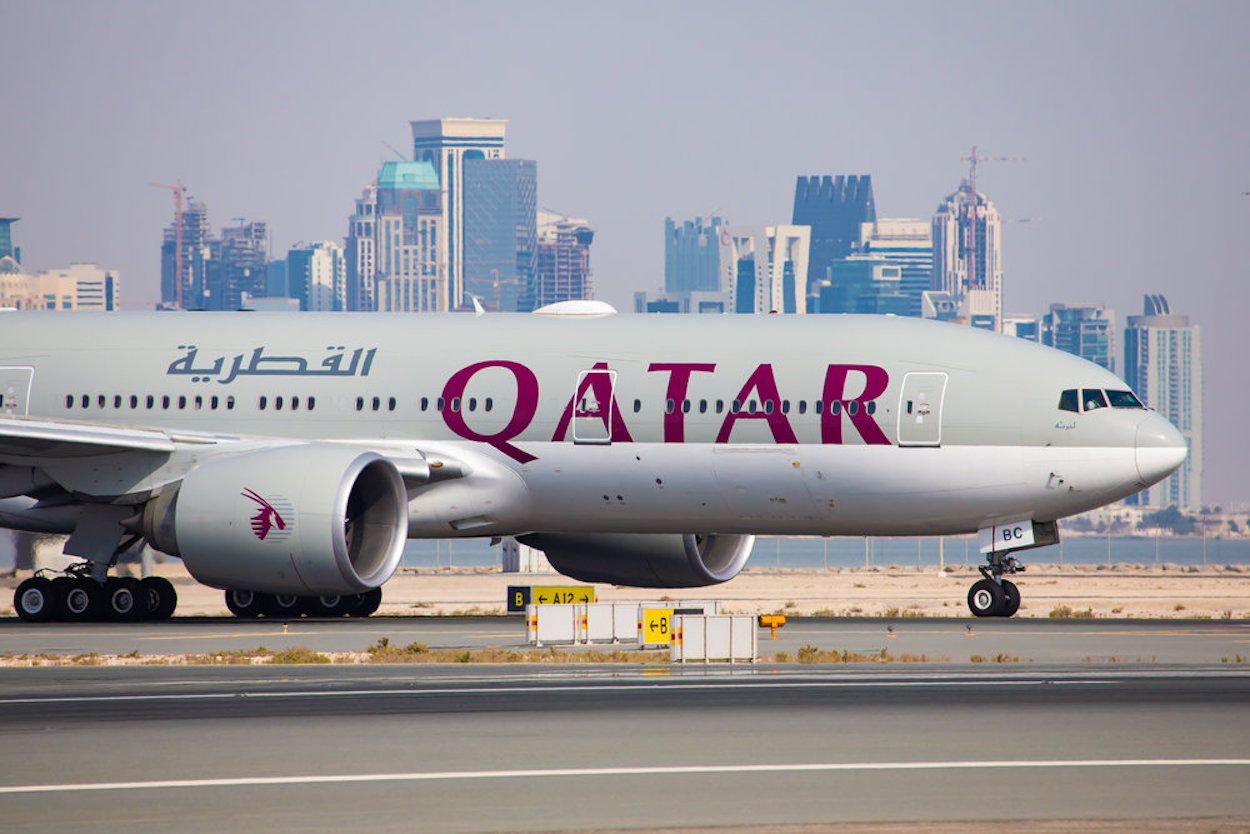
Starting July 22, Qatar Airways will fly a Boeing 777-200LR from Doha to Bogota, continue on to Caracas, then return nonstop to Doha, twice a week. According to Ben at One Mile at a Time, the triangle routing covers roughly 8,200 miles and blocks at close to 21 hours of total flying time, making it one of the longest scheduled passenger routes in the world. Qatar becomes the first Gulf carrier to serve Venezuela, but it likely won’t be the last.
However, this is not a leisure route – far from it. There are two missions, first, connecting the world to Venezuela again, and the other way around; and second, the vast oil business connections between the Middle East and the world’s largest oil reserves. This could not have been possible before due to sanctions.
Is This A Restart Attempt, Or Something Else?
Venezuela has spent years as one of the hardest countries in the world to fly to legally. US sanctions, a collapsed domestic airline industry, and years of diplomatic isolation pushed most global carriers out of Caracas entirely. American commercial aviation to Venezuela has been a patchwork of suspensions and workarounds for most of the last decade. The government threatened airlines that left amongst safety concerns and struggling economics, that they wouldn’t be permitted to return, but that was under Maduro who is awaiting trial in New York.
Qatar is cautiously dipping its toe in the water. Its stop in Caracas is via a tag route from Bogota, not a dedicated line. Qatar flies it just twice weekly so it’s also not a huge move for frequency. But more than seats, traffic, and cargo, this is a very cautious way of testing the United States former prohibitive policy of engaging with Venezuela during sanctions. It tests the Qataris relationship with the United States some too. Matthew wrote about how Qatar kept flying and recovered fast after an Iran attack briefly closed regional airspace, and about the airline’s willingness to stay in markets others avoid even while facing pressure over its own alliance ties, including Matthew’s take on why it has every right to ditch Oneworld but should stay.
It Matters Because Of What It Reveals
For points and miles travelers, an ultra long haul triangle route to two rarely visited capitals is genuinely exciting – though this is not a fifth freedom segment and travelers cannot book Qatar between Bogota and Caracas. Bogota is an easy, well connected city. Caracas is not, and has not been for years (and I have personally long wanted to visit), which means this route instantly becomes one of the more unusual ways to add a new country to your list in Qsuites business class.
The two cities are both new to Qatar (though other destinations in South America are not) and the frequencies are low. Still, Qatar might have opened Bogota without Caracas but it makes sense to add it for a few reasons. Practically, it helps because it’s a very long flight back to Qatar, and Bogota’s elevation makes the heavy fuel a challenge, running just to Caracas light on fuel and then refilling (in a very cheap country for petroleum) is a logistical no brainer. It also allows Qatar to test the waters with a higher likelihood of filling seats.
But more importantly, if the route starts in a couple of weeks as expected and without challenge from the US government, it will show that the market may be open again for business. That could send an important message to others around the world.
Conclusion
Qatar Airways will sell this route on novelty, one of the world’s longest flights, a rare stamp in your passport, and expanding its connections to another corner of the globe. But whether this will lead to other carriers considering a return to Venezuela is yet to be seen. It’s also unclear just how profitable it will be, but if they hold the route, or expand the frequency, we will have our answers.
What do you think?




Well, these days, Venezuela (or what’s left of it after the horrifying earthquakes) and Qatar are basically are US-territories, under DJT. Venezuela’s our source of slush-fund oil; Qatar is Daddy’s bank (you know, Daddy, like NATO Secretary General Mark Rutte calls him… *facepalm*). At some point, we’re gonna learn blatant grift and attempts at ‘appeasement’ aren’t sustainable.
What is left?….Venezuela is the size of Texas and California combined. The town of La Guaira is the size of Galveston , Texas. The only place destroyed by the earthquake was La Guaira. The rest of Venezuela is open for business, their oil refineries open for business, schools and supermarkets open too. Stop posting fake news please !!!
Jesse……stop posting fake news!!! Venezuela is the size of texas and oklahoma combined not texas and california…….
This isn’t the first Middle Eastern service to Bogotá. Emirates has flown to Bogota via Miami. If we take a more expansive view of Middle Eastern, Turkish also serves Bogotá from Istanbul and has served Caracas too.
@Edwin – Bogota, yes, Caracas, no. I wouldn’t consider Turkish to be Middle Eastern but our opinions could differ.
Emirates have been flying to Bogotá for a while now (some geographically challenged people would also say the same for the THY flights to both BOG and CCS). Whether anyone fancies doing the MIA stop on the way there is a different question.
Good grief is this ignorant. US airlines are adding frequencies to Venezuela, because Marco Rubio is now running the country. We’re happy to support Venezuela’s economy now.
This was announced several months ago, though it reaaly took way longer than expected. Therefore your logic is flawed (at least partially )
Turkish is absolutely Middle Eastern and they serve CCS.
Any chance this will negatively impact United’s recently announced routes to Cartagena from IAD and IAH?
Sanctions don’t have anything to do with this. Airlines stopped flying to CCS because they weren’t able to actually collect money they were owed and the security situation was too unstable.
QR flies to plenty of sanctioned countries, like Iran and Russia.
As far as I know, Turkish Airlines is flying Istanbul – Caracas non stop daily. They are also flying to Valencia, Venezuela too.
well, not sure if/when these flights WILL actually start as the airport (Maiquetia area of La Guiara State) was severely damaged in the twin quakes.