
Delta keeps adding nonstop Europe flights from cities that are not hubs. Is the dartboard strategy genius, and which city is next?

The Delta Dartboard
There is a game I imagine playing out in some windowless room at Delta’s Atlanta headquarters. Someone walks up to a giant map of the world, blindfolds an executive, hands them a dart, and lets it fly. Wherever it lands, that is the next nonstop to Paris. Indianapolis? Sure. Austin? Why not. The Delta dartboard, a phrase/concept coined (I believe) by the Dots, Lines, and Destinations podcast, is a notion in jest; a comical bit that aims to explain the carrier’s chaotic approach to choosing new US origins to Paris.
Except it is not a bit. And the longer I look at it, the more I think Delta knows exactly what it is doing.
The legacy hub-and-spoke model is simple. Funnel everyone through Atlanta, Detroit, Minneapolis, Salt Lake, and New York, and let the big international gateways do the heavy transatlantic lifting. For those that live in Indianapolis and want to fly to Paris, connect through Atlanta or JFK. That is how it has worked for decades, and for good reason, because wide-body jets are expensive and you want them full. The dartboard breaks that rule on purpose. Indianapolis to Paris. Austin to Paris. Nonstop, point to point, from cities that are not Delta hubs and never will be. On paper it looks reckless. But the math has changed, and that is the part worth sitting with. The carrier just recently restarted the hotly contested Los Angeles-Hong Kong route, but it would have been more impressive to see it try some more adventurous routes as almost all of its non-hub traffic goes to Paris (feeding Skyteam partner, Air France.)
For what it’s worth, the Pittsburgh-Paris flight five times weekly on Delta was the reason I moved to Pittsburgh, though I never flew the route. It’s now defunct.
Why The Dartboard Might Be Genius
Three things make these routes pencil out in 2026 in a way they would not have a decade ago. The first is the aircraft. The A330neo and the A321neo XLR changed the conversation. Delta does not need to throw an oversized A350 at Austin to Paris and pray. A right-sized, fuel-efficient jet means the breakeven load factor drops, and suddenly a market that produces pretty good rather than great demand becomes profitable rather than aspirational. The 757 the carrier used to operate for some of these experiments doesn’t have the legs to get to Austin with a full payload so that was never an option before.
The second is that it’s in part about genuine demand year round to the City of Lights, but more the other components. Yes, the premium leisure traveler and the corporate account will pay up for a nonstop and skip a connection altogether. One full Delta One cabin and a healthy premium economy can carry a route that a coach-only model never could. These are revenue plays dressed up as route maps. But the demand picture is wider than it seems. These markets play host to major international corporations and for some reason one-stop service to Europe plays differently when customs is at your home airport. The nonstop service from a home airport plays on a psychological and human factor; I hear from clients all the time that insist on Pittsburgh’s London flight home even when there are cheaper and shorter options available.
The third is defense. Every nonstop Delta launches from a secondary city is a wall against United and American doing it first. Austin is a genuinely contested market, and planting a flag there, even a slightly speculative one, is cheaper than trying to claw the market back later. Some of these darts are not bets on the destination. They are bets against the competition. American made a push for Austin before drawing back, but British Airways flies to London up to twice daily and represents oneworld from Austin to Europe. Lufthansa flies from Frankfurt for Star Alliance, and KLM operates to Amsterdam on a 777, this expands Skyteam’s foothold.
The Catch Nobody Puts On The Press Release
While Delta Air Lines is busy adding long-haul European routes from unexpected places, it has also been cutting regional routes that do not perform. The Dayton cut got attention, and there is a steady drumbeat of route changes in 2026 that read less like expansion and more like reallocation. Pull a jet off a tired domestic spoke, point it at something shinier.
That is not a contradiction; it is the strategy. The dartboard is not growth for growth’s sake. It is Delta trimming the boring middle and concentrating metal where the premium revenue lives. The risk is obvious. Throw enough darts and some will miss. A secondary-city long-haul that looks brilliant in a strong economy looks very different the moment corporate travel softens or fuel spikes. These routes have thinner margins for error than a JFK to London workhorse, and Delta will cut the underperformers without sentiment. Austin to Paris is not guaranteed to see a third summer.
There’s a secret equation that takes place behind the scenes though for these routes too. Airports will subsidize traffic to markets the city wants a relationship with. That reduces the financial risk for Delta to try these routes from markets it might not otherwise consider. Some businesses will also commit to a certain volume of spending to ensure the route stays or expands.
So Which City Is Next?
If you accept the logic, meaning an efficient jet, a premium-heavy cabin, a fast-growing or contested market, and no nearby Delta hub already doing the job, a few candidates stand out. Nashville is the obvious one. Explosive growth, a real corporate base, a tourism story that sells itself, and no Delta hub close enough to cannibalize. If a dart has not landed there yet, it will. Raleigh-Durham is the research-triangle, tech-money play, and it is exactly the kind of high-income secondary market the A321neo XLR was built to serve to Europe. American has flown to London from Raleigh for some time, but additional demand – especially in the age of AI – could make sense.
San Antonio or a deeper Texas push makes sense if Austin proves the thesis. Charleston is the wildcard, small but punching massively above its weight in premium leisure demand, which is the only metric that matters for this model. Pittsburgh could see a revival but it’s less likely with Aer Lingus, IcelandAir, and British Airways all offering at least summer service. Cleveland has two of those three and a renewed domestic push from United. Columbus could work on a 3-4x weekly schedule. St. Louis just got British Airways flights back to London, that could be an option too.
My money is on Nashville next, with Raleigh close behind.
Conclusion
The Delta dartboard looks random is anything but. It is a disciplined bet that the right aircraft plus a premium-loaded cabin can make point-to-point international flying work from cities the old hub model wrote off. Some darts will miss, and Delta will pull them without blinking, and that is a feature rather than a bug. But the model is sound, the timing fits the fleet, and the competitive logic is real. It is not a blindfolded executive throwing darts. It is an airline that figured out the board is worth more than the hub-and-spoke gospel admitted. The only real question is which mid-sized American city wakes up to a nonstop Europe announcement next, and how long it gets to keep it.
What do you think?





Delta retired their 777s in October of 2020…
@Dave – Yes, but the retirement of the equipment (like the eventual retirement of the 757, a sad day for sure) will also change where and how they add routes. The 777 is my favorite aircraft but it’s imperfect for many routes so the A330 opens doors that would otherwise have to remain closed.
Yes, DL officially retired all of its iconic B777s from service on October 31, 2020. The decision to phase out all 18 of the jets (eight 777-200ERs and ten 777-200LRs) was driven by fleet modernization efforts and the economic impacts of the COVID-19 pandemic. By eliminating the older, less fuel-efficient planes, DL shifted its long-haul focus to more economical aircraft like the A350-900 and A330neo.
Like last Sunday, too much AI. This caused me to lose interest as I now don’t know if this is Kyle’s actual thoughts:
“But the math has changed, and that is the part worth sitting with.”
No reasonable human writes like that.
@Frequent Flyer – The math has changed due to new equipment. As another commenter pointed out, Delta has retired its 777 fleet. The 757s don’t have the legs to get farther than the east coast (cited in the piece) and others carriers can compete on those routes with A321 variants. But the A330 helps with a lower seat count, slightly better fuel efficiency on routes that couldn’t have supported the larger aircraft and can’t support A350s.
Delta flew RDU CDG and transitioned the service to AF. I don’t see why you’d think they’d restart it.
EWR to CDG used to be one of the only non-hub flights on Delta out of Newark. Never got to fly it before DL pulled the plug. But with the joint venture with AF-KLM, the “strategy” makes sense; or at least is less bizarre.
You moved to Pittsburgh because of a Delta route? That sounds crazy!!!
@TCar – When we returned to the US from a sabbatical in Thailand, we could move anywhere in the States and I insisted on just one condition. I grew up in Omaha, NE and at the time nearly every flight required a connection, often eating a day of a trip on both ends. After living in Thailand and Manchester, I vowed to never live in a city without international service. My sister-in-law was lobbying for Pittsburgh, a 30-minute drive for her and I resisted. But then she surfaced a single 5x weekly Delta flight to Paris and I am a man of my word so we settled on the Steel City.
To this day, despite service now to Cancun, Punta Cana, Reykjavik, London, and Dublin I still have never crossed Border Control at PIT.
It’s fascinating that they still don’t have a single flight to LYS or MRS, and I bet they’re not making any effort to market all these secondary US destinations to the French/EU point of sale. They’re only interested in attracting customers who can sign up for their credit cards.
@PM – I would think Marseilles, or Lyon could be candidates. We have seen more activity in Nice for French Riviera traffic, but not to the scale of some. For context, Emirates flies a daily A380 (instead of the smaller 777) on the 6.5 hour flight, about what it would be east bound to Nice from the east coast. Why doesn’t Air France fly to LAX and connect with Delta traffic there, clearly there is demand.
Unlike DL, AF don’t have multiple hubs- they have the main hub at CDG, the one at AMS, and a handful of regional routes. LYS and MRS are both massive cities and could easily sustain a route to JFK or ATL, but DL won’t be interested in attracting pax who are based there.
AUS-CDG is entirely predictable. AUS-LHR tried and failed for DL on VS. AUS-AMS unable to get to daily despite BA having no issues going seasonally double daily to LHR. AUS-CDG isn’t about Paris, it’s about connections to Europe since DL haven’t been able to work LHR or AMS work on a reliable basis for customers in AUS and they need to to pull Oneworld loyal customers off their options on BA.
The domestic adds and drops by Delta really are just a dartboard at this point. Delta can easily see demand on all these routes before they start, they can see WN or old AA P2P fares/loads, etc. The way Delta keeps cancelling routes to try something else out of AUS is perplexing and does suggest a bit more of a dartboard in NP at delta with AUS than you’d expect — or perhaps just the usual Delta hubris of “it didn’t work for AA, but it will for DL” and then realizing it didn’t 😉
Kinda like TPA-AMS. Odd, but I guess it works.
What? No Nuuk or Ulaanbataar? Sheesh!
When will Austin Gothenburg start? Never.
When will Nashville Vienna start? Never.
Delta, I dare you.
With EES delays in Europe, I would rather connect in the U.S., like JFK or ATL, than miss a connection in Paris. However, if you’re going to Paris, those new flights could be convenient.
“With EES delays in Europe, I would rather connect in the U.S., like JFK or ATL, than miss a connection in Paris. However, if you’re going to Paris, those new flights could be convenient.”
Or… if you’re in AUS, just connect at Heathrow and avoid the EES (and you get to skip ATL and JFK) until you arrive in the EU 😉
Flying to Europe on a narrow-body, single aisle plane where everything (and everyone) from front-to-back is cramped and squeezed? Ewwww. No thanks, I’ll skip that experience. I’d rather connect at a hub (though not Atlanta, so I’d be looking at a different airline).
As for all the AI slop: “No reasonable human writes like that.” Just lazy, ignorant fools who depend on AI.
It’s not a dartboard approach nor a pure point to point route at all. What on earth are you talking about? Delta and Air France are in a joint venture. They plan routes between Europe and North America jointly, based on carefully allocated capacity percentages that ensure profitability for both but that also respect each company’s commitments to employee groups such as pilot groups and flight attendants, to ensure that they all have shots at the flying. Indianapolis-Paris or Raleigh/ Durham -Paris or the theoretical Austin-Paris are not at all point to point random dartboard routes. They’re spoke to hub routes, allowing great connectivity over the joint dl/af/kl networks. Not random crazy things. They’re highly analyzed, coordinated actions between the carriers in their joint venture. What horse crap are you suggesting?
@Jason – Why doesn’t any other alliance carrier do this? They all have JVs. See comment on John’s post. British Airways won’t compete against any North American carrier that adds Edinburgh service though it could easily add flights from Scotland to Philly, Miami, or Dallas. Air France could do this too. Maybe the closest one is Lufthansa but that’s not under its own flag but rather via Discover/Eurowings.
None of them are as integrated as dl/AF. D/af share profits. The others share revenue only, which impacts how tight their coordination is. Regardless, rdu/pit/ind/cvg-cdg is about much more than the point to point market. The majority of traffic on each of those flights goes/ went beyond Paris. Just like any other spoke to hub flight on any other network anywhere in the world
None of these decisions were random or dart throwing. Plus, pit and ind started their flights with big revenue guarantees. RDU I think too. But RDU doesn’t use them anymore. These were all heavily analyzed and not random decisions in the way you kind of portray them
“None of them are as integrated as dl/AF. D/af share profits. The others share revenue only, which impacts how tight their coordination is. ”
Feel free to provide any backup to this whatsoever. There’s absolutely nothing stopping AA/IAG from a profit type coordination or AC/LH/UA from doing the same.
Your quote is just a Delta HQ fanboy thing said inside HQ you’ve been told but can’t ever be backed up. Why? Because the other two TATL JVs could do the same but they don’t. Do they just hate being more coordinated or making more money?
I’m sorry but this is complete AI slop. There are all of these vague references to the A321XLR which doesn’t really make sense given that Delta chose not to purchase them. Not to mention, these aren’t random but coordinated through the AF/KLM/VS joint venture, feeding Air France in CDG.
@John H – This site has more than a dozen articles in the last two years about the A321-NEO/XLR and similar variants changing the game. It refers to other carriers like Aer Lingus, that operate the type because that puts nonstops into markets that normally wouldn’t have them. I also cite that they are not entirely random, in fact that’s the conclusion of the piece, as these are often subsidized routes and that they feed into the Air France network. I also cite that these are almost always into Paris and nowhere else.
What we don’t see is other carriers with the same non-hub to partner hub approach. British Airways has something like 30 non-stop routes to North America now, the vast majority into the United States, places like Pittsburgh (mentioned), St. Louis (featured a couple of weeks ago), Nashville, etc. What British Airways is NOT doing is flying these routes from Birmingham, Manchester (though Aer Lingus had a limited run – also covered in another article) etc. Air France is not flying from Nice to Atlanta or Detroit, taking its own secondary market and feeding it into Delta. Delta appears to be the only major carrier doing service like this and as I point out – it’s not random, but it can appear that way.
Then why have they stopped operating so many of these types of routes?
@Rebel – I suspect that the subsidies dried up; markets often want to test opening those new lines but won’t fund empty planes if the market doesn’t book. I am confident that Delta had a corporate account in Pittsburgh that was sponsoring the route there but when it ended, there wasn’t enough O&D traffic to keep it.
so while the A330 opens up all kinds of routes the 777 couldn’t for delta, it just hasn’t done it?
“The 777 is my favorite aircraft but it’s imperfect for many routes so the A330 opens doors that would otherwise have to remain closed.”
you seem to be pretending the A330 is a new plane for Delta and it’s some kind of 1:1 swap? It is not… nor is the A330 the replacement for the 77L that Delta had, the A359 or A35k are for those longer routes.
@MaxPower – Some valid points here, but I guess with the A330, A350, and 777 – the legs are there to a significant distance, it’s the ones that are short that offer real experimentation as we have seen by other carriers. My point with this was simply that threshold is lower on an A330 than it was on a 777, the economics can go a little lower demand, a little fewer seats, a little less cargo which makes trying new things a little bit easier.
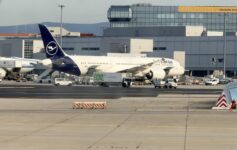
For aviation enthusiasts → The DL jetliner featured in the article’s photo is a B757-200. It is 28.1 years old and is currently en route from STT to ATL.
For aviation enthusiasts → DL currently has 74 B757-200s (average age: 28.4 years) in its fleet.
Ed Bastian & Co is well aware that in commercial aviation, learning without experience is impossible.
The enchanting Music City certainly deserves nonstop DL flights to Europe… Let’s recall that while DL flies directly to numerous European destinations from its major U.S. hubs, such as ATL and JFK, all of its departures out of BNA are domestic or to Mexico.
A wise, strategic move… There absolutely should be a sequel!
As a resident of Indianapolis, did I miss an announcement from DL on a new flight to Paris?
@Tony – This was one they started and stopped just as they did with PIT.
It is true that DL does not offer any direct flights from PIT to CDG. DL permanently discontinued its seasonal nonstop route between Pittsburgh and Paris back in late 2018. Currently, no other airline operates a direct route between these two cities either.
Regrettably, DL does not currently offer direct, non-stop flights from IND to CDG. The seasoned airline previously operated this route but ended it at the onset of the COVID-19 pandemic. As you know, to travel from Indianapolis to Paris with DL today, you will need to book a connecting flight. Typical layover hubs for this route are ATL or JFK.
“That is not a contradiction; it is the strategy”
Tiring AI slop, what a disappointing waste of everyone’s time.
My friends and I just flew into Naples, Italy and I was *shocked* by how many US airlines operate there (and the flight loads were all good), but we flew Delta back from Malta – a pleasant surprise, and also impressed by the smaller markets served by DL and the 767-300. Somehow we operated on time and it was a good flight.
And we also didn’t have to deal with the EES BS. Thank god.
Were you able to get Delta one seats as a pass rider?
Interesting how on a.net at least half a dozen posters think this is an A.I. article lol. FT has a reference to it as A.I. also. Helps the clicks but maybe liebling should write more instead of ‘Kyle’ the mentions and links are good for clicks though so there is an upside.