
Spirit’s bankruptcy exit plan cuts debt by billions and shrinks to 94 planes. But surging fuel prices from the Iran conflict could derail the whole thing.
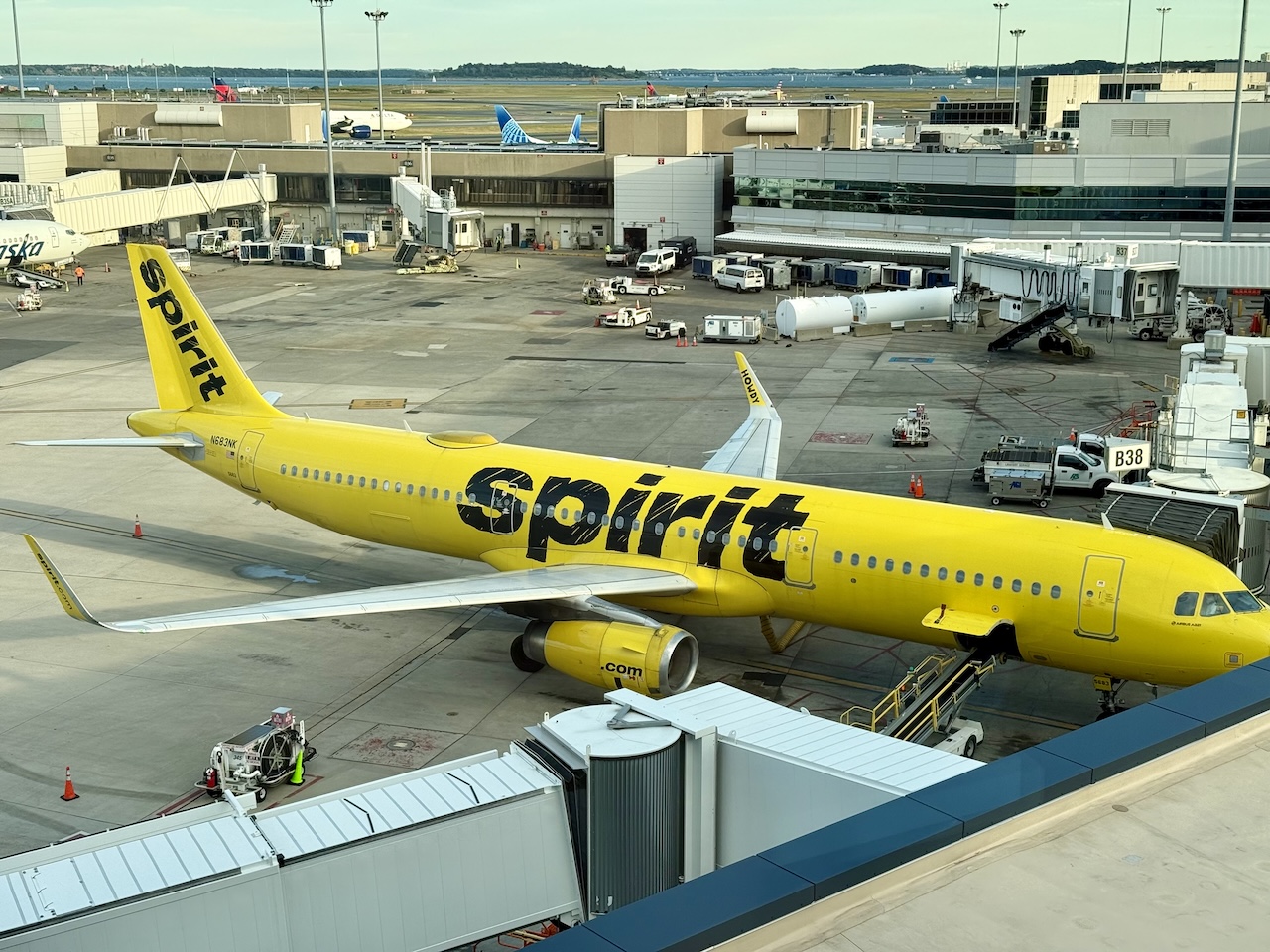
Spirit Airlines has been through a lot. Two bankruptcy filings in under a year, a failed merger with JetBlue that a federal judge torpedoed, a rejected reunion with Frontier, and a balance sheet beset by debt. But against all odds, Spirit now has a path out of Chapter 11 and into something resembling a functioning airline again. The question is whether the plan is good enough to survive what’s happening in the world right now.
The Merger Merry-Go-Round That Started The Spiral
It’s impossible to talk about Spirit’s current predicament without rewinding the tape. Back in February 2022, Frontier and Spirit agreed to merge in a $6.6 billion deal that would have created the fifth-largest carrier in the US. On paper, it made sense. Two ULCCs combining forces, sharing overhead, and building a network that could genuinely compete with the legacies on price. The aviation world nodded along.
Then JetBlue showed up uninvited. The carrier launched a hostile bid that ultimately won over Spirit’s shareholders with a $3.8 billion offer, a 50% premium over the stock price, and a $470 million breakup fee if regulators blocked the deal. Spirit walked away from Frontier and straight into JetBlue Airways’ arms. This site wrote at length both supporting the merger and sharing reasons why it may have been a bad idea.
That judge’s decision turned out to be catastrophic for Spirit. In January 2024, a federal judge blocked the JetBlue-Spirit merger, ruling it would harm the very budget-conscious travelers Spirit was supposed to serve. By March, the deal was officially dead. Spirit collected its $425 million in prepayments and a $69 million termination fee, but it had lost something far more valuable: time, strategic direction, and credibility with investors. The court’s decision also flagged that, at least in the LCC market, the government was unwilling to give any room for mergers. It later approved Alaska’s acquisition of Hawaiian Airlines but neither carrier was a low cost carrier.
The airline filed for Chapter 11 in November 2024, emerged in March 2025, and then promptly lost $257 million over the next three months. By August 2025, Spirit was back in bankruptcy court for a second time. When Frontier came knocking again in January 2025 with a $400 million merger proposal, Spirit rejected it as inadequate. Whether that was pride, prudence, or poor judgment depends on who you ask. At nearly 1/10th of the original bidding war just a couple of years prior, it’s understandable that Spirit’s remaining investors found that offer opportunistic by the Frontier team.
Spirit’s Plan To Shrink Its Way Back To Life
The current exit strategy is all about getting smaller. Much smaller. Spirit has reached an agreement with creditors that would slash its debt and lease obligations from roughly $7.4 billion to about $2.1 billion. The fleet will go from 214 aircraft before the initial filing down to just 94 planes. The airline recently moved to auction off 20 more Airbus jets for $533.5 million, a mix of 13 A320s and seven A321s, with those aircraft phasing out of the fleet starting in April 2026.
The route network is shrinking too. Spirit is canceling 11 international routes across the Caribbean and Central America, significantly reducing frequencies on 22 others, and pulling out of weaker markets entirely. This coming summer, Spirit will offer nearly 40% fewer flights and seats than the same period in 2024. Annualized fleet costs are being cut by $550 million, a 65% reduction from pre-bankruptcy levels.
The strategy is straightforward: shrink to profitability, focus on high-demand routes from Fort Lauderdale, New York, and Detroit, and layer in more premium upsell options without completely abandoning the ULCC model. Spirit is targeting a late spring or early summer 2026 exit from Chapter 11. On paper, it’s a reasonable plan. Get lean, get focused, and stop bleeding cash on routes that don’t work. I had my doubts at the beginning of this process, but Spirit’s management seems committed and thoughtful in its approach.
Fuel Prices Could Ruin Everything
Here’s the problem. Spirit can control its fleet size, its route map, and its labor costs. It cannot control the price of jet fuel. And right now, the fuel picture is as ugly as it’s been since 2022, and it could get worse.
The US-Iran conflict has effectively shut down commercial shipping through the Strait of Hormuz, and the impact on energy markets has been immediate and severe. Oil has spiked above $90 per barrel, up roughly 60% since the start of the year. Jet fuel at the US Gulf Coast has surged to $4.12 per gallon, the highest level in nearly four years. Globally, jet fuel has topped $1,500 per tonne with roughly 30% of Europe’s jet fuel supply originating from or transiting the strait. Stoppages from functioning fuel distribution centers in the Middle East cannot be overcome by newly approved shipments from Venezuela as the infrastructure supporting oil exploration in the world’s largest proven reserves has languished and fallen to disrepair. It will take some time to get those back in working order and secure deals for export. Time that Spirit doesn’t have.
For healthy airlines with strong balance sheets and fuel hedging programs, this is painful but survivable. For an airline emerging from its second bankruptcy with razor-thin margins and no hedging in place, it could be fatal. United’s CEO Scott Kirby has already warned that airfares will rise, and industry analysts estimate that major carriers could collectively face more than $5 billion in extra fuel expenses if current trends persist. Spirit, with its customer base that is disproportionately price-sensitive, is in the worst possible position to pass those costs along.
The ULCC model works when you can offer fares that are dramatically lower than the competition. When fuel costs spike and everyone’s fares go up, the gap between Spirit’s base fares and a legacy carrier’s economy ticket narrows. At that point, the traveler who was going to save $40 by flying Spirit might just book the Delta flight instead and get a free Coke.
Was Spirit Doomed From The Start?
There’s a case to be made that Spirit’s trajectory was set the moment merger talks with Frontier began in 2022. Not because the Frontier deal was bad, but because it set off a chain reaction that the airline never recovered from. JetBlue’s hostile bid pulled Spirit away from a logical partner, the DOJ killed the JetBlue deal, and Spirit was left standing alone in an increasingly hostile market for ULCCs. My contention at the time was that Spirit should be leading the charge, not Frontier. The models are distinctly different with Frontier flying inconsistent schedules, to and from many secondary airports serving fewer passengers, and operating a hub service model solely from Denver in the western half of the United States. From a competitiveness standpoint, Frontier might be offering a wider market with more airports served, but it doesn’t serve the general public to wait 3-4 days for the next outbound flight. Ultimately, Frontier was more profitable through the period but not dramatically so.
The first bankruptcy in November 2024 was supposed to be the reset. But emerging into soft domestic fares and high costs meant the turnaround never had a chance to take hold. The second filing in August 2025 was, in some ways, an admission that the first restructuring didn’t go deep enough. Now Spirit is trying again with a more aggressive plan, and the external environment is arguably worse than it was either of the first two times.
Frontier, meanwhile, has continued pursuing a merger even after being rejected. There’s a certain irony in the fact that the partner Spirit walked away from in 2022 is still waiting at the altar. Whether Spirit should have taken the $400 million offer remains an open question, but it’s hard not to wonder what the ULCC landscape would look like today if that original Frontier-Spirit merger had just gone through.
Conclusion
Spirit Airlines has, by most accounts, put together the most aggressive restructuring plan it could. Cutting debt from $7.4 billion to $2.1 billion is monumental. Shrinking to 94 aircraft and focusing on profitable routes from core hubs is sensible. Layering in premium upsell options while keeping its ULCC DNA is smart. But “good enough in normal times” and “good enough right now” are two very different things. With jet fuel prices surging past $4 per gallon, the Strait of Hormuz in crisis, and a customer base that will bolt the moment fares creep too high, even the best-case scenario for Spirit involves flying through turbulence that would challenge a healthy airline. The plan might work if fuel prices settle down, if demand holds through the summer, and if Spirit can execute the transition without another stumble. That’s a lot of “ifs” for a carrier that has already burned through two rounds of bankruptcy protection. Spirit may very well survive this – I hope it does. But the nine lives of Spirit may have finally been spent if fuel prices remain too high for too long.
What do you think?




good article, Kyle.
Problem is that global high fuel prices make NK’s fleet less marketable.
47 knows it but they have to get the Strait open and hurtling projectiles from Iran ended or the global economy could tank in very short order.
And if crude oil crosses the $100/bbl line and stays there, NK will have US airline company in chapter 11
labor costs have been layered on during low fuel costs; revenue is simply not there for most airlines to pay high labor and high fuel costs
Tim, global high fuel prices make EVERYONE’S fleet less marketable. Delta, too, bud. *gulp*
Be sure to thank your Dear Leader for making everything so ‘great’ again…
Delta has some newer planes, but they have a lot of very thirsty planes in their fleet too
There isn’t a plane in DL’s fleet that DL alone flies.
DL’s fuel efficiency is better than its competitors in part because DL has more seats per departure as a result of fewer regional jets and no 50 seat regional jets as part of its capacity purchase agreements
Also, DL started mainline upgauging before other carriers and has higher gauge even on its mainline fleet.
but that isn’t the issue here because DL, just like AA, AS, B6, UA and WN etc aren’t having to get rid of airplanes from their fleets as NK is doing as it restructures.
High fuel prices could easily ruin a lot of airlines’ business plans and could be cause NK to fail to emerge from Chatper 11.
Crude oil touched $110/bbl and is hovering right around $100 as I write. Many airlines cannot absorb that big of a cost shock in their 1st and 2nd quarter earnings even if the Strait is reopened and Iran is stopped from attacking neighbors.
The airline industry is alwasy one nanosecond away from a black swan event and we are in one now. It will push some airlines over the edge; the need for and abililty to take on new airplanes will be much lower, potentially for years to come. EVEN IF oil prices return to the $60s in a month or two – and there is zero assurance that will happen.
Tim, correct me if I’m wrong, but price shocks should not immediately affect airlines, because they purchase futures contracts. It’s not like they literally fill up at the Wawa like you or I may. (Although, personally, I gave up my vehicles when I moved back to the city. I ain’t paying double-rent for a parking space… phew!)
1990
US airlines do not hedge price; they do have supply contracts and can delay buying some fuel but then cut their “reserves” which makes no sense if flying doesn’t decrease in the short term.
WN cuts its hedges and veyr much wished they had them.
Foreign airlines hedge fuel because it is priced in dollars so the hedge is as much about currency risk as fuel risk.
DL’s refinery does hedge some fuel so it has a short term advantage but the crack spread is soaring and that is how the refinery gets the greatest benefit.
DL is probably the best positioned US airline while west coast airlines including AS and UA are in the worst shape from a fuel perspective.
an 80% increase in fuel prices means that US airlines will be flying tickets over the next month at fuel prices far above when the tickets are sold. Airlines have to make decisions now if they are going to get capacity out for the summer and beyond but chances are that they can’t get labor costs out this close to the summer and regional jet contracts for the summer are signed.
The 1st quarter probably turned to a loss for many airlines and the 2nd quarter is very iffy.
Feet seem like a pretty low cost form of transportation. and the NYC subway isn’t likely to boost fares in the short term. but how about them taxes in NYC?
Well… the MTA fare just went from $2.90 to $3.00 in January (but don’t worry, about half of the folks who take the bus don’t bother paying for it, fare evasion getting a bit better on the subways but still ~10% of folks don’t pay). Care to weigh in on protected bike lanes though?
Beautiful day in NYC for a walk though! In the 60s!
NK should have merged with F9!
Why? That would have been a merger of two member of the walking dead.
Why? that would have brought a marriage two members of the Walking Dead.
The lesson to remember regarding SPIRIT’s position → Chapter 7 bankruptcy is not the same as Chapter 11 bankruptcy.
I think you’re misstating Spirit’s “exist from bankruptcy” plan. So far, they haven’t revealed one. What they have said is that they have a tentative agreement with their existing bondholders not to force them into Chapter 7 right now, pending their ability to get another raft of creditors on board “sometime” in the second quarter.